Ranch Dressing: Is It Always Bad For Diabetes? (Expert Answer)

Middle-aged woman standing behind marble countertop with ranch dressing, fresh salad, olive oil, herbs, and glucose meter visible

✪ Key Takeaway: Ranch dressing is not always bad for diabetes when you choose versions with healthy fats, minimal added sugar, and control portions. Introduction You pour ranch dressing over your salad and suddenly wonder if you just made a terrible mistake for your blood sugar. You are asking this question because ranch dressing has earned a reputation as an unhealthy choice, especially for people managing diabetes who worry about every food decision they make. Hi, I am Abdur, your nutrition coach, and today I am going to explain why ranch dressing is not always the villain in your diabetes management story and how you can make it work for your health goals. What Makes Ranch Dressing Problematic For Some People With Diabetes? Most commercial ranch dressings contain added sugars that can raise blood glucose levels quickly. These products often include high fructose corn syrup or other sweeteners that manufacturers add to improve taste and shelf life. A typical two-tablespoon serving of regular ranch dressing contains around 2 to 4 grams of total carbohydrates, which may not seem like much but adds up when you use more than the serving size. Many store-bought versions also contain inflammatory oils like soybean oil or canola oil that undergo heavy processing and may contribute to insulin resistance over time. The sodium content in commercial ranch dressing can reach 200 to 300 milligrams per serving, which becomes concerning when you consider that people with diabetes have higher risks for cardiovascular problems. Another issue is

Almonds: Are They Really Good For Low Blood Pressure? (Expert Answer)

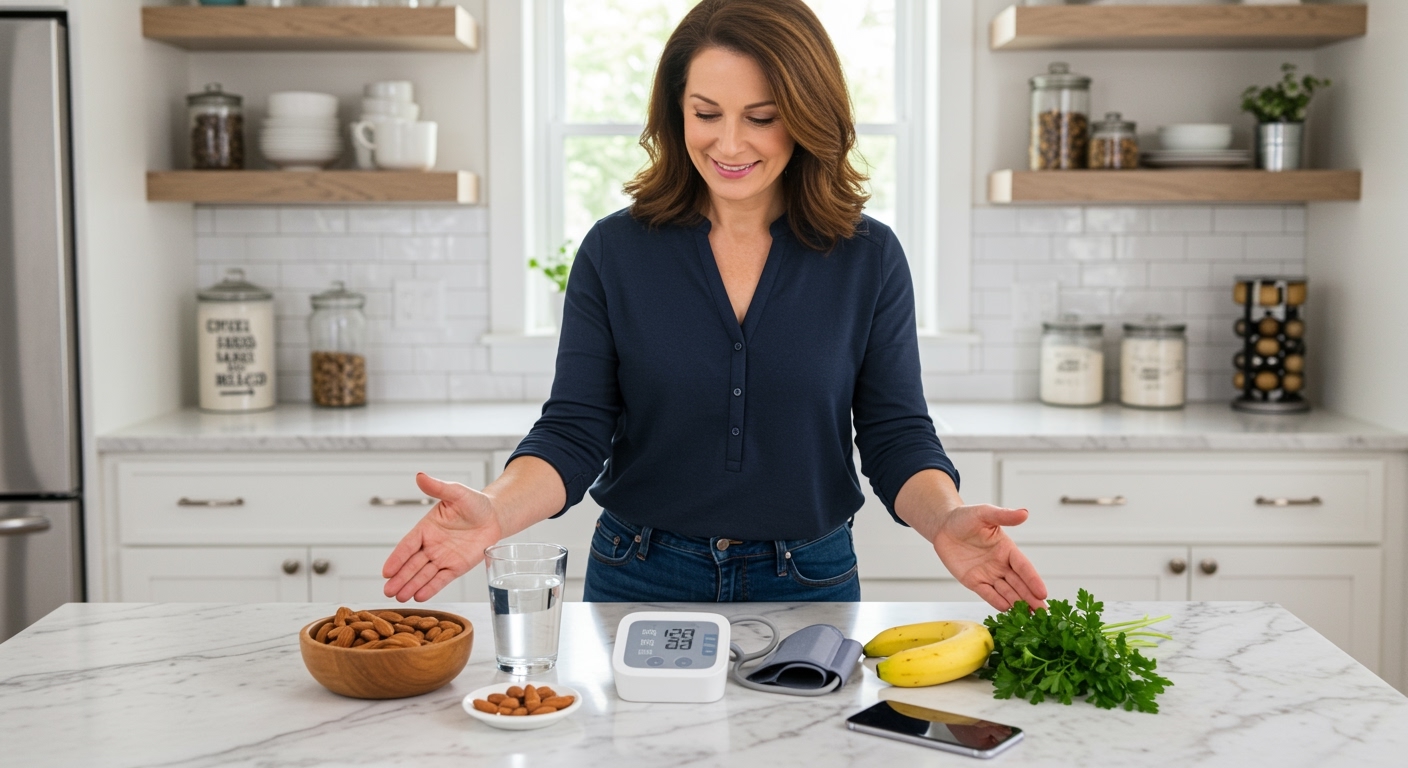
Middle-aged woman reaching toward almonds and blood pressure monitor on white marble countertop in bright modern kitchen

✪ Key Takeaway: Almonds help lower high blood pressure but do not raise low blood pressure and may worsen hypotension symptoms in some people. Introduction You grab a handful of almonds thinking they will solve your low blood pressure problem. You might be asking this question because you have heard almonds are heart-healthy and assume they will fix any blood pressure issue, whether high or low. Hi, I am Abdur, your nutrition coach, and today I am going to explain why almonds work differently for high and low blood pressure and what you should actually do if you struggle with hypotension. What Does Research Say About Almonds and Blood Pressure? The scientific evidence is clear about one thing. Almonds lower blood pressure in people who have high blood pressure or prehypertension. A comprehensive review of multiple studies found that eating almonds reduced systolic blood pressure by an average of 2.3 mmHg and diastolic pressure by 1.5 mmHg. This happens because almonds contain magnesium, potassium, and healthy fats that relax blood vessels and improve circulation. But here is the problem nobody talks about. These same blood pressure-lowering effects can make low blood pressure even worse. If your blood pressure is already below normal, eating foods that further reduce pressure will intensify symptoms like dizziness, fatigue, and fainting. ✪ Fact: Studies on almonds and blood pressure only included people with high or normal blood pressure, never those with hypotension. Why Do People Think Almonds Help Low Blood Pressure? The confusion comes from

Onions: Are They Really Good For High Blood Pressure? (Expert Answer)

Middle-aged woman examining red onions on marble countertop with blood pressure monitor and heart model in bright modern kitchen

✪ Key Takeaway: Onions can help lower blood pressure through sulfur compounds and quercetin that relax blood vessels and reduce inflammation. Introduction You probably slice onions into your cooking every single day without thinking twice about their health benefits. Maybe your doctor recently told you that your blood pressure numbers are creeping up, and now you are wondering if those everyday onions sitting in your kitchen could actually help bring those numbers down naturally. Hi, I am Abdur, your nutrition coach, and today I am going to explain exactly how onions affect your blood pressure, what the science really says, and whether you should count on them as part of your hypertension management strategy. What Makes Onions Special For Blood Pressure? Onions contain sulfur compounds that give them their distinctive smell and taste. These same compounds also help your blood vessels relax and widen, which directly lowers the pressure inside your arteries. The main player here is a compound called allicin, which forms when you cut or crush onions and their cells break open. Onions also pack a powerful antioxidant called quercetin, especially concentrated in the outer layers and red varieties. Quercetin works by reducing inflammation in your blood vessel walls and improving their ability to expand and contract properly. When your blood vessels function better, your heart does not have to work as hard to pump blood throughout your body. ✪ Fact: Red and yellow onions contain significantly more quercetin than white onions, making them better choices for blood

Menudo: Is It Even Safe For Diabetes? (Expert Answer)

Woman standing behind marble countertop examining menudo soup bowl with tripe, hominy, glucose meter, and fresh ingredients visible

✪ Key Takeaway: Menudo can be safe for diabetes when you control portions, limit hominy, and pair it with low-carb vegetables. Introduction Menudo sits steaming in front of you at a family gathering, and you wonder if one bowl will send your blood sugar soaring. You might be asking this question because menudo is a traditional comfort food that brings back memories, but diabetes makes you second-guess every meal choice. Hi, I am Abdur, your nutrition coach and today I am going to explain whether menudo is safe for diabetes, what makes it risky, and how you can enjoy it without compromising your blood sugar control. What Makes Menudo a Concern for Blood Sugar? Menudo is a traditional Mexican soup made with beef tripe, hominy, chili peppers, and various spices. The main concern for people with diabetes is the hominy, which is processed corn that contains significant amounts of carbohydrates. A typical serving of menudo contains about 15-25 grams of carbohydrates, mostly from the hominy. The tripe itself is almost carb-free and provides protein, which actually helps slow down sugar absorption. However, restaurant versions often add extra hominy to make the soup more filling, which increases the carb load significantly. The glycemic response depends on how much hominy you consume in one sitting. Many people with diabetes experience blood sugar spikes after eating menudo because they underestimate the carb content from hominy. ✪ Fact: One cup of hominy contains approximately 23 grams of carbohydrates, similar to a slice of bread.

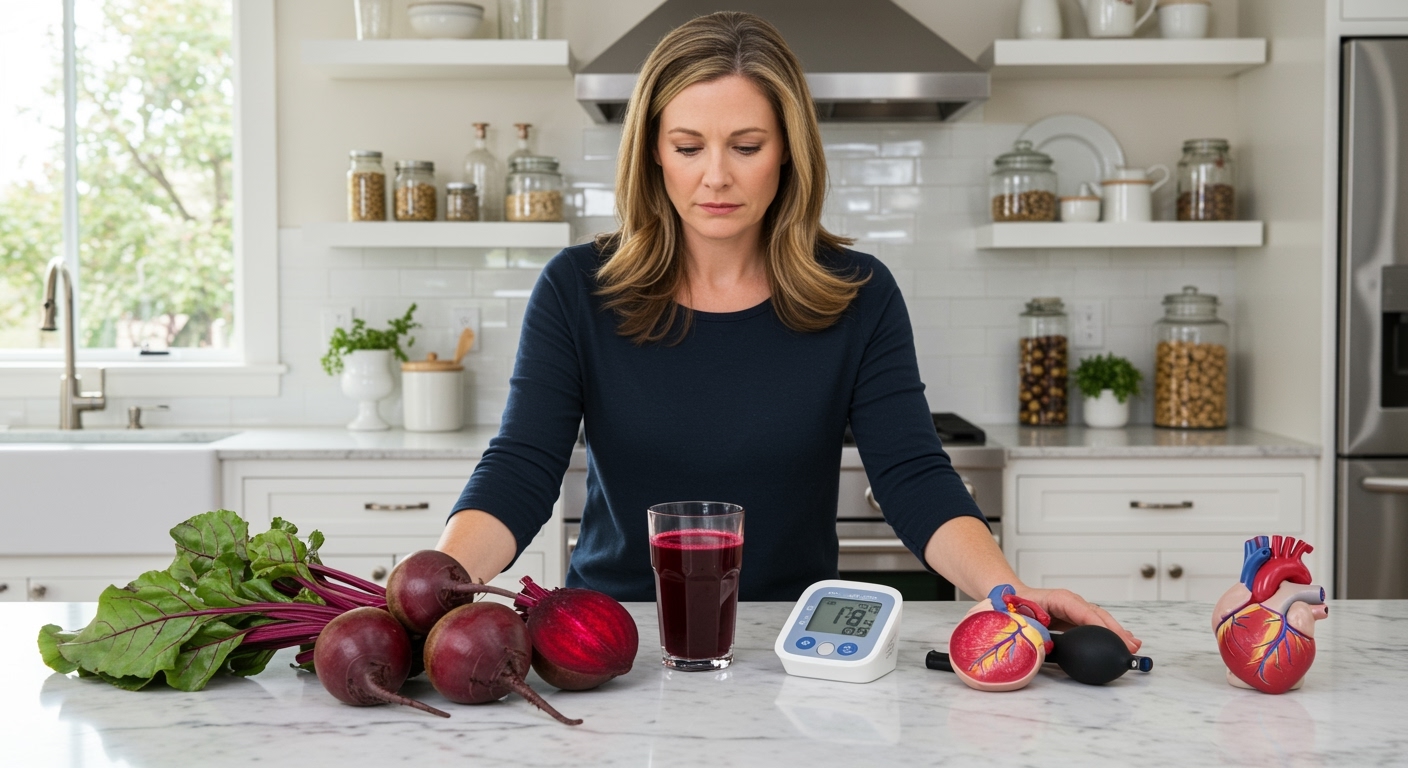
Beetroot: Is It Really Good For Low Blood Pressure? (Expert Answer)

Woman standing behind marble counter looking at fresh beetroots, beetroot juice, blood pressure monitor, and heart model in sunlit kitchen

✪ Key Takeaway: Beetroot lowers blood pressure, so it can worsen hypotension and cause dangerous symptoms. Introduction You have probably heard that beetroot is a superfood for heart health and blood pressure. But if you are dealing with low blood pressure, you might be wondering whether this popular vegetable will actually help you or make things worse. Hi, I am Abdur, your nutrition coach, and today I am going to explain exactly how beetroot affects low blood pressure and whether you should include it in your diet. How Does Beetroot Actually Affect Blood Pressure? Beetroot contains high amounts of dietary nitrates, which are natural compounds found in many vegetables. When you eat beetroot, your body converts these nitrates into nitric oxide through a series of chemical reactions. Nitric oxide is a powerful molecule that signals your blood vessels to relax and widen. This widening process, called vasodilation, reduces resistance in your arteries and allows blood to flow more easily. As a result, your blood pressure drops because your heart does not need to work as hard to pump blood through relaxed vessels. Multiple studies have confirmed that beetroot juice can lower both systolic and diastolic blood pressure in people with normal or high readings. This effect typically begins within a few hours of consumption and can last for several hours. ✪ Fact: Just 250 milliliters of beetroot juice can lower blood pressure by approximately 8 millimeters of mercury within hours. Why Would Beetroot Be Dangerous For Low Blood Pressure? If

Seasoning: Is It Always Bad For High Blood Pressure? (Expert Answer)

Woman sprinkling herbs over various seasonings including chili flakes, turmeric, garlic, rosemary, and spices on marble countertop.

✪ Key Takeaway: Most seasonings are safe for high blood pressure, and many herbs and spices actually help lower it naturally. Introduction You probably think all seasonings are dangerous when you have high blood pressure. This fear makes sense because doctors always warn about salt, and most people assume all seasonings contain high amounts of sodium that spike blood pressure immediately. Hi, I am Abdur, your nutrition coach, and today I am going to explain which seasonings are safe for high blood pressure and which ones actually help lower it naturally. What Makes Salt Different From Other Seasonings? Salt contains sodium chloride, which directly affects blood pressure by causing your body to retain water. When you consume too much sodium, your kidneys struggle to remove the excess, and this extra fluid increases the volume of blood flowing through your vessels. The increased blood volume puts more pressure on artery walls, which raises your blood pressure readings over time. Most herbs and spices contain minimal sodium naturally, making them completely different from table salt in their effect on blood pressure. Fresh garlic, turmeric, black pepper, cinnamon, ginger, and rosemary all add intense flavor without adding sodium to your meals. The confusion happens because many seasoning blends sold in stores contain added salt as their primary ingredient, which makes people think all seasonings are bad. When you check ingredient lists on seasoning bottles, you will often find salt listed first, meaning it makes up the largest portion of that product. ✪ Pro

Matcha: Can It Help With Diabetes? (Expert Answer)

Middle-aged woman standing behind marble counter with matcha powder, whisk, prepared drink, glucose meter, and pancreas model in bright kitchen

✪ Key Takeaway: Matcha may help with diabetes by improving insulin sensitivity and lowering blood sugar, but it works best as part of a complete diet. Introduction You walk past the coffee shop and see bright green drinks everywhere. People with diabetes often wonder if this trendy matcha powder can actually help control their blood sugar or if it is just another health fad that promises too much. Hi, I am Abdur, your nutrition coach, and today I am going to explain exactly how matcha affects diabetes, what the research really shows, and whether you should add it to your daily routine. What Makes Matcha Different From Regular Green Tea? Matcha comes from the same plant as regular green tea, but farmers grow it differently. They cover the tea plants with shade cloths about three weeks before harvest, which forces the plant to produce more chlorophyll and certain beneficial compounds. After harvesting, workers steam the leaves, remove the stems and veins, then grind the remaining leaf tissue into a fine powder. When you drink matcha, you consume the entire leaf rather than just the water that passed through tea leaves. This means you get much higher concentrations of beneficial compounds called catechins, especially one called epigallocatechin gallate or EGCG. Regular green tea might contain 25 to 86 milligrams of catechins per cup, while matcha can deliver 137 milligrams or more in the same amount. This concentration difference matters because catechins are the compounds researchers believe help with blood sugar control.

Ginger: Can It Help With Low Blood Pressure? (Expert Answer)

Woman holding ginger root at marble counter with blood pressure monitor, ginger tea, and medical tools in bright kitchen setting

✪ Key Takeaway: Ginger may lower blood pressure further, making it risky for hypotension patients who need stable readings. Introduction You feel dizzy when you stand up too quickly and wonder if ginger tea might help stabilize your blood pressure. Many people with low blood pressure search for natural remedies, hoping that popular kitchen spices like ginger will solve their problem without medication. Hi, I am Abdur, your nutrition coach and today I am going to explain how ginger actually affects your blood pressure and whether it helps or worsens hypotension. Does Ginger Lower Blood Pressure? Ginger contains bioactive compounds called gingerols and shogaols that have vasodilatory effects on your blood vessels. These compounds work by relaxing the smooth muscles in your arterial walls, which allows blood vessels to widen. When your blood vessels dilate, the pressure inside them naturally decreases because blood flows through a wider channel. Research published in multiple studies shows that ginger can reduce both systolic and diastolic blood pressure readings in people with hypertension. This blood pressure lowering effect happens because ginger acts as a natural calcium channel blocker, similar to some prescription medications. For someone already dealing with low blood pressure, this additional reduction can be problematic rather than beneficial. ✪ Fact: Ginger can lower blood pressure by up to 8 mmHg in people with elevated readings, according to clinical research. What Happens When You Take Ginger With Low Blood Pressure? Your body struggles to maintain adequate blood flow to vital organs when pressure

Jasmine Rice: Is It Even Safe For High Blood Pressure? (Expert Answer)

Woman standing behind marble counter with jasmine rice bowl, blood pressure monitor, heart model, and vegetables in bright kitchen

✪ Key Takeaway: Jasmine rice is safe for high blood pressure when eaten in controlled portions without added salt or high-sodium ingredients. Introduction You love jasmine rice for its fragrant aroma and fluffy texture. But now your doctor says you have high blood pressure and suddenly every food choice feels like walking through a minefield. Hi, I am Abdur, your nutrition coach and today I am going to explain exactly how jasmine rice affects your blood pressure and whether you need to remove it from your plate forever. Does Jasmine Rice Naturally Contain Sodium? Plain jasmine rice contains almost zero sodium in its natural form. One cup of cooked jasmine rice has only about 1 to 2 milligrams of sodium which is practically nothing. Your body needs less than 2300 milligrams of sodium per day and people with high blood pressure should aim for 1500 milligrams or less. The problem starts when you cook jasmine rice with salt or pair it with high-sodium dishes like soy sauce-based meals or processed curries. Most people do not realize that the rice itself is innocent but the cooking method and accompaniments turn it into a blood pressure nightmare. When you add just one teaspoon of salt while cooking rice you are adding about 2300 milligrams of sodium which maxes out your entire daily limit in one go. ✪ Pro Tip: Cook jasmine rice in plain water without any salt and use herbs like garlic, ginger, or bay leaves for flavor instead. How Do

Cornbread: Is It Always Bad For Diabetes? (Expert Answer)

Woman standing behind marble counter gesturing toward cornbread, glucose meter, corn kernels, and baking ingredients in bright kitchen

✪ Key Takeaway: Cornbread is not always bad for diabetes when you control portion size, choose whole grain versions, and pair it with protein or fiber. Introduction You smell fresh cornbread baking and your mouth waters, but then you remember your diabetes diagnosis. You might be asking this question because someone told you cornbread will spike your blood sugar, or maybe you saw it on a list of foods to avoid with diabetes. Hi, I am Abdur, your nutrition coach and today I am going to explain exactly how cornbread affects your blood sugar and show you when and how you can safely enjoy it. What Makes Traditional Cornbread Problematic For Blood Sugar? Traditional cornbread recipes use refined cornmeal, white flour, sugar, and very little fiber. This combination creates a food that breaks down quickly in your digestive system. When carbohydrates break down rapidly, they enter your bloodstream as glucose within minutes. Your pancreas must release insulin quickly to handle this sudden glucose surge. Most store-bought or restaurant cornbread contains added sugar ranging from 6 to 12 grams per serving. The glycemic index of traditional cornbread sits around 70 to 75, which falls into the high category. A typical serving of cornbread delivers 30 to 40 grams of total carbohydrates with minimal protein or healthy fats to slow absorption. ✪ Fact: Refined cornmeal loses about 80 percent of its original fiber content during processing, which explains why it digests so quickly. Does The Type Of Cornmeal Change The Blood Sugar