Berberine: Is It Really Good For Hypothyroidism? (Expert Answer)

Woman holding supplement bottle and water glass while looking at thyroid model and berberine capsules on marble countertop

✪ Key Takeaway: Berberine may help with weight loss and insulin resistance in hypothyroidism but does not directly treat thyroid dysfunction itself. Introduction You have probably heard about berberine being called nature’s metformin or a miracle supplement for weight loss. If you have hypothyroidism, you might be wondering whether this yellow compound can help you manage your stubborn weight gain, fatigue, and metabolic problems that come with an underactive thyroid. Hi, I am Abdur, your nutrition coach and today I am going to explain the real connection between berberine and hypothyroidism, what science actually says, and whether this supplement deserves a place in your thyroid management plan. What Exactly Is Berberine And How Does It Work? Berberine is a natural compound extracted from several plants including goldenseal, barberry, and Oregon grape. This bright yellow alkaloid has been used in traditional Chinese medicine and Ayurvedic practices for thousands of years to treat various digestive and metabolic conditions. When you take berberine, it gets absorbed into your bloodstream and travels to your cells where it activates an enzyme called AMPK, which stands for adenosine monophosphate-activated protein kinase. Think of AMPK as your body’s master metabolic switch that regulates how your cells produce and use energy. By activating this enzyme, berberine helps improve insulin sensitivity, reduce blood sugar levels, lower cholesterol, and promote fat burning in ways similar to prescription diabetes medications. This metabolic boost is why many people with weight management struggles turn to berberine as a natural alternative. ✪ Fact: Berberine


Raisins: Can They Help With Low Blood Pressure? (Expert Answer)

Middle-aged woman reaching toward bowl of raisins and blood pressure monitor on white marble countertop in bright modern kitchen

✪ Key Takeaway: Raisins do not help with low blood pressure because they contain potassium that can lower blood pressure further. Introduction You grab a handful of raisins thinking they might give you a quick energy boost and help with your dizziness. You might be asking this question because you have heard that raisins are good for heart health, and you wonder if they can help stabilize your low blood pressure symptoms like fatigue and lightheadedness. Hi, I am Abdur, your nutrition coach, and today I am going to explain whether raisins can actually help with low blood pressure or if they might make your condition worse. What Do Raisins Actually Do to Blood Pressure? Raisins have been studied extensively for their effects on blood pressure, but the research focuses almost entirely on people with high blood pressure. A groundbreaking study presented at the American College of Cardiology conference showed that eating raisins three times daily significantly reduced blood pressure in people with mild hypertension. The participants who ate raisins experienced drops in both systolic and diastolic blood pressure compared to those who ate other processed snacks. This happens because raisins are packed with potassium, a mineral that helps your blood vessels relax and reduces the tension in your arterial walls. When you have low blood pressure, your body already struggles to maintain adequate pressure to push blood through your circulatory system. Adding more potassium through raisins can make your blood vessels relax even more, which could drop your blood

Palo Azul: Can It Help With High Blood Pressure? (Expert Answer)

Middle-aged woman holding dried bark pieces while standing behind marble counter with blue tea, blood pressure monitor, and herbs

✪ Key Takeaway: Palo azul shows promising antioxidant properties but lacks direct scientific evidence specifically proving it lowers blood pressure in humans. Introduction You have probably heard someone mention palo azul as a natural remedy for high blood pressure. Maybe you are tired of taking multiple medications or you simply want to explore natural alternatives that might support your cardiovascular health. Hi, I am Abdur, your nutrition coach, and today I am going to explain what palo azul really is, what science says about its effects on blood pressure, and whether it deserves a place in your health routine. What Exactly Is Palo Azul? Palo azul comes from a tree called Eysenhardtia polystachya that grows in Mexico and parts of Central America. The name literally translates to blue stick because when you steep the wood in hot water, it produces a tea with a distinctive blue fluorescence. Traditional healers have used this plant for centuries to treat kidney problems, urinary tract infections, and various inflammatory conditions. The wood contains several bioactive compounds including flavonoids, isoflavones, and coatline, which give it antioxidant and anti-inflammatory properties. People typically prepare it by boiling wood chips in water for 30 minutes to an hour until the liquid turns a pale blue color. The tea has a mild, slightly woody taste that most people find pleasant and easy to drink throughout the day. ✪ Fact: Palo azul tea contains zero caffeine, making it suitable for consumption at any time without affecting sleep quality. Does Science

Pimento Cheese: Is It Always Bad For Diabetes? (Expert Answer)

Woman holding measuring cup over pimento cheese bowl with glucose meter, cheese, peppers, and crackers on marble countertop

✪ Key Takeaway: Pimento cheese is not always bad for diabetes when consumed in controlled portions and made with quality ingredients. Introduction You probably heard someone say that pimento cheese will destroy your blood sugar control. You might be asking this question because you love this Southern classic but worry about your diabetes management. Hi, I am Abdur, your nutrition coach and today I am going to explain exactly how pimento cheese affects your blood sugar and when it can actually fit into your diabetes meal plan. What Makes Pimento Cheese Different From Regular Cheese? Pimento cheese is not just plain cheese sitting on your plate. It contains shredded cheddar cheese mixed with mayonnaise, cream cheese, and chopped pimento peppers. The mayonnaise and cream cheese add extra calories and fat that plain cheese does not have. Some recipes include sugar, which directly impacts your blood glucose levels. The carbohydrate content varies wildly depending on who makes it and what ingredients they use. Store-bought versions often contain hidden sugars and preservatives that homemade versions do not have. Understanding these differences helps you make smarter choices about which version to eat. ✪ Pro Tip: Always check the ingredient list on store-bought pimento cheese to spot added sugars that can spike your blood glucose unexpectedly. How Does Fat Content Affect Blood Sugar Response? Fat does not raise your blood sugar directly like carbohydrates do. Pimento cheese contains high amounts of fat from cheese, mayonnaise, and cream cheese. This fat actually slows down digestion

Chicken Liver: Is It Really Good For High Blood Pressure? (Expert Answer)

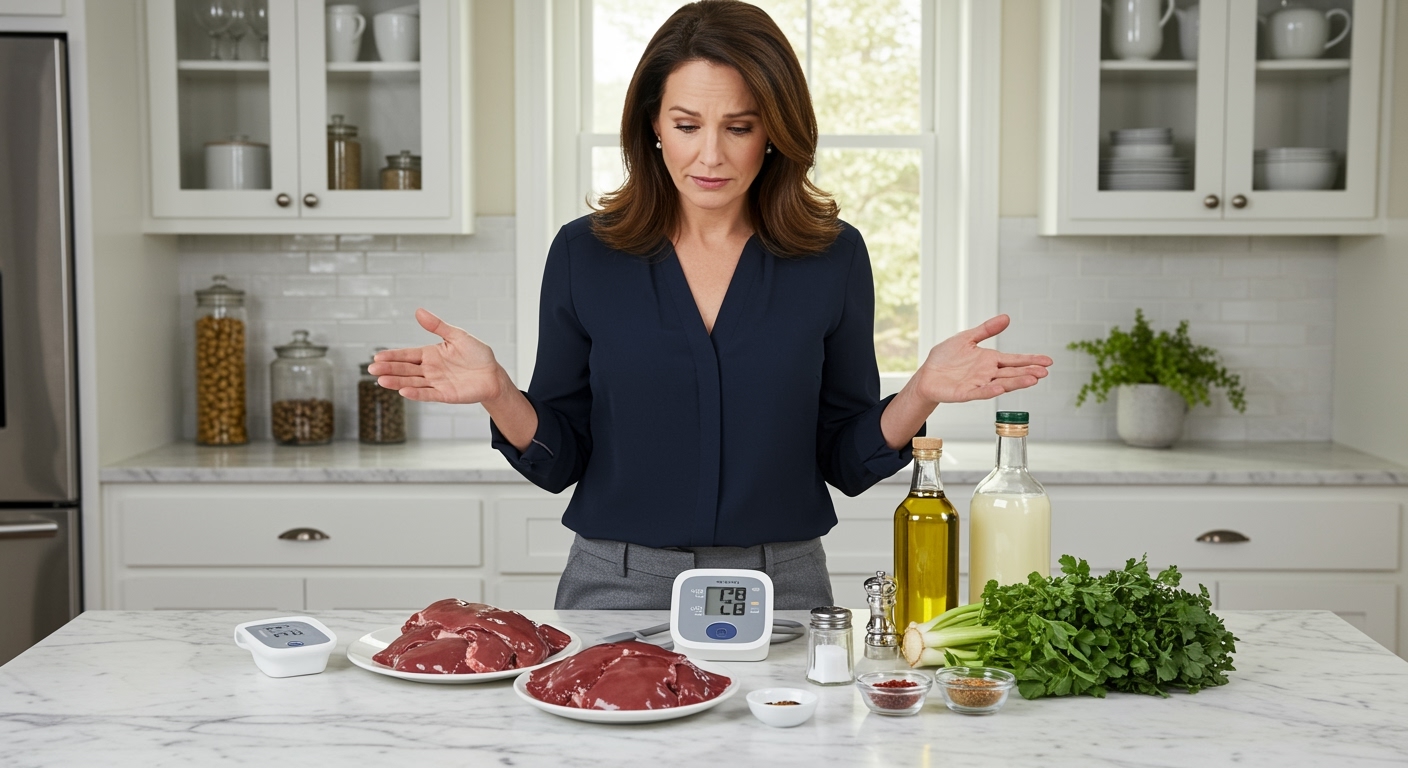
Middle-aged woman standing behind marble countertop with chicken liver, blood pressure monitor, and fresh vegetables in bright kitchen

✪ Key Takeaway: Chicken liver can be part of a high blood pressure diet when eaten occasionally in small portions, but its high cholesterol and sodium content make it risky for daily consumption. Introduction You walk into the grocery store and see chicken liver on sale. Your doctor told you to eat more nutrient-dense foods to help manage your high blood pressure, and you have heard that organ meats are nutritional powerhouses. Hi, I am Abdur, your nutrition coach, and today I am going to explain whether chicken liver truly supports healthy blood pressure or if it creates more problems than it solves. What Makes Chicken Liver Nutritionally Unique? Chicken liver packs an incredible amount of nutrients into a small serving. A 100-gram serving contains about 172 calories with 25 grams of protein and just 7 grams of fat. The vitamin content is where chicken liver really shines with massive amounts of vitamin A, vitamin B12, folate, and riboflavin. It also provides significant amounts of iron, zinc, selenium, and copper that your body needs for various functions. The bioavailability of these nutrients means your body can absorb and use them more efficiently compared to plant-based sources. However, this nutritional density comes with a catch that people with high blood pressure need to understand. One serving of chicken liver contains about 345 milligrams of cholesterol, which is more than the entire daily recommended limit. ✪ Fact: Chicken liver contains more vitamin A than almost any other food, providing over 300 percent

Spinach Dip: Is It Really Good For Diabetes? (Expert Answer)

Woman standing behind marble countertop looking at spinach dip bowl and glucose meter with cream cheese and fresh spinach visible

✪ Key Takeaway: Most spinach dips are not good for diabetes because they contain high amounts of saturated fat, sodium, and hidden carbs from dairy and additives. Introduction You see that bowl of creamy spinach dip at the party and think it must be healthy because spinach is a superfood. You might be asking this question because you want to enjoy social gatherings without spiking your blood sugar or because someone told you that anything with vegetables is automatically diabetes-friendly. Hi, I am Abdur, your nutrition coach and today I am going to explain why spinach dip is not the diabetes-friendly choice you hoped for and what you need to know before taking that next bite. What Actually Goes Into Spinach Dip? Traditional spinach dip recipes contain cream cheese, sour cream, mayonnaise, and sometimes even additional cheese like parmesan or mozzarella. These ingredients create a high-fat and high-calorie mixture that has very little resemblance to the nutritional profile of plain spinach. A typical serving of spinach dip contains around 150 to 200 calories with 12 to 15 grams of fat per quarter cup. Most of this fat comes from saturated fat, which can worsen insulin resistance over time when consumed regularly. The sodium content often exceeds 300 milligrams per serving, contributing to blood pressure issues that commonly accompany diabetes. Many store-bought versions also include added sugars, preservatives, and flavor enhancers that further compromise their nutritional value. The actual spinach content in most dips is surprisingly low, often making up less

Palo Azul: Is It Even Important For Diabetes? (Expert Answer)

Woman holding dried palo azul wood pieces while standing behind marble counter with herbal tea, glucose meter, and natural remedies

✪ Key Takeaway: Palo azul shows some promise in animal studies but lacks human clinical trials to prove its effectiveness for diabetes management. Introduction You walk into a health store and someone tells you about a magical blue tea that can fix your blood sugar problems. You might be asking this question because you are tired of medications, frustrated with side effects, or simply looking for natural alternatives that actually work for diabetes management. Hi, I am Abdur, your nutrition coach and today I am going to explain what palo azul really does for diabetes and whether it deserves a place in your health routine. What Exactly Is Palo Azul? Palo azul comes from a tree called Eysenhardtia polystachya that grows in Mexico and parts of Central America. People have used this blue wood for centuries to make tea that supposedly helps with kidney problems and blood sugar issues. When you boil the wood chips in water, the liquid turns a beautiful blue color because of compounds called flavonoids. These flavonoids are plant chemicals that have antioxidant properties, meaning they fight damage in your cells caused by unstable molecules called free radicals. The tea tastes mild and slightly woody, which makes it easy to drink without adding sweeteners. Traditional healers in Mexico have passed down recipes for palo azul tea through generations, claiming it cleanses the body and balances blood sugar. ✪ Fact: Palo azul contains over 20 different flavonoid compounds that give it both color and potential health properties.

Clam Chowder: Is It Always Bad For Diabetes? (Expert Answer)

Woman holding spoon over clam chowder bowl on marble counter with fresh clams, vegetables, cream, and glucose meter visible

✪ Key Takeaway: Clam chowder is not always bad for diabetes if you control portions, choose lighter versions, and balance it with low-carb foods. Introduction You walk into your favorite restaurant and see clam chowder on the menu. Your mind immediately goes to your blood sugar levels and you wonder if this creamy comfort food will send your glucose soaring. Hi, I am Abdur, your nutrition coach and today I am going to explain whether clam chowder is truly off-limits for people with diabetes or if there are ways to enjoy it safely. What Makes Clam Chowder A Concern For Blood Sugar? Clam chowder typically contains potatoes, which are high in starch and can raise blood sugar quickly. The cream or milk base adds saturated fat, which does not directly spike glucose but can affect insulin sensitivity over time. Most restaurant versions include flour as a thickening agent, adding more refined carbohydrates to the mix. A typical serving of New England clam chowder contains around 15-20 grams of carbohydrates per cup. The glycemic index of traditional clam chowder ranges from 60 to 70, which falls into the medium to high category. ✪ Fact: Manhattan clam chowder has fewer carbs than New England style because it uses tomato base instead of cream. Does The Type Of Clam Chowder Matter? New England clam chowder is the creamiest version and typically contains the most calories and saturated fat. Manhattan clam chowder uses a tomato-based broth, which significantly reduces the fat content and slightly

Cornbread Mix: Is It That Bad For Diabetes? (Expert Answer)

Middle-aged woman standing behind marble counter with cornbread mix box, cornmeal bowl, sugar, oil, glucose meter, and cornbread slice.

✪ Key Takeaway: Cornbread mix is problematic for diabetes due to added sugars, refined flour, and high glycemic load that spike blood sugar rapidly. Introduction You grab a box of cornbread mix from the shelf because dinner needs a quick side dish. But then you pause and wonder if this convenient option will send your blood sugar through the roof. Hi, I’m Abdur, your nutrition coach and today I’m going to explain exactly why cornbread mix poses specific challenges for diabetes management and what you can do about it. What Makes Cornbread Mix Different From Plain Cornmeal? Cornbread mix is not just cornmeal in a convenient package. Most commercial mixes contain refined wheat flour as the primary ingredient, not cornmeal. This wheat flour has been stripped of fiber and nutrients during processing. The second major ingredient is typically added sugar, which can range from 4 to 12 grams per serving. Many mixes also include partially hydrogenated oils or other processed fats for shelf stability. Plain cornmeal contains about 2 grams of fiber per quarter cup, but the mix version often has less than 1 gram because of the refined flour dilution. This combination of refined carbohydrates, added sugars, and minimal fiber creates a perfect storm for blood sugar spikes. ✪ Fact: A typical cornbread mix serving contains 30-35 grams of carbohydrates with less than 1 gram of fiber, giving it a very high net carb count. How Does Cornbread Mix Affect Your Blood Sugar? The glycemic index of cornbread made

Tamales: Is It That Bad For Diabetes? (Expert Answer)

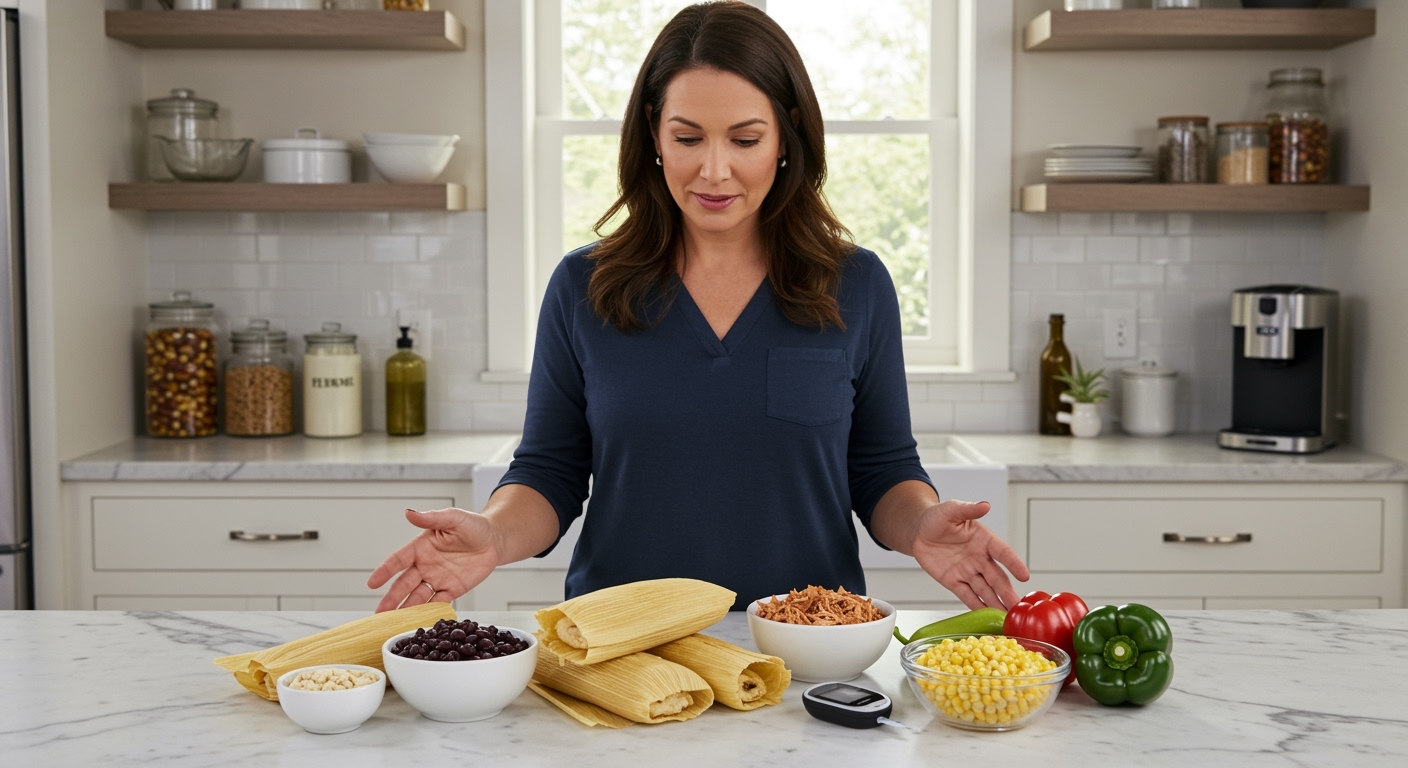
Woman standing behind marble counter examining unwrapped tamales, beans, chicken, vegetables, and glucose meter in bright modern kitchen

✪ Key Takeaway: Tamales can raise blood sugar quickly due to masa, but portion control and smart ingredient swaps make them diabetes-friendly. Introduction You smell those steaming tamales at a family gathering and your mouth waters instantly. But then you remember your diabetes diagnosis and wonder if one bite will send your blood sugar through the roof. Hi, I’m Abdur, your nutrition coach and today I’m going to explain exactly how tamales affect your blood sugar and show you practical ways to enjoy them without compromising your health. What Makes Traditional Tamales a Blood Sugar Challenge? Traditional tamales pack a hefty carbohydrate load that comes primarily from masa, which is corn dough mixed with lard. One average tamale contains about 20 to 25 grams of carbohydrates, and most people eat two or three in one sitting. The masa base consists of ground corn that has been processed, removing most of its natural fiber content. When you eat processed corn without adequate fiber, your body breaks it down into glucose rapidly, causing blood sugar spikes. The lard added to masa increases the calorie density but does slow down digestion slightly, which creates a moderate glycemic response rather than an extreme spike. Research shows that corn-based foods have a glycemic index ranging from 52 to 69, placing them in the medium category. The problem intensifies when tamales include sweet fillings like pineapple, raisins, or sweetened beans that add extra sugar on top of the carb-heavy masa. ✪ Fact: The glycemic index of