Ashwagandha: Is It Even Safe For Low Blood Pressure? (Expert Answer)

Middle-aged woman in navy blouse standing behind marble counter with ashwagandha root, blood pressure monitor, and supplements

✪ Key Takeaway: Ashwagandha can lower blood pressure further, making it risky for hypotension without medical supervision. Introduction You walk into a health store and see ashwagandha everywhere with promises of stress relief and better health. But when your blood pressure already runs low, that popular supplement suddenly becomes a question mark instead of a solution. Hi, I am Abdur, your nutrition coach, and today I am going to explain whether ashwagandha is safe for people with low blood pressure and what you need to know before taking it. What Does Ashwagandha Actually Do To Your Blood Pressure? Ashwagandha is an adaptogenic herb that helps your body manage stress by regulating cortisol levels. When cortisol drops, your blood vessels relax and your blood pressure naturally decreases as a result. Research shows that ashwagandha can reduce both systolic and diastolic blood pressure readings in people with normal or high blood pressure. This effect happens because the herb influences your autonomic nervous system, which controls involuntary functions like heart rate and blood vessel constriction. For someone with hypertension, this blood pressure reduction is beneficial and often desired. But for someone with hypotension, this same mechanism can push already low numbers even lower. The problem is that ashwagandha does not know your baseline blood pressure before it starts working. ✪ Fact: Studies show ashwagandha can reduce blood pressure by 5-10 mmHg in people with elevated readings. Why Does Low Blood Pressure Make Ashwagandha Risky? Low blood pressure, or hypotension, means your blood pressure


Apple Juice: Can It Help With Low Blood Pressure? (Expert Answer)

Middle-aged woman standing behind marble counter reaching toward glass of apple juice with blood pressure monitor and fresh apples visible

✪ Key Takeaway: Apple juice typically does not help with low blood pressure and may actually worsen symptoms due to its lack of sodium and potential to cause blood sugar fluctuations. Introduction You feel dizzy when you stand up too quickly and someone tells you to drink apple juice for energy. You might be wondering if this popular fruit juice can actually help raise your blood pressure numbers and make you feel better throughout the day. Hi, I am Abdur, your nutrition coach and today I am going to explain whether apple juice truly helps with low blood pressure and what you should drink instead for real results. What Happens to Your Blood Pressure When You Drink Apple Juice? Apple juice contains mostly water and natural sugars with very little sodium or other minerals that affect blood pressure directly. When you drink it, the sugar content gets absorbed quickly into your bloodstream, causing a rapid spike in blood glucose levels. Your body responds by releasing insulin to manage this sugar surge, which can sometimes lead to a temporary drop in blood pressure. The fluid volume from the juice does increase your total blood volume slightly, but this effect is minimal and short-lived. Research shows that apple juice lacks the electrolytes like sodium and potassium in proper ratios that are needed to maintain healthy blood pressure. In fact, the absence of sodium means apple juice does nothing to address one of the main dietary approaches for raising low blood pressure. ✪

Apples: Are They Really Good For Low Blood Pressure? (Expert Answer)

Woman holding red apple while standing behind marble countertop with blood pressure monitor, salt bowl, and apple slices in bright kitchen.

✪ Key Takeaway: Apples do not significantly raise blood pressure and may actually help lower it, making them unsuitable for managing low blood pressure. Introduction You have been told that an apple a day keeps the doctor away, but what if your problem is low blood pressure instead of high? Many people with hypotension wonder if eating apples will help raise their blood pressure to healthier levels, or if this popular fruit might make their condition worse. Hi, I am Abdur, your nutrition coach, and today I am going to explain the real relationship between apples and low blood pressure, backed by science and practical experience. What Actually Happens When You Eat Apples? When you bite into an apple, your body receives a combination of natural sugars, fiber, water, and various nutrients that work together in specific ways. The fiber content in apples, particularly pectin, slows down the absorption of sugars into your bloodstream, preventing rapid spikes in blood glucose. This gradual sugar release means you will not experience the quick energy boost that might temporarily affect your blood pressure levels. Apples contain about 95 milligrams of potassium per medium fruit, which is a mineral known for helping blood vessels relax and widen. When blood vessels relax, blood flows more easily through them, which typically results in lower blood pressure rather than higher readings. The polyphenols in apples, especially quercetin, have been studied for their ability to improve blood vessel function and reduce arterial stiffness. Research published in scientific journals

Apple Cider Vinegar: Is It Even Safe For Low Blood Pressure? (Expert Answer)

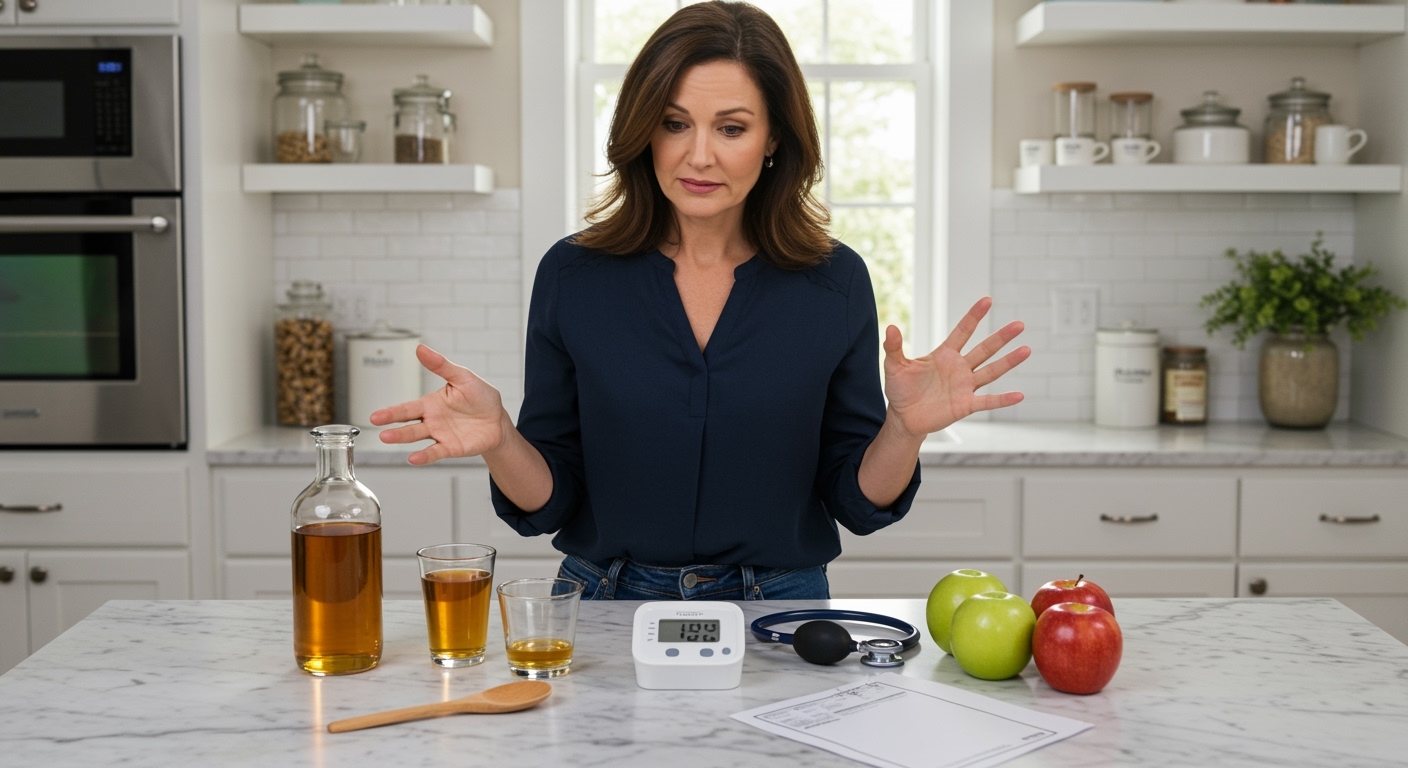
Woman standing behind marble counter with apple cider vinegar bottle, blood pressure monitor, and health items in bright kitchen

✪ Key Takeaway: Apple cider vinegar can lower blood pressure further, making it risky for people with already low readings. Introduction You have seen apple cider vinegar everywhere, from health blogs to social media posts claiming it fixes everything. But if you already struggle with low blood pressure, you might be wondering whether this trendy remedy could actually make things worse instead of better. Hi, I am Abdur, your nutrition coach, and today I am going to explain whether apple cider vinegar is safe for people with low blood pressure and what you need to know before taking it. Does Apple Cider Vinegar Actually Lower Blood Pressure? Apple cider vinegar has been studied for its potential effects on blood pressure, and the research shows some interesting patterns. A study published in 2016 found that acetic acid, the main component in vinegar, helped reduce blood pressure in animal models by affecting the renin-angiotensin system, which regulates blood pressure in your body. Human studies are limited, but a small trial showed that people who consumed apple cider vinegar daily experienced modest reductions in both systolic and diastolic blood pressure readings. The mechanism involves acetic acid potentially improving blood vessel function and reducing the stiffness of arterial walls. This means if your blood pressure is already sitting below normal levels, adding apple cider vinegar could push those numbers even lower. The problem is that most people taking apple cider vinegar do not monitor their blood pressure regularly, so they miss these dangerous drops.

Bitter Gourd: Is It Really Good For Low Blood Pressure? (Expert Answer)

Middle-aged woman standing behind marble counter with bitter gourds, blood pressure monitor, and juice in bright kitchen

✪ Key Takeaway: Bitter gourd lowers blood pressure naturally, making it dangerous for people with existing low blood pressure conditions. Introduction You have heard that bitter gourd is a superfood that fixes almost every health problem. But if you already struggle with low blood pressure, you might be wondering whether this vegetable will help you or make things worse. Hi, I am Abdur, your nutrition coach and today I am going to explain exactly how bitter gourd affects your blood pressure and whether you should avoid it or embrace it based on your current health status. What Does Bitter Gourd Actually Do To Your Blood Pressure? Bitter gourd contains bioactive compounds that actively lower blood pressure in your body. Research shows that these compounds work by relaxing your blood vessels and improving blood flow throughout your circulatory system. When your blood vessels relax, the pressure inside them naturally decreases because blood flows more easily without resistance. A study published in the European Journal of Nutrition and Food Safety found that bitter gourd consumption significantly reduced systolic and diastolic blood pressure in participants over several weeks. This effect happens because bitter gourd contains potassium, which helps balance sodium levels in your body and prevents fluid retention that raises blood pressure. The vegetable also contains compounds called charantin and vicine that mimic insulin action, which indirectly affects blood pressure regulation through improved metabolic function. So if you already have low blood pressure, eating bitter gourd regularly could push your levels even lower

Amla Juice: Is It Really Good For Low Blood Pressure? (Expert Answer)

Woman holding glass of green amla juice with fresh gooseberries and blood pressure monitor on white marble countertop in bright kitchen

✪ Key Takeaway: Amla juice lowers blood pressure, making it risky for people with hypotension who need to avoid further drops. Introduction You have heard that amla juice is a miracle drink for health. Everyone talks about its benefits, but nobody warns you about what happens when your blood pressure is already sitting on the lower side. You are probably asking this question because you want to know if amla juice will help or hurt your low blood pressure condition, and I am here to give you the honest answer that most people will not tell you. Hi, I am Abdur, your nutrition coach, and today I am going to explain exactly how amla juice affects your blood pressure and whether it is a smart choice for your specific situation. What Does Amla Juice Actually Do To Your Blood Pressure? Amla juice has a blood pressure lowering effect that works through multiple pathways in your body. Research shows that amla contains compounds called polyphenols and vitamin C that relax your blood vessels. When your blood vessels relax, they widen, which means blood flows through them with less resistance. This widening effect is called vasodilation, and it naturally brings your blood pressure numbers down. Studies have documented that people who consume amla regularly see reductions in both systolic and diastolic blood pressure readings. The problem is that this benefit becomes a serious risk when your blood pressure is already low. If your normal reading is around 90/60 mmHg or lower, drinking

Amla: Can It Help With Low Blood Pressure? (Expert Answer)

Middle-aged woman in navy shirt examining fresh amla fruits while standing at white marble counter with blood pressure monitor and bowl

✪ Key Takeaway: Amla can lower blood pressure, so it may worsen hypotension rather than help it. Introduction You have heard that amla is a superfruit with amazing health benefits. But when you struggle with low blood pressure, you need to know if this fruit will help or harm your condition. Hi, I am Abdur, your nutrition coach, and today I am going to explain exactly how amla affects blood pressure and whether you should include it in your diet when dealing with hypotension. What Does Amla Actually Do to Your Blood Pressure? Amla, also known as Indian gooseberry, has been studied for its cardiovascular effects. Research shows that amla can reduce blood pressure in people with hypertension. The fruit contains high amounts of vitamin C, polyphenols, and other bioactive compounds that relax blood vessels. When your blood vessels relax, they widen, which allows blood to flow more easily and reduces pressure on arterial walls. This mechanism is beneficial for people with high blood pressure but creates a problem for those already dealing with low blood pressure. If your blood pressure is already below normal, further reduction can lead to dizziness, fatigue, and fainting episodes. ✪ Fact: Studies show amla can reduce systolic blood pressure by 5-10 mmHg in hypertensive patients within 12 weeks. Why Would Someone With Low Blood Pressure Consider Amla? Many people hear about amla as a general health tonic without understanding its specific effects. Traditional medicine systems promote amla for overall vitality, immunity, and energy. These

Almond Milk: Is It Really Good For Low Blood Pressure? (Expert Answer)

Middle-aged woman standing behind marble countertop examining blood pressure monitor with almond milk, almonds, and heart model visible

✪ Key Takeaway: Almond milk may slightly lower already normal blood pressure but does not effectively raise low blood pressure levels. Introduction You walk down the grocery aisle and see rows of almond milk cartons promising heart health benefits. You might be asking this question because you have low blood pressure and wonder if switching to almond milk will help or hurt your condition. Hi, I am Abdur, your nutrition coach and today I am going to explain exactly how almond milk affects low blood pressure and what you need to know before making it part of your daily routine. What Does Almond Milk Actually Do To Your Blood Pressure? Almond milk contains potassium and magnesium, two minerals that help relax blood vessel walls. When your blood vessels relax, blood flows more easily and pressure drops slightly. This effect benefits people with high blood pressure, but it works against those with low blood pressure. Research shows that regular consumption of almond milk can reduce systolic blood pressure by 2 to 3 mmHg in people with normal or elevated levels. If your blood pressure already sits below 90/60 mmHg, this additional drop can worsen symptoms like dizziness and fatigue. The unsaturated fats in almond milk also improve endothelial function, which means your blood vessels become more flexible and responsive. Better vessel flexibility sounds healthy, but for someone with hypotension, it can make blood pressure regulation even more challenging. ✪ Fact: One cup of unsweetened almond milk contains about 180 mg of

Almonds: Can They Help With Low Blood Pressure? (Expert Answer)

Woman holding blood pressure monitor while standing behind marble counter with bowl of almonds, heart model, and almond milk visible

✪ Key Takeaway: Almonds lower blood pressure, which makes them unhelpful and potentially problematic for people with hypotension. Introduction You grab a handful of almonds thinking they are the perfect healthy snack. But then you wonder if these crunchy nuts might actually make your low blood pressure worse instead of better. Hi, I am Abdur, your nutrition coach and today I am going to explain exactly how almonds affect blood pressure and whether they help or harm people dealing with hypotension. What Do Almonds Actually Do To Your Blood Pressure? Almonds contain magnesium, potassium, and healthy fats that work together to relax your blood vessels. When your blood vessels relax, the resistance to blood flow decreases throughout your circulatory system. This relaxation effect causes your blood pressure readings to drop lower than before. Multiple research studies show that regular almond consumption reduces both systolic and diastolic pressure in people with normal or high blood pressure. One study published in the Journal of the American Heart Association found that eating almonds daily lowered blood pressure by an average of 3 to 4 mmHg. This blood pressure lowering effect happens because almonds improve the function of your endothelium, which is the inner lining of your blood vessels. For someone with hypertension, this effect is beneficial and protective for heart health. ✪ Fact: Just one ounce of almonds provides about 76 milligrams of magnesium, which is roughly 20 percent of your daily requirement. Why Does This Create A Problem For Low Blood Pressure?

Alligator Pepper: Is It Even Safe For Low Blood Pressure? (Expert Answer)

Woman holding alligator pepper seed while standing behind marble counter with blood pressure monitor and health-related items

✪ Key Takeaway: Alligator pepper can lower blood pressure further, making it unsafe for people with hypotension or readings below 90/60 mmHg. Introduction You walk into a market and see alligator pepper being sold as a miracle spice for health. The seller tells you it helps with digestion, boosts immunity, and even improves circulation, but nobody mentions what happens when your blood pressure is already sitting below normal levels. Hi, I am Abdur, your nutrition coach, and today I am going to explain whether alligator pepper is safe for people with low blood pressure and what you need to know before adding it to your diet. What Exactly Is Alligator Pepper And Why Do People Use It? Alligator pepper is a spicy seed that comes from a plant called Aframomum melegueta, which grows in West African countries like Nigeria, Ghana, and Cameroon. People have used this reddish-brown seed for centuries in traditional medicine to treat stomach problems, infections, and even snake bites. The seeds contain bioactive compounds like gingerol, paradol, and shogaol, which give them their pungent taste and medicinal properties. In many African cultures, alligator pepper is also used in ceremonies and celebrations because people believe it brings good luck and wards off evil spirits. Beyond cultural uses, modern research shows that alligator pepper has antioxidant, anti-inflammatory, and antimicrobial effects that support overall health. However, the same compounds that make it beneficial can also cause problems for people with certain health conditions, especially those dealing with low blood pressure.