Black Coffee: Is It Even Safe For Low Blood Pressure? (Expert Answer)
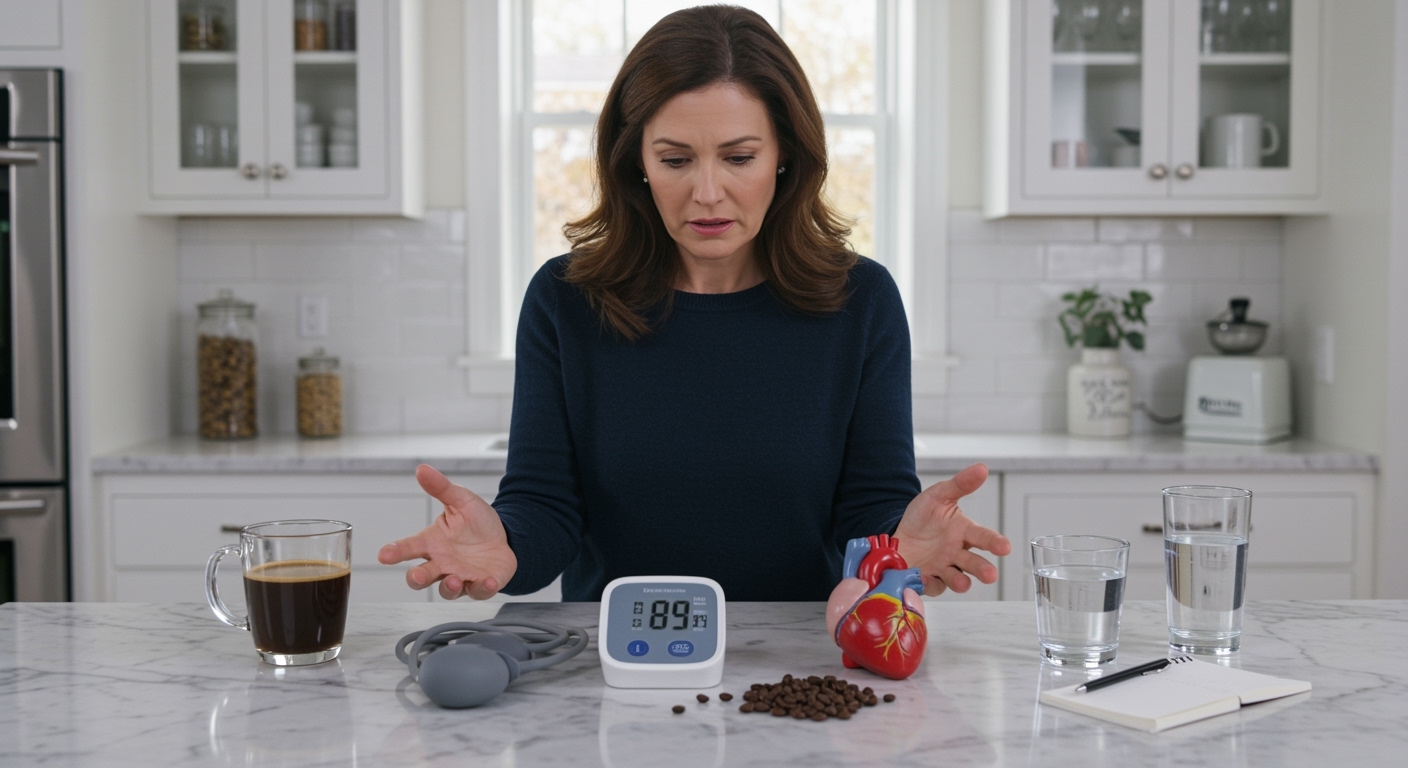
Woman standing behind marble counter looking at black coffee mug and blood pressure monitor with heart model and clock visible

✪ Key Takeaway: Black coffee can temporarily raise blood pressure by 3-15 mmHg, making it potentially helpful for low blood pressure when used strategically. Introduction You feel dizzy when you stand up too quickly, and someone tells you to drink black coffee. You might be asking this question because you have low blood pressure and wonder if that morning cup could help you feel better or make things worse. Hi, I am Abdur, your nutrition coach, and today I am going to explain exactly how black coffee affects your blood pressure, when it helps, when it does not, and what you need to know before making it part of your daily routine. How Does Black Coffee Actually Affect Your Blood Pressure? Black coffee contains caffeine, a natural stimulant that directly affects your cardiovascular system. When you drink coffee, caffeine blocks adenosine receptors in your body. Adenosine is a chemical that normally relaxes your blood vessels and makes you feel calm. When caffeine blocks these receptors, your blood vessels constrict or narrow, which increases resistance to blood flow. This constriction causes your heart to pump harder, and your blood pressure rises temporarily. Research shows that caffeine can raise systolic blood pressure by 3-15 mmHg and diastolic pressure by 4-13 mmHg within 30 minutes of consumption. For someone with low blood pressure, this temporary increase might actually bring readings closer to normal range and reduce symptoms like dizziness or fatigue. ✪ Fact: The blood pressure raising effect of caffeine typically peaks at


Cardamom: Is It Really Good For High Blood Pressure? (Expert Answer)

Woman holding green cardamom pods at marble counter with heart model, blood pressure monitor, and spices in bright kitchen

✪ Key Takeaway: Cardamom can lower blood pressure by 3-5 mmHg when consumed at 3 grams daily for 12 weeks through diuretic and antioxidant effects. Introduction Your doctor just told you that your blood pressure is creeping up and you need to make changes. You might be asking this question because you heard someone mention that cardamom helps with blood pressure, or maybe you saw it online and wondered if this common spice sitting in your kitchen could actually make a difference. Hi, I am Abdur, your nutrition coach and today I am going to explain exactly how cardamom affects blood pressure, what the science says, how much you need, and whether it is worth adding to your daily routine. What Does Research Say About Cardamom And Blood Pressure? A clinical trial published in the Indian Journal of Biochemistry and Biophysics studied 20 people with newly diagnosed stage 1 hypertension. Participants took 3 grams of cardamom powder daily for 12 weeks. Results showed a significant reduction in both systolic and diastolic blood pressure. Systolic pressure dropped from an average of 142 mmHg to 137 mmHg. Diastolic pressure decreased from 88 mmHg to 83 mmHg. Another study in the Journal of Ethnopharmacology confirmed that cardamom acts as a natural diuretic, meaning it helps your body eliminate excess sodium and water through urine. This mechanism directly reduces the volume of fluid in your blood vessels, which lowers the pressure against artery walls. ✪ Fact: Cardamom contains over 100 bioactive compounds, with 1,8-cineole

Broad Beans: Are They Really Good For Diabetes? (Expert Answer)

Middle-aged woman in navy blouse standing behind white marble counter arranging fresh broad beans, glucose meter, and bowls in bright kitchen

✪ Key Takeaway: Broad beans are excellent for diabetes because they have a low glycemic index, high fiber content, and protein that helps stabilize blood sugar levels. Introduction You walk through the produce section and spot those bright green pods sitting quietly in the corner. You might be asking this question because someone told you that legumes spike blood sugar, or maybe your doctor suggested adding more beans to your diet but you are not sure if broad beans count. Hi, I am Abdur, your nutrition coach and today I am going to explain exactly how broad beans affect your blood sugar and why they deserve a spot on your diabetes-friendly plate. What Makes Broad Beans Different From Other Legumes? Broad beans, also called fava beans, belong to the legume family but they have a unique nutritional profile that sets them apart. One cup of cooked broad beans contains about 13 grams of protein and 9 grams of fiber, which is higher than many other common beans. The fiber in broad beans is a mix of soluble and insoluble types, and the soluble fiber specifically helps slow down glucose absorption in your intestines. This means when you eat broad beans, the sugar from the carbohydrates enters your bloodstream gradually instead of causing a rapid spike. The glycemic index of cooked broad beans sits around 40, which falls into the low category and makes them a smart choice for blood sugar control. ✪ Fact: The glycemic index measures how quickly a

Chamomile Tea: Can It Help With Hypothyroidism? (Expert Answer)

Woman holding glass teacup with chamomile tea while touching fresh chamomile flower on marble counter with thyroid model and tea items

✪ Key Takeaway: Chamomile tea may protect against thyroid cancer but does not directly treat hypothyroidism or replace medication. Introduction You reach for that warm cup of chamomile tea every evening hoping it will calm your nerves and maybe help your sluggish thyroid. You might be wondering if this popular herbal drink can actually improve your hypothyroidism or if it is just another wellness trend without real benefits. Hi, I am Abdur, your nutrition coach and today I am going to explain exactly how chamomile tea affects your thyroid function and whether it deserves a place in your hypothyroidism management plan. What Does Research Say About Chamomile and Thyroid Health? A Greek study published in 2015 examined over 4,000 people and found something interesting about chamomile tea drinkers. People who consumed chamomile tea regularly showed a 70 percent lower risk of developing thyroid cancer and benign thyroid nodules. The protective effect became stronger with longer duration and higher frequency of chamomile consumption over many years. However, this study focused on thyroid cancer prevention, not on treating existing hypothyroidism or improving thyroid hormone levels. The researchers suggested that chamomile contains antioxidant compounds called apigenin and other flavonoids that may protect thyroid cells from damage. These compounds work by reducing oxidative stress and inflammation in thyroid tissue, which are factors linked to thyroid disease development. But protection against cancer does not mean chamomile can increase thyroid hormone production or reverse an underactive thyroid condition. ✪ Fact: The Greek study showed chamomile tea

Garlic: Can It Help With Low Blood Pressure? (Expert Answer)

Woman holding garlic bulb and blood pressure cuff standing behind marble counter with garlic cloves and monitor in bright kitchen

✪ Key Takeaway: Garlic can lower blood pressure further, making it risky for people with hypotension who should use it cautiously. Introduction You have heard that garlic is good for your heart, but what if your blood pressure is already too low? You might be asking this question because you love cooking with garlic, or someone told you about its health benefits, but you worry it could make your hypotension worse. Hi, I am Abdur, your nutrition coach and today I am going to explain how garlic affects low blood pressure and whether you should avoid it or use it carefully. What Does Garlic Actually Do to Your Blood Pressure? Garlic contains a compound called allicin that forms when you crush or chop fresh cloves. This allicin helps your blood vessels relax and widen, which is called vasodilation. When your blood vessels widen, the pressure inside them naturally decreases. Research shows that garlic can lower systolic blood pressure by about 8-10 mmHg in people with high blood pressure. But here is the problem: if your blood pressure is already low, this relaxing effect could push it even lower. Your body needs a certain level of pressure to push blood to your brain, heart, and other vital organs. When pressure drops too much, you might feel dizzy, weak, or even faint. ✪ Fact: Allicin breaks down quickly after cutting garlic, so letting it sit for 10 minutes before cooking preserves more of its active compounds. Is Cooked Garlic Safer Than Raw

Raw Onion: Can It Help With High Blood Pressure? (Expert Answer)

Woman standing behind marble counter with raw onions, blood pressure monitor, heart model, and water glass in bright kitchen

✪ Key Takeaway: Raw onion can help lower blood pressure through quercetin and sulfur compounds that relax blood vessels naturally. Introduction Your doctor tells you to watch your blood pressure, and suddenly every food choice feels like a medical decision. You might be asking this question because you heard someone mention that raw onions can help with high blood pressure, or maybe you noticed traditional remedies always include onions for heart health. Hi, I am Abdur, your nutrition coach, and today I am going to explain exactly how raw onions affect your blood pressure, what compounds make them work, and whether you should add them to your daily routine. What Makes Raw Onion Different From Cooked Onion? Raw onions contain higher levels of quercetin, a powerful flavonoid that directly impacts your cardiovascular system. When you cook onions, heat breaks down many of these heat-sensitive compounds and reduces their effectiveness. Raw onions also preserve sulfur-containing compounds that get destroyed during cooking processes. These sulfur compounds help your body produce nitric oxide, a molecule that relaxes blood vessel walls. When blood vessels relax, blood flows more easily and pressure against artery walls decreases naturally. Research shows that quercetin levels in raw onions can be up to 25 percent higher than in cooked versions. ✪ Fact: Red and yellow onions contain more quercetin than white onions, making them better choices for blood pressure management. How Does Quercetin Lower Blood Pressure? Quercetin works as a natural ACE inhibitor, blocking the enzyme that causes blood

Persimmon: Is It Really Good For Diabetes? (Expert Answer)

Middle-aged woman in navy sweater holding whole persimmon while standing behind marble counter with sliced persimmons and glucose meter

✪ Key Takeaway: Persimmon can be good for diabetes when eaten in small portions, but its high sugar content requires careful timing and monitoring. Introduction You walk through the produce section and spot those beautiful orange persimmons that look almost too perfect to be real. Your doctor told you to eat more fruit, but you also know that managing blood sugar means being careful about which fruits you choose and how much you eat. Hi, I am Abdur, your nutrition coach and today I am going to explain exactly how persimmon affects your blood sugar, when you should eat it, and how much is safe for your diabetes management. What Makes Persimmon Different From Other Fruits? Persimmon stands out because it contains significantly more natural sugars than most fruits you typically eat. One medium persimmon delivers about 21 grams of sugar, which is roughly the same amount you would find in a large banana or a cup of grapes. The glycemic index of persimmon ranges between 50 and 70 depending on ripeness, placing it in the medium category that requires attention from diabetics. What makes this fruit unique is its incredibly high concentration of soluble fiber, particularly pectin, which slows down sugar absorption in your digestive system. Research published in the Journal of Nutritional Science and Vitaminology shows that persimmon contains powerful antioxidants called proanthocyanidins that may improve insulin sensitivity over time. The fruit also provides significant amounts of vitamin A, vitamin C, and manganese that support overall metabolic health.

Chai Tea: Is It Really Good For Hypothyroidism? (Expert Answer)

Woman standing behind marble counter examining chai tea, spices, and thyroid model in bright modern kitchen with natural lighting

✪ Key Takeaway: Chai tea can be beneficial for hypothyroidism when consumed moderately, but excessive intake may interfere with thyroid medication absorption. Introduction You grab your favorite chai tea every morning without thinking twice about it. But lately you have been wondering if this spiced beverage is helping or hurting your thyroid condition. Hi, I am Abdur, your nutrition coach and today I am going to explain the real relationship between chai tea and hypothyroidism so you can make informed decisions about your daily beverage choices. What Makes Chai Tea Different From Regular Tea? Chai tea is not just black tea with milk and sugar. It contains a powerful blend of spices including cinnamon, cardamom, ginger, cloves, and black pepper. Each of these spices carries bioactive compounds that interact with your body in specific ways. The black tea base provides caffeine and polyphenols that affect metabolism. When you have hypothyroidism, your thyroid gland produces insufficient thyroid hormones, slowing down your metabolism. The combination of tea and spices creates a complex beverage that can influence thyroid function in multiple ways. Understanding this complexity helps you make better choices about when and how much chai tea to consume. ✪ Fact: Traditional chai recipes can contain up to eight different spices, each contributing unique health properties beyond just flavor. How Do Chai Spices Affect Your Thyroid Function? Cinnamon in chai tea helps regulate blood sugar levels, which indirectly supports thyroid health. When your blood sugar spikes and crashes throughout the day, it stresses

Boiled Egg: Can It Help With Low Blood Pressure? (Expert Answer)

Woman standing behind marble counter with boiled eggs, blood pressure monitor, and health items in bright modern kitchen

✪ Key Takeaway: Boiled eggs can help with low blood pressure by providing protein and sodium that support healthy circulation. Introduction You feel dizzy when you stand up too quickly and wonder if your breakfast choices matter. You might be asking this question because you have low blood pressure and want to know if something as simple as a boiled egg can help raise your levels naturally without medication. Hi, I am Abdur, your nutrition coach and today I am going to explain how boiled eggs affect your blood pressure, what components in eggs influence your cardiovascular system, and whether they should be part of your strategy to manage low blood pressure. What Happens to Your Blood Pressure When You Eat Boiled Eggs? When you eat a boiled egg, your body receives a complete package of protein, sodium, and various minerals that influence your cardiovascular system. The protein in eggs contains specific amino acids that can affect how your blood vessels function. Research shows that egg white proteins contain peptides that may have ACE-inhibiting properties, which typically help lower high blood pressure rather than raise it. However, the sodium content in eggs, especially when you add salt during cooking, can help increase blood volume temporarily. One large boiled egg contains approximately 62 milligrams of sodium naturally, which is relatively modest but still contributes to your daily intake. The combination of protein and sodium creates a mild effect that can support blood pressure regulation without causing dramatic spikes. Your body uses

Grape Juice: Is It Really Good For High Blood Pressure? (Expert Answer)

Woman holding glass of purple grape juice while standing behind marble counter with fresh grapes, blood pressure monitor, and heart model

✪ Key Takeaway: Concord grape juice may modestly lower blood pressure, but only when consumed consistently in specific amounts. Introduction You walk down the juice aisle and see bottles claiming heart health benefits. You might be wondering if grape juice can actually help manage your high blood pressure or if this is just another marketing trick. Hi, I am Abdur, your nutrition coach and today I am going to explain exactly what science says about grape juice and blood pressure, which type matters, and whether you should add it to your daily routine. What Makes Grape Juice Different From Other Fruit Juices? Grape juice contains polyphenols, which are natural plant compounds with antioxidant properties. The most important polyphenols in grape juice are flavonoids, particularly a group called anthocyanins that give grapes their deep purple color. These compounds work by improving the function of your endothelium, which is the thin layer of cells lining your blood vessels. When your endothelium functions properly, it produces nitric oxide, a molecule that helps blood vessels relax and widen. This relaxation of blood vessels is what potentially leads to lower blood pressure readings. Not all grape juices contain the same amount of these beneficial compounds. The concentration depends on the grape variety, processing method, and whether the juice includes grape skins where most polyphenols are found. ✪ Fact: Dark purple grape juice contains up to three times more polyphenols than white or green grape juice. Does Research Actually Support The Blood Pressure Claims? Several studies