Besan: Is It Really Good For Diabetes? (Expert Answer)

Woman scooping besan flour from glass bowl on marble countertop with chickpeas, glucose meter, and cooking items in bright kitchen

✪ Key Takeaway: Besan is excellent for diabetes because it has a low glycemic index, high protein and fiber content that slows sugar absorption. Introduction Your doctor tells you to watch your carbs, but nobody explains which flours are actually safe. You might be asking this question because you love Indian food and want to know if besan can fit into your diabetes meal plan without spiking your blood sugar. Hi, I’m Abdur, your nutrition coach, and today I’m going to explain exactly how besan affects your blood glucose and why it might become your new favorite flour. What Makes Besan Different From Regular Flour? Besan is made from ground chickpeas, which means it comes from a legume source rather than grains. This fundamental difference changes everything about how your body processes it. Regular wheat flour contains mostly starch that breaks down quickly into glucose in your bloodstream. Besan contains about 22 grams of protein per 100 grams, which is nearly four times more than wheat flour. The fiber content in besan reaches around 10 grams per 100 grams, compared to just 2-3 grams in refined wheat flour. This combination of high protein and fiber creates a slower digestion process that prevents rapid blood sugar spikes. When you eat besan-based foods, your pancreas does not need to release massive amounts of insulin all at once. ✪ Fact: Chickpea flour has been used in Indian cuisine for over 4,000 years as a staple ingredient in various traditional dishes. How Does Besan


Coconut Water: Can It Help With Low Blood Pressure? (Expert Answer)

Woman holding glass of coconut water standing behind marble counter with fresh coconut, blood pressure monitor, and healthy foods

✪ Key Takeaway: Coconut water may lower blood pressure rather than raise it, making it potentially unsuitable for hypotension management. Introduction You grab a bottle of coconut water thinking it will boost your energy and fix your low blood pressure problem. You might be asking this question because someone told you that coconut water is great for heart health, or you read somewhere that it helps with blood pressure issues. Hi, I am Abdur, your nutrition coach and today I am going to explain whether coconut water actually helps with low blood pressure or if it does the exact opposite. Does Coconut Water Actually Raise Blood Pressure? The short answer is no, and this is where things get interesting. Research shows that coconut water may actually lower blood pressure instead of raising it. A study published in the West Indian Medical Journal found that coconut water reduced systolic blood pressure in 71 percent of participants. This happens because coconut water contains high amounts of potassium, which helps relax blood vessel walls. When your blood vessels relax, blood flows more easily and pressure drops. If you already have low blood pressure, drinking coconut water might make your condition worse rather than better. ✪ Fact: One cup of coconut water contains about 600 milligrams of potassium, which is more than a medium banana provides. What Makes Coconut Water Lower Blood Pressure? The potassium content in coconut water is the main player here. Your body needs a delicate balance between sodium and potassium

Sweet Potatoes: Is It Even Important For High Blood Pressure? (Expert Answer)

Middle-aged woman standing behind marble countertop with sweet potatoes, blood pressure monitor, heart model, and greens in bright kitchen

✪ Key Takeaway: Sweet potatoes are important for high blood pressure because they provide potassium, magnesium, and fiber that help relax blood vessels. Introduction You walk past sweet potatoes in the grocery store every week without giving them a second thought. You might be wondering if this orange root vegetable actually makes any difference for your blood pressure numbers, or if it is just another health trend that sounds good but does nothing real. Hi, I am Abdur, your nutrition coach and today I am going to explain exactly how sweet potatoes affect your blood pressure, what makes them work, and whether you should actually care about adding them to your plate. What Makes Sweet Potatoes Different From Regular Potatoes For Blood Pressure? Sweet potatoes and regular white potatoes look similar but they work differently inside your body. The biggest difference comes down to potassium content and how your body processes the carbohydrates. One medium sweet potato contains about 542 milligrams of potassium compared to 421 milligrams in a white potato of the same size. That extra potassium matters because it helps your kidneys flush out excess sodium through urine. When sodium levels drop in your bloodstream, the pressure inside your blood vessels naturally decreases. Sweet potatoes also contain more fiber than white potatoes, which slows down sugar absorption and prevents blood sugar spikes that can stress your cardiovascular system. The orange color in sweet potatoes comes from beta-carotene, which your body converts into vitamin A that supports healthy blood

Besan: Can It Help With Diabetes? (Expert Answer)

Middle-aged woman standing behind marble counter with besan flour bowl, glucose meter, chickpeas, and pancake in bright kitchen.

✪ Key Takeaway: Besan can help with diabetes due to its low glycemic index, high protein content, and fiber that slows glucose absorption effectively. Introduction You walk into your kitchen and see that bag of besan sitting in your pantry. You wonder if this golden flour could actually help manage your blood sugar or if it is just another carb source you should avoid. Hi, I am Abdur, your nutrition coach and today I am going to explain exactly how besan affects diabetes and whether it deserves a place in your meal plan. What Makes Besan Different From Regular Flour? Besan comes from ground chickpeas, not wheat grains like most flours you use daily. This simple difference changes everything about how your body processes it. Regular wheat flour contains mostly starch that breaks down quickly into glucose in your bloodstream. Besan delivers about 22 grams of protein per 100 grams compared to just 10 grams in whole wheat flour. This higher protein content slows down digestion and prevents rapid blood sugar spikes. The fiber in besan also reaches around 10 grams per 100 grams, which is significantly higher than refined wheat flour. Your body takes longer to break down this combination of protein and fiber, resulting in more stable glucose levels throughout the day. ✪ Fact: Besan contains nearly double the protein of whole wheat flour, making it a superior choice for blood sugar control. How Does Besan Affect Blood Sugar Levels? The glycemic index of besan sits around 35,

Soft Drinks: Is It Even Safe For Low Blood Pressure? (Expert Answer)

Woman standing behind marble counter looking at cola drink, blood pressure monitor, heart model, vegetables, and sugar cubes in kitchen

✪ Key Takeaway: Soft drinks are unsafe for low blood pressure because they cause rapid blood sugar spikes followed by crashes that worsen hypotension. Introduction You feel dizzy, your vision blurs, and someone hands you a cold soft drink saying it will help your low blood pressure. This happens because people believe the sugar and caffeine in soft drinks can quickly raise blood pressure and make you feel better instantly. Hi, I am Abdur, your nutrition coach, and today I am going to explain why soft drinks create more problems than solutions for people with low blood pressure and what actually happens inside your body when you drink them. What Happens to Your Blood Pressure When You Drink Soft Drinks? When you drink a soft drink, the high sugar content enters your bloodstream within minutes. Your pancreas responds by releasing insulin to handle this sudden glucose surge. This insulin spike can actually cause your blood vessels to dilate, which may temporarily lower your blood pressure even further. The caffeine in many soft drinks does cause a short-term increase in blood pressure by stimulating your adrenal glands to release stress hormones. However, this effect lasts only 30 to 60 minutes before your blood pressure drops again, often lower than before you drank it. Research published in the American Journal of Physiology shows that sugar-sweetened beverages can disrupt normal blood pressure regulation mechanisms over time. The real danger comes from this rollercoaster effect that leaves you feeling worse than when you started.

Milk: Is It Really Good For High Blood Pressure? (Expert Answer)

Woman pouring milk from pitcher into glass on marble counter with blood pressure monitor, yogurt, banana, and almonds in bright kitchen

✪ Key Takeaway: Low-fat milk can help lower blood pressure through calcium, potassium, and magnesium, but whole milk may worsen it. Introduction You stand in the dairy aisle wondering if that carton of milk will help or hurt your blood pressure numbers. You are asking this question because conflicting advice from doctors, friends, and the internet has left you confused about whether milk belongs in your blood pressure management plan. Hi, I am Abdur, your nutrition coach and today I am going to explain exactly how different types of milk affect your blood pressure and which choices support your cardiovascular health. What Does Research Say About Milk and Blood Pressure? Multiple studies show that low-fat dairy products can reduce blood pressure in people with hypertension. A major research review found that consuming three servings of low-fat dairy daily lowered systolic blood pressure by an average of 3.7 mmHg. This reduction might seem small but it translates to a significant decrease in heart disease risk over time. The DASH diet, which stands for Dietary Approaches to Stop Hypertension, specifically recommends low-fat dairy as a core component. Clinical trials testing this eating pattern consistently show blood pressure reductions comparable to some medications. However, the type of milk matters more than most people realize. Whole milk contains saturated fat that can negatively impact cardiovascular health and potentially raise blood pressure in some individuals. ✪ Fact: People who consume low-fat dairy regularly have a 16 percent lower risk of developing high blood pressure compared

Guava: Is It Even Important For Diabetes? (Expert Answer)

Middle-aged woman holding halved guava showing pink flesh with whole guavas and glucose meter on white marble countertop

✪ Key Takeaway: Guava is important for diabetes because it has a low glycemic index, high fiber content, and compounds that improve insulin sensitivity. Introduction You walk past guavas at the grocery store every week without giving them a second thought. You might be asking this question because someone told you guava helps with blood sugar, or maybe you read something online that made you curious about whether this tropical fruit actually matters for your diabetes management. Hi, I am Abdur, your nutrition coach, and today I am going to explain exactly why guava deserves a spot in your diabetes meal plan and how it affects your blood sugar levels in ways most fruits cannot. Does Guava Actually Lower Blood Sugar Levels? Guava does not magically lower your blood sugar like medication does. However, research shows that guava leaf extract can improve insulin sensitivity and reduce blood glucose levels when consumed regularly. A study published in Nutrition and Metabolism found that guava leaf tea reduced blood sugar levels in people with type 2 diabetes after meals. The fruit itself contains compounds called polyphenols that slow down sugar absorption in your intestines. This means when you eat guava, your blood sugar rises more slowly compared to eating other fruits with similar sugar content. The fiber content in guava also plays a major role in this blood sugar control mechanism. One medium guava contains about 3 grams of fiber, which helps your body process sugars more efficiently and prevents those dangerous blood

Cinnamon: Can It Help With Low Blood Pressure? (Expert Answer)

Woman holding cinnamon stick while standing behind marble countertop with blood pressure monitor, heart model, and spices visible.

✪ Key Takeaway: Cinnamon may worsen low blood pressure because it naturally lowers blood pressure levels in most people. Introduction You sprinkle cinnamon on your morning oatmeal without thinking twice about it. But what if this innocent spice is making your low blood pressure worse instead of better? Hi, I am Abdur, your nutrition coach and today I am going to explain how cinnamon affects your blood pressure and whether you should avoid it when dealing with hypotension. Does Cinnamon Lower Blood Pressure? Research shows that cinnamon does lower blood pressure in most people. A study published in the journal Nutrition found that consuming cinnamon reduced both systolic and diastolic blood pressure in participants. The compounds in cinnamon work by relaxing your blood vessels and improving blood flow throughout your body. This mechanism is helpful for people with high blood pressure but problematic for those with low blood pressure. When your blood vessels relax too much, your already low blood pressure drops even further. This can lead to symptoms like dizziness, fainting, fatigue, and difficulty concentrating throughout your day. ✪ Fact: Cinnamon contains compounds called cinnamaldehyde and coumarin that directly affect how your blood vessels respond to pressure changes. What Happens When You Eat Cinnamon With Low Blood Pressure? Your body struggles to maintain adequate blood flow to vital organs when you consume cinnamon regularly. The vasodilation effect means your blood vessels widen, which reduces the pressure inside them. This is exactly what people with hypertension need, but the opposite

White Rice: Is It That Bad For High Blood Pressure? (Expert Answer)

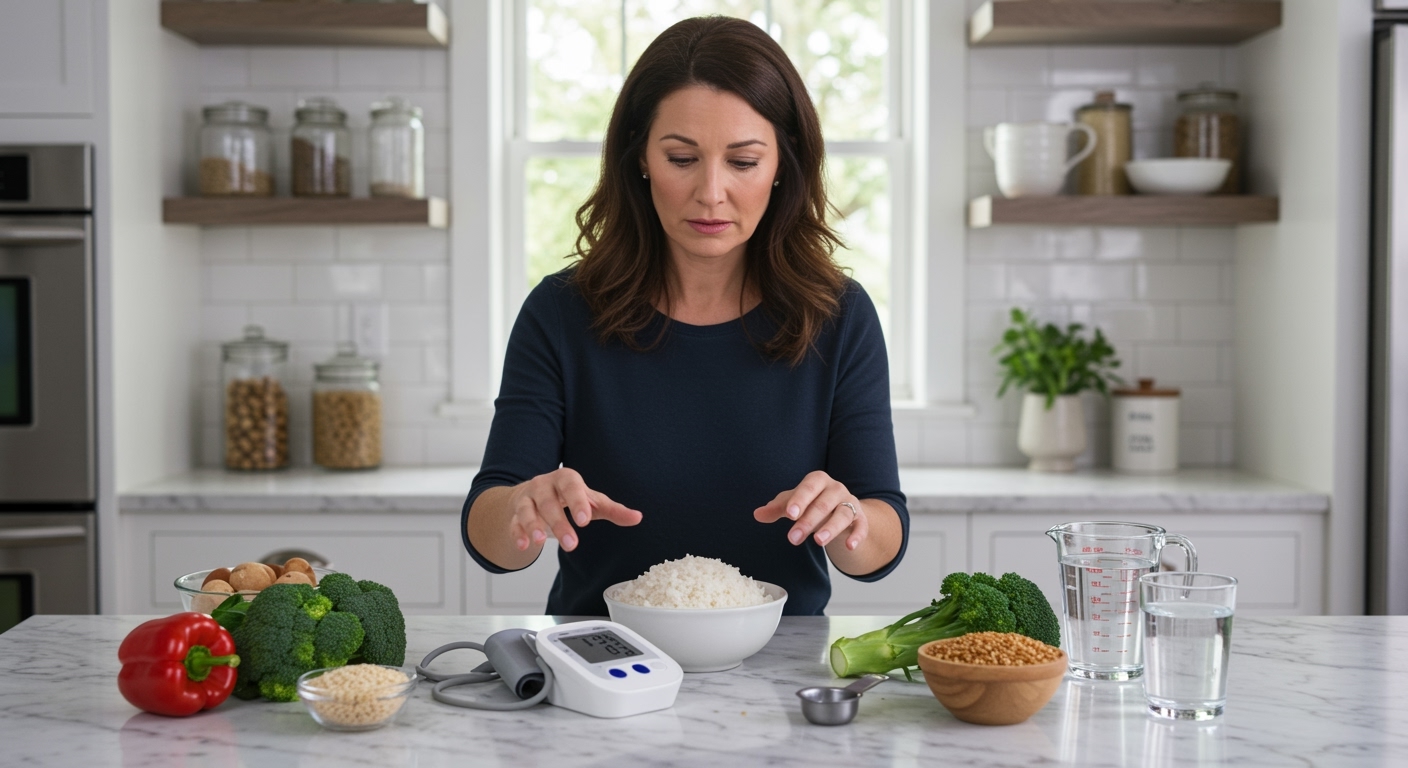
Woman standing behind marble counter examining bowl of white rice next to blood pressure monitor with vegetables and measuring cup visible

✪ Key Takeaway: White rice does not directly raise blood pressure, but eating large portions regularly can contribute to weight gain and insulin resistance. Introduction You have been told to avoid white rice because it will spike your blood pressure. This advice probably came from a well-meaning family member or a social media post that made white rice sound like poison for your heart. Hi, I am Abdur, your nutrition coach, and today I am going to explain exactly how white rice affects blood pressure and whether you really need to eliminate it from your diet. Does White Rice Directly Increase Blood Pressure? White rice itself does not contain sodium, which is the primary dietary factor that raises blood pressure. A cup of plain cooked white rice has less than 2 milligrams of sodium, making it one of the lowest sodium foods you can eat. The problem starts when you eat white rice with high-sodium dishes like soy sauce, pickles, processed meats, or salty curries. These accompaniments are what actually drive your blood pressure up, not the rice itself. Research shows that populations eating white rice as a staple with low-sodium side dishes do not show higher rates of hypertension compared to those eating other grains. The real issue is that white rice gets blamed for the company it keeps on your plate. ✪ Fact: Traditional Japanese diets include white rice daily but maintain lower hypertension rates due to minimal sodium in side dishes. How Does White Rice Affect Weight

Papaya: Are They Really Good For Diabetes? (Expert Answer)

Woman holding halved papaya behind marble counter with blood glucose meter, whole papaya, sliced fruit, and measuring tools in bright kitchen

✪ Key Takeaway: Papaya is good for diabetes when eaten in controlled portions because it has a low glycemic index and provides fiber. Introduction You stand in the produce section staring at those bright orange papayas wondering if they will spike your blood sugar. You are asking this question because someone told you tropical fruits are dangerous for diabetes or you read conflicting information online about fruit and blood glucose. Hi, I am Abdur, your nutrition coach and today I am going to explain exactly how papaya affects your blood sugar and whether you should include it in your diabetes meal plan. What Makes Papaya Different From Other Tropical Fruits? Papaya has a glycemic index of 60 which places it in the medium category rather than high like watermelon or pineapple. The glycemic index measures how quickly a food raises your blood sugar on a scale from 0 to 100. Foods below 55 are low, 56 to 69 are medium, and 70 or above are high. One cup of fresh papaya cubes contains about 11 grams of sugar and 2.5 grams of fiber which slows down sugar absorption. The fiber in papaya helps your body release glucose gradually into your bloodstream instead of causing a rapid spike. Research published in the International Journal of Nutrition Sciences shows that papaya consumption improved fasting blood glucose levels in people with type 2 diabetes over 12 weeks. The key difference is that papaya provides antioxidants like lycopene and vitamin C that protect your