Dark Chocolate: Is It Really Good For Low Blood Pressure? (Expert Answer)
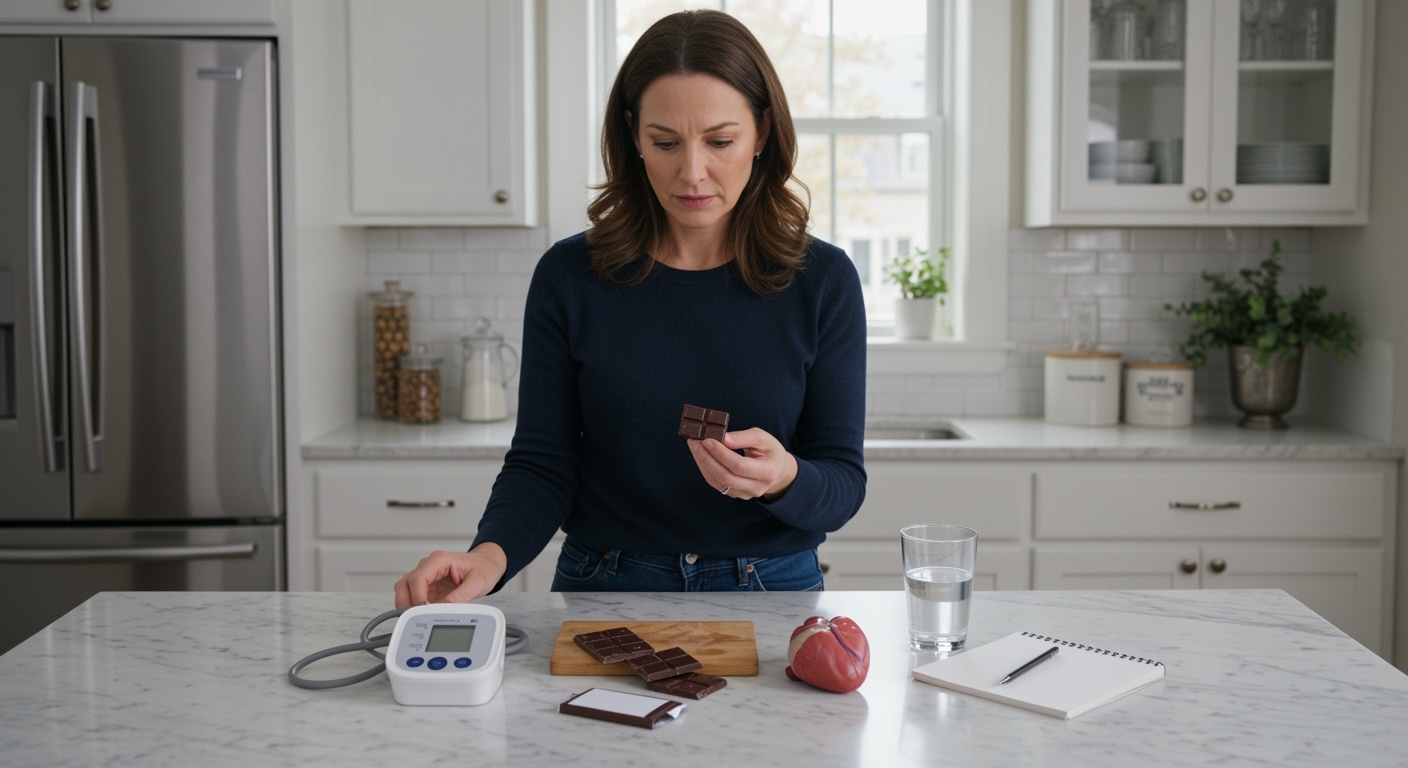
Woman holding dark chocolate piece while standing behind marble counter with blood pressure monitor and heart model in bright kitchen

✪ Key Takeaway: Dark chocolate can worsen low blood pressure by further reducing it, potentially causing dizziness, fatigue, and fainting. Introduction You have probably heard that dark chocolate is good for your heart and blood pressure. But what if your blood pressure is already too low and you are wondering whether that daily piece of dark chocolate is helping or hurting you. Hi, I am Abdur, your nutrition coach and today I am going to explain whether dark chocolate is really good for low blood pressure and what you need to know before making it part of your daily routine. What Does Dark Chocolate Actually Do To Blood Pressure? Dark chocolate contains compounds called flavonoids that have been studied extensively for their effects on cardiovascular health. These flavonoids, particularly a type called epicatechin, help your blood vessels relax and widen through a process called vasodilation. When your blood vessels widen, the resistance to blood flow decreases, which naturally lowers blood pressure. Multiple research studies have confirmed that consuming dark chocolate can reduce both systolic and diastolic blood pressure by approximately 2 to 3 mmHg. This effect happens because flavonoids stimulate the production of nitric oxide in the inner lining of your blood vessels. Nitric oxide acts as a signaling molecule that tells your blood vessel walls to relax and expand. For people with high blood pressure, this mechanism can be beneficial and even protective against heart disease and stroke. ✪ Fact: Dark chocolate with at least 70 percent cocoa content


Hot Sauce: Is It Always Bad For High Blood Pressure? (Expert Answer)

Woman reading hot sauce bottle label on marble counter with blood pressure monitor, chili peppers, and vegetables in bright kitchen

✪ Key Takeaway: Hot sauce is not always bad for high blood pressure because capsaicin may help lower it, but high sodium content in many brands can raise it. Introduction You love adding that fiery kick to your meals but your doctor just told you to watch your blood pressure. Now you are standing in your kitchen wondering if you need to throw away every bottle of hot sauce you own. Hi, I am Abdur, your nutrition coach and today I am going to explain the complex relationship between hot sauce and high blood pressure so you can make informed decisions about your favorite condiment. What Makes Hot Sauce a Blood Pressure Concern? The main problem with most commercial hot sauces is their sodium content, not the heat itself. Many popular brands pack between 100 to 200 milligrams of sodium per teaspoon serving. When you have high blood pressure, your daily sodium limit should stay below 1500 milligrams according to the American Heart Association. A few generous dashes of high sodium hot sauce throughout the day can quickly add up to 300 to 500 milligrams. Sodium causes your body to retain water, which increases the volume of blood flowing through your vessels. This extra fluid puts more pressure on artery walls, forcing your heart to work harder with each beat. Over time, this sustained pressure damages blood vessels and increases your risk of heart disease and stroke. ✪ Fact: Some hot sauce brands contain more sodium per serving than a

Oranges: Are They Really Good For Diabetes? (Expert Answer)

Middle-aged woman holding orange and glucose meter while standing behind marble counter with fresh oranges and segments

✪ Key Takeaway: Oranges are good for diabetes when eaten whole in moderate portions because their fiber slows sugar absorption. Introduction You probably heard that fruit is healthy but also that it contains sugar. If you have diabetes or prediabetes, this creates confusion about whether you should eat oranges or avoid them completely. Hi, I’m Abdur, your nutrition coach and today I’m going to explain exactly how oranges affect your blood sugar and whether they deserve a place in your diabetes management plan. What Makes Oranges Different From Other Sugary Foods? Oranges contain natural sugars, but they also come packaged with fiber, water, and nutrients. A medium orange has about 12 grams of sugar, but it also provides approximately 3 grams of fiber. This fiber slows down how quickly the sugar enters your bloodstream. When you eat candy or drink soda, you get sugar without any fiber to slow absorption. Your blood sugar spikes rapidly because nothing is there to buffer the impact. Oranges also contain vitamin C, potassium, and antioxidants that support overall health. Research shows that whole fruit consumption is associated with lower diabetes risk, while fruit juice increases risk. ✪ Fact: One medium orange contains only about 60 calories but provides over 100% of your daily vitamin C needs. How Does The Glycemic Index Of Oranges Compare? The glycemic index measures how quickly a food raises blood sugar on a scale from 0 to 100. Oranges have a glycemic index of around 40 to 43, which falls

Cucumber: Can It Help With Low Blood Pressure? (Expert Answer)

Woman slicing fresh cucumbers on marble countertop with whole cucumbers, cucumber water, heart model, and blood pressure cuff visible

✪ Key Takeaway: Cucumbers may lower blood pressure further, which can worsen hypotension symptoms in people already struggling with low BP. Introduction You wake up feeling dizzy, your vision blurs when you stand, and you wonder if that cucumber salad you ate last night made things worse. You might be asking this question because you have low blood pressure and you have heard that cucumbers are good for blood pressure, but you are not sure if they help or harm your specific condition. Hi, I am Abdur, your nutrition coach, and today I am going to explain exactly how cucumbers affect low blood pressure, what happens in your body when you eat them, and whether you should include them in your diet or avoid them completely. What Does Cucumber Do to Your Blood Pressure? Cucumbers contain potassium, a mineral that helps your body balance sodium levels and relax blood vessel walls. When you eat cucumbers regularly, the potassium works to reduce tension in your arteries, which typically lowers blood pressure in people with hypertension. One medium cucumber provides about 442 milligrams of potassium, which is roughly 10 percent of your daily requirement. This blood pressure lowering effect happens because potassium signals your kidneys to excrete more sodium through urine, and less sodium means less fluid retention and lower pressure in your blood vessels. Cucumbers also contain about 95 percent water, which helps maintain proper hydration and blood volume in your body. The problem is that if your blood pressure is

Bananas: Are They Really Good For High Blood Pressure? (Expert Answer)

Middle-aged woman standing behind marble countertop with bananas, blood pressure monitor, and heart model in bright kitchen

✪ Key Takeaway: Bananas effectively lower blood pressure through high potassium content that helps your body flush out excess sodium. Introduction You grab a banana for breakfast and wonder if this simple yellow fruit can actually help your blood pressure numbers. You are asking this question because everywhere you look, someone is talking about potassium and heart health, but nobody explains how it really works in your body. Hi, I am Abdur, your nutrition coach and today I am going to explain exactly how bananas affect your blood pressure and whether they deserve a spot in your daily diet. What Makes Bananas Special For Blood Pressure? Bananas contain about 422 milligrams of potassium in one medium-sized fruit. This amount represents roughly 9 percent of your daily potassium needs. Potassium works as a natural counterbalance to sodium in your bloodstream. When you eat foods high in potassium, your kidneys help flush out excess sodium through urine. Less sodium in your blood means less water retention and lower pressure against your artery walls. Research published in medical journals shows that increasing potassium intake can reduce systolic blood pressure by 3 to 6 points in people with hypertension. ✪ Fact: The World Health Organization recommends at least 3,510 milligrams of potassium daily for adults to reduce blood pressure and cardiovascular disease risk. How Does The Sodium-Potassium Balance Work? Your body maintains a delicate sodium-potassium balance across cell membranes. Sodium sits mostly outside your cells while potassium stays inside them. This balance controls how

Pancakes: Is It Always Bad for Diabetes? (Expert Answer)

Middle-aged woman standing behind marble countertop arranging pancakes, almond flour, berries, and glucose meter in bright kitchen

✪ Key Takeaway: Pancakes are not always bad for diabetes when you use low-glycemic flours, control portions, and add protein or healthy fats. Introduction You wake up craving fluffy pancakes but then remember your diabetes diagnosis and feel guilty before even reaching for the mixing bowl. You are probably asking this question because someone told you that pancakes will spike your blood sugar dangerously high and you should never eat them again. Hi, I am Abdur, your nutrition coach and today I am going to explain exactly when pancakes become problematic for diabetes and how you can modify them to enjoy this breakfast favorite safely. Why Do Traditional Pancakes Spike Blood Sugar So Quickly? Traditional pancakes are made with refined white flour that contains almost no fiber to slow down digestion. When you eat refined flour, your body breaks it down into glucose within minutes because there is nothing to slow the process. Most pancake recipes also include added sugar in the batter itself, which adds even more fast-acting carbohydrates to your meal. Then you pour syrup on top, which is basically pure sugar that enters your bloodstream almost immediately. A typical serving of three medium pancakes with syrup can contain 60 to 90 grams of fast-digesting carbohydrates with minimal protein or fat. This combination creates a perfect storm that sends your blood glucose soaring within 30 to 60 minutes after eating. Your pancreas then releases a large amount of insulin to handle this glucose flood, which can lead to

Fish: Is It Really Good For Low Blood Pressure? (Expert Answer)

Woman standing behind marble counter looking at salmon fillet and blood pressure monitor with fish oil capsules and vegetables

✪ Key Takeaway: Fish can lower blood pressure further, making it risky for hypotension unless consumed strategically. Introduction You have heard everywhere that fish is heart-healthy and good for blood pressure. But what if your blood pressure is already low, and you are wondering whether fish will make it worse or actually help stabilize it? Hi, I am Abdur, your nutrition coach, and today I am going to explain exactly how fish affects low blood pressure, when it helps, when it harms, and how to eat it safely without causing dizziness or fatigue. Does Fish Lower Blood Pressure Even More? Yes, fish can lower blood pressure even further if you already have hypotension. Fish contains omega-3 fatty acids, specifically EPA and DHA, which relax blood vessel walls and improve blood flow. When blood vessels relax, the resistance against blood flow decreases, which naturally reduces blood pressure. Research shows that consuming about 3 grams of omega-3 daily can reduce systolic blood pressure by approximately 5 mmHg and diastolic by 3 mmHg. For someone with normal or high blood pressure, this drop is beneficial and protective. But for someone with low blood pressure, this same effect can push readings dangerously lower, causing symptoms like dizziness, fainting, blurred vision, and extreme fatigue. So yes, fish does have a blood pressure-lowering effect, and this matters significantly if your baseline pressure is already below normal. ✪ Fact: Omega-3 fatty acids reduce blood pressure by improving endothelial function and decreasing vascular resistance. What Happens Inside Your

Decaf Coffee: Is It Even Safe For High Blood Pressure? (Expert Answer)

Woman holding coffee mug standing behind marble counter with heart model, blood pressure monitor, coffee beans, and coffee pot visible

✪ Key Takeaway: Decaf coffee is generally safe for high blood pressure, but it still contains small amounts of caffeine and other compounds that may affect some people. Introduction You switched to decaf coffee thinking you solved your blood pressure problem. But then you heard someone say that decaf might not be completely safe either, and now you are confused about whether you made the right choice for your health. Hi, I am Abdur, your nutrition coach, and today I am going to explain everything you need to know about decaf coffee and its real impact on high blood pressure. Does Decaf Coffee Actually Contain Caffeine? Yes, decaf coffee still contains caffeine, just in much smaller amounts than regular coffee. A typical cup of regular coffee contains about 95 milligrams of caffeine, while the same amount of decaf coffee contains only 2 to 5 milligrams. This means decaf has about 97 percent less caffeine than regular coffee, but it is not completely caffeine-free. The decaffeination process removes most caffeine using water, organic solvents, or carbon dioxide, but removing every single molecule is practically impossible. For most people with high blood pressure, this tiny amount of caffeine will not cause any noticeable blood pressure spike. However, if you are extremely sensitive to caffeine or drink multiple cups of decaf throughout the day, those small amounts can add up. The good news is that research shows decaf coffee does not raise blood pressure the way regular coffee does in most individuals. ✪

Carrots: Are They Really Good For Diabetes? (Expert Answer)

Woman holding carrot while gesturing toward blood glucose meter with fresh carrots, carrot juice, and sliced carrots on marble counter

✪ Key Takeaway: Carrots are good for diabetes when eaten whole and raw because they contain fiber that slows sugar absorption and bioactive compounds that improve insulin sensitivity. Introduction You have probably heard someone say that people with diabetes should avoid carrots because they are too sweet. This common belief creates unnecessary fear around a vegetable that actually offers significant health benefits for blood sugar management. Hi, I am Abdur, your nutrition coach, and today I am going to explain the truth about carrots and diabetes based on recent scientific research that challenges old assumptions. What Makes People Think Carrots Are Bad For Diabetes? The confusion about carrots and diabetes comes from misunderstanding glycemic index numbers without considering real-world eating patterns. Cooked carrots have a glycemic index of around 39 to 92 depending on cooking method, which sounds high when you see the upper range. However, glycemic index measures how 50 grams of carbohydrate from a food affects blood sugar, not how a normal serving size affects you. A typical serving of carrots contains only about 5 to 10 grams of carbohydrate, which means the actual blood sugar impact is much smaller than the glycemic index suggests. The glycemic load of carrots is only 2 to 6, which is considered low and unlikely to cause significant blood sugar spikes. Raw carrots have even lower impact because the fiber structure remains intact and slows down digestion and sugar absorption in your intestines. Most people eat carrots as part of a mixed

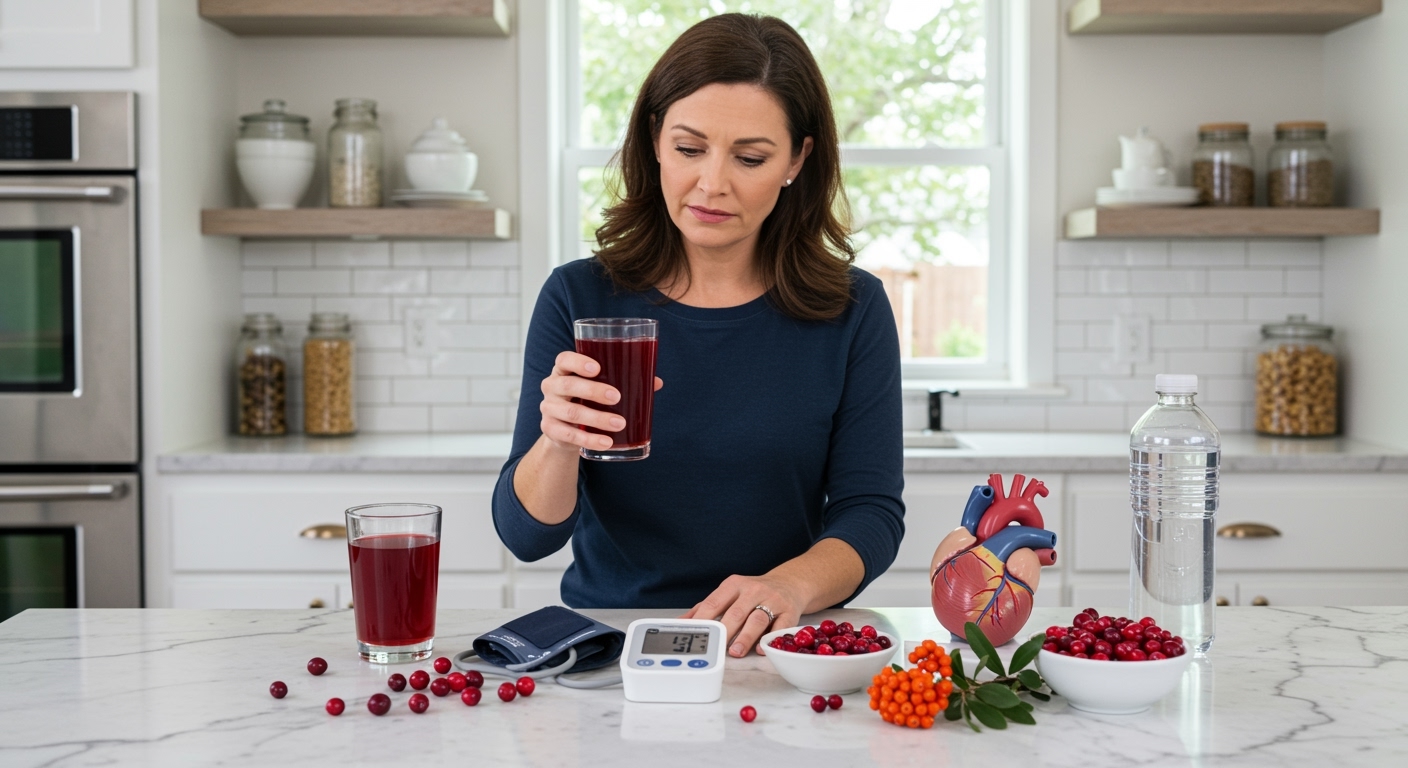
Cranberry: Can It Help With Low Blood Pressure? (Expert Answer)

Woman holding cranberry juice glass while standing near blood pressure monitor with fresh cranberries on marble countertop

✪ Key Takeaway: Cranberry lowers blood pressure rather than raising it, making it unsuitable for treating hypotension. Introduction You wake up feeling dizzy, your vision blurs when you stand, and someone suggests drinking cranberry juice to help. You might be asking this question because you have low blood pressure and heard that cranberry offers health benefits, so you wonder if it could raise your numbers to a healthier range. Hi, I am Abdur, your nutrition coach, and today I am going to explain how cranberry affects blood pressure, whether it helps with hypotension, and what the science actually reveals about this popular berry. Does Cranberry Raise Blood Pressure? The short answer is no, cranberry does not raise blood pressure. Research consistently shows that cranberry actually lowers blood pressure in people who consume it regularly. A study published in 2012 found that drinking low-calorie cranberry juice significantly reduced blood pressure in participants over eight weeks. The reduction occurred in both systolic pressure, which is the top number, and diastolic pressure, which is the bottom number. This effect happens because cranberries contain compounds called polyphenols, which are plant chemicals that help relax blood vessels. When your blood vessels relax, they widen, allowing blood to flow more easily, which naturally decreases the pressure against vessel walls. If you already have low blood pressure, consuming cranberry products could potentially make your condition worse rather than better. ✪ Fact: Cranberry juice reduced systolic blood pressure by an average of 3 mmHg in clinical studies, which