Ginger: Are They Really Good For Low Blood Pressure? (Expert Answer)

Middle-aged woman holding fresh ginger root while standing behind marble countertop with blood pressure monitor and ginger products

✪ Key Takeaway: Ginger may lower blood pressure further, making it potentially risky for people with hypotension. Introduction You add ginger to your tea thinking it will boost your health. But what if that same spice is making your low blood pressure worse instead of better? Hi, I am Abdur, your nutrition coach and today I am going to explain how ginger affects your blood pressure and whether you should avoid it if you have hypotension. Does Ginger Lower Blood Pressure Even More? Yes, ginger can lower your blood pressure even further. This happens because ginger contains compounds called gingerols and shogaols that act as natural calcium channel blockers. These compounds prevent calcium from entering the cells of your heart and blood vessel walls. When calcium cannot enter these cells, your blood vessels relax and widen. This widening of blood vessels is called vasodilation, and it reduces the pressure inside your arteries. For someone with normal or high blood pressure, this effect might be beneficial. But if you already have low blood pressure, ginger can push your numbers down to dangerous levels. ✪ Fact: Studies show ginger can reduce systolic blood pressure by 6 mmHg and diastolic by 2 mmHg in some people. What Happens When You Consume Ginger With Hypotension? When you have hypotension and consume ginger, you risk making your symptoms worse. Your blood pressure might drop so low that your brain and organs do not get enough oxygen-rich blood. This can lead to dizziness, lightheadedness, and even

Turmeric: Can It Help With High Blood Pressure? (Expert Answer)

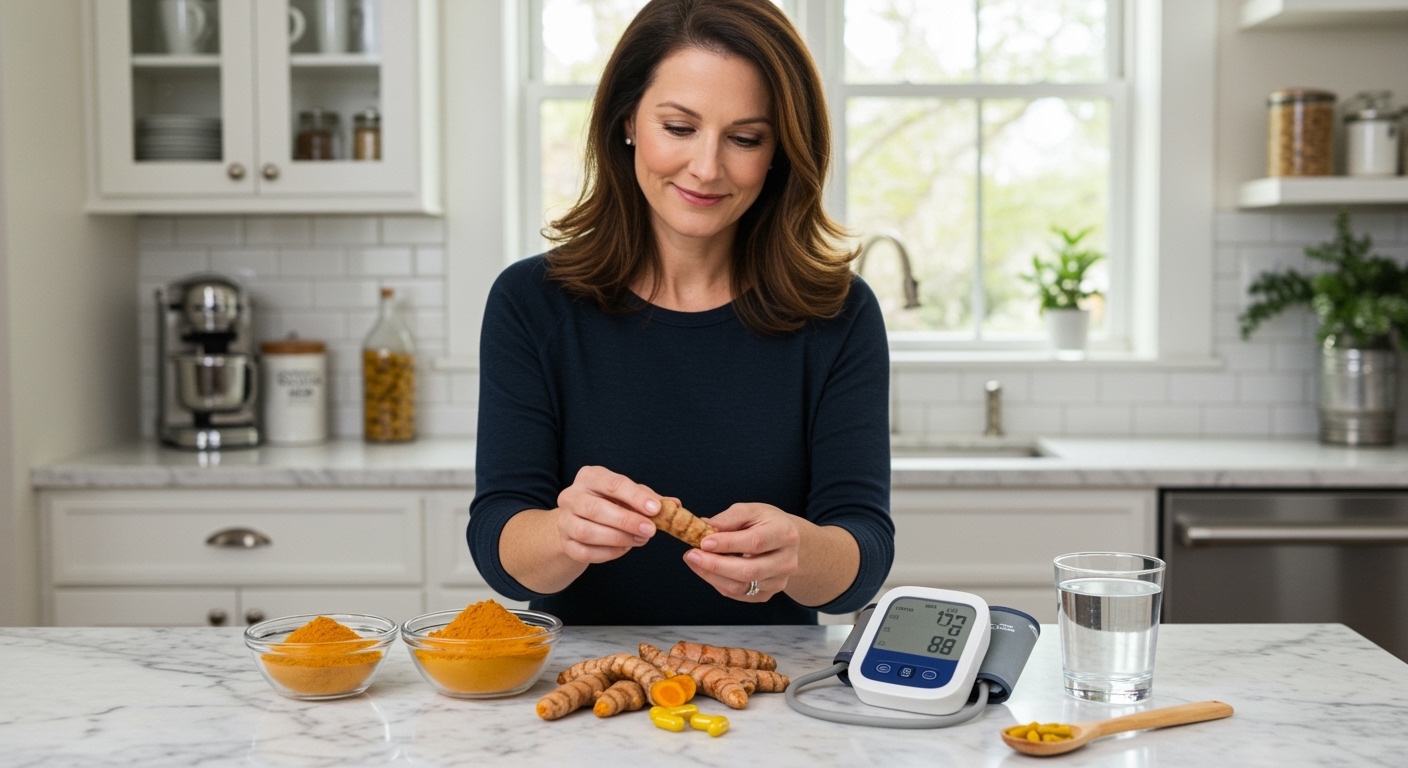
Woman holding fresh turmeric root on marble countertop with turmeric powder, blood pressure monitor, and supplements in bright kitchen.

✪ Key Takeaway: Turmeric may help lower blood pressure modestly through its active compound curcumin, but it works best as part of a comprehensive approach. Introduction You walk down the spice aisle and see turmeric everywhere with promises of health miracles. You might be wondering if this golden spice can actually help control your blood pressure without adding another pill to your daily routine. Hi, I am Abdur, your nutrition coach and today I am going to explain exactly how turmeric affects blood pressure, what the science really says, and whether you should add it to your health plan. What Makes Turmeric Special For Blood Pressure? Turmeric contains a powerful compound called curcumin that gives the spice its bright yellow color. This compound acts as a natural anti-inflammatory agent in your body. Chronic inflammation damages your blood vessels over time and makes them stiff. When your blood vessels lose flexibility, your heart has to work harder to pump blood through them. Curcumin helps reduce this inflammation and may improve how well your blood vessels expand and contract. Research shows that curcumin also acts as an antioxidant that protects your blood vessels from damage caused by free radicals. This protection helps maintain healthy blood pressure levels over time. ✪ Fact: Curcumin makes up only about three percent of turmeric by weight, which is why concentrated forms often work better than cooking spice alone. Does Science Support Turmeric For High Blood Pressure? Multiple studies have tested turmeric and curcumin on people with

Bajra: Can It Help With Diabetes? (Expert Answer)

Woman standing behind marble counter touching bowl of bajra grains with glucose meter and fresh vegetables in bright modern kitchen

✪ Key Takeaway: Bajra helps manage diabetes by slowing glucose absorption and improving insulin sensitivity through its high fiber and resistant starch content. Introduction Your grandmother probably ate bajra regularly without knowing it was a diabetes superfood. You might be asking this question because your doctor told you to switch from white rice to healthier grains, or maybe you saw someone in your family reverse their prediabetes with simple food changes. Hi, I’m Abdur, your nutrition coach, and today I’m going to explain exactly how bajra affects your blood sugar and whether it deserves a permanent spot on your plate. What Makes Bajra Different From Regular Grains? Bajra, also called pearl millet, is an ancient grain that has fed millions of people in Asia and Africa for over 4,000 years. Unlike refined grains that spike your blood sugar within minutes, bajra contains a thick outer layer that takes longer to break down in your digestive system. This grain packs about 11 grams of dietary fiber per 100 grams, which is nearly three times more than white rice. The fiber in bajra forms a gel-like substance in your intestines that slows down the absorption of glucose into your bloodstream. Research published in Frontiers in Nutrition found that regular millet consumption significantly improved fasting blood glucose levels in people with type 2 diabetes. Bajra also contains resistant starch, a special type of carbohydrate that your small intestine cannot fully digest. This resistant starch reaches your colon intact where beneficial bacteria ferment it,

Ghee: Is It Always Bad For Low Blood Pressure? (Expert Answer)

Middle-aged woman stirring ghee in glass bowl on marble counter with blood pressure monitor and healthy foods nearby in bright kitchen

✪ Key Takeaway: Ghee is not inherently bad for low blood pressure and may actually help when combined with adequate sodium and balanced meals. Introduction You have been told to avoid ghee because it might worsen your blood pressure problems. You might be asking this question because someone warned you that fatty foods are dangerous for anyone with blood pressure issues, or perhaps you experienced dizziness after eating ghee and wondered if there was a connection. Hi, I am Abdur, your nutrition coach, and today I am going to explain how ghee actually affects low blood pressure and whether you should really avoid it. What Actually Happens When You Eat Ghee With Low Blood Pressure? When you consume ghee, your body breaks it down into fatty acids that get absorbed through your intestinal walls. These fatty acids enter your bloodstream and provide concentrated energy that your cells can use immediately. Ghee contains mostly saturated fats, which are stable molecules that do not directly lower or raise blood pressure on their own. The confusion comes from mixing up high blood pressure advice with low blood pressure needs. People with hypotension need adequate calories and often benefit from energy-dense foods like ghee to maintain stable blood sugar and prevent sudden drops in blood pressure. Research published in the British Journal of Nutrition showed that ghee consumption did not negatively affect cardiovascular markers in healthy adults. ✪ Fact: Ghee contains butyric acid, a short-chain fatty acid that supports gut health and may help

Apple: Can It Help With High Blood Pressure? (Expert Answer)

Woman holding red apple standing behind marble counter with whole apples, apple halves, heart model, and blood pressure cuff

✪ Key Takeaway: Apples can help lower blood pressure through potassium, fiber, and polyphenols that improve blood vessel function. Introduction You have probably heard the old saying about an apple a day keeping the doctor away. But when your blood pressure numbers start creeping up, you might wonder if this simple fruit can actually make a real difference in your cardiovascular health. Hi, I am Abdur, your nutrition coach, and today I am going to explain exactly how apples affect your blood pressure and whether they deserve a place in your heart-healthy eating plan. What Makes Apples Special for Blood Pressure? Apples contain three main components that directly influence your blood pressure levels. The first component is potassium, a mineral that helps your kidneys flush out excess sodium through urine. When sodium levels drop in your bloodstream, your blood vessels relax and your blood pressure naturally decreases. The second component is soluble fiber, particularly pectin, which forms a gel-like substance in your digestive system. This fiber helps reduce cholesterol absorption, which keeps your arteries clear and allows blood to flow more easily. The third component is polyphenols, especially quercetin, which acts as a natural antioxidant that protects your blood vessel walls from damage and inflammation. Research shows that people who eat apples regularly have better endothelial function, meaning the inner lining of their blood vessels works more efficiently to regulate blood flow and pressure. ✪ Fact: One medium apple contains about 195 milligrams of potassium, which is roughly 4 percent

Beets: Are They Really Good For Diabetes? (Expert Answer)

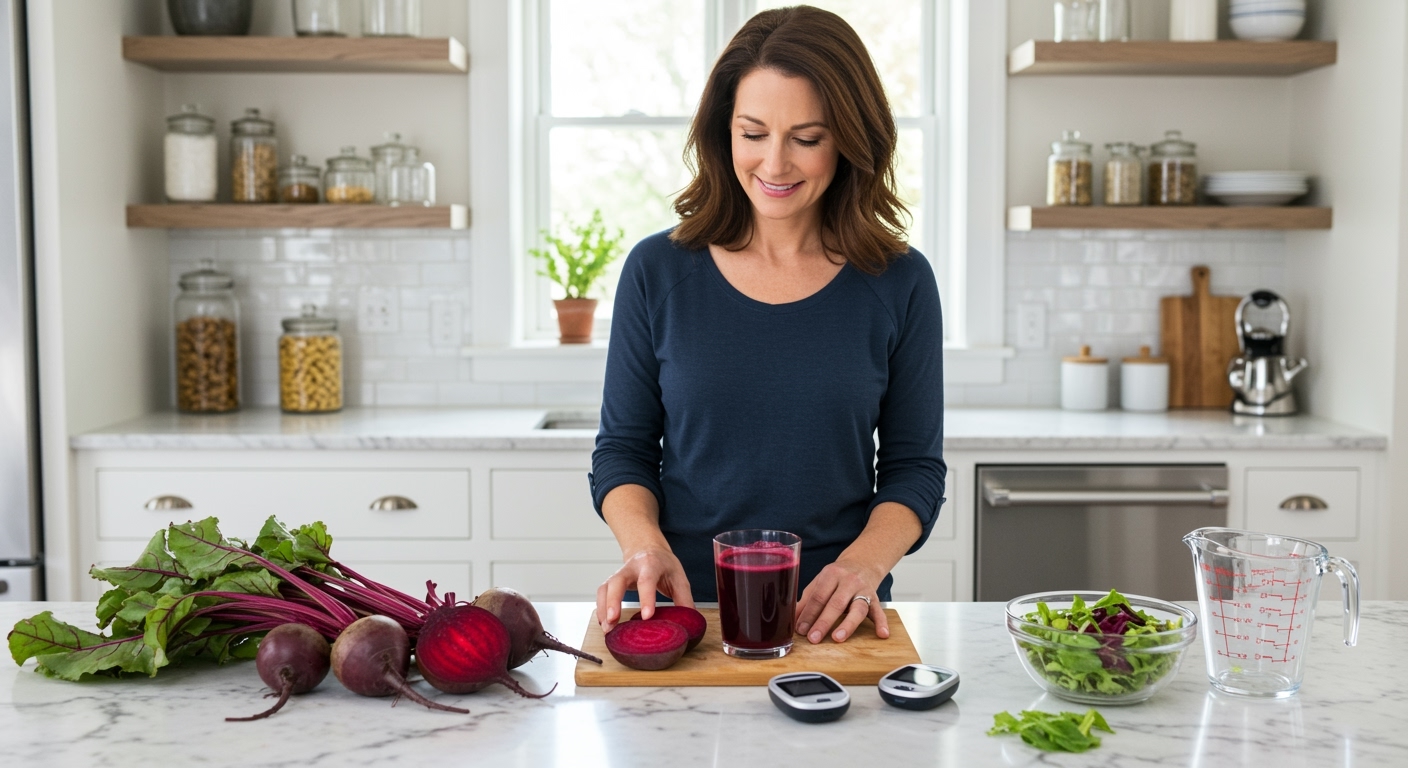
Middle-aged woman arranging whole and sliced beets with glucose meter and salad on white marble countertop in bright kitchen

✪ Key Takeaway: Beets are good for diabetes when eaten in moderate portions due to their fiber, nitrates, and antioxidants that support blood sugar control. Introduction You probably heard that beets contain sugar and wondered if they are safe for your blood sugar levels. Many people with diabetes avoid beets completely because they think all sweet vegetables will spike their glucose. Hi, I am Abdur, your nutrition coach and today I am going to explain why beets can actually be a smart addition to your diabetes meal plan when you understand how to use them properly. What Makes Beets Different From Other Sweet Vegetables? Beets contain natural sugars but they also pack powerful compounds that work in your favor. One medium beet has about 8 grams of sugar and 2 grams of fiber which slows down sugar absorption. The glycemic index of cooked beets sits around 64 which puts them in the medium range. However, the glycemic load of a typical serving is only about 5 which is considered low. This means beets will not cause the dramatic blood sugar spikes that pure sugar or white bread would cause. The key difference is that beets come with nutrients and fiber that change how your body processes their natural sugars. Research shows that the betalains in beets have antioxidant properties that may protect your cells from damage caused by high blood sugar. ✪ Fact: The deep red color in beets comes from betalains which have powerful antioxidant and anti-inflammatory properties that

Garlic: Is It Really Good For Low Blood Pressure? (Expert Answer)

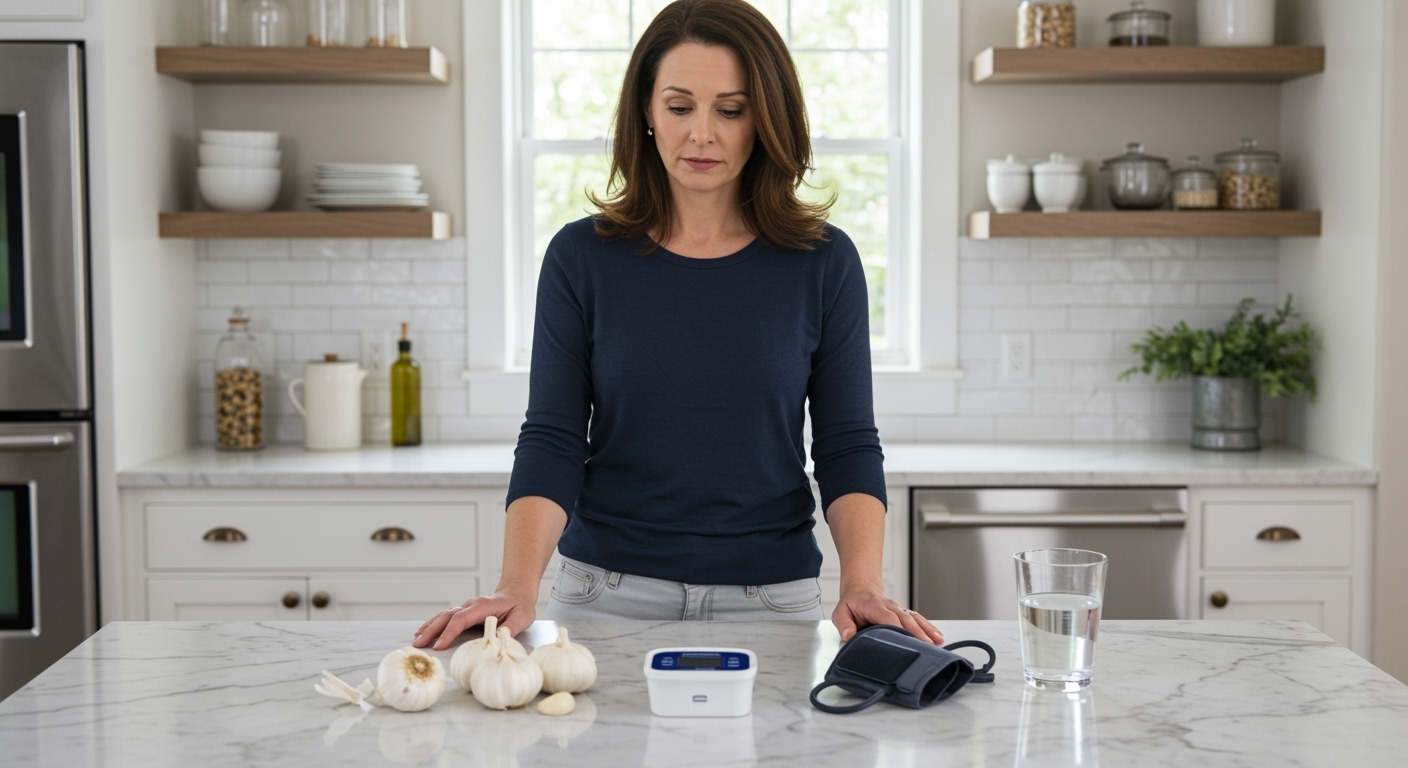
Middle-aged woman holding garlic bulb while standing behind marble counter with garlic cloves, blood pressure monitor, and water glass

✪ Key Takeaway: Garlic lowers blood pressure, so if yours is already low, consuming garlic regularly can make your condition worse. Introduction You have heard that garlic is a miracle food for heart health. Your grandmother swears by it, your neighbor takes garlic supplements daily, and every health blog seems to praise its cardiovascular benefits. But if you struggle with low blood pressure, you might be wondering whether this popular remedy will help you or actually make your symptoms worse. You are asking this question because you want to know if garlic is safe for your specific condition. You need clear answers about whether garlic will give you more energy or leave you feeling dizzy and fatigued. Hi, I am Abdur, your nutrition coach, and today I am going to explain exactly how garlic affects blood pressure, why it might not be your best choice if yours runs low, and what you should do instead. What Does Garlic Actually Do to Your Blood Pressure? Garlic contains a compound called allicin, which forms when you crush or chop fresh garlic cloves. This compound relaxes your blood vessels by increasing the production of nitric oxide in your body. Nitric oxide is a molecule that signals your blood vessel walls to relax and widen. When your blood vessels widen, the pressure inside them naturally decreases. This effect is exactly why doctors and researchers recommend garlic for people with high blood pressure. Multiple studies show that garlic can reduce systolic blood pressure by an

Olive Oil: Is It Really Good For High Blood Pressure? (Expert Answer)

Woman holding olive oil bottle standing behind marble counter with blood pressure monitor, heart model, olives, and garlic in kitchen

✪ Key Takeaway: Extra virgin olive oil lowers blood pressure by 3-4 mmHg when you consume 3-4 tablespoons daily for at least three months consistently. Introduction Your doctor told you to eat healthier and suddenly everyone around you started recommending olive oil like it was some magic potion. You are probably asking this question because you have heard conflicting information about olive oil and blood pressure, and you want to know if spending extra money on this oil will actually help your condition or if it is just another health trend that will disappoint you. Hi, I am Abdur, your nutrition coach and today I am going to explain exactly how olive oil affects your blood pressure, which type actually works, how much you need, and the mistakes that prevent most people from getting any benefits. What Does Science Actually Say About Olive Oil And Blood Pressure? Research shows that extra virgin olive oil can reduce systolic blood pressure by about 3 to 4 mmHg and diastolic pressure by 2 to 3 mmHg when consumed regularly. A study published in the American Heart Association journal found that people who consumed about 30 grams daily experienced measurable blood pressure reductions within three months. The key compounds responsible for this effect are polyphenols, which are natural antioxidants found in high concentrations only in extra virgin olive oil. These polyphenols help your blood vessels relax and improve something called endothelial function, which is basically how well the inner lining of your blood vessels

Grits: Is It Always Bad For Diabetes? (Expert Answer)

Woman standing behind marble countertop with bowl of grits, glucose meter, vegetables, and measuring tools in bright kitchen

✪ Key Takeaway: Grits can fit into a diabetes meal plan when you control portions, choose stone-ground varieties, and pair them with protein and fiber. Introduction You probably heard someone say that grits will destroy your blood sugar control. This blanket statement creates unnecessary fear and confusion about a food that millions of people enjoy regularly. Hi, I’m Abdur, your nutrition coach, and today I’m going to explain exactly how grits affect diabetes and when they can actually fit into your meal plan without causing problems. What Makes Grits Different From Other Breakfast Foods? Grits come from ground corn kernels that have been processed to remove the outer hull. The processing method determines how quickly your body breaks down the starches into glucose. Instant grits go through heavy processing that removes most of the fiber and creates smaller particles. These smaller particles dissolve faster in your digestive system, which means glucose enters your bloodstream more rapidly. Stone-ground grits retain more of the original corn kernel structure and contain more fiber. This fiber slows down digestion and creates a more gradual rise in blood sugar levels. The glycemic index of instant grits ranges from 69 to 79, which falls into the high category that causes rapid blood sugar spikes. ✪ Fact: One cup of cooked grits contains about 38 grams of carbohydrates, which equals roughly 2.5 slices of white bread. How Does Your Body Process Grits When You Have Diabetes? When you eat grits, your digestive system breaks down the starch

Fish Oil: Is It Even Important For Low Blood Pressure? (Expert Answer)

Woman standing behind marble counter examining fish oil supplement bottles with salmon, walnuts, and blood pressure monitor visible

✪ Key Takeaway: Fish oil lowers blood pressure, making it potentially dangerous for people with hypotension who need higher readings. Introduction You walk into a health store and see bottles of fish oil supplements everywhere with promises of heart health benefits. But when you already struggle with low blood pressure that makes you dizzy and tired, you wonder if these popular supplements will help or harm your condition. Hi, I’m Abdur, your nutrition coach, and today I’m going to explain exactly how fish oil affects blood pressure and whether people with hypotension should avoid it completely. What Does Fish Oil Actually Do To Your Blood Pressure? Fish oil contains omega-3 fatty acids called EPA and DHA that directly affect your cardiovascular system. These fatty acids make your blood vessels more flexible and relaxed, which reduces the resistance blood faces when flowing through your arteries. When resistance drops, your blood pressure naturally decreases because your heart does not need to pump as hard to move blood throughout your body. Research shows that consuming about 3 grams of omega-3 fatty acids daily can lower both systolic and diastolic blood pressure readings by several points. This effect becomes more pronounced in people who already have elevated blood pressure, but it still occurs in those with normal or low readings. The problem emerges when someone with hypotension takes fish oil expecting health benefits without understanding this blood pressure-lowering mechanism. ✪ Fact: Studies show omega-3s can reduce blood pressure by 2-8 mmHg depending on dosage