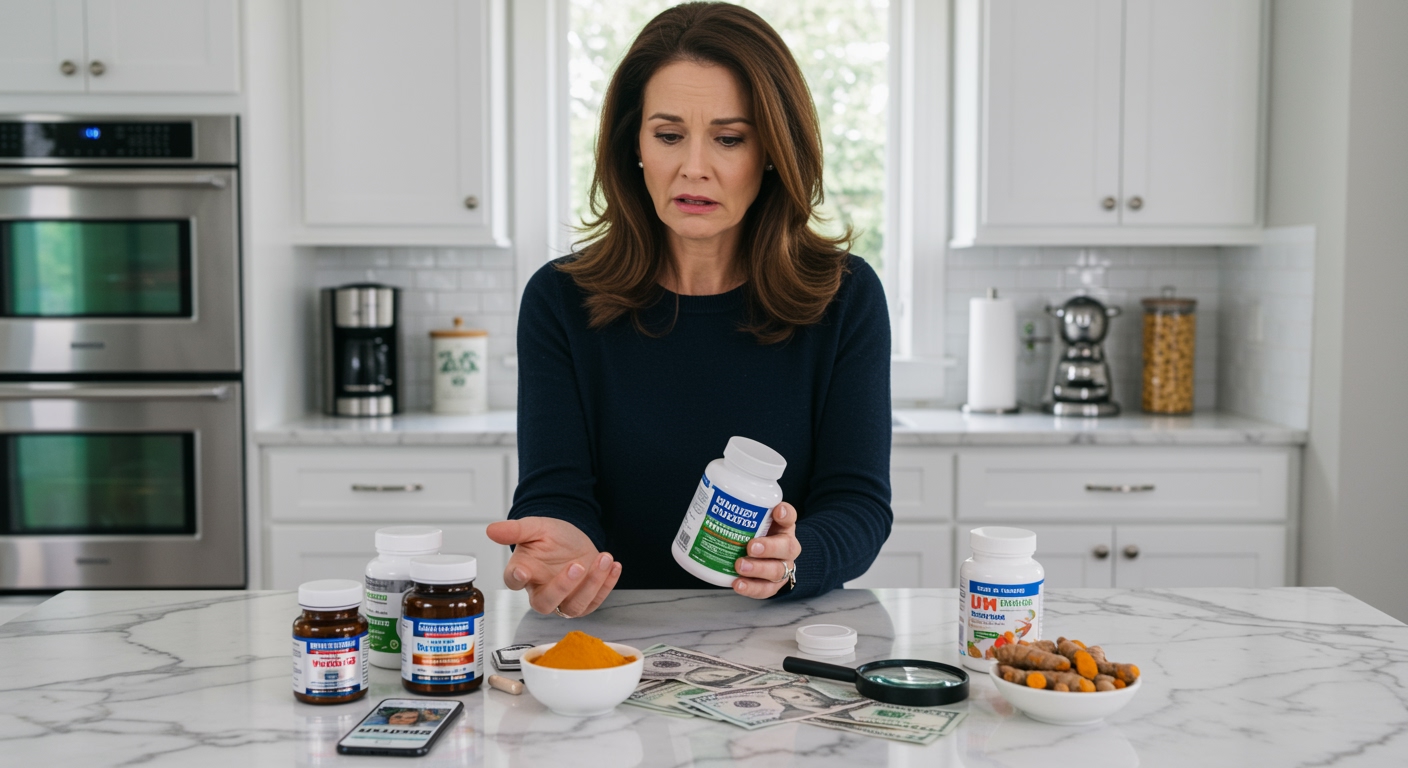
✪ Key Highlight: Utah woman loses $400 to fake Oprah weight loss ad selling overpriced turmeric in fancy bottles.
Introduction
Lisa Swearingen thought she had discovered the perfect weight loss solution when she saw what appeared to be Oprah Winfrey endorsing a revolutionary supplement online.
The convincing advertisement promised a science-backed formula with exotic ingredients like Himalayan pink salt and burnt berberine, leading Lisa to spend over $400 on multiple bottles.
Hi, I am Abdur, your nutrition coach and today I am going to analyze this alarming case of deepfake technology being used to create fake celebrity endorsements for worthless weight loss supplements.
What Did Lisa Actually Receive For Her Money?
When Lisa opened her expensive supplement bottles, she discovered the shocking truth about what she had purchased.
The main ingredient was nothing more than turmeric, a common spice that costs pennies at any grocery store.
The fancy marketing had transformed a basic kitchen spice into what appeared to be a cutting-edge weight loss formula.
Lisa felt completely deceived, realizing she had paid premium prices for something she could have bought for under $5 at her local supermarket.
The elaborate ingredient names mentioned in the advertisement were simply marketing tricks designed to make ordinary substances sound revolutionary and exotic.
✪ Fact: Turmeric contains curcumin, which has anti-inflammatory properties but no proven weight loss effects.
How Are Scammers Using Deepfake Technology?
The Oprah endorsement that convinced Lisa to buy was completely fabricated using advanced deepfake technology.
Scammers created convincing videos and social media posts that looked and sounded exactly like the real Oprah Winfrey.
These fake endorsements appeared across popular platforms like TikTok and Instagram, reaching millions of unsuspecting consumers.
The technology has become so sophisticated that even careful observers struggle to distinguish between real and fake celebrity content.
The real Oprah has publicly warned people about these scams and made it clear she does not endorse any weight loss supplements.
Consumer protection experts say these deepfake scams are becoming increasingly common and more difficult to detect.
✪ Pro Tip: Always verify celebrity endorsements by checking their official websites and social media accounts directly.
Why Are These Scams So Effective?
These scams work because they exploit our natural trust in celebrity endorsements and our desire for quick weight loss solutions.
The combination of a trusted celebrity face with scientific-sounding ingredient names creates a powerful psychological impact.
Many people assume that if a celebrity is promoting something, it must be legitimate and thoroughly tested.
The supplement industry operates with loose regulations, allowing companies to make dramatic claims without providing solid proof.
A 2020 study in JAMA Network Open found that many dietary supplements sold online do not contain what they claim on their labels.
Some supplements even contain potentially harmful ingredients that are not listed on the product packaging.
✪ Note: The FDA does not regulate dietary supplements as strictly as prescription medications.
What Can You Do If You Fall Victim?
Lisa tried to contact the company using the phone number on her shipping label but received no guarantee of a full refund.
This frustrating experience is common among victims of similar supplement scams across the country.
Consumer protection advocates recommend disputing the charges with your credit card company if you become a scam victim.
You should also report the fraudulent company to the Federal Trade Commission and your state attorney general office.
Document everything including screenshots of advertisements, email communications, and product packaging for your dispute case.
Many credit card companies will reverse charges for fraudulent purchases if you provide sufficient evidence of deception.
✪ Pro Tip: Take screenshots of suspicious ads before making purchases to use as evidence later.
How Can You Protect Yourself From These Scams?
The most important step is to always check the ingredient list before buying any supplement or health product.
Be extremely skeptical of dramatic weight loss claims, especially when they promise quick results without diet or exercise changes.
If you see a celebrity endorsing a product online, go directly to their official website or verified social media accounts to confirm.
Remember that legitimate weight loss requires consistent healthy eating habits and regular physical activity over time.
No single supplement can replace the fundamental principles of sustainable weight management through proper nutrition and lifestyle changes.
Always consult with your healthcare provider before starting any new supplement regimen, especially if you have existing health conditions.
✪ Fact: Sustainable weight loss typically occurs at a rate of 1-2 pounds per week through healthy lifestyle changes.
The Bottom Line
Lisa Swearingen story serves as a powerful warning about the sophisticated scams targeting people desperate for weight loss solutions.
A fancy bottle with a celebrity face does not guarantee the product inside is worth your hard-earned money or will deliver promised results.
I encourage you to share your own experiences with supplement scams or ask any questions you might have about identifying legitimate health products in the comment section below.
References
At NutritionCrown, we use quality and credible sources to ensure our content is accurate and trustworthy. Below are the sources referenced in creating this article:
- YouTube: Weight Loss Scam Investigation
- YouTube: Celebrity Endorsement Fraud
- YouTube: Supplement Industry Scams





I want to know why Oprah, Kelly Clarkson, Adele, Rebel Wilson, and others like Dr. Oz and Anderson Cooper cannot sue these companies for using their likenesses and faking their voices. These companies are doing something that is surely illegal, and their company leaders should be rotting in jail instead of changing the name of the product and posting the next hour-long fake ad.
You are absolutely right to be frustrated about this serious problem. Celebrities like Oprah and Kelly Clarkson have been fighting back through their legal teams, but the reality is much more complicated than it should be. Kelly Clarkson has had her publicist repeatedly deny any affiliation with weight loss products, and Oprah has held press conferences specifically to deny involvement in these scam ads. The Federal Trade Commission has taken action against some of these operations, with cases resulting in millions of dollars in fines and even shutdowns of companies using fake celebrity endorsements without permission. However, the problem is that when one company gets caught, the scammers simply rebrand and start again with a new product name and website.
The legal process is frustratingly slow and expensive. These deepfake operations often run from overseas or hide behind complex networks of affiliate marketers who get paid commissions for every person they trick into buying. While celebrities can sue under state right of publicity laws and federal false endorsement laws like the Lanham Act, each lawsuit takes years and significant money to pursue. By the time one case moves through the courts, the scammers have already moved on to their next scheme with a different company name.
What makes this even worse is that current laws were written before AI deepfake technology became this advanced. New legislation like the NO FAKES Act has been proposed in the United States to specifically criminalize the creation and distribution of AI-generated replicas of someone’s voice or likeness without consent. Until stronger laws pass with serious criminal penalties and better enforcement mechanisms, these scammers will keep exploiting the gap between what is clearly wrong and what the legal system can actually stop quickly enough to matter.