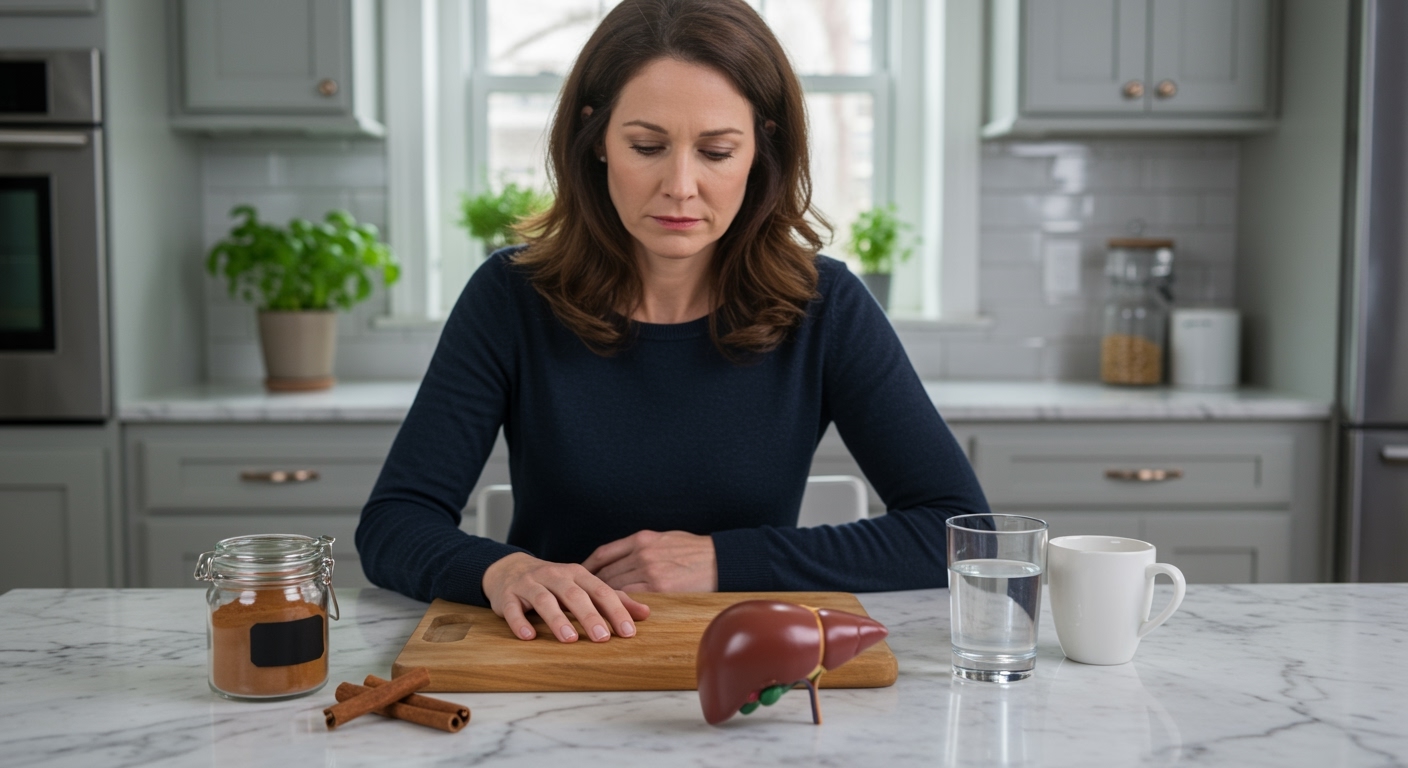
✪ Key Takeaway: Cassia cinnamon contains high levels of coumarin that can cause liver damage when consumed regularly in amounts as low as one teaspoon daily.
Why Your Morning Coffee Ritual Might Be Destroying Your Liver
You sprinkle it on your oatmeal, stir it into your coffee, and add it to your smoothies without a second thought.
That innocent looking brown powder sitting in your spice cabinet contains a compound called coumarin that your liver struggles to process, and with each daily dose, you might be pushing your body closer to serious damage.
Hi, I am Abdur, your nutrition coach and today I am going to explain exactly how cinnamon powder is silently harming your liver, which type is the worst offender, and what you can do right now to protect yourself.
What Makes Cinnamon Dangerous For Your Liver?
The problem starts with a natural compound called coumarin found in cassia cinnamon, which is the most common type sold in stores worldwide.
Coumarin is a toxic substance that your liver must break down and eliminate, but when you consume it regularly, it accumulates faster than your body can safely process it.
Studies show that cassia cinnamon contains between 0.4 to 8 grams of coumarin per kilogram, while the safer Ceylon variety contains only trace amounts of 0.004 grams per kilogram.
The European Food Safety Authority set a tolerable daily intake of coumarin at 0.1 milligrams per kilogram of body weight, which means a 150-pound person should consume no more than 6.8 milligrams daily.
Just one teaspoon of cassia cinnamon powder can contain between 7 to 18 milligrams of coumarin, which already exceeds the safe limit for most adults.
✪ Fact: Over 90 percent of cinnamon sold in American supermarkets is cassia cinnamon from China, Indonesia, or Vietnam, not the safer Ceylon variety.
How Does Coumarin Actually Damage Your Liver?
When coumarin enters your body, it travels to your liver where enzymes attempt to break it down into harmless compounds that can be eliminated through urine.
However, during this breakdown process, coumarin creates toxic metabolites that can damage liver cells, particularly when your liver is overwhelmed by repeated exposure.
These toxic byproducts cause inflammation in liver tissue, and over time, this chronic inflammation can lead to conditions like hepatitis, fatty liver disease, or even permanent scarring called cirrhosis.
Research published in the Molecular Nutrition and Food Research journal found that people who consumed high amounts of cassia cinnamon showed elevated liver enzyme levels, which is a clear marker of liver stress and damage.
The scary part is that liver damage from coumarin happens silently without obvious symptoms until the damage becomes severe enough to affect liver function.
✪ Note: Your liver can regenerate damaged tissue, but only if you stop the source of damage before permanent scarring occurs.
Who Is At The Highest Risk From Cinnamon Consumption?
People who add cinnamon to their daily routine for blood sugar control or weight loss are at the greatest risk because they consume it consistently over long periods.
Children are particularly vulnerable because their smaller body weight means they reach toxic coumarin levels much faster than adults, and their developing livers are less efficient at processing toxins.
Anyone with existing liver conditions, those taking medications that affect liver function, or people who regularly consume alcohol face exponentially higher risks from coumarin exposure.
The German Federal Institute for Risk Assessment documented multiple cases of liver damage in people consuming cinnamon supplements or large amounts of cinnamon in foods like oatmeal, chai tea, or baked goods.
Even health-conscious individuals who think they are making good choices by adding cinnamon to their diet may be unknowingly causing harm.
✪ Pro Tip: If you take cinnamon supplements, check the label because most contain cassia cinnamon and deliver concentrated doses that far exceed safe coumarin limits.
What Are The Warning Signs Of Cinnamon-Related Liver Damage?
Early liver damage rarely causes noticeable symptoms, which is why many people continue consuming harmful amounts of cinnamon without realizing the internal damage occurring.
As damage progresses, you might experience fatigue, loss of appetite, nausea, or a general feeling of unwellness that you might dismiss as stress or lack of sleep.
More advanced signs include yellowing of the skin or eyes called jaundice, dark urine, pale stools, or pain in the upper right side of your abdomen where your liver is located.
Blood tests showing elevated levels of liver enzymes like ALT and AST are the most reliable early indicators that your liver is under stress from coumarin or other toxins.
If you have been consuming large amounts of cinnamon daily and experience any of these symptoms, you should stop immediately and consult with a healthcare provider for liver function tests.
✪ Fact: Your liver can lose up to 75 percent of its function before you notice obvious symptoms, which is why regular blood tests are crucial for early detection.
How Can You Safely Enjoy Cinnamon Without The Risk?
The simplest solution is switching from cassia cinnamon to Ceylon cinnamon, which contains almost no coumarin and provides the same flavor and potential health benefits.
Ceylon cinnamon costs more and can be harder to find, but you can order it online or look for it in specialty stores where it is often labeled as true cinnamon or sweet cinnamon.
If you choose to continue using cassia cinnamon, limit your intake to no more than half a teaspoon per day, and avoid consuming it every single day to give your liver time to recover.
Never take cinnamon supplements unless specifically recommended by your doctor, because these products contain concentrated amounts that make it easy to exceed safe coumarin limits.
Remember that cinnamon is not essential for good health, and if you have any concerns about liver function or existing health conditions, it is better to avoid it completely than risk potential damage.
✪ Pro Tip: Ceylon cinnamon has a lighter, sweeter taste and crumbles easily, while cassia is darker, harder, and has a stronger, spicier flavor that helps you identify it.
The Bottom Line
The cinnamon powder in your kitchen cabinet is likely cassia cinnamon containing dangerous levels of coumarin that can damage your liver when consumed regularly in typical daily amounts.
Your liver works silently to protect you every day, but it cannot defend itself against toxins you knowingly consume in the name of health.
I would love to hear your thoughts on this topic, so please share your questions, experiences, or concerns in the comment section below.
References
At NutritionCrown, we use quality and credible sources to ensure our content is accurate and trustworthy. Below are the sources referenced in writing this article:
- ConsumerLab: Cinnamon Coumarin Liver Danger
- National Center for Complementary and Integrative Health: Cinnamon
- National Library of Medicine: Cinnamon and Coumarin Research
- German Federal Institute for Risk Assessment: FAQ on Coumarin in Cinnamon and Other Foods