
Are Beans Bad for CKD? (Expert Answer)

Short Answer: Beans are potentially good for CKD. Because they have protein and fiber which can benefit CKD patients, but they also contain potassium and phosphorus which can negatively affect CKD if consumed in excess. Chronic Kidney Disease (CKD) is a condition that affects your kidneys. In CKD, your body’s kidneys are damaged and cannot filter blood as they should. This can lead to a build-up of wastes in your body, as well as other problems that can harm your health. This can lead to various health problems, such as fluid retention, high blood pressure, anemia, bone weakness, and heart disease. One of the key factors in managing CKD is diet. What you consume can affect your blood pressure, electrolyte balance, and waste accumulation, which can impact your CKD symptoms and overall health. To effectively manage CKD, you should consume low-sodium, low-potassium, and low-phosphorus rich foods like cauliflower, onions, and eggplant, and avoid high-potassium, high-phosphorus, and high-sodium rich foods like cola, bananas, and processed meats. Now, beans are a nutritious food that people usually eat as part of meals or as a protein source in salads and other dishes. Beans are potentially good for CKD because they contain protein and fiber. However, they also contain potassium and phosphorus, which can be harmful in excess for CKD patients. If the health condition has several types, this item is good for those with normal potassium and phosphorus levels. 100 grams of boiled Adzuki beans can give you approximately 7.5g of protein (15%
Is Liver Good for Anemia? (Expert Answer)

Short Answer: Liver is good for anemia. Because it has high levels of heme iron and other nutrients that can positively affect blood health. Anemia is a condition that affects your blood. In anemia, your body lacks enough healthy red blood cells to carry adequate oxygen to your tissues. This can lead to various health problems, such as fatigue, weakness, and shortness of breath. One of the key factors in managing anemia is diet. What you consume can affect your iron levels, which can impact your anemia symptoms and overall health. To effectively manage anemia, you should consume iron-rich foods like red meat, poultry, and fish, and avoid calcium-rich foods like dairy products that can inhibit iron absorption. Now, liver is an organ meat that comes from animals such as cows, pigs, and chickens. People usually eat it cooked, often fried or in dishes like pâté. Liver is good for anemia because it contains high levels of heme iron, which is easily absorbed by the body. It is beneficial for all types of anemia that are caused by iron deficiency. A serving of liver can give you a significant amount of your daily iron needs. For example, beef liver contains about 36% of the daily value (DV) for iron per serving. Iron can positively affect anemia by increasing the hemoglobin levels in your blood. Vitamin A and B vitamins in liver also support blood health and energy metabolism. Furthermore, liver is a source of protein, and protein is good for

Is Cottage Cheese Good for Muscle Building? (Expert Answer)

Short Answer: Cottage cheese is good for muscle building. Because it has high-quality protein and they can support muscle growth and repair. Muscle building is a condition that affects your skeletal muscles. In muscle building, your body synthesizes new muscle proteins, a process known as muscle protein synthesis. This can lead to increased muscle mass and strength, but if not managed properly, it can also lead to muscle strain or injury. One of the key factors in managing muscle building is diet. What you consume can affect your muscle recovery and growth, which can impact your workout performance and overall health. To effectively manage muscle building, you should consume protein-rich foods like chicken breast, fish, and eggs and avoid sugar-rich foods like sodas, candies, and pastries. Now, cottage cheese is a dairy product made from the curds of cow’s milk. People usually eat it plain, as a snack, or incorporate it into recipes like salads, smoothies, and baked dishes. Cottage cheese is good for muscle building because it contains high-quality protein, particularly casein. Casein is a slow-digesting protein that provides a steady supply of amino acids for muscle repair and growth. A one-cup serving of low-fat cottage cheese can give you approximately 25 grams of protein (which is about 50% of your daily needs), 5% of the daily value for calcium, and 20% for sodium. Protein can positively affect muscle building as it is essential for muscle protein synthesis. Calcium supports bone health, which is crucial for a strong musculoskeletal

Is Peanut Butter Good for Weight Gain? (Expert Answer)

Short Answer: Peanut butter is good for weight gain. Because it has healthy fats, protein, and fiber and they can help increase caloric intake in a nutritious way. Weight gain is a condition that affects your body composition. In weight gain, your body stores more calories as fat than it burns through activity and metabolism. This can lead to various health problems, such as obesity, heart disease, and diabetes. One of the key factors in managing weight gain is diet. What you consume can affect your caloric balance, which can impact your weight gain symptoms and overall health. To effectively manage weight gain, you should consume protein and fiber-rich foods like chicken breast, lentils, and broccoli and avoid sugar and saturated fat-rich foods like soda, fast food, and pastries. Now, peanut butter is a nutrient-dense spread. People usually spread it on bread or use it in recipes. Peanut butter is good for weight gain because it contains healthy fats, protein, and fiber. It is especially good for those looking to increase their caloric intake in a healthy way. Two tablespoons of peanut butter can give you approximately 7 grams of protein (14% of your daily needs), 16 grams of fat (21% of your daily needs), and 2 grams of fiber (8% of your daily needs). Protein can positively affect weight gain by helping to build and repair muscle tissue. Healthy fats can positively affect weight gain by providing a concentrated source of energy. Fiber can positively affect weight management by

Is Fufu Good for Weight Loss? (Expert Answer)

Short Answer: Fufu is neutral for weight management. Because it has dietary fiber and potassium which can positively affect weight management, but its high carbohydrate content can lead to weight gain if not consumed in moderation. Weight management is a condition that affects your body’s overall health and well-being. In weight management, your body regulates the balance between energy intake and energy expenditure. This can lead to various health problems, such as obesity or malnutrition, if not managed properly. One of the key factors in managing weight is diet. What you consume can affect your caloric balance, which can impact your weight management symptoms and overall health. To effectively manage weight, you should consume fiber-rich foods like fruits, vegetables, and whole grains, and avoid high-calorie, low-nutrient foods like sugary snacks, fast food, and sugary beverages. Now, Fufu is a traditional West African food made by pounding starchy ingredients like yam, cassava, or plantains into a smooth and dough-like consistency. People usually eat it by taking a small ball of it with their fingers and dipping it into an accompanying soup or sauce. Fufu is neutral for weight management because it contains both beneficial and less beneficial ingredients. It is high in carbohydrates and can be an excellent source of energy. A 240g serving of Fufu can give you approximately 29% of your daily carbohydrate needs, 26% of your daily fiber needs, and 23% of your daily potassium needs. Dietary fiber can positively affect weight management as it helps control blood

Is Pickle Juice Good for Arthritis? (Expert Answer)

Short Answer: Pickle juice is controversial for arthritis. Because it has vinegar, which may reduce inflammation, but high sodium content can negatively affect blood pressure. Arthritis is a condition that affects your joints. In arthritis, your body’s immune system can mistakenly attack the joints, causing inflammation at the micro level. This can lead to various health problems, such as pain, stiffness, and swelling. One of the key factors in managing arthritis is diet. What you consume can affect your inflammation levels, which can impact your arthritis symptoms and overall health. To effectively manage arthritis, you should consume omega-3 fatty acids, antioxidants, and phytochemicals rich foods like salmon, walnuts, and berries and avoid saturated fats and sugar rich foods like red meats, processed foods, and sugary beverages. Now, pickle juice is a brine made from water, vinegar, salt, and spices, often used as a flavoring. People usually drink it for its purported health benefits, including muscle cramp relief and hydration. Pickle juice is controversial for arthritis because it contains vinegar, which some claim has anti-inflammatory properties. However, there is no scientific evidence to support the use of pickle juice for arthritis. About 1/3 cup of pickle juice can give you approximately 821mg of sodium and 18mg of vitamin C, which is a significant amount of your daily needs. Vinegar can potentially affect arthritis by reducing inflammation, but this is based on anecdotal evidence rather than scientific research Sodium can negatively affect arthritis by contributing to high blood pressure if consumed in

Are Pickles Bad for Gout? (Expert Answer)

Short Answer: Pickles are not bad for gout. Because they have low purine content and can positively affect gut health, but should be consumed in moderation due to their sodium content. Gout is a condition that affects your joints. In gout, your body experiences a buildup of uric acid in the blood, which can form sharp, needle-like urate crystals in a joint or surrounding tissue, causing inflammation and intense pain. This can lead to various health problems, such as recurrent gout attacks and joint damage. One of the key factors in managing gout is diet. What you consume can affect your uric acid levels, which can impact your gout symptoms and overall health. To effectively manage gout, you should consume low-purine rich foods like cherries, vegetables, and whole grains and avoid high-purine rich foods like red meats, organ meats, and certain seafood. Now, pickles are preserved cucumbers. People usually eat them as a condiment or snack. Pickles are not bad for gout because they contain low levels of purines. However, pickles are high in sodium and some types may contain vinegar, which can affect uric acid levels. A medium-sized pickle can give you about 1% of your daily vitamin A, 1/3 of your daily vitamin K, and 2% of your daily potassium needs. Vitamin A and vitamin K can positively affect gout by supporting overall health, while sodium can negatively affect gout by potentially contributing to higher blood pressure. Furthermore, pickles are a fermented food and fermentation is good for

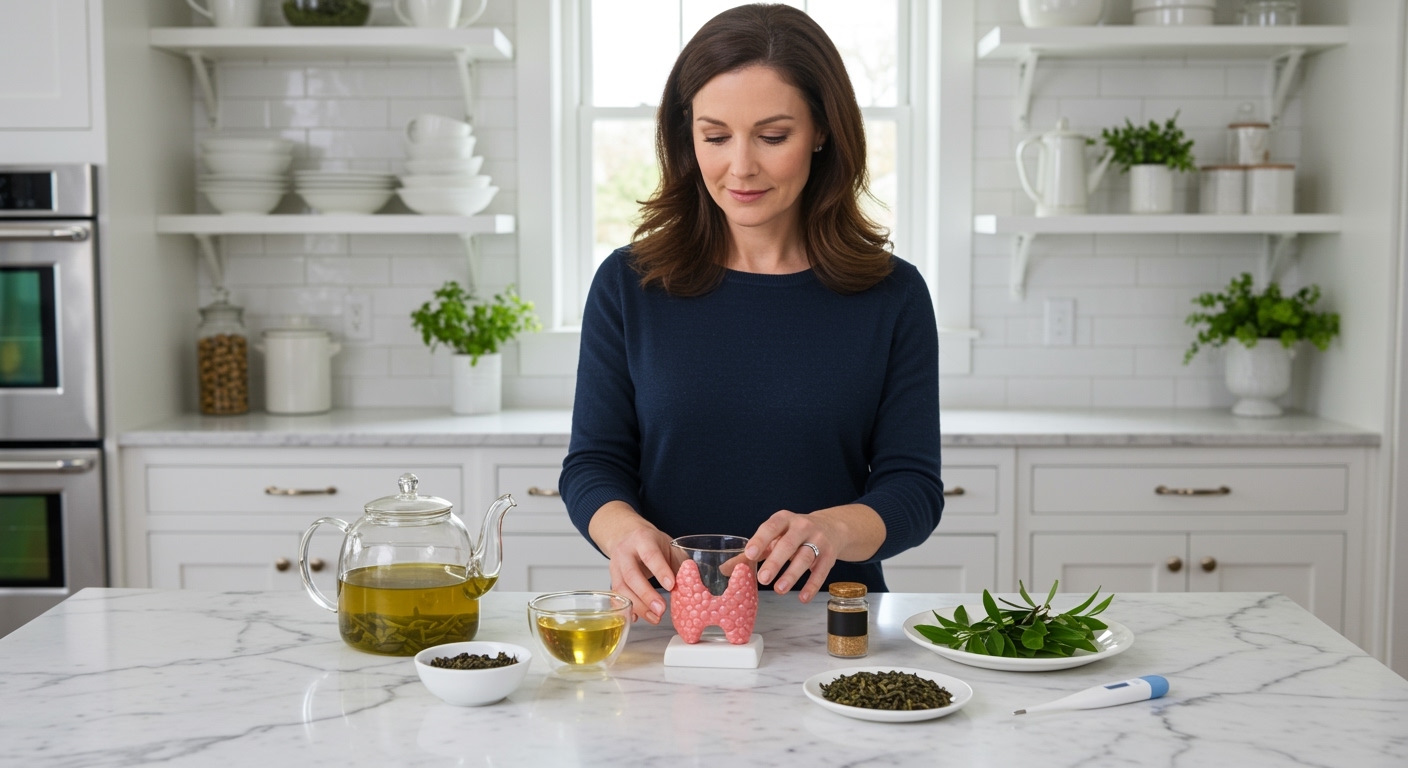
Green Tea: Is It Really Good For Hypothyroidism? (Expert Answer)

Middle-aged woman in navy sweater touching glass teacup while standing behind marble counter with green tea items and thyroid model

✪ Key Takeaway: Green tea can be safe for hypothyroidism when consumed in moderation and timed properly away from thyroid medication. Introduction You probably heard that green tea is a superfood that fixes everything from weight gain to brain fog. But when you have hypothyroidism, you start questioning whether this popular beverage might actually work against your thyroid health instead of supporting it. Hi, I’m Abdur, your nutrition coach, and today I’m going to explain exactly how green tea affects your thyroid function and whether you should keep it in your daily routine. What Does Green Tea Actually Do To Your Thyroid? Green tea contains compounds called catechins, with one specific type called epigallocatechin gallate being the most abundant. These catechins can interfere with an enzyme called thyroid peroxidase, which your thyroid gland needs to produce thyroid hormones. Research published in the European Journal of Public Health found that excessive green tea consumption was associated with increased risk of thyroid problems in some populations. However, the keyword here is excessive, which typically means consuming more than 5-6 cups daily over extended periods. Your thyroid uses iodine and the enzyme thyroid peroxidase to create thyroid hormones T3 and T4. When catechins block this enzyme, your thyroid cannot produce hormones efficiently, potentially worsening hypothyroidism symptoms. But this effect depends heavily on how much you drink and your overall iodine status in the body. ✪ Fact: One cup of green tea contains approximately 50-100 mg of catechins, far below the levels shown to

Is Peanuts Good for Hyperthyroidism? (Expert Answer)

Short Answer: Peanuts are not recommended for hyperthyroidism. Because they have goitrogens and antithyroid antibodies which can negatively affect thyroid function. Hyperthyroidism is a condition that affects your thyroid gland. In hyperthyroidism, your body produces too much thyroid hormone. This can lead to various health problems, such as weight loss, anxiety, irritability, muscle weakness, and sleep disturbances. One of the key factors in managing hyperthyroidism is diet. What you consume can affect your thyroid hormone levels, which can impact your hyperthyroidism symptoms and overall health. To effectively manage hyperthyroidism, you should consume foods low in iodine like non-iodized salt, egg whites, and fresh vegetables and avoid iodine-rich foods like iodized salt, dairy products, and seafood. Now, peanuts are legumes. People usually eat them as a snack or use them in various dishes. Peanuts are not recommended for hyperthyroidism because they contain goitrogens. Goitrogens are substances that can interfere with the way the thyroid gland uses iodine and can worsen hyperthyroidism. A handful of peanuts can give you a moderate amount of goitrogens. Goitrogens can negatively affect hyperthyroidism by inhibiting iodine uptake and thyroid hormone production. Furthermore, peanuts are a source of antithyroid antibodies, and antithyroid antibodies are bad for hyperthyroidism. Because, they can lead to immunity against the thyroid gland and potentially cause hypothyroidism if exposed to iodine after consuming peanuts. That’s why I suggest you limit your peanut intake to avoid potential complications. Stick to small amounts to minimize the risk of worsening hyperthyroidism. Also, you shouldn’t eat peanuts

Is Acai Bad for Acid Reflux? (Expert Answer)

Short Answer: Acai is good for acid reflux. Because it has antioxidants and fiber which can reduce inflammation and improve digestion. Acid reflux is a condition that affects your esophagus. In acid reflux, your body experiences a backward flow of stomach acid into the esophagus. This can lead to various health problems, such as heartburn, regurgitation, and potentially esophagitis. One of the key factors in managing acid reflux is diet. What you consume can affect your esophageal sphincter, which can impact your acid reflux symptoms and overall health. To effectively manage acid reflux, you should consume alkaline, fiber-rich, and low-fat foods like bananas, melons, and green vegetables and avoid acidic, high-fat, and spicy foods like tomatoes, fatty meats, and chili peppers. Now, acai is a berry from the Euterpe oleracea palm tree. People usually eat them fresh, in smoothies, or as a supplement. Acai is good for acid reflux because it contains antioxidants and fiber. There is no scientific evidence to suggest that acai berries specifically cause acid reflux. In fact, they are considered safe and recommended for acid reflux or GERD. A typical serving of acai can give you a good amount of antioxidants and fiber, which can be beneficial for managing acid reflux symptoms. Antioxidants can positively affect acid reflux by reducing inflammation Fiber can positively affect acid reflux by improving digestion and preventing the backflow of stomach acid. Furthermore, acai is a berry, and berries are good for acid reflux. Because, they are typically low in acidity