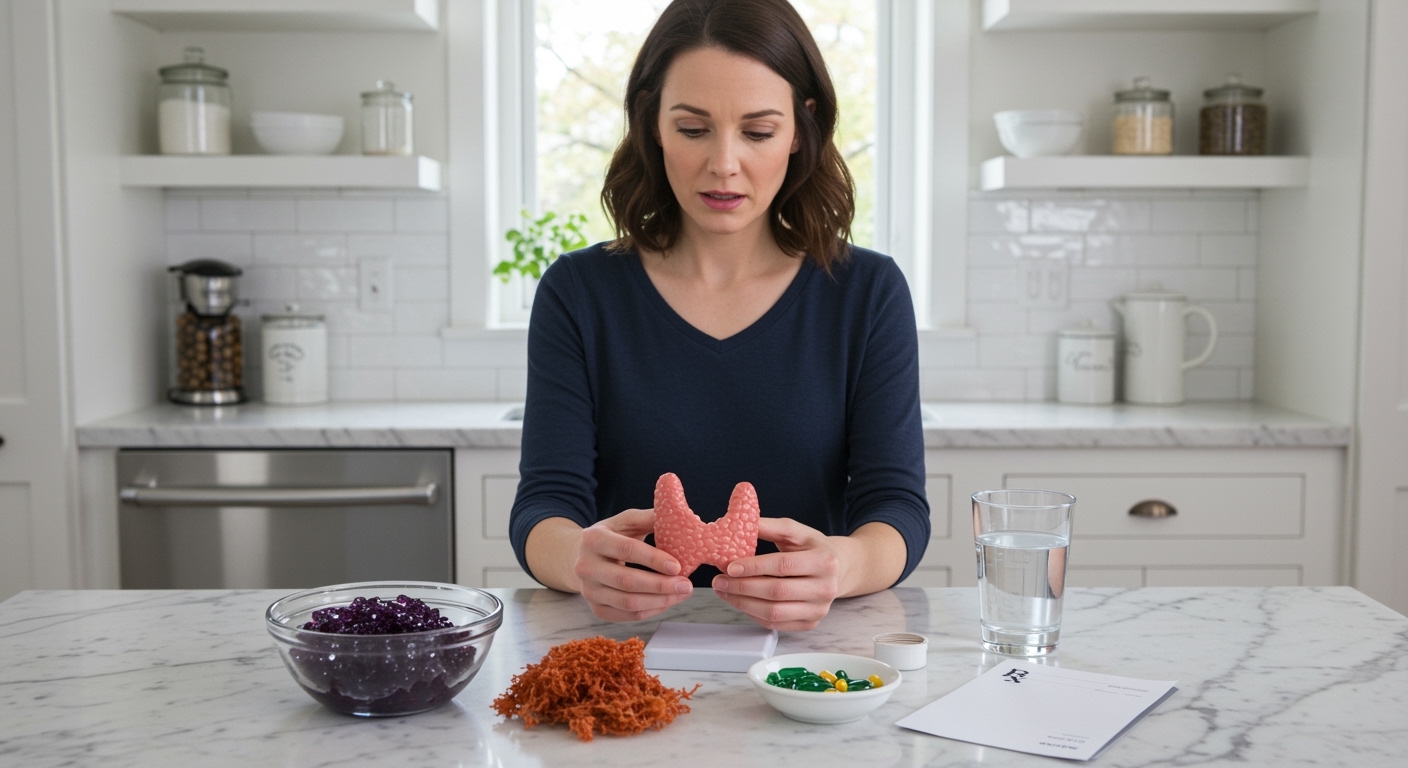
✪ Key Takeaway: Sea moss can worsen hypothyroidism by causing iodine overload, especially if you take thyroid medication.
Introduction
Social media influencers are calling sea moss a miracle cure for thyroid problems.
You probably saw videos claiming this ocean vegetable will fix your sluggish thyroid, boost your energy, and transform your health overnight.
Hi, I am Abdur, your nutrition coach, and today I am going to explain why sea moss might actually harm your hypothyroidism instead of helping it.
What Exactly Is Sea Moss And Why Does Everyone Talk About It?
Sea moss is a type of red algae that grows along rocky coastlines in the Atlantic Ocean.
People also call it Irish moss or by its scientific name, Chondrus crispus.
This seaweed became trendy because it contains iodine, a mineral your thyroid gland needs to produce hormones.
The wellness industry jumped on this fact and started marketing sea moss as a natural thyroid booster.
Companies sell it as dried flakes, powder, capsules, or pre-made gel that you can add to smoothies.
The problem is that iodine content in sea moss varies wildly depending on where it grew and how it was processed.
One batch might contain very little iodine while another could have dangerously high amounts that overwhelm your thyroid function.
✪ Fact: Sea moss can contain anywhere from trace amounts to over 47,000 micrograms of iodine per gram, making dosing impossible to predict.
Does Your Hypothyroid Body Actually Need More Iodine?
Most people with hypothyroidism in developed countries do not have iodine deficiency.
Your table salt is fortified with iodine, and you get enough from dairy products, eggs, and seafood.
The most common cause of hypothyroidism is Hashimoto thyroiditis, an autoimmune condition where your immune system attacks your thyroid gland.
Adding more iodine through sea moss will not fix an autoimmune problem.
In fact, excessive iodine can trigger or worsen autoimmune thyroid disease by increasing inflammation in your thyroid tissue.
Your thyroid uses iodine to make two hormones called T3 and T4, but too much iodine actually blocks hormone production temporarily.
This protective mechanism, called the Wolff-Chaikoff effect, prevents your thyroid from making too much hormone when iodine levels spike suddenly.
✪ Note: The recommended daily iodine intake is 150 micrograms for adults, but one serving of sea moss can exceed this by hundreds of times.
Can Sea Moss Interfere With Your Thyroid Medication?
This is where things get seriously dangerous for people taking thyroid medication.
If you take levothyroxine or any synthetic thyroid hormone, adding sea moss creates unpredictable interactions.
The massive iodine load from sea moss can interfere with how your medication works in your body.
Your doctor carefully adjusted your medication dose based on your blood tests and symptoms.
When you suddenly flood your system with unpredictable amounts of iodine, your thyroid function becomes unstable.
You might experience symptoms of both hypothyroidism and hyperthyroidism as your thyroid swings between underactive and overactive states.
Your next blood test will show confusing results, and your doctor might unnecessarily change your medication dosage based on these artificial fluctuations.
✪ Pro Tip: Always tell your doctor about any supplements you take, including sea moss, before your thyroid function tests.
What Are The Real Risks Of Taking Sea Moss For Thyroid Health?
The biggest risk is iodine-induced thyrotoxicosis, a condition where excess iodine causes your thyroid to produce too much hormone.
This can happen even if you have hypothyroidism because your thyroid might still have some functioning tissue.
Symptoms include rapid heartbeat, anxiety, tremors, weight loss, and difficulty sleeping.
For people with Hashimoto thyroiditis, high iodine intake can accelerate the autoimmune destruction of your thyroid gland.
Research shows that populations with high iodine intake have higher rates of autoimmune thyroid disease.
Sea moss also carries contamination risks because it absorbs heavy metals like mercury, lead, and arsenic from ocean water.
These toxins accumulate in your body over time and create additional health problems beyond thyroid dysfunction.
✪ Fact: A case report documented a woman who developed severe hyperthyroidism after taking sea moss supplements for just two months.
What Should You Do Instead To Support Your Thyroid?
Focus on eating a balanced diet with adequate but not excessive iodine from whole food sources.
Include eggs, dairy products, fish, and iodized salt in moderate amounts.
Make sure you get enough selenium, which helps convert T4 to the active T3 hormone your cells actually use.
Brazil nuts, sunflower seeds, and fish provide good amounts of selenium without the risks of supplements.
Take your thyroid medication consistently at the same time each day, preferably on an empty stomach.
Work with your doctor to monitor your thyroid function through regular blood tests and adjust medication as needed.
If you want to try any supplement, discuss it with your healthcare provider first and choose products that have been tested for purity and potency.
✪ Pro Tip: Managing stress, getting enough sleep, and maintaining stable blood sugar levels support thyroid health more effectively than any supplement.
The Bottom Line
Sea moss is not the thyroid miracle cure that social media makes it out to be.
Your thyroid needs consistency and balance, not trendy supplements with unpredictable iodine levels that create more problems than they solve.
I would love to hear your thoughts on this topic, so please share your questions or experiences with thyroid supplements in the comment section below.
References
At NutritionCrown, we use quality and credible sources to ensure our content is accurate and trustworthy. Below are the sources referenced in writing this article:
- GoodRx: Is Sea Moss Good for You?
- MDLinx: An Increasingly Popular Sea Supplement May Pose Thyroid Health Risks
- Cleveland Clinic: Sea Moss Benefits
- British Thyroid Foundation: Diets and Supplements for Thyroid Disorders
- Kaiser Permanente: Sea Moss Supplements: What You Need to Know