✪ Key Takeaway: Potassium can lower blood pressure naturally by helping your kidneys remove excess sodium and relaxing blood vessel walls.
Introduction
Your doctor just told you that your blood pressure is too high and you need to make changes now.
You might be wondering if there are natural ways to bring those numbers down without immediately jumping to medication.
Hi, I’m Abdur, your nutrition coach and today I’m going to explain how potassium can actually lower your blood pressure naturally and why this mineral might be the missing piece in your health puzzle.
How Does Potassium Actually Work in Your Body?
Potassium works like a natural diuretic in your kidneys.
When you eat foods rich in potassium, your kidneys get better at removing excess sodium from your blood.
This process happens because potassium and sodium work together in a delicate balance.
Too much sodium makes your body hold onto water, which increases blood volume and raises pressure.
Potassium helps your kidneys flush out that extra sodium and water, which reduces blood volume and lowers pressure naturally.
Research shows that people who eat more potassium have lower blood pressure readings than those who eat less.
The mineral also helps relax blood vessel walls, making it easier for blood to flow through your arteries.
✪ Pro Tip: Your body needs about 3,500 mg of potassium daily to maintain healthy blood pressure levels.
What Does the Research Actually Say?
Multiple studies have proven that potassium can significantly lower blood pressure in both healthy people and those with hypertension.
A major review published in the BMJ analyzed data from 33 studies involving over 128,000 participants.
The researchers found that increasing potassium intake reduced systolic blood pressure by an average of 3.5 mmHg and diastolic pressure by 2.0 mmHg.
These numbers might seem small, but they represent a significant reduction in cardiovascular risk.
Another study from Harvard Medical School showed that people who ate the most potassium had a 20% lower risk of stroke compared to those who ate the least.
The American Heart Association now recommends increasing potassium intake as a first-line approach for managing blood pressure.
Clinical trials have shown that potassium supplements can lower blood pressure within just a few weeks of starting treatment.
✪ Fun Fact: A 3.5 mmHg reduction in blood pressure can decrease stroke risk by 8-15% and heart disease risk by 6%.
Which Foods Give You the Most Potassium?
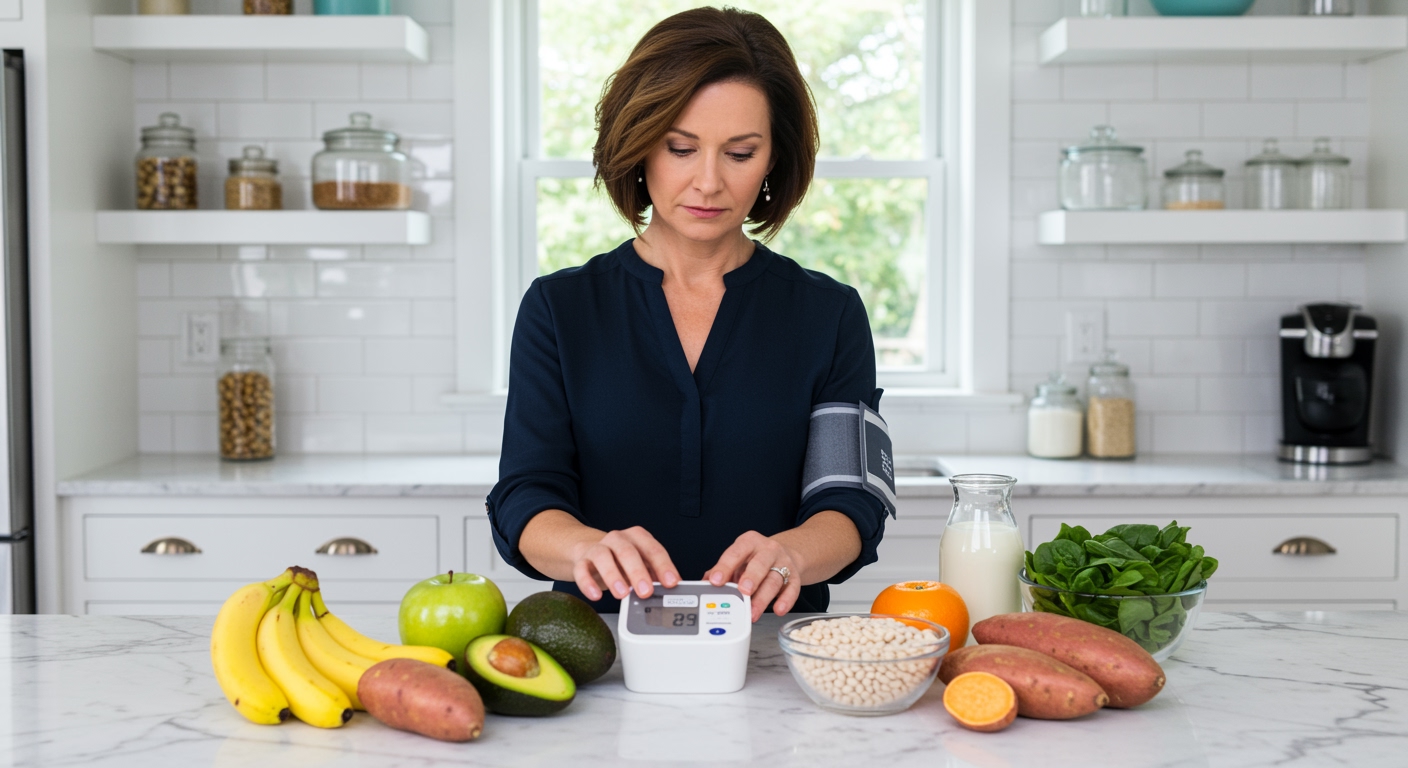
Bananas get all the attention, but they are not the richest source of potassium.
One medium banana contains about 422 mg of potassium, which is good but not exceptional.
White beans pack 1,189 mg of potassium per cup, making them one of the best sources available.
Sweet potatoes contain 952 mg per medium potato, and they taste great roasted with a little olive oil.
Avocados provide 975 mg per cup, plus healthy fats that help your body absorb other nutrients.
Spinach delivers 839 mg per cooked cup, and you can easily add it to smoothies or omelets.
Plain yogurt contains 573 mg per cup and gives you probiotics as a bonus for gut health.
✪ Note: Processed foods are typically low in potassium and high in sodium, creating the opposite effect you want.
Can You Take Too Much Potassium?
Getting too much potassium from food is nearly impossible for healthy people.
Your kidneys are excellent at removing excess potassium when they function normally.
However, people with kidney disease need to be careful because their kidneys cannot remove potassium efficiently.
Some medications like ACE inhibitors and potassium-sparing diuretics can also increase potassium levels.
If you take these medications, you should talk to your doctor before dramatically increasing your potassium intake.
Potassium supplements can be dangerous because they deliver large amounts quickly, unlike food sources.
Most nutrition experts recommend getting potassium from whole foods rather than supplements whenever possible.
✪ Pro Tip: Always check with your healthcare provider before making major dietary changes if you have kidney problems or take blood pressure medications.
How Quickly Will You See Results?
Most people start seeing blood pressure improvements within 2-4 weeks of increasing their potassium intake.
The exact timeline depends on your starting blood pressure, overall diet, and how much potassium you add.
People with higher blood pressure tend to see more dramatic results than those with normal readings.
You need to be consistent with your potassium intake because the benefits disappear when you stop eating potassium-rich foods.
The best approach is to gradually increase your potassium intake over several weeks rather than making sudden changes.
Track your blood pressure at home so you can see the improvements as they happen.
Remember that potassium works best when combined with other healthy habits like reducing sodium and staying active.
✪ Fun Fact: The DASH diet, which emphasizes potassium-rich foods, can lower blood pressure as much as some medications.
The Bottom Line
Potassium can definitely lower your blood pressure naturally by helping your kidneys remove excess sodium and relaxing your blood vessels.
As I always tell my clients, nature provides powerful tools for health, but consistency is the key that unlocks their potential.
What questions do you have about using potassium to support your blood pressure goals, and which potassium-rich foods are you most excited to try?
References
At NutritionCrown, we use quality and credible sources to ensure our content is accurate and trustworthy. Below are the sources referenced in creating this article:
- BMJ: Effect of increased potassium intake on cardiovascular risk factors and disease
- American Heart Association: Potassium and High Blood Pressure
- Harvard Health: Can eating potassium-rich foods lower my blood pressure?
- PMC: Potassium Intake and Blood Pressure