Bananas: Are They Really Good For High Blood Pressure? (Expert Answer)

Middle-aged woman standing behind marble countertop with bananas, blood pressure monitor, and heart model in bright kitchen

✪ Key Takeaway: Bananas effectively lower blood pressure through high potassium content that helps your body flush out excess sodium. Introduction You grab a banana for breakfast and wonder if this simple yellow fruit can actually help your blood pressure numbers. You are asking this question because everywhere you look, someone is talking about potassium and heart health, but nobody explains how it really works in your body. Hi, I am Abdur, your nutrition coach and today I am going to explain exactly how bananas affect your blood pressure and whether they deserve a spot in your daily diet. What Makes Bananas Special For Blood Pressure? Bananas contain about 422 milligrams of potassium in one medium-sized fruit. This amount represents roughly 9 percent of your daily potassium needs. Potassium works as a natural counterbalance to sodium in your bloodstream. When you eat foods high in potassium, your kidneys help flush out excess sodium through urine. Less sodium in your blood means less water retention and lower pressure against your artery walls. Research published in medical journals shows that increasing potassium intake can reduce systolic blood pressure by 3 to 6 points in people with hypertension. ✪ Fact: The World Health Organization recommends at least 3,510 milligrams of potassium daily for adults to reduce blood pressure and cardiovascular disease risk. How Does The Sodium-Potassium Balance Work? Your body maintains a delicate sodium-potassium balance across cell membranes. Sodium sits mostly outside your cells while potassium stays inside them. This balance controls how


Decaf Coffee: Is It Even Safe For High Blood Pressure? (Expert Answer)

Woman holding coffee mug standing behind marble counter with heart model, blood pressure monitor, coffee beans, and coffee pot visible

✪ Key Takeaway: Decaf coffee is generally safe for high blood pressure, but it still contains small amounts of caffeine and other compounds that may affect some people. Introduction You switched to decaf coffee thinking you solved your blood pressure problem. But then you heard someone say that decaf might not be completely safe either, and now you are confused about whether you made the right choice for your health. Hi, I am Abdur, your nutrition coach, and today I am going to explain everything you need to know about decaf coffee and its real impact on high blood pressure. Does Decaf Coffee Actually Contain Caffeine? Yes, decaf coffee still contains caffeine, just in much smaller amounts than regular coffee. A typical cup of regular coffee contains about 95 milligrams of caffeine, while the same amount of decaf coffee contains only 2 to 5 milligrams. This means decaf has about 97 percent less caffeine than regular coffee, but it is not completely caffeine-free. The decaffeination process removes most caffeine using water, organic solvents, or carbon dioxide, but removing every single molecule is practically impossible. For most people with high blood pressure, this tiny amount of caffeine will not cause any noticeable blood pressure spike. However, if you are extremely sensitive to caffeine or drink multiple cups of decaf throughout the day, those small amounts can add up. The good news is that research shows decaf coffee does not raise blood pressure the way regular coffee does in most individuals. ✪

Cereal: Is It Really Good For High Blood Pressure? (Expert Answer)

Woman examining two cereal containers on marble countertop with blood pressure monitor and fresh fruits in bright modern kitchen

✪ Key Takeaway: Whole grain cereals lower blood pressure while refined cereals raise it due to sodium and sugar content. Introduction Your morning cereal might be the reason your blood pressure numbers refuse to budge. You probably chose cereal because it seemed like a quick, healthy breakfast option that would support your cardiovascular health goals. Hi, I am Abdur, your nutrition coach, and today I am going to reveal which cereals actually help lower blood pressure and which ones are secretly making your hypertension worse. Why Does Cereal Type Matter For Blood Pressure? The type of cereal you eat determines whether your blood vessels relax or constrict throughout the day. Whole grain cereals contain fiber that slows down sugar absorption and prevents blood pressure spikes. Research published in JAMA Internal Medicine found that people who ate whole grain cereal regularly had 19 percent lower risk of developing high blood pressure. Refined cereals strip away the bran and germ layers that contain blood pressure-lowering nutrients like magnesium and potassium. These processed versions cause rapid blood sugar increases that trigger your body to release stress hormones. Your blood vessels respond to these hormones by tightening, which pushes your blood pressure higher within hours of eating. The fiber in whole grains also feeds beneficial gut bacteria that produce compounds called short-chain fatty acids. ✪ Fact: Whole grain cereal eaters have blood pressure readings averaging 4-5 mmHg lower than those who eat refined cereals regularly. What Makes Most Breakfast Cereals Dangerous For Hypertension? Most

Peanut Butter: Is It Even Safe For High Blood Pressure? (Expert Answer)

Middle-aged woman standing behind marble counter examining peanut butter jar with blood pressure monitor and heart model visible

✪ Key Takeaway: Peanut butter is safe for high blood pressure only when you choose unsalted versions and control portion sizes carefully. Introduction You stand in the grocery aisle staring at rows of peanut butter jars wondering if this creamy spread will spike your blood pressure. You might be asking this question because your doctor told you to watch your sodium intake and you heard peanut butter contains salt. Hi, I am Abdur, your nutrition coach and today I am going to explain exactly how peanut butter affects your blood pressure and which types you should choose or avoid. Does Peanut Butter Actually Raise Blood Pressure? The answer depends entirely on which type of peanut butter you eat. Regular commercial peanut butter contains added salt that can push your blood pressure higher when consumed frequently. Most popular brands add between 120 to 250 milligrams of sodium per serving which seems small but adds up quickly throughout your day. Your body retains extra water when you consume too much sodium and this increases the volume of blood flowing through your arteries. This extra volume forces your heart to work harder and creates more pressure against your artery walls. Natural peanut butter without added salt contains only about 5 milligrams of sodium per serving which poses no threat to your blood pressure. The magnesium and potassium naturally present in peanuts actually help your blood vessels relax and may lower blood pressure slightly. ✪ Pro Tip: Always flip the jar and read the

Broccoli: Is It Really Good For High Blood Pressure? (Expert Answer)

Middle-aged woman touching fresh broccoli florets on marble countertop with blood pressure monitor and heart model visible in bright kitchen

✪ Key Takeaway: Broccoli lowers blood pressure through sulforaphane and potassium that relax blood vessels and reduce inflammation. Introduction You stand in the produce section staring at broccoli and wondering if this green vegetable can actually help your blood pressure numbers. Maybe your doctor told you to eat more vegetables, or perhaps you read somewhere that broccoli fights high blood pressure, but you want to know if the science backs it up. Hi, I am Abdur, your nutrition coach, and today I am going to explain exactly how broccoli affects your blood pressure and whether you should make it a regular part of your meals. What Makes Broccoli Special For Blood Pressure? Broccoli contains a powerful compound called sulforaphane that directly affects how your blood vessels function. When you chew broccoli, an enzyme called myrosinase converts glucoraphanin into sulforaphane, which then enters your bloodstream. This compound activates a protein called Nrf2 in your cells, which reduces oxidative stress and inflammation throughout your cardiovascular system. Research shows that sulforaphane helps your blood vessels produce more nitric oxide, a molecule that relaxes and widens blood vessels. When your blood vessels relax, blood flows more easily, and your heart does not have to work as hard to pump blood through your body. Beyond sulforaphane, broccoli delivers about 457 milligrams of potassium per cooked cup, which helps your kidneys flush out excess sodium. This sodium-potassium balance is critical because high sodium levels cause your body to retain water, which increases blood volume and raises

Carrots: Are They Really Good For High Blood Pressure? (Expert Answer)

Middle-aged woman standing behind marble counter holding carrot with blood pressure monitor, carrot juice, and heart model visible

✪ Key Takeaway: Carrots can help lower high blood pressure due to their potassium, fiber, and antioxidant content that supports healthy blood vessel function. Introduction You have probably heard that carrots are good for your eyes since childhood. But when your doctor tells you that your blood pressure numbers are creeping up, you start wondering if this orange vegetable can help your heart too. Hi, I am Abdur, your nutrition coach and today I am going to explain exactly how carrots affect your blood pressure and whether you should make them a regular part of your diet. What Makes Carrots Potentially Beneficial For Blood Pressure? Carrots contain a powerful combination of nutrients that work together to support healthy blood pressure levels. One medium carrot provides about 230 milligrams of potassium, which is a mineral that helps your body balance sodium levels. When you consume enough potassium, your kidneys can flush out excess sodium through urine, which reduces the pressure on your blood vessel walls. Carrots also contain dietary fiber, with one medium carrot providing about 2 grams. Fiber helps reduce cholesterol absorption in your gut, which keeps your arteries clear and flexible. The beta-carotene in carrots acts as an antioxidant that protects your blood vessels from oxidative damage caused by free radicals. Research published in the Journal of Human Hypertension found that people who consumed more carotenoid-rich vegetables had lower blood pressure readings compared to those who ate fewer of these foods. ✪ Fact: Orange carrots were not the original

Sweet Potatoes: Is It Even Important For High Blood Pressure? (Expert Answer)

Middle-aged woman standing behind marble countertop with sweet potatoes, blood pressure monitor, heart model, and greens in bright kitchen

✪ Key Takeaway: Sweet potatoes are important for high blood pressure because they provide potassium, magnesium, and fiber that help relax blood vessels. Introduction You walk past sweet potatoes in the grocery store every week without giving them a second thought. You might be wondering if this orange root vegetable actually makes any difference for your blood pressure numbers, or if it is just another health trend that sounds good but does nothing real. Hi, I am Abdur, your nutrition coach and today I am going to explain exactly how sweet potatoes affect your blood pressure, what makes them work, and whether you should actually care about adding them to your plate. What Makes Sweet Potatoes Different From Regular Potatoes For Blood Pressure? Sweet potatoes and regular white potatoes look similar but they work differently inside your body. The biggest difference comes down to potassium content and how your body processes the carbohydrates. One medium sweet potato contains about 542 milligrams of potassium compared to 421 milligrams in a white potato of the same size. That extra potassium matters because it helps your kidneys flush out excess sodium through urine. When sodium levels drop in your bloodstream, the pressure inside your blood vessels naturally decreases. Sweet potatoes also contain more fiber than white potatoes, which slows down sugar absorption and prevents blood sugar spikes that can stress your cardiovascular system. The orange color in sweet potatoes comes from beta-carotene, which your body converts into vitamin A that supports healthy blood

Milk: Is It Really Good For High Blood Pressure? (Expert Answer)

Woman pouring milk from pitcher into glass on marble counter with blood pressure monitor, yogurt, banana, and almonds in bright kitchen

✪ Key Takeaway: Low-fat milk can help lower blood pressure through calcium, potassium, and magnesium, but whole milk may worsen it. Introduction You stand in the dairy aisle wondering if that carton of milk will help or hurt your blood pressure numbers. You are asking this question because conflicting advice from doctors, friends, and the internet has left you confused about whether milk belongs in your blood pressure management plan. Hi, I am Abdur, your nutrition coach and today I am going to explain exactly how different types of milk affect your blood pressure and which choices support your cardiovascular health. What Does Research Say About Milk and Blood Pressure? Multiple studies show that low-fat dairy products can reduce blood pressure in people with hypertension. A major research review found that consuming three servings of low-fat dairy daily lowered systolic blood pressure by an average of 3.7 mmHg. This reduction might seem small but it translates to a significant decrease in heart disease risk over time. The DASH diet, which stands for Dietary Approaches to Stop Hypertension, specifically recommends low-fat dairy as a core component. Clinical trials testing this eating pattern consistently show blood pressure reductions comparable to some medications. However, the type of milk matters more than most people realize. Whole milk contains saturated fat that can negatively impact cardiovascular health and potentially raise blood pressure in some individuals. ✪ Fact: People who consume low-fat dairy regularly have a 16 percent lower risk of developing high blood pressure compared

White Rice: Is It That Bad For High Blood Pressure? (Expert Answer)

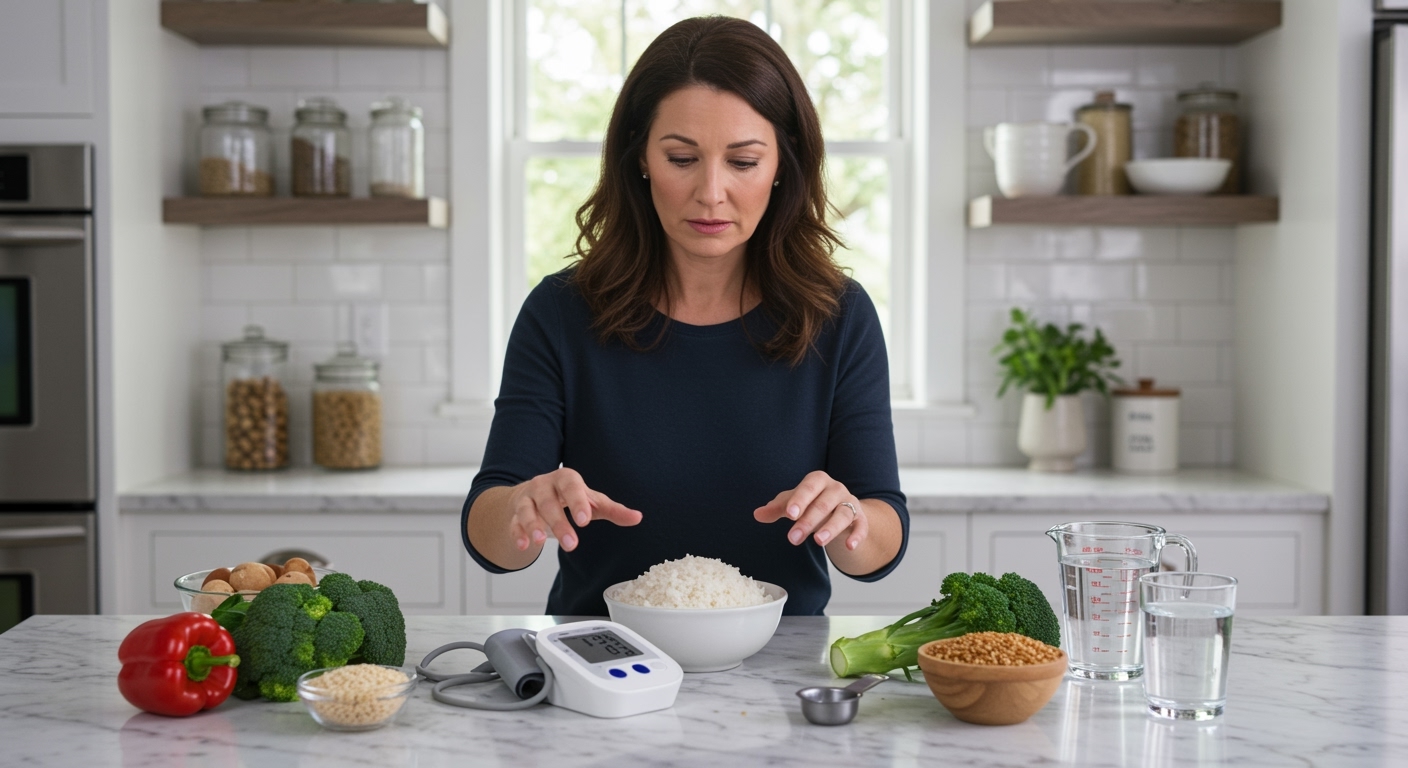
Woman standing behind marble counter examining bowl of white rice next to blood pressure monitor with vegetables and measuring cup visible

✪ Key Takeaway: White rice does not directly raise blood pressure, but eating large portions regularly can contribute to weight gain and insulin resistance. Introduction You have been told to avoid white rice because it will spike your blood pressure. This advice probably came from a well-meaning family member or a social media post that made white rice sound like poison for your heart. Hi, I am Abdur, your nutrition coach, and today I am going to explain exactly how white rice affects blood pressure and whether you really need to eliminate it from your diet. Does White Rice Directly Increase Blood Pressure? White rice itself does not contain sodium, which is the primary dietary factor that raises blood pressure. A cup of plain cooked white rice has less than 2 milligrams of sodium, making it one of the lowest sodium foods you can eat. The problem starts when you eat white rice with high-sodium dishes like soy sauce, pickles, processed meats, or salty curries. These accompaniments are what actually drive your blood pressure up, not the rice itself. Research shows that populations eating white rice as a staple with low-sodium side dishes do not show higher rates of hypertension compared to those eating other grains. The real issue is that white rice gets blamed for the company it keeps on your plate. ✪ Fact: Traditional Japanese diets include white rice daily but maintain lower hypertension rates due to minimal sodium in side dishes. How Does White Rice Affect Weight

Ice Cream: Is It That Bad For High Blood Pressure? (Expert Answer)

Woman standing behind marble counter with ice cream bowl, salt shaker, blood pressure cuff, sugar, butter, and heart model in bright kitchen

✪ Key Takeaway: Ice cream can raise blood pressure mainly through hidden sodium and saturated fat, not just sugar as most people think. Introduction You stand in front of your freezer on a hot summer evening, craving that creamy scoop of ice cream. But then you remember your doctor mentioned something about watching your blood pressure, and suddenly that innocent dessert feels like a dangerous choice. Hi, I am Abdur, your nutrition coach, and today I am going to explain exactly how ice cream affects your blood pressure and whether you need to give it up completely or can still enjoy it smartly. What Actually Happens to Your Blood Pressure When You Eat Ice Cream? Ice cream affects your blood pressure through multiple pathways that most people never consider. The sodium content in ice cream is the first major concern because salt makes your body retain water. When your body holds onto extra water, your blood volume increases, which puts more pressure on your artery walls. A single cup of regular ice cream can contain anywhere from 50 to 100 milligrams of sodium, and some flavors with mix-ins like cookies or pretzels can pack over 200 milligrams. The saturated fat in ice cream creates another problem because it promotes inflammation in your blood vessels over time. This inflammation makes your arteries stiffer and less flexible, which means your heart has to work harder to pump blood through them. Sugar does play a role too, but not in the direct way