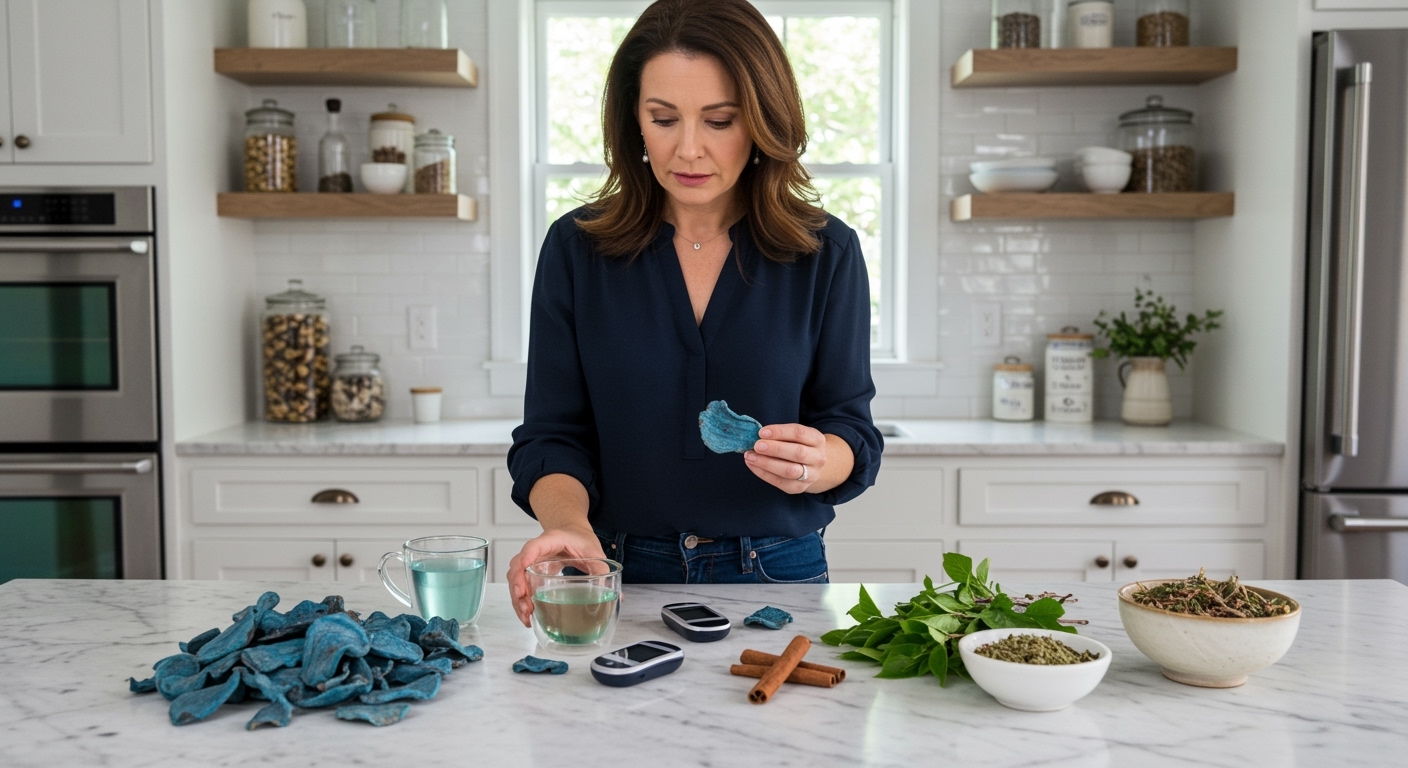
✪ Key Takeaway: Palo azul shows some promise in animal studies but lacks human clinical trials to prove its effectiveness for diabetes management.
Introduction
You walk into a health store and someone tells you about a magical blue tea that can fix your blood sugar problems.
You might be asking this question because you are tired of medications, frustrated with side effects, or simply looking for natural alternatives that actually work for diabetes management.
Hi, I am Abdur, your nutrition coach and today I am going to explain what palo azul really does for diabetes and whether it deserves a place in your health routine.
What Exactly Is Palo Azul?
Palo azul comes from a tree called Eysenhardtia polystachya that grows in Mexico and parts of Central America.
People have used this blue wood for centuries to make tea that supposedly helps with kidney problems and blood sugar issues.
When you boil the wood chips in water, the liquid turns a beautiful blue color because of compounds called flavonoids.
These flavonoids are plant chemicals that have antioxidant properties, meaning they fight damage in your cells caused by unstable molecules called free radicals.
The tea tastes mild and slightly woody, which makes it easy to drink without adding sweeteners.
Traditional healers in Mexico have passed down recipes for palo azul tea through generations, claiming it cleanses the body and balances blood sugar.
✪ Fact: Palo azul contains over 20 different flavonoid compounds that give it both color and potential health properties.
What Does Science Say About Palo Azul And Blood Sugar?
A 2020 study published in the Journal of Ethnopharmacology tested palo azul extract on diabetic mice and found it reduced blood glucose levels by about 30 percent.
The researchers discovered that palo azul worked by improving how the body uses insulin, which is the hormone that moves sugar from your blood into your cells.
Another study from 2016 showed that palo azul extract protected pancreatic beta cells, which are the cells in your pancreas that make insulin.
When these cells get damaged in diabetes, your body cannot produce enough insulin to control blood sugar properly.
The problem is that all these studies were done on animals or in test tubes, not on actual human beings with diabetes.
What works in a mouse does not always work the same way in a human because our bodies process substances differently.
There are currently no published clinical trials testing palo azul on people with type 1 or type 2 diabetes.
✪ Note: Animal studies provide clues but cannot replace human research when making health decisions about diabetes management.
Can Palo Azul Replace Your Diabetes Medication?
The short answer is absolutely not, and anyone telling you otherwise is putting your health at serious risk.
Diabetes medications like metformin, insulin, and SGLT2 inhibitors have gone through decades of research with thousands of human participants.
These medications have proven track records of preventing complications like kidney disease, nerve damage, vision loss, and heart problems.
Palo azul has none of this evidence backing it up for diabetes treatment.
If you stop taking your prescribed medication and rely only on palo azul tea, your blood sugar will likely spike to dangerous levels.
High blood sugar over time damages your blood vessels, nerves, kidneys, eyes, and heart in ways that cannot be reversed.
You can explore palo azul as a complementary approach alongside your regular treatment, but never as a replacement without your doctor’s approval.
✪ Pro Tip: Always inform your doctor about any herbal remedies you want to try because they can interact with your diabetes medications.
Are There Any Risks Or Side Effects?
Palo azul is generally considered safe when used as a tea in moderate amounts.
However, drinking large quantities might cause digestive upset, including nausea, stomach cramps, or diarrhea in some people.
There is also a concern about kidney function because palo azul acts as a diuretic, meaning it makes you urinate more frequently.
If you already have kidney problems or take medications that affect your kidneys, this extra fluid loss could cause issues with electrolyte balance.
Pregnant and breastfeeding women should avoid palo azul completely because there is no safety data available for these groups.
The tea might also interact with diabetes medications and cause your blood sugar to drop too low, leading to hypoglycemia with symptoms like shakiness, sweating, confusion, and dizziness.
✪ Note: Monitor your blood sugar more frequently if you decide to try palo azul alongside your regular diabetes management plan.
What Should You Do Instead For Better Blood Sugar Control?
Focus on strategies that have proven effectiveness through extensive human research and clinical practice.
Start with your diet by choosing whole foods like vegetables, lean proteins, healthy fats, and complex carbohydrates that digest slowly.
Physical activity is incredibly powerful because it helps your muscles use glucose without needing as much insulin, which improves your insulin sensitivity.
Even a 30-minute walk after meals can make a significant difference in your blood sugar levels throughout the day.
Sleep quality matters more than most people realize because poor sleep increases stress hormones that raise blood sugar.
Stress management through techniques like deep breathing, meditation, or talking with a counselor helps lower cortisol, which is a hormone that makes blood sugar harder to control.
If you want to explore natural supplements, consider options with stronger evidence like cinnamon, berberine, or alpha-lipoic acid, but only after discussing them with your healthcare provider.
✪ Pro Tip: Keep a food and blood sugar journal for two weeks to identify which meals and activities most impact your glucose levels.
The Bottom Line
Palo azul shows interesting potential in early research but lacks the human studies needed to recommend it as an important tool for diabetes management.
Hope is not a strategy when managing a chronic condition that can steal your quality of life one day at a time.
I would love to hear your thoughts on this topic, so please share your questions, experiences, or opinions in the comment section below.
References
At NutritionCrown, we use quality and credible sources to ensure our content is accurate and trustworthy. Below are the sources referenced in writing this article:

Does Palo Azul wash away medications, like blood pressure medicine and Synthroid, etc.?
Thank you Carolyne for your question! It’s a common concern many people have. Palo azul doesn’t typically wash away medications like blood pressure medicine or thyroid medications. But it’s always smart to be careful when mixing herbs and drugs. The tea might affect how your body absorbs some medicines, just like grapefruit juice can. To be safe, try drinking palo azul at a different time than when you take your meds. And definitely talk to your doctor about it. They know your health best and can give you personalized advice.