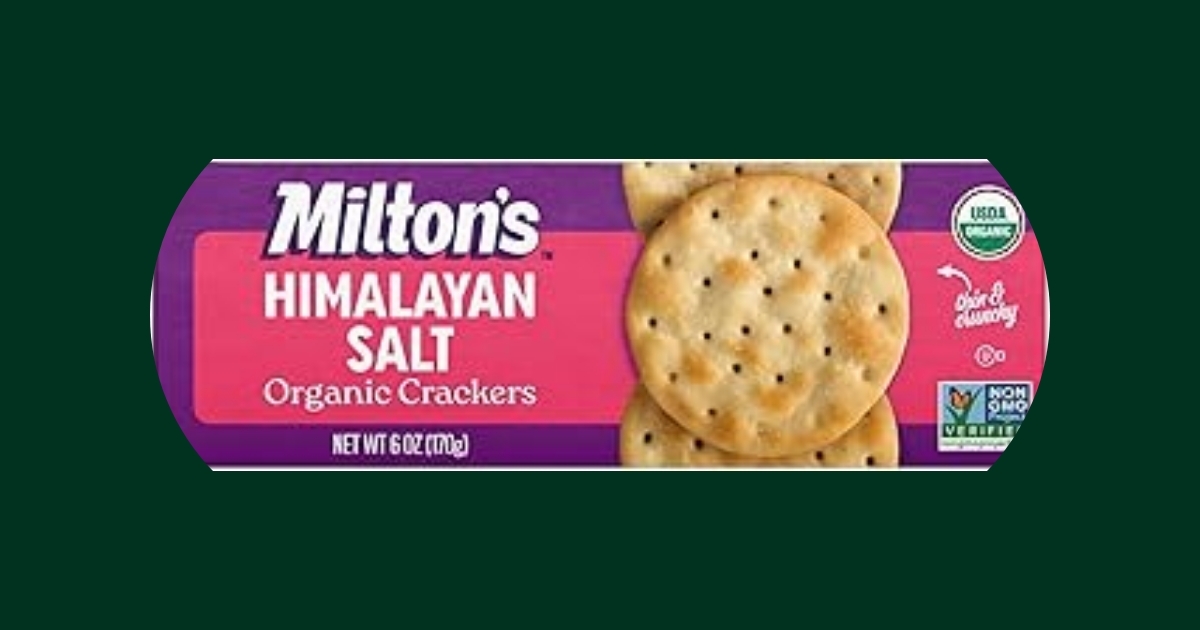
✪ Key Takeaway: Milton’s Himalayan Salt Crackers are decent whole grain snacks, but the Himalayan salt is mostly marketing hype.
Introduction
You stand in the cracker aisle wondering if those fancy pink salt crackers are actually healthier than regular ones or just another overpriced gimmick.
The ingredient list looks confusing, the price seems high, and you cannot tell if the Himalayan salt claim is legitimate or pure marketing nonsense.
Hi, I’m Abdur, your nutrition coach, and today I’m giving you my honest, research-backed analysis of Milton’s Himalayan Salt Crackers to help you make an informed decision about whether you should buy it or not.
What Is This Type of Cracker?
These are multi-grain crackers made primarily from wheat flour with added whole grains and topped with specialty salt.
When you eat crackers like these, your body breaks down the carbohydrates into glucose for energy while the fiber from whole grains slows digestion and helps maintain stable blood sugar levels.
The sesame seeds provide healthy fats and minerals that support hormone production and bone health.
Gourmet crackers with specialty salts have become increasingly popular because consumers believe exotic ingredients like Himalayan salt offer superior health benefits compared to regular table salt.
However, the truth is that Himalayan salt and regular salt are nutritionally identical in terms of sodium content, which is what actually affects your health.
✪ Fact: Himalayan salt contains 98% sodium chloride, the same as table salt, with trace minerals too small to impact your daily nutrition.
Who Manufactures and Markets It?
Milton’s Craft Bakers is the brand name, but the actual manufacturing is outsourced to third-party facilities including co-packers rather than being produced in their own factory.
The company headquarters are located in Carlsbad, California, and some products are made at a bakery facility in Escondido, California, though specific cracker production locations are not publicly disclosed.
Milton’s Baking Company LLC has been around since 1995 and nearly went bankrupt in 2012 before recovering through product innovation, so they are an established brand but not an industry giant.
The company has earned BBB A+ accreditation since 2018 and focuses on Non-GMO and organic certifications, which shows commitment to certain quality standards.
No major legal controversies or safety scandals have been documented, though some customers have complained about defective products and poor customer service response on review platforms.
✪ Note: Third-party manufacturing is common in the food industry and does not automatically indicate lower quality if proper oversight exists.
When Was This Product Launched?
This specific Himalayan Salt Cracker variety was launched approximately in 2017 as part of Milton’s expanded gourmet cracker line.
No official product recalls or safety alerts have been issued for this specific cracker variety since its launch according to FDA databases.
Some customers have reported receiving smaller package sizes without prior notice and occasional batches that arrived stale or with off-taste, suggesting possible quality control inconsistencies.
Overall, the product has maintained a consistent safety record with no documented health hazards, contamination issues, or widespread consumer protection complaints.
✪ Pro Tip: Always check the manufacturing date on cracker boxes to ensure freshness, as stale crackers lose both flavor and texture quality.
What Is Inside This Product?
- Unbleached Enriched Flour: This is refined wheat flour with added B vitamins and iron, providing carbohydrates for energy but lacking the fiber and nutrients found in whole grain flour.
- Whole Wheat Flour: This is flour made from the entire wheat kernel, providing more fiber, vitamins, and minerals compared to refined flour, which supports digestive health and blood sugar control.
- Soybean Oil: This is a refined vegetable oil high in omega-6 fatty acids, which can promote inflammation when consumed in excess compared to omega-3 fatty acids.
- Sesame Seeds: These are nutrient-dense seeds rich in healthy fats, protein, calcium, and antioxidants that support bone health and reduce inflammation.
- Himalayan Pink Salt: This is rock salt from Pakistan containing 98% sodium chloride plus trace minerals in amounts too small to provide meaningful health benefits beyond regular salt.
- Yeast: This is a leavening agent that helps the crackers rise and adds a subtle savory flavor without any significant nutritional impact.
✪ Fact: Soybean oil is one of the most common sources of excess omega-6 fatty acids in the modern diet, contributing to inflammatory imbalances.
What Is the Quality of The Ingredients?
The primary ingredients are conventional wheat flours and soybean oil, which are likely sourced from standard agricultural suppliers rather than premium organic farms given the mid-range price point.
The flour is enriched rather than naturally nutrient-dense, meaning synthetic vitamins are added back after processing strips away the natural nutrients from the grain.
Many Milton’s products carry Non-GMO Project Verified and Certified Organic labels, though you must check individual product packaging as not all varieties have these certifications.
The ingredient list is relatively clean without artificial preservatives, colors, or high-fructose corn syrup, which is better than many conventional cracker brands.
The overall ingredient profile is acceptable for the price point but not exceptional, as the use of refined flour and soybean oil keeps this from being a truly premium health food product.
✪ Pro Tip: Look for crackers made with 100% whole grain flour listed as the first ingredient to maximize fiber and nutrient intake.
What Does This Product Claim?
The primary claim is that these crackers are made with Himalayan pink salt, which marketing materials suggest is a healthier, more natural salt option.
This claim is misleading because Himalayan salt contains the same amount of sodium as regular salt, and the trace minerals present are in such small quantities they provide no meaningful health benefits.
Scientific research shows that all salt types affect blood pressure and cardiovascular health identically based on sodium content, regardless of color or origin.
The marketing message creates a health halo effect that makes consumers believe they are making a superior choice, when in reality the sodium impact on your body is identical to crackers made with regular salt.
✪ Note: The American Heart Association recommends limiting sodium to 2,300 mg daily regardless of salt type, as all forms raise blood pressure equally.
What Do Other Users Say?
The most common positive feedback mentions that these crackers have a satisfying crisp texture that holds toppings well without breaking, and users enjoy the savory flavor from the sesame seeds and salt.
The most frequent negative complaints involve receiving stale or broken crackers, with some batches having an off-taste that suggests quality control issues during manufacturing or shipping.
Several users noted that package sizes have decreased over time without a corresponding price reduction, which creates frustration about getting less product for the same money.
A small number of customers reported mild digestive discomfort after eating these crackers, likely due to the wheat content or high sodium levels in those sensitive to these ingredients.
The general consensus is that these crackers offer decent value when fresh but the inconsistent quality and shrinking package sizes make them less appealing compared to competitors at similar price points.
✪ Pro Tip: Buy crackers from stores with high product turnover to increase your chances of getting fresh boxes with better texture and flavor.
What Is Your Honest Opinion?
You should buy these crackers if you want a convenient whole grain snack with clean ingredients, but skip them if you are specifically seeking health benefits from Himalayan salt or need a truly low-sodium option.
The combination of refined and whole wheat flour provides moderate fiber content, making these suitable for occasional snacking but not ideal as a daily staple for those prioritizing maximum nutrient density.
If you decide to buy Milton’s crackers, choose the original multi-grain or everything flavor varieties instead of paying extra for the Himalayan salt version, since the salt type makes no nutritional difference.
These crackers deserve a spot in your pantry rotation as a better-than-average processed snack option, but do not expect them to be a health food miracle just because of the pink salt marketing.
✪ Fact: One serving of these crackers contains about 150-180 mg of sodium, which is moderate but adds up quickly if you eat multiple servings.
The Bottom Line
Go for these crackers if you want a decent whole grain snack with clean ingredients, but do not pay extra specifically for the Himalayan salt version since it offers no real health advantage over regular salt.
The ingredient list matters more than the marketing claims on the front of the package.
Share your experience with Milton’s crackers in the comments below, especially if you have noticed quality differences between batches or have found better alternatives at similar price points.
References
At NutritionCrown, we use quality and credible sources to ensure our content is accurate and trustworthy. Below are the sources referenced in writing this article:
- ZoomInfo: Milton’s Craft Bakers Company Profile
- San Diego Business Journal: Milton’s Bakes Success With Innovative Products
- Better Business Bureau: Milton’s Craft Bakers BBB Profile
- VMG Partners: Milton’s Craft Bakers Portfolio Company