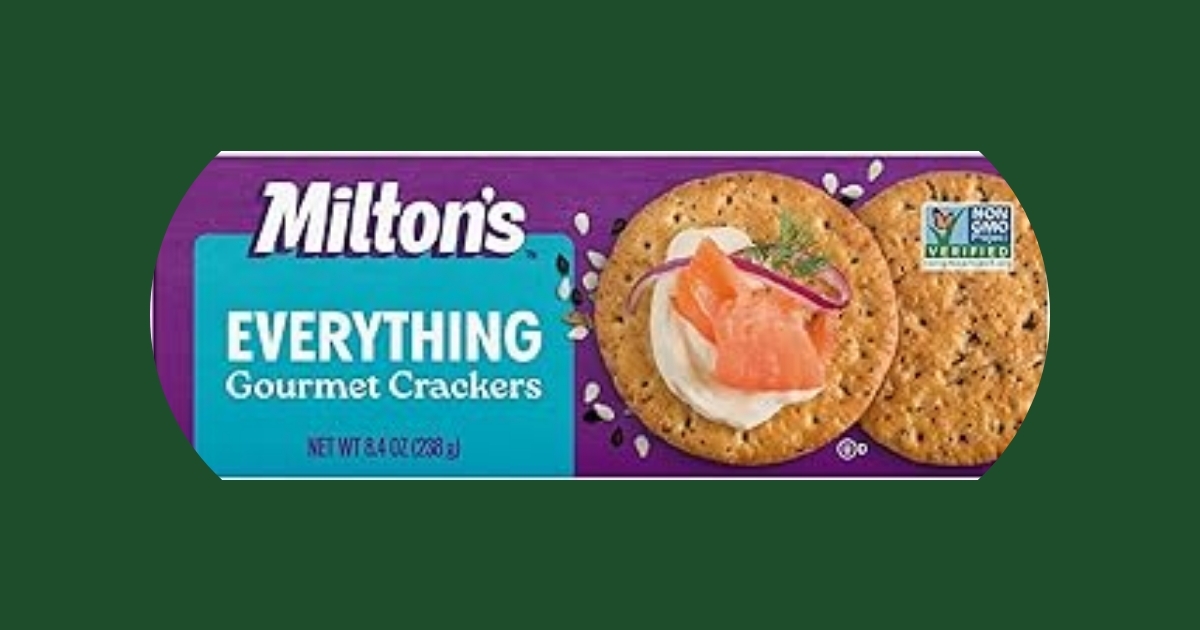
✪ Key Takeaway: Milton’s Everything Bagel Crackers offer decent taste but contain refined flour and soybean oil that limit their health value.
Introduction
You stand in the cracker aisle wondering if those artisanal-looking packages actually contain healthier ingredients than the regular brands, or if you’re just paying extra for fancy marketing.
The confusion grows when you see words like “craft bakers” and “everything bagel” that make you think you’re choosing something better, but the ingredient list tells a different story that most people never bother to read.
Hi, I’m Abdur, your nutrition coach, and today I’m giving you my honest, research-backed analysis of Milton’s Everything Bagel Crackers to help you make an informed decision about whether you should buy it or not.
What Is Everything Bagel Crackers?
Everything bagel crackers are baked snacks made from wheat flour and topped with a seasoning blend that typically includes sesame seeds, poppy seeds, garlic, onion, and salt.
When you eat these crackers, your body breaks down the refined carbohydrates into glucose, which enters your bloodstream and triggers an insulin response to manage your blood sugar levels.
The fats from the oil and seeds get digested in your small intestine, where they’re absorbed and either used for energy or stored in your fat cells depending on your overall calorie balance.
This category of flavored crackers has become increasingly popular because people want convenient snacks that taste interesting without requiring any preparation time.
However, most commercial crackers rely on refined flours and cheap oils that provide quick energy but lack the fiber, vitamins, and minerals your body needs for long-term health.
✪ Fact: The everything bagel seasoning trend started in New York City in the 1980s and has now spread to crackers, chips, and even popcorn.
Who Manufactures and Markets It?
Milton’s Craft Bakers is the brand name, and the product is manufactured directly by Milton’s Baking Company LLC in their own facility rather than being outsourced to a third-party manufacturer.
The company headquarters and production facility are both located in Carlsbad, California, United States, which means they control their manufacturing process from start to finish.
Milton’s has been in business since 1997, making them a 29-year-old brand with an established presence in the artisanal baked goods market, though they nearly faced bankruptcy in 2012 before being acquired by new ownership.
The company holds BBB A+ accreditation since 2018 and focuses on organic and quality ingredients, but they haven’t received major industry awards for safety standards beyond standard food safety compliance.
There are no major controversies or legal issues documented regarding their business practices, though some customer complaints on Yelp mention unreturned calls about defective products and sneaky size reductions without proper notice.
✪ Note: A brand surviving near-bankruptcy and continuing for over a decade shows resilience but doesn’t guarantee consistent product quality.
When Was This Product Launched?
This specific product was launched approximately in 2004 as part of Milton’s gourmet cracker line, making it roughly 20 years old in the marketplace.
There are no official recalls or safety alerts issued by FDA or other regulatory bodies for this product since its launch.
Some consumer feedback on Yelp and online reviews mention that the crackers seem smaller and the packaging size has been reduced over time without clear communication, which creates trust issues with loyal customers.
Overall, the product has maintained a consistent safety record with no serious health incidents reported through consumer protection databases, which is a positive sign for food safety.
✪ Pro Tip: When a brand reduces package size without lowering price, you’re paying more per ounce—always check the unit price on the shelf label.
What Is Inside This Product?
- Unbleached Enriched Flour: This is refined wheat flour with added vitamins and minerals to replace nutrients lost during processing, but it still lacks the fiber and natural nutrients found in whole grains.
- Water: This is a neutral ingredient used to bind the dough and has no nutritional impact on your health.
- Whole Wheat Flour: This provides more fiber and nutrients than refined flour, but since it’s listed after water, it’s present in smaller amounts than the enriched flour.
- Soybean Oil: This is a highly processed omega-6 rich oil that can contribute to inflammation when consumed in excess, and it’s one of the cheapest oils used in commercial food production.
- Sesame Seeds: These provide healthy fats, protein, and minerals like calcium and magnesium, making them a beneficial ingredient in this product.
- Poppy Seeds: These add texture and contain small amounts of minerals and healthy fats, though the quantity is too small to provide significant nutritional benefit.
- Dried Onion: This adds flavor and contains antioxidants and prebiotic fibers that support gut health, though the amount used is minimal.
- Dried Garlic: This provides flavor and contains allicin, a compound with anti-inflammatory and immune-supporting properties, but again the quantity is very small.
- Sea Salt: This is sodium chloride that enhances taste but contributes to your daily sodium intake, which needs to be monitored if you have high blood pressure.
✪ Fact: Soybean oil is one of the most widely used oils in processed foods because it’s cheap, but it contains high omega-6 fatty acids that promote inflammation when not balanced with omega-3s.
What Is the Quality of The Ingredients?
The primary ingredients are commodity-grade refined flour and soybean oil, which suggests the brand prioritizes cost efficiency over premium sourcing, though they don’t disclose specific supplier information on their packaging.
The enriched flour is a lower-grade ingredient compared to whole grain flour because the refining process removes the bran and germ, which contain most of the fiber and nutrients.
The product is BBB Accredited and the brand offers organic options in other products, but this specific cracker does not carry USDA Organic, Non-GMO Project Verified, or GMP certifications on the label.
The use of soybean oil instead of olive oil or avocado oil indicates a focus on cost reduction rather than nutritional quality, which is common in mass-market crackers.
Given the price point and ingredient profile, this product falls into the mid-range category where you’re paying for better taste and branding but not necessarily for superior ingredients compared to whole food alternatives.
✪ Pro Tip: If a product doesn’t display organic or non-GMO certification on the front label, assume it contains conventional ingredients to manage your expectations.
What Does This Product Claim?
The primary claim on the packaging and marketing materials is that these are artisanal quality craft-baked crackers made with quality ingredients and everything bagel seasoning.
This claim is partially true because the product does contain whole wheat flour and real seeds, but the first ingredient is refined enriched flour, which contradicts the artisanal quality image the brand projects.
The scientific reasoning shows that refined flour causes faster blood sugar spikes compared to whole grain flour, and soybean oil contributes to an imbalanced omega-6 to omega-3 ratio that can promote inflammation over time.
The marketing message of artisanal craft baking suggests a healthier alternative to regular crackers, but the ingredient list reveals it’s only marginally better due to the inclusion of some whole wheat flour and seeds.
✪ Note: When a product lists refined flour first and whole wheat flour second, you’re getting more refined carbs than whole grains despite the healthy branding.
What Do Other Users Say?
The most common positive feedback on Amazon with a 4.6 out of 5 rating from over 5,000 reviews highlights the crispy texture, great flavor from the everything seasoning, and how well they work as a base for toppings or eaten alone.
The most frequent negative complaints mention that some bags arrive with stale crackers, the portion sizes feel smaller than before, and there’s occasional breakage during shipping that leaves many crumbs.
Users appreciate the resealable pouch design, but some mention that the seal doesn’t always work properly after the first opening, which affects freshness over time.
There are minimal reports of digestive issues or side effects, though people with sesame allergies obviously cannot consume this product due to the prominent use of sesame seeds.
The general consensus is that users feel the product offers decent value for the taste and convenience, but many wish the ingredients were cleaner and the package size hadn’t been reduced without a price adjustment.
✪ Pro Tip: If you receive stale crackers, contact the seller immediately through Amazon for a replacement rather than leaving a negative review without resolution.
What Is Your Honest Opinion?
If you’re a busy professional or parent who needs a quick snack that tastes better than regular crackers, you can eat 5 to 10 crackers as an occasional snack 2 to 3 times per week, but don’t rely on them as a daily staple.
The logic behind this recommendation is that the refined flour and soybean oil provide quick energy but lack the sustained nutrition your body needs, and the sodium content can add up quickly if you eat them frequently.
Among the available variations, I recommend choosing the Original Multi-Grain or Honey Wheat options if you want slightly more fiber, but if you love the everything bagel flavor, stick with this specific product and just control your portion size.
My final verdict is that Milton’s Everything Bagel Crackers deserve a spot in your pantry as a backup snack option when you need convenience, but they should not replace whole food snacks like nuts, fruits, or homemade crackers made with better oils and whole grains.
✪ Pro Tip: Pair these crackers with hummus, avocado, or nut butter to add protein and healthy fats that slow down the blood sugar spike from refined flour.
The Bottom Line
If you’re looking for a tasty, convenient cracker that’s slightly better than mainstream brands, go ahead and buy Milton’s Everything Bagel Crackers, but keep your expectations realistic about their nutritional value.
The best snack is the one you prepare at home with whole ingredients, but the second-best snack is the one you actually eat instead of skipping meals entirely.
I’d love to hear your experience with these crackers in the comments below—do you pair them with specific toppings, or do you eat them straight from the bag?
References
At NutritionCrown, we use quality and credible sources to ensure our content is accurate and trustworthy. Below are the sources referenced in writing this article:
- ZoomInfo: Milton’s Craft Bakers Company Profile
- San Diego Business Journal: Milton’s Bakes Success with Innovative Products
- Better Business Bureau: Milton’s Craft Bakers BBB Profile
- VMG Partners: Milton’s Craft Bakers Portfolio Company
