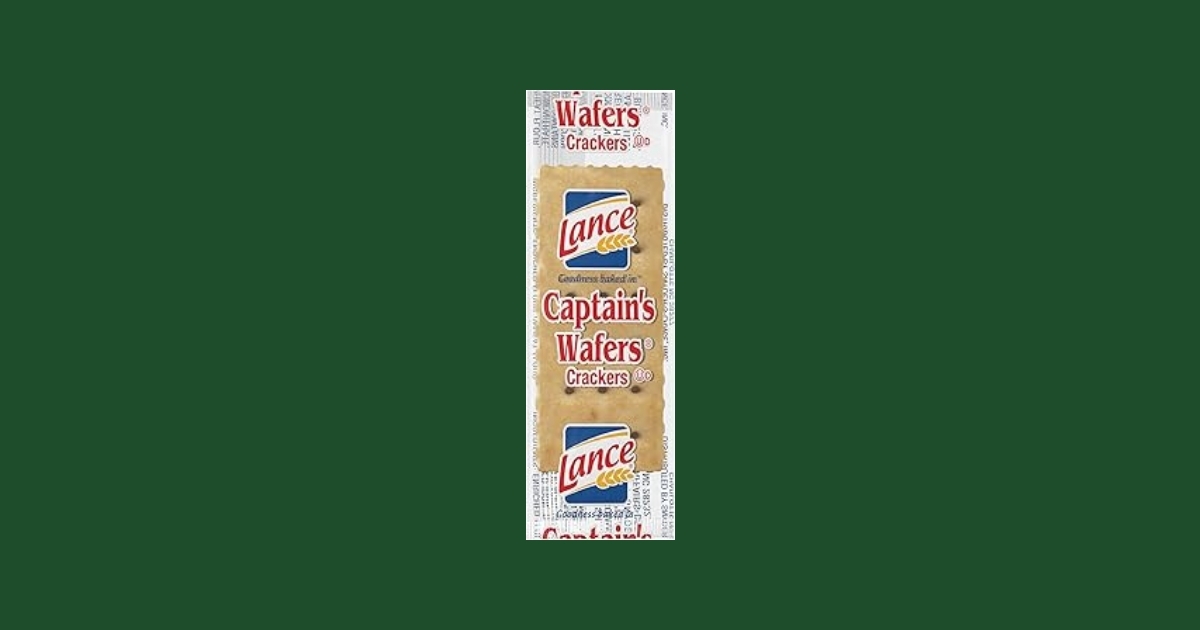
✪ Key Takeaway: Lance Captain Wafers are convenient but nutritionally empty crackers that offer minimal health benefits despite their 100-year market presence.
Introduction
You grab a pack of crackers at the salad bar thinking it is a harmless side option, but do you actually know what is inside those individually wrapped packages that seem so convenient?
Most people never flip the package to check the ingredient list, assuming all crackers are basically the same simple combination of flour, salt, and oil.
Hi, I am Abdur, your nutrition coach, and today I am giving you my honest, research-backed analysis of Lance Captain Wafers to help you make an informed decision about whether you should buy it or not.
What Is This Type of Cracker?
Captain Wafers belong to the category of salted crackers, which are baked wheat-based snacks designed for convenience and long shelf life.
When you eat these crackers, your body quickly breaks down the refined carbohydrates into glucose, causing a rapid spike in blood sugar followed by an energy crash within one to two hours.
This category of crackers remains extremely popular in the United States because they are cheap to produce, easy to transport, and require zero preparation before eating.
However, nutritionists consistently warn that these products provide empty calories with minimal vitamins, minerals, or fiber that your body actually needs.
The convenience factor drives sales, but the nutritional value remains questionable at best for anyone concerned about long-term health outcomes.
✪ Fact: The average American consumes over 23 pounds of crackers and savory snacks annually, making this category a multi-billion dollar industry.
Who Manufactures and Markets It?
Lance Inc. manufactures Captain Wafers directly in their own facilities, not through third-party contractors, which gives them complete control over the production process.
The company headquarters are located in Charlotte, North Carolina, with their main manufacturing facility at 8600 South Boulevard in the same city.
Lance is an established industry leader with 113 years of history, having achieved their first million-dollar sales year back in 1935 during the Great Depression.
The brand became the official sandwich cracker of Little League Baseball and Softball in 2014, demonstrating their market positioning and brand recognition.
In 2018, Campbell Soup Company acquired Snyder’s-Lance for approximately 6.1 billion dollars, which shows the significant market value but also raises concerns about corporate consolidation in the food industry.
✪ Note: Large corporate acquisitions often lead to cost-cutting measures that may affect ingredient quality over time, so monitor formulation changes carefully.
When Was This Product Launched?
Captain Wafers were launched in the 1980s as a convenience pack of salted crackers specifically designed for restaurant salad bars and vending machines.
No major product recalls or safety alerts have been issued for Captain Wafers since its launch, according to available consumer protection databases.
However, consumers have noted subtle formulation changes over the decades, particularly in the oil type used and the sodium content adjustments.
The product has maintained a consistent safety record with no documented cases of contamination or serious adverse health events linked directly to consumption.
✪ Pro Tip: Just because a product has no recalls does not automatically mean it supports your health goals, especially if it contains refined ingredients.
What Is Inside This Product?
Based on typical Lance Captain Wafers formulations found in the market, here is the likely ingredient breakdown:
- Enriched Wheat Flour: This is refined white flour stripped of natural fiber and nutrients, then fortified with synthetic vitamins, which your body absorbs less efficiently than whole grain sources.
- Vegetable Oil (Soybean and/or Palm Oil): These are highly processed oils that contain inflammatory omega-6 fatty acids and may include trans fats depending on the processing method used.
- Salt: Added sodium that contributes to daily intake limits, with most crackers containing 100-150 mg per serving, which adds up quickly when eating multiple servings.
- Leavening Agents (Baking Soda, Sodium Acid Pyrophosphate): These are chemical compounds that create the light texture but offer zero nutritional value to your diet.
- Malted Barley Flour: This adds a slight sweetness and color but is still a refined grain product without significant fiber or micronutrient content.
- Soy Lecithin: This is an emulsifier derived from soybeans that helps bind ingredients together but may cause digestive discomfort in people sensitive to soy products.
✪ Fact: Enriched flour contains only five synthetic nutrients added back after removing over 30 natural vitamins and minerals during the refining process.
What Is the Quality of The Ingredients?
Lance does not disclose specific sourcing information for their wheat or oil suppliers, which suggests they likely use commodity-grade ingredients purchased at the lowest market price.
The use of refined flour and processed vegetable oils indicates lower-grade raw materials compared to products using whole grains and cold-pressed oils.
Captain Wafers do not carry any quality certifications like USDA Organic, Non-GMO Project Verified, or whole grain stamps, which confirms the basic ingredient profile.
The additives used are standard food-grade chemicals approved by the FDA but offer no nutritional benefit and serve only functional purposes in manufacturing.
Given the low price point of around two to three dollars per box, the ingredient quality matches what you pay for, which is basic, mass-produced crackers with minimal nutritional investment.
✪ Note: When brands do not advertise certifications or sourcing transparency, it usually means they have nothing special to highlight about ingredient quality.
What Does This Product Claim?
The primary claim on Captain Wafers packaging emphasizes convenience and portability with individually wrapped packs, rather than making specific health or nutrition claims.
This marketing approach is technically true because the product does deliver on convenience, but it cleverly avoids making any nutritional promises that could be challenged.
The absence of health claims is actually a red flag in itself, because it indicates the manufacturer knows there is nothing nutritionally beneficial to promote about the product.
The marketing matches the actual contents perfectly—you get exactly what is advertised, which is a convenient snack with minimal nutritional value beyond basic calories.
✪ Pro Tip: When a snack food emphasizes convenience over nutrition in its marketing, that tells you everything about where their priorities lie.
What Do Other Users Say?
The most common positive feedback centers around the familiar taste, convenient packaging, and nostalgic connection to childhood memories or restaurant experiences.
Frequent negative complaints include the crackers being too salty, breaking easily during shipping, and leaving an oily residue on fingers after handling.
Users appreciate the individual packaging for portion control and freshness, though some find the excess plastic wasteful from an environmental perspective.
Some consumers report mild digestive discomfort or bloating after eating multiple servings, likely due to the refined flour and processed oils used.
The general consensus is that Captain Wafers offer decent value for the low price point if you prioritize convenience over nutritional quality.
✪ Fact: Nostalgia is a powerful marketing tool that food companies exploit to maintain customer loyalty despite declining nutritional standards in processed foods.
What Is Your Honest Opinion?
You should avoid Lance Captain Wafers if you have any health goals related to weight management, blood sugar control, or reducing inflammation in your body.
The refined flour and processed oils provide empty calories that spike your blood sugar without delivering the fiber, protein, or healthy fats your body needs for sustained energy.
If you must choose from the Lance product line, their whole grain varieties would be a marginally better option, though I still recommend making your own crackers at home with almond flour or whole wheat.
This product does not deserve a regular spot in your pantry unless you prioritize convenience over health and accept the nutritional trade-offs that come with ultra-processed snacks.
The Bottom Line
Skip Lance Captain Wafers and invest your money in whole food alternatives like homemade crackers, vegetable sticks with hummus, or unsalted nuts that actually nourish your body.
Your health is built one meal at a time, and every choice either moves you closer to your goals or further away from them.
Share your favorite healthy cracker alternatives in the comments below, and let me know if you have questions about reading ingredient labels on packaged foods.
References
At NutritionCrown, we use quality and credible sources to ensure our content is accurate and trustworthy. Below are the sources referenced in writing this article:
- Encyclopedia.com: Lance Inc. Company History
- Lance Official Website: Our Story – Lance
- Charlotte Magazine: The Cracker Kingdom’s New Ruler
- Wikipedia: Lance Inc. Wikipedia