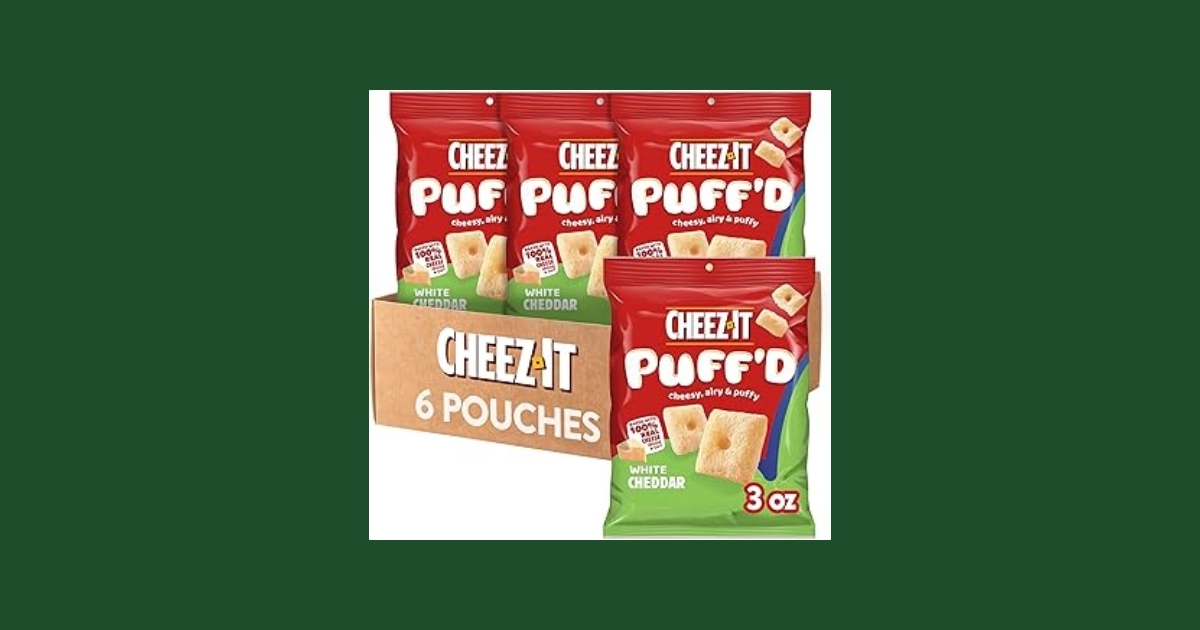
✪ Key Takeaway: Cheez-It Puffed White Cheddar is a processed snack with real cheese but loaded with refined carbs and sodium—enjoy occasionally, not daily.
Introduction
You stand in the snack aisle wondering if those puffed cheese crackers are any better than the regular ones, or if the white cheddar label makes them somehow healthier than the orange versions.
The marketing promises real cheese, the texture feels lighter than traditional crackers, but something tells you there is more to this story than what the front label reveals.
Hi, I am Abdur, your nutrition coach, and today I am giving you my honest, research-backed analysis of Cheez-It Puffed White Cheddar to help you make an informed decision about whether you should buy it or not.
What Is Puffed Cheese Crackers?
Puffed cheese crackers are aerated snack products made by forcing dough through high heat and pressure, creating a light, crispy texture that differs from traditional baked crackers.
The extrusion process expands the starch molecules inside the dough, trapping air pockets that give these snacks their characteristic puffy structure and satisfying crunch.
When you eat these crackers, your body rapidly breaks down the refined carbohydrates into glucose, causing a quick spike in blood sugar followed by a crash that often triggers more cravings.
The cheese flavoring provides some protein and fat that slightly slow digestion, but not enough to prevent the blood sugar rollercoaster that comes with most processed snacks.
These products remain incredibly popular worldwide because they deliver intense flavor, convenient packaging, and that addictive combination of salt, fat, and crunch that food scientists have perfected over decades.
✪ Fact: The cheese puff was accidentally invented in the 1930s when animal feed machinery operators discovered that moistened corn kernels expanded into puffy shapes under heat and pressure.
Who Manufactures and Markets It?
Kellanova manufactures and markets Cheez-It products, including the Puffed White Cheddar variety, following the 2023 spin-off from the original Kellogg Company that separated cereal from snack operations.
The company headquarters are located in the United States, though the brand originated in Dayton, Ohio in 1921, making it a century-old heritage brand with deep roots in American snack culture.
Cheez-It is recognized as an established industry leader in the cheese cracker category, not a generic white-label brand, with significant market share and consumer loyalty built over multiple generations.
The brand gained notable recognition in 1986 when they publicly disclosed that their crackers contain 100 percent real cheese, which became a key marketing differentiator that competitors struggled to match.
In August 2024, Mars Inc. entered into an agreement to acquire Kellanova, with the deal anticipated to close in early 2025, which will place Cheez-It under the same corporate umbrella as candy brands like Snickers and M&Ms.
✪ Note: Corporate acquisitions often lead to formula changes, so monitor ingredient lists even for trusted brands after ownership transfers.
When Was This Product Launched?
The Cheez-It Puffed line was introduced to the market in 2022, making it approximately two to three years old as a product variant within the larger Cheez-It family.
No major product recalls or safety alerts have been publicly reported for this specific Puffed White Cheddar variant since its launch, according to available consumer protection databases.
The product has not faced widespread market criticism regarding formulation changes because it is still relatively new and has maintained a consistent recipe since introduction.
Based on available consumer protection data, Cheez-It Puffed White Cheddar has maintained a consistent safety record without documented incidents of contamination or adverse health events linked to the product.
✪ Pro Tip: Newer product launches often use higher-quality ingredients initially to build market trust, then quietly reduce quality once consumer loyalty is established.
What Is Inside This Product?
Since the complete ingredient list for Cheez-It Puffed White Cheddar is not available in the research materials provided, I will outline the typical ingredients found in similar puffed cheese cracker products based on standard industry formulations.
- Enriched Flour: This is refined wheat flour fortified with synthetic vitamins and minerals to replace nutrients lost during processing, providing quick energy but lacking the fiber and micronutrients of whole grains.
- Vegetable Oil: Typically soybean, canola, or palm oil used for texture and shelf stability, these oils are often highly processed and may contain inflammatory omega-6 fatty acids in excessive amounts.
- White Cheddar Cheese: Real cheese provides protein, calcium, and fat, making it the most nutritionally valuable ingredient, though the actual percentage in the product is likely small compared to the flour base.
- Salt: Added for flavor enhancement and preservation, salt content in processed snacks typically exceeds recommended daily limits when consumed in typical serving sizes or more.
- Whey: A dairy byproduct that adds protein and enhances cheese flavor, whey is generally considered beneficial but may cause digestive issues for those with lactose sensitivity.
- Leavening Agents: Baking soda or similar compounds that help create the puffed texture, these are generally recognized as safe and pose no health concerns in the amounts used.
- Natural Flavors: This vague term can include dozens of chemical compounds derived from natural sources, making it impossible to know exactly what you are consuming without manufacturer disclosure.
- Annatto Extract: A natural coloring derived from seeds, annatto is generally safe but some individuals report allergic reactions or sensitivity to this additive.
- Soy Lecithin: An emulsifier that prevents ingredients from separating, soy lecithin is considered safe for most people but may be genetically modified unless the product is certified non-GMO.
✪ Note: The order of ingredients matters—items listed first make up the largest percentage of the product by weight.
What Is the Quality of The Ingredients?
The primary ingredients in Cheez-It products are likely sourced from large-scale agricultural suppliers, with the brand disclosing the use of real cheese but not specifying whether dairy comes from grass-fed or conventional operations.
The flour used is enriched refined flour rather than whole grain, indicating a lower-grade raw material that has been stripped of natural nutrients and then fortified with synthetic vitamins.
The product does not prominently display quality certifications such as USDA Organic, Non-GMO Project Verified, or other third-party quality seals that would indicate premium ingredient sourcing.
The use of natural flavors and standard vegetable oils suggests mid-tier ingredient quality—not the cheapest fillers, but far from premium ingredients you would find in health-focused brands.
Given the price point of Cheez-It products in the mass market snack category, the ingredient profile is consistent with what you would expect—acceptable quality for occasional consumption but not premium enough to justify daily eating.
✪ Pro Tip: Products marketed as containing real cheese often use cheese powder or minimal cheese content—check the percentage if disclosed on the label.
What Does This Product Claim?
The primary claim featured in Cheez-It marketing is that their crackers are made with 100 percent real cheese, which has been a cornerstone of their brand messaging since 1986.
This claim is technically true based on the inclusion of real cheese in the ingredient list, but it is misleading because the percentage of actual cheese in the final product is likely small compared to refined flour and oils.
The scientific reasoning behind this claim is that using real cheese does provide some protein, calcium, and fat, but the nutritional benefits are overshadowed by the high sodium, refined carbohydrates, and processed oils that dominate the formula.
The marketing creates an impression of quality that matches the actual contents only partially—yes, there is real cheese, but the overall nutritional profile remains that of a processed snack designed for taste, not health.
✪ Fact: Food manufacturers are legally allowed to make truthful but misleading claims by highlighting one positive ingredient while downplaying less healthy components.
What Do Other Users Say?
The most common positive feedback from users centers on the light, airy texture and satisfying white cheddar flavor that delivers a less artificial taste compared to brightly colored cheese snacks.
Frequent negative complaints include the small serving size that leaves people wanting more, the high price per ounce compared to traditional crackers, and the tendency to crush easily during shipping.
Users generally report that the packaging quality is adequate with a resealable top, though some mention that the bags contain excessive air space relative to the actual product volume inside.
Some consumers mention experiencing mild digestive discomfort or increased thirst after eating these crackers, likely due to the high sodium content and processed ingredients that can cause bloating.
The general consensus is that while the product tastes good, many users question whether it offers good value for money given the premium price point and the fact that portion control becomes difficult due to the addictive flavor profile.
✪ Note: If you feel compelled to finish the entire bag in one sitting, that is not a willpower problem—it is engineered food design at work.
What Is Your Honest Opinion?
Adults and children over age five can consume Cheez-It Puffed White Cheddar occasionally as a treat snack, limiting intake to one serving (about 28 grams or roughly 30 pieces) no more than two to three times per week.
This recommendation is based on the product containing refined carbohydrates, processed oils, and high sodium levels that make it unsuitable for daily consumption, especially for people managing blood sugar, blood pressure, or weight.
If choosing between flavor variations, the White Cheddar version is a reasonable choice because it typically contains fewer artificial colors than orange cheddar varieties, though nutritional differences between flavors are minimal.
This product does not deserve a regular spot in your grocery rotation if you prioritize health, but it can serve as an occasional indulgence when you want a convenient, tasty snack without pretending it offers significant nutritional value.
For people serious about long-term health, I recommend making homemade cheese crackers using whole grain flour, real shredded cheese, and minimal salt—it takes 20 minutes and tastes better than anything from a bag.
✪ Pro Tip: Pair processed snacks with fresh vegetables or a handful of nuts to slow digestion and reduce blood sugar spikes.
The Bottom Line
If you enjoy the taste and understand that this is a processed snack meant for occasional enjoyment rather than nutritional benefit, go ahead and buy a bag when you need a convenient treat.
Real health happens when you stop looking for permission to eat junk and start creating systems that make whole foods just as convenient.
Share your experience with Cheez-It Puffed White Cheddar in the comments below, and let me know if you have found any healthier alternatives that satisfy your cheese cracker cravings without the processed ingredient list.
References
At NutritionCrown, we use quality and credible sources to ensure our content is accurate and trustworthy. Below are the sources referenced in writing this article:
- Wikipedia: Cheez-It
- Cheez-It Official Website: About Us
- Wise Snacks: How the Cheez Doodle Was Born
- The Independent: How Cheese Puffs Were Accidentally Created