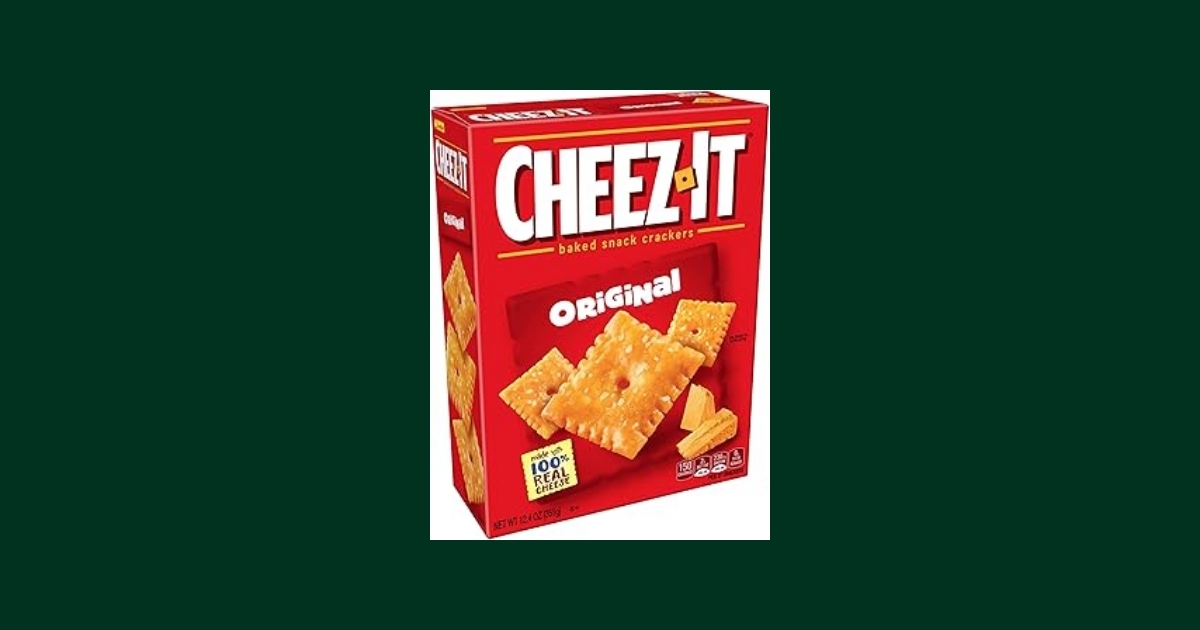
✪ Key Takeaway: Cheez-It Original crackers are a highly processed snack made with real cheese but loaded with refined flour, vegetable oil, and sodium that should be consumed occasionally, not daily.
Introduction
You stand in the snack aisle staring at dozens of cracker boxes, wondering which one will not wreck your health goals while still satisfying that crunchy craving.
The bright red box of Cheez-It catches your eye, and you remember the childhood memories, but then doubt creeps in about whether this processed snack belongs in your adult diet.
Hi, I am Abdur, your nutrition coach, and today I am giving you my honest, research-backed analysis of Cheez-It Original Cheese Crackers to help you make an informed decision about whether you should buy it or not.
What Is a Cheese Cracker?
A cheese cracker is a baked snack food made primarily from wheat flour, cheese, and fat, designed to deliver a savory, crunchy eating experience.
When you eat these crackers, your body quickly breaks down the refined carbohydrates into glucose, causing a rapid spike in blood sugar followed by a crash that often triggers more hunger.
The fat content from the cheese and added oils slows digestion slightly, but the overall nutritional profile remains heavily weighted toward empty calories with minimal fiber or protein.
Cheese crackers have remained extremely popular in the United States for over a century because they combine the addictive qualities of salt, fat, and carbohydrates in a convenient, shelf-stable package.
The food industry has perfected the flavor profile and texture to trigger dopamine release in your brain, making it nearly impossible to eat just a handful without reaching for more.
✪ Fact: The signature hole in the center of each Cheez-It cracker is not decorative—it prevents air bubbles from forming during the baking process.
Who Manufactures and Markets It?
Kellanova manufactures and markets Cheez-It crackers directly through their own production facilities, not through third-party contractors.
The company headquarters are located in Battle Creek, Michigan, while the specific manufacturing facilities for Cheez-It are in Kansas City, Kansas, and Cary, North Carolina.
Kellanova is an established industry leader that was formerly the snack division of Kellogg Company before spinning off in 2023, bringing over a century of food manufacturing experience.
The company has received various food safety certifications and maintains quality standards typical of large-scale American food manufacturers, though no extraordinary awards specifically stand out.
In August 2024, Mars Inc. entered an agreement to acquire Kellanova for approximately 36 billion dollars, with the deal expected to close in early 2025, though no major controversies or legal issues have plagued the Cheez-It brand specifically.
✪ Note: Large corporate acquisitions like this rarely change the product formulation immediately, but watch for subtle ingredient shifts over the next few years.
When Was This Product Launched?
Cheez-It crackers were first introduced to the American market on March 31, 1921, making this snack product over 100 years old.
The original recipe was created by the Green & Green Company in Dayton, Ohio, and has undergone various formula adjustments over the decades, though no major recalls or safety alerts have been widely documented in recent years.
Some long-time consumers have complained on social media and review platforms that the taste and texture have changed over time, particularly regarding the cheese intensity and cracker thickness.
Despite these subjective complaints, the product has maintained a consistent safety record according to FDA and consumer protection databases, with no widespread health incidents linked to the original formulation.
✪ Fact: Cheez-It was invented in Dayton, Ohio, the same city that gave birth to the airplane, cash register, and pop-top can.
What Is Inside This Product?
- Enriched Flour (Wheat Flour, Niacin, Reduced Iron, Vitamin B1, Vitamin B2, Folic Acid): This is refined wheat flour that has been stripped of its natural nutrients during processing, then artificially fortified with synthetic vitamins and minerals to replace what was lost, making it a nutritionally inferior ingredient compared to whole grain flour.
- Vegetable Oil (High Oleic Soybean, Soybean, Palm, and/or Canola Oil with TBHQ for Freshness): This is a blend of highly processed oils that provide fat and calories but offer minimal nutritional benefit, and TBHQ is a synthetic preservative that has raised health concerns in some animal studies, though it remains FDA-approved at low levels.
- Cheese Made with Skim Milk (Skim Milk, Whey Protein, Salt, Cheese Cultures, Enzymes, Annatto Extract Color): This is real cheese made from skim milk, which provides some protein and calcium, though the fat has been removed and the annatto extract is a natural coloring agent considered safe by most nutritional standards.
- Salt: This is sodium chloride added for flavor enhancement, and while salt is essential for bodily functions, the amount in processed snacks typically exceeds healthy limits and contributes to high blood pressure and cardiovascular issues when consumed regularly.
- Paprika: This is a ground spice made from dried peppers that adds color and mild flavor, and it contains antioxidants like vitamin A, making it one of the few beneficial ingredients in this product.
- Yeast: This is inactive yeast used as a flavor enhancer to provide a savory, umami taste, and it is generally considered safe and may offer trace amounts of B vitamins.
- Paprika Oleoresin (for Color): This is a concentrated extract from paprika used to intensify the orange-red color of the crackers, and it is a natural coloring agent considered safe for consumption.
- Soy Lecithin: This is an emulsifier derived from soybeans that helps bind ingredients together and improve texture, and while it is generally recognized as safe, some people with soy allergies may need to avoid it.
✪ Pro Tip: If you see TBHQ on any ingredient list, understand that it is a petroleum-derived preservative that keeps oils from going rancid but offers zero nutritional value.
What Is the Quality of The Ingredients?
The primary ingredients in Cheez-It crackers are commodity-grade materials sourced from large-scale agricultural suppliers, and the brand does not disclose specific origin details, suggesting cost efficiency rather than premium sourcing.
The enriched flour is the lowest grade of wheat processing, stripped of fiber and natural nutrients, while the vegetable oils are highly refined and likely chemically extracted, reducing their nutritional value significantly.
The product does not carry USDA Organic, Non-GMO Project Verified, or any premium certifications on the label, indicating that the ingredients are likely conventionally grown and may include genetically modified organisms.
The use of TBHQ as a preservative and soy lecithin as an emulsifier are industry-standard cheap additives that extend shelf life and improve manufacturing efficiency but add no health benefits.
Given the low-cost ingredients and mass-market pricing, the overall ingredient quality does not justify a premium price point, though it aligns with what you would expect from a budget-friendly, widely available snack cracker.
✪ Note: The absence of whole grains, organic certification, or non-GMO labeling tells you everything about the company’s priority—profit margin over nutritional quality.
What Does This Product Claim?
The primary claim printed on the Cheez-It Original packaging states that the crackers are made with 100% real cheese, a message the brand has emphasized since 1986.
This claim is True based on the ingredient list, which clearly shows cheese made with skim milk as the third ingredient, confirming the presence of actual dairy cheese rather than artificial cheese flavoring.
The scientific reasoning behind this claim is straightforward—real cheese provides protein, calcium, and fat, which contribute to the savory taste and satisfying texture, though the nutritional benefit is diluted by the refined flour and added oils.
The marketing message accurately matches the ingredient reality, but it cleverly distracts from the fact that the crackers are still a highly processed snack loaded with sodium, refined carbohydrates, and low-quality fats.
✪ Pro Tip: A product can be made with real cheese and still be unhealthy—do not let one positive ingredient blind you to the overall nutritional profile.
What Do Other Users Say?
The most common positive feedback from online reviews highlights the addictive taste, satisfying crunch, and nostalgic appeal that keeps people reaching for Cheez-It crackers again and again.
The most frequent negative complaints focus on the excessive saltiness, the tendency to eat far more than the recommended serving size, and occasional reports of stale crackers in certain boxes.
Users generally praise the sturdy cardboard box and resealable packaging options in larger sizes, though some mention that the inner foil lining can tear easily, compromising freshness.
A small percentage of reviewers report mild digestive discomfort, bloating, or thirst after consuming multiple servings, likely due to the high sodium content and refined carbohydrates.
The general consensus among users is that Cheez-It Original delivers on taste and convenience but offers poor value from a nutritional standpoint, especially for those trying to maintain a balanced diet.
✪ Fact: The average American consumes about 3,400 milligrams of sodium per day, and just one serving of Cheez-It crackers contributes roughly 230 milligrams to that total.
What Is Your Honest Opinion?
Adults and children over the age of 5 can consume Cheez-It Original crackers occasionally as a treat, limiting intake to one serving (about 27 crackers or 30 grams) no more than twice per week, while those with high blood pressure, diabetes, or weight management goals should avoid this product entirely.
The logic behind this recommendation is that the refined flour spikes blood sugar rapidly, the sodium content exceeds healthy limits for frequent consumption, and the low protein and fiber content fail to provide satiety, leading to overeating.
Among the available variations, the Original flavor remains the better choice compared to heavily seasoned options like Hot & Spicy or Extra Toasty, which contain even more sodium and artificial flavorings.
My final verdict is that Cheez-It Original does not deserve a regular spot in your grocery rotation or snack drawer if you prioritize long-term health, but it can serve as an occasional indulgence when you understand the nutritional trade-offs.
The Bottom Line
If you are looking for a convenient, shelf-stable snack that delivers nostalgic flavor without any nutritional benefits, go ahead and grab a box of Cheez-It Original, but if you want to support your health goals, look for whole grain crackers with higher fiber, lower sodium, and cleaner ingredient lists.
The best snack is the one you prepare at home with ingredients you can pronounce and control.
I invite you to share your results, questions, or favorite healthier cracker alternatives in the comments below so we can build a community that prioritizes real food over marketing hype.
References
At NutritionCrown, we use quality and credible sources to ensure our content is accurate and trustworthy. Below are the sources referenced in writing this article:
- Wikipedia: Cheez-It
- Dayton Daily News: Happy Birthday Cheez-It: The Crispy Crackers Were Invented in Dayton 100 Years Ago
- Cheez-It Official Website: About Us
- The Dayton Magazine: The Many Layers of Cheez-It