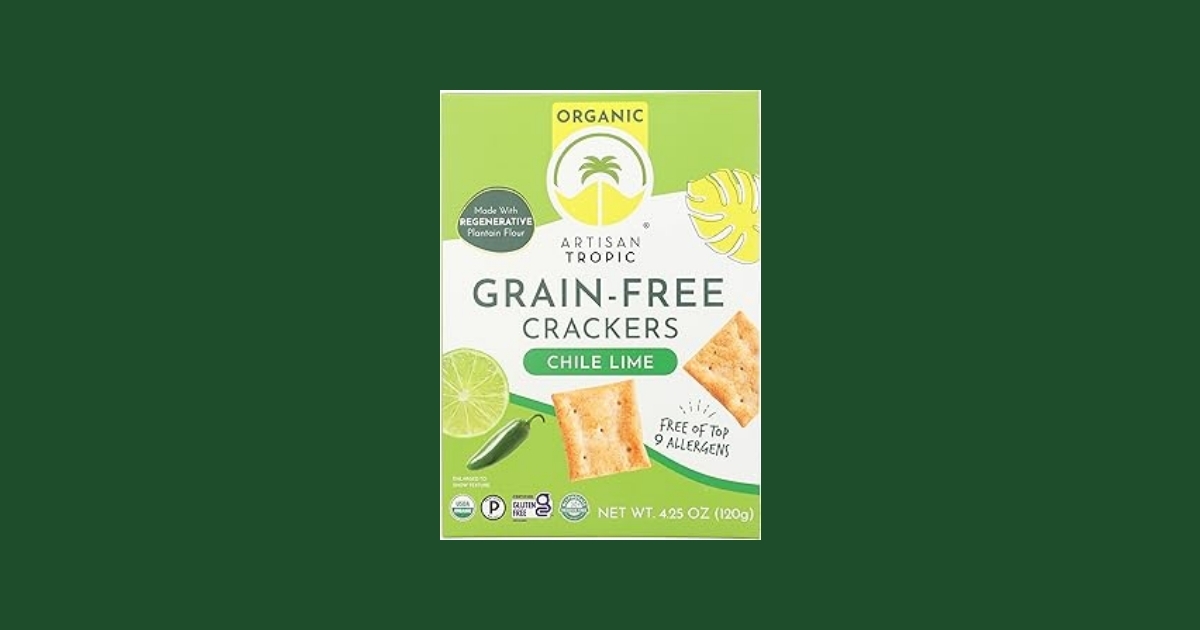
✪ Key Takeaway: Artisan Tropic Chile Crackers offer a cleaner alternative to conventional crackers but remain a processed snack best consumed occasionally.
Introduction
You stand in the cracker aisle wondering if grain-free options are truly healthier or just another expensive marketing trick designed to empty your wallet.
The ingredient lists confuse you, the certifications overwhelm you, and you cannot tell if cassava-based crackers are genuinely better than traditional wheat crackers.
Hi, I am Abdur, your nutrition coach, and today I am giving you my honest, research-backed analysis of Artisan Tropic Chile Lime Crackers to help you make an informed decision about whether you should buy it or not.
What Is Cassava-Based Crackers?
Cassava-based crackers belong to the grain-free snack category made from cassava root, a starchy tuber native to South America and widely consumed across tropical regions.
When you eat cassava crackers, your body breaks down the resistant starch into glucose molecules that enter your bloodstream, providing quick energy similar to other starchy foods.
The digestive process involves salivary amylase beginning starch breakdown in your mouth, followed by pancreatic enzymes completing the job in your small intestine.
These crackers have gained popularity among people following paleo, grain-free, or gluten-free diets who seek alternatives to wheat-based snacks without compromising on texture.
The market demand surged because consumers believe cassava offers better digestibility and fewer inflammatory compounds compared to conventional grain-based crackers.
✪ Fact: Cassava contains naturally occurring cyanogenic glycosides that must be properly processed to ensure safety for human consumption.
Who Manufactures and Markets It?
Artisan Tropic manufactures these crackers through a co-manufacturing facility in Sandusky, Ohio, while their plantain and cassava strips come from their own facility in Colombia.
The company headquarters are located in Charlotte, North Carolina, where Artisan Tropic, LLC operates as the legal entity behind the brand.
Artisan Tropic holds a strong reputation as the number one selling plantain and cassava chip brand throughout Whole Foods and has expanded to approximately 5,000 stores nationwide including Target.
The brand was founded in 2014 when the founder’s daughter was diagnosed with an autoimmune disease, demonstrating genuine commitment to creating healthier snack alternatives.
No major controversies or legal issues regarding their business practices were found in available consumer protection databases or industry reports.
✪ Note: Companies with personal health stories often maintain higher quality standards due to their founder’s direct stake in product integrity.
When Was This Product Launched?
The specific launch date for the Chile Lime Crackers variant is not publicly disclosed, though Artisan Tropic began operations in 2014 with their core plantain and cassava chip products.
No product-specific recalls or safety alerts have been issued for this cracker line since its introduction to the market.
Consumer feedback does not indicate any widespread criticism regarding formulation changes over time, suggesting consistent recipe maintenance.
The product has maintained a consistent safety record according to available consumer protection data and marketplace reviews.
✪ Pro Tip: Products without recalls or formulation controversies typically indicate stable manufacturing processes and quality control systems.
What Is Inside This Product?
- Organic Cassava Flour: This is the primary ingredient derived from cassava root, providing the starchy base that is naturally gluten-free and grain-free, though nutritionally similar to refined wheat flour in terms of blood sugar impact.
- Organic Palm Oil: This is a saturated fat extracted from palm fruit that remains stable at high temperatures, though its production raises environmental sustainability concerns and it contains about 50% saturated fatty acids.
- Organic Chile Lime Seasoning: This is a blend of spices including chile powder and lime flavoring that adds taste without significant nutritional value, though natural seasonings are preferable to artificial additives.
- Sea Salt: This is sodium chloride harvested from evaporated seawater that enhances flavor and acts as a preservative, though excessive sodium intake contributes to hypertension in salt-sensitive individuals.
- Organic Lime Juice Powder: This is dehydrated lime juice that provides citrus flavor and minimal vitamin C content, offering a natural alternative to artificial citric acid.
✪ Fact: Cassava flour contains minimal protein and fiber compared to whole grain alternatives, making it primarily a source of refined carbohydrates.
What Is the Quality of The Ingredients?
The organic certification on the label indicates that the cassava and palm oil are sourced from farms that follow USDA organic standards, avoiding synthetic pesticides and fertilizers.
The use of cassava flour instead of cassava starch suggests a less refined processing method that retains more of the original root’s composition, though it still behaves as a refined carbohydrate.
The product carries USDA Organic and likely Paleo Foundation certifications based on the brand’s portfolio, indicating third-party verification of ingredient sourcing and processing methods.
The absence of artificial preservatives, colors, or flavors demonstrates a commitment to clean label formulation, though palm oil remains a controversial ingredient from an environmental perspective.
The overall ingredient profile justifies a premium price point compared to conventional crackers due to organic certification and grain-free positioning, though the nutritional density does not significantly exceed traditional options.
✪ Note: Organic certification guarantees pesticide-free ingredients but does not automatically make a processed food nutritionally superior to whole foods.
What Does This Product Claim?
The primary marketing message emphasizes that these crackers are grain-free, gluten-free, and made with organic ingredients, positioning them as a healthier alternative to conventional wheat crackers.
This claim is True based on the ingredient list showing cassava flour as the base instead of wheat, corn, or other grains.
The scientific reasoning supports that cassava naturally contains no gluten proteins and qualifies as grain-free, making it suitable for people with celiac disease or gluten sensitivity.
However, the marketing creates a health halo effect that may mislead consumers into believing these crackers are nutritionally superior when they still function as a processed, high-carbohydrate snack food.
The packaging accurately reflects the contents, but the implied health benefits exceed what the nutritional profile actually delivers in terms of vitamins, minerals, or fiber content.
✪ Pro Tip: Grain-free does not automatically mean low-carb or blood sugar friendly—cassava flour still converts rapidly to glucose in your bloodstream.
What Do Other Users Say?
The most common positive feedback highlights the satisfying crunch and authentic chile lime flavor that rivals conventional crackers without the wheat-based ingredients.
Frequent negative complaints mention the high price point compared to regular crackers and occasional issues with crackers arriving broken due to fragile packaging.
Users appreciate the resealable packaging that maintains freshness, though some report that the bag size feels small relative to the cost.
A small percentage of consumers report mild digestive discomfort when consuming large quantities, likely due to the high cassava starch content and palm oil.
The general consensus suggests that users feel the product offers acceptable value for those strictly following grain-free diets, but conventional cracker buyers find the price unjustifiable.
✪ Fact: Consumer willingness to pay premium prices often reflects dietary restrictions rather than objective nutritional superiority of the product.
What Is Your Honest Opinion?
People with celiac disease, gluten sensitivity, or those following strict paleo protocols should consider these crackers as an occasional snack option, consuming no more than one serving (about 10-12 crackers) per sitting.
The logic behind this recommendation stems from the fact that cassava flour still delivers a high glycemic load similar to refined wheat flour, causing rapid blood sugar spikes despite being grain-free.
Among available variations in the Artisan Tropic line, the plain sea salt version offers better control over sodium and seasoning intake compared to flavored options like chile lime.
This product deserves a spot in your pantry rotation only if you have specific dietary restrictions that eliminate conventional crackers, but it should not replace whole food snacks like vegetables with hummus or nuts.
The crackers work best as a vehicle for nutrient-dense toppings like avocado, sardines, or nut butter rather than eaten alone as a standalone snack.
✪ Pro Tip: Pair these crackers with protein and healthy fats to slow down the blood sugar spike caused by the refined cassava starch.
The Bottom Line
If you need a grain-free cracker option due to medical conditions or dietary philosophy, Artisan Tropic Chile Lime Crackers deliver on their promise with clean ingredients and satisfying texture.
The best snack is the one that serves your meal, not replaces it—crackers are carriers, not complete nutrition.
Share your experience with these crackers in the comments below, especially how you pair them with other foods to create balanced snacks that support your health goals.
References
At NutritionCrown, we use quality and credible sources to ensure our content is accurate and trustworthy. Below are the sources referenced in writing this article:
- Artisan Tropic: About Us – Artisan Tropic
- Artisan Tropic: Our Journey So Far – Artisan Tropic Blog
- The Business Download: Artisan Tropic: Snack Food Healthy for the Body and Planet
- Charlotte Business Journal: Latinos Mean Business: Artisan Tropic
- Paleo Foundation: Artisan Tropic: Effect of Transparency on Market Interest