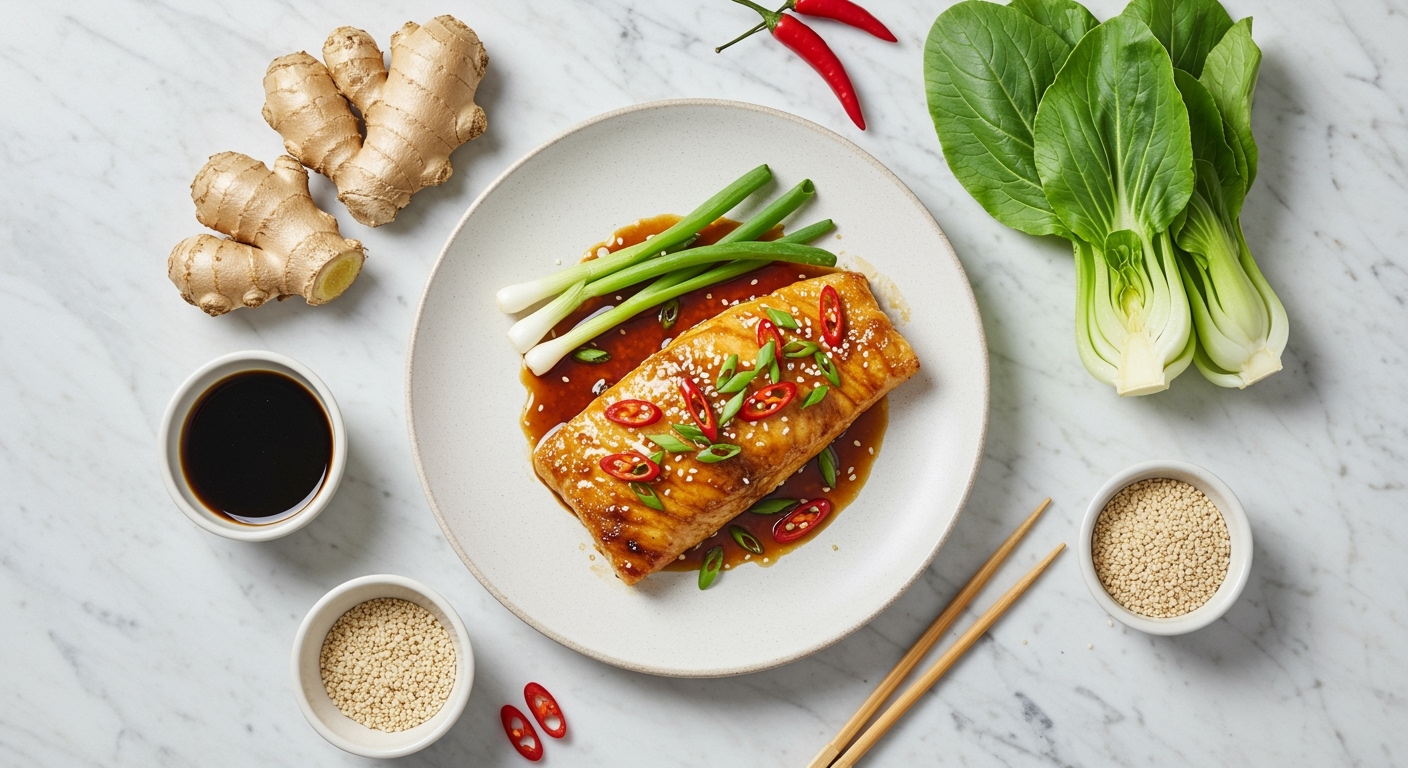
✪ Key Takeaway: This Asian grouper delivers restaurant-quality flavor in 20 minutes with a sweet-savory glaze perfect for busy weeknights.
Introduction
Imagine biting into tender, flaky grouper coated with a glossy caramelized glaze that hits every taste note at once.
The sweet and savory balance combined with a hint of heat makes this dish absolutely irresistible.
What makes this recipe special is how it transforms a simple white fish into something that tastes like it came from an expensive Asian restaurant.
Hi, I am Abdur, your nutrition coach and today I am showing you exactly how to make Asian grouper that stays moist and flavorful while cooking in under 30 minutes.
What’s the Origin of This Recipe?
Asian grouper recipes draw inspiration from coastal Chinese cooking where fresh fish meets bold sauces.
In regions like Hong Kong and Taiwan, grouper is considered a premium fish often served during celebrations and family gatherings.
The cooking method typically involves steaming or pan-searing the fish, then finishing it with a ginger-scallion sauce or sweet soy glaze.
This particular recipe combines elements from Cantonese and Southeast Asian cuisines, creating a fusion that works beautifully with grouper’s mild, sweet flesh.
The technique of building layers of flavor through marinating, searing, and glazing comes from traditional Asian cooking wisdom passed down through generations.
✪ Fact: Grouper is called the “chicken of the sea” in many Asian cultures because of its mild flavor and firm texture.
Is This Recipe Healthy?
Grouper is an excellent source of lean protein with very little fat, making it perfect for weight management.
A typical serving provides about 20-25 grams of protein with less than 2 grams of fat.
This fish is also rich in omega-3 fatty acids, which support heart health and reduce inflammation in your body.
The ginger and garlic in this recipe add anti-inflammatory compounds that boost your immune system.
You can make this recipe even healthier by reducing the sugar in the glaze or using a natural sweetener like honey.
The dish fits perfectly into low-carb, keto, and paleo diets when you skip the sugar or use minimal amounts.
Adding more vegetables like bok choy or snap peas increases the fiber content and makes it a complete balanced meal.
✪ Total Time: 25 minutes | ✪ Total servings: 2
Tools
- Large skillet or wok
- Sharp knife for slicing
- Cutting board
- Small mixing bowl
- Measuring spoons
- Spatula or fish turner
- Paper towels
✪ Pro Tip: A fish turner with a thin, flexible edge prevents the delicate grouper from breaking apart when flipping.
Ingredients
- 2 grouper fillets (6 ounces each)
- 2 tablespoons soy sauce
- 1 tablespoon rice vinegar
- 1 tablespoon brown sugar or honey
- 2 teaspoons sesame oil
- 3 cloves garlic, minced
- 1 tablespoon fresh ginger, grated
- 2 scallions, sliced
- 1 red chili, sliced (optional)
- 1 tablespoon vegetable oil
- Salt and pepper to taste
- Sesame seeds for garnish
✪ Note: Fresh grouper works best, but frozen fillets work perfectly when thawed properly in the refrigerator overnight.
Instructions
- Pat the grouper fillets completely dry with paper towels and season both sides with salt and pepper.
- In a small bowl, whisk together soy sauce, rice vinegar, brown sugar, and sesame oil until the sugar dissolves.
- Heat vegetable oil in a large skillet over medium-high heat until it shimmers.
- Place the grouper fillets skin-side down (if skin is on) and cook for 3-4 minutes without moving them.
- Carefully flip the fillets and cook for another 2-3 minutes until the fish is opaque and flakes easily.
- Remove the fish to a plate and reduce heat to medium.
- Add garlic and ginger to the same pan and cook for 30 seconds until fragrant.
- Pour in the sauce mixture and let it bubble for 1-2 minutes until it thickens slightly.
- Return the fish to the pan and spoon the sauce over the fillets.
- Top with scallions, chili slices, and sesame seeds before serving immediately.
✪ Pro Tip: The fish continues cooking from residual heat, so remove it from the pan when it is just barely opaque in the center.
Nutrition Facts (approximate)
- Calories: 280 kcal
- Protein: 35g
- Carbohydrates: 12g
- Fat: 10g
✪ Fact: Grouper provides more than 70 percent of your daily vitamin B12 needs in just one serving.
What Are Common Mistakes to Avoid?
The biggest mistake people make is overcooking the grouper, which turns it dry and rubbery.
Fish cooks incredibly fast, and grouper is no exception—it needs only 6-7 minutes total cooking time.
Another common error is not drying the fish before cooking, which prevents that beautiful golden sear from forming.
Moving the fish around too much in the pan causes it to break apart and stick to the surface.
Using low heat is a mistake because you need high heat to create that caramelized crust quickly without overcooking the inside.
You will know something is wrong if the fish starts releasing white albumin (a protein) excessively, which means the heat is too high or cooking time is too long.
✪ Pro Tip: The fish is done when it reaches an internal temperature of 145 degrees Fahrenheit and flakes easily with a fork.
What If You’re Missing an Ingredient?
If you do not have rice vinegar, you can substitute with apple cider vinegar or regular white vinegar mixed with a pinch of sugar.
No sesame oil? Use a tiny bit of toasted sesame seeds blended with vegetable oil, or skip it entirely—the dish will still taste great.
Fresh ginger can be replaced with ginger powder (use one-quarter the amount), though fresh provides much better flavor.
If you cannot find grouper, excellent substitutes include snapper, halibut, cod, or sea bass—any firm white fish works.
Missing scallions? Regular onions or shallots work, but slice them very thin and cook them briefly to reduce their sharpness.
Brown sugar can be swapped with white sugar, honey, or maple syrup, though each changes the flavor profile slightly.
✪ Note: Soy sauce is essential to this recipe and has no good substitute that maintains the authentic Asian flavor profile.
Can You Store Leftovers?
Yes, you can store leftover Asian grouper in an airtight container in the refrigerator for up to 2 days.
The fish will lose some of its crispy texture when stored, but the flavor remains delicious.
To reheat, use a low-temperature oven (300 degrees Fahrenheit) for about 10 minutes rather than the microwave, which makes fish rubbery.
Store the sauce separately if possible and drizzle it over the reheated fish for better texture.
Freezing cooked grouper is not recommended because it becomes watery and mushy when thawed.
For best results, cook only what you plan to eat and prepare fresh batches when needed since it takes less than 30 minutes.
✪ Pro Tip: Leftover grouper works wonderfully flaked into fried rice or noodle dishes the next day.
Can You Scale This Recipe?
This recipe scales up beautifully for feeding a crowd at dinner parties or family gatherings.
You can easily double or triple the ingredients, but you will need to cook the fish in batches to avoid overcrowding the pan.
Overcrowding causes the fish to steam instead of sear, which ruins the texture.
For scaling down to one serving, simply halve all ingredients—the cooking time remains the same.
When cooking for more than four people, consider using two pans simultaneously to maintain the proper cooking temperature.
The sauce recipe scales perfectly without any adjustments needed to the ratios or cooking method.
✪ Note: Keep cooked batches warm in a 200-degree oven while finishing the remaining fillets.
Can You Customize This Recipe?
Absolutely—this recipe is incredibly flexible and welcomes creativity.
For a spicier version, add sriracha or chili garlic sauce to the glaze or increase the fresh chili.
You can make it sweeter by adding a tablespoon of hoisin sauce or increasing the brown sugar slightly.
Add vegetables like bok choy, snap peas, bell peppers, or broccoli directly to the pan after cooking the fish for a complete one-pan meal.
For a citrus twist, squeeze fresh lime or orange juice over the finished dish.
Try different protein options like salmon, shrimp, chicken breast, or tofu using the exact same sauce and method.
Garnish variations include cilantro, Thai basil, crushed peanuts, or crispy fried shallots for different flavor profiles.
✪ Pro Tip: A splash of coconut milk in the sauce creates a creamy Thai-inspired variation that pairs beautifully with grouper.
The Bottom Line
This Asian grouper recipe proves that restaurant-quality seafood dishes are completely achievable at home with simple ingredients and basic techniques.
The combination of tender fish and bold Asian flavors creates a meal that feels special enough for guests but easy enough for busy weeknights.
The secret to perfect fish is high heat, patience, and knowing when to stop cooking.
I would love to hear how your Asian grouper turned out.
Did you add any personal twists or variations?
Share your results, questions, or favorite ways to customize this recipe in the comments below.
References
At NutritionCrown, we use quality and credible sources to ensure our content is accurate and trustworthy. Below are the sources referenced in writing this article:
- Hooked Up Seafood: Grilled Grouper with Bok Choy and Barbecue Sauce
- My Delicious Blog: Asian Grouper with Red Pepper Scallion Slaw
- Sizzlefish: Sweet and Spicy Red Grouper
- Ib Beach Nana: Eric Ripert Sauteed Grouper with Bok Choy
- The Intrepid Eater: Ginger Scallion Grouper Stir Fry