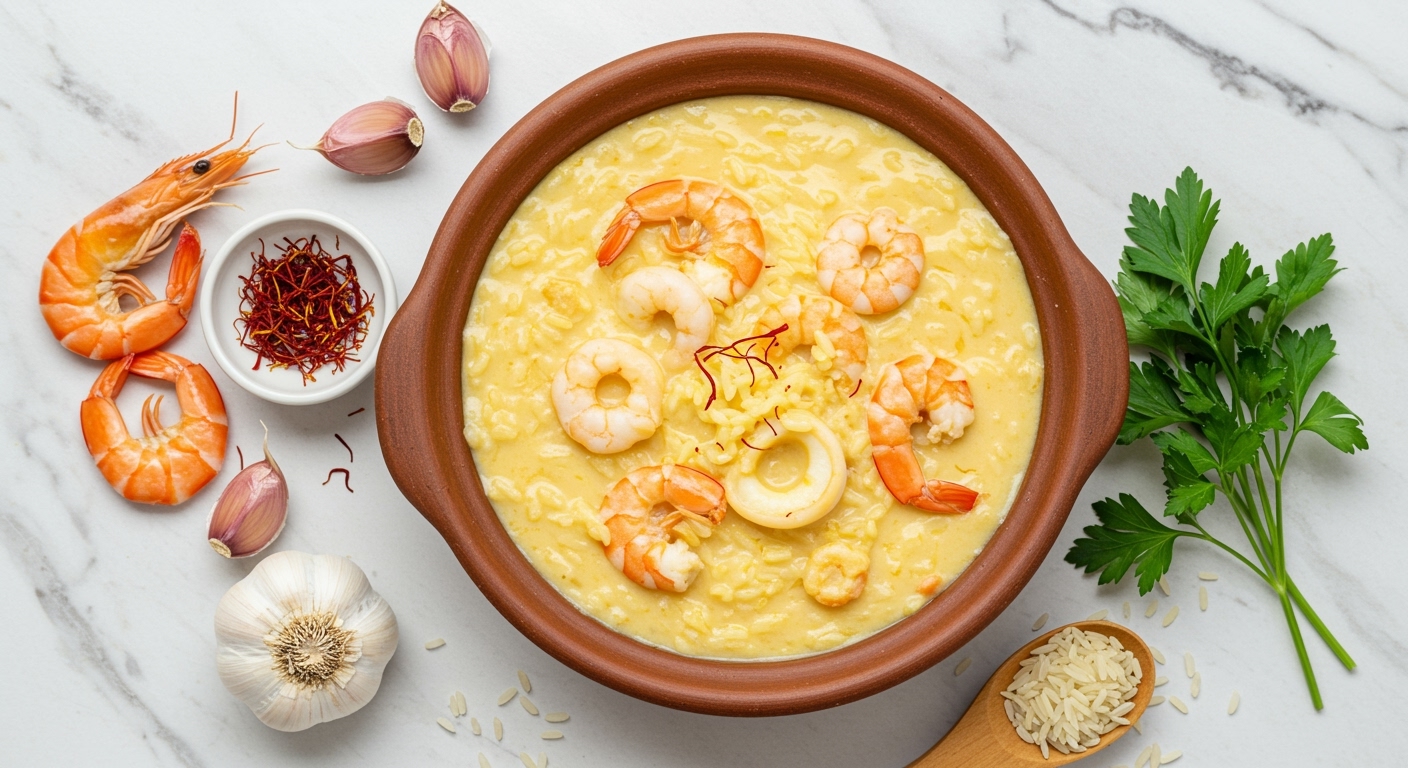
✪ Key Takeaway: Arroz meloso is a creamy Spanish rice dish with a soupy texture, perfect for seafood lovers seeking comfort food with bold flavor.
Introduction
Imagine a spoonful of creamy rice that flows like liquid gold, carrying pieces of tender seafood and the unmistakable aroma of saffron and garlic.
That is arroz meloso, and what makes this recipe special is its perfect balance between risotto and soup, creating a texture that coats your spoon without being too thick or too thin.
Hi, I am Abdur, your nutrition coach, and today I am showing you exactly how to make arroz meloso that delivers restaurant-quality results in your own kitchen with simple techniques anyone can master.
What’s the Origin of This Recipe?
Arroz meloso comes from the coastal regions of Spain, particularly Valencia and Catalonia, where rice dishes dominate the culinary landscape.
The name literally translates to mellow rice or honeyed rice, referring to its soft, flowing texture that sits somewhere between traditional paella and soupy rice.
Spanish fishermen created this dish as a way to use their daily catch with locally grown rice, creating a one-pot meal that fed families after long days at sea.
Unlike paella, which has a dry, separated grain texture, arroz meloso embraces moisture and creaminess, making it more forgiving for home cooks.
Each coastal town has its own version, with some using monkfish, others preferring shrimp, and some combining multiple seafood types for maximum flavor depth.
✪ Fact: Traditional Spanish cooks use bomba rice because it absorbs three times its volume in liquid without becoming mushy.
Is This Recipe Healthy?
Arroz meloso provides a balanced meal with carbohydrates from rice, protein from seafood, and beneficial fats from olive oil in one dish.
The seafood component delivers omega-3 fatty acids, selenium, and high-quality protein that supports muscle maintenance and heart health.
Saffron, a key ingredient, contains antioxidants like crocin and safranal that have been studied for mood-supporting and anti-inflammatory properties.
The dish can be made healthier by using brown rice instead of white, though this changes cooking time and texture significantly.
One serving provides approximately 400-500 calories depending on seafood choices, making it a moderate-calorie meal that fits most eating patterns when portion sizes are controlled.
✪ Total Time: 45 minutes | ✪ Total servings: 4
Tools
- Wide, shallow pan or paella pan (12-14 inches)
- Wooden spoon for stirring
- Sharp knife for chopping
- Measuring cups and spoons
- Ladle for adding broth
✪ Pro Tip: A wide pan is essential because it allows the rice to cook evenly and develop the signature creamy texture.
Ingredients
- 2 cups bomba rice or short-grain rice
- 1 pound mixed seafood (shrimp, squid, mussels)
- 6 cups fish or seafood stock
- 4 tablespoons extra virgin olive oil
- 1 medium onion, finely chopped
- 4 garlic cloves, minced
- 2 ripe tomatoes, grated
- 1 teaspoon smoked paprika
- Pinch of saffron threads (about 20 threads)
- 1 red bell pepper, diced
- Salt to taste
- Fresh parsley for garnish
- Lemon wedges for serving
✪ Note: The ratio of liquid to rice is crucial—you need about three cups of stock for every cup of rice.
Instructions
- Heat the olive oil in your wide pan over medium heat until it shimmers but does not smoke.
- Add the chopped onion and cook for 5 minutes until it becomes translucent and soft.
- Stir in the minced garlic and diced bell pepper, cooking for another 2 minutes until fragrant.
- Add the grated tomatoes and cook for 5 minutes until the mixture thickens and the raw tomato smell disappears.
- Sprinkle in the smoked paprika and saffron threads, stirring constantly for 30 seconds to release their flavors.
- Pour in the rice and stir it around the pan for 2 minutes, coating every grain with the sofrito mixture.
- Add all the stock at once (unlike risotto, you do not add it gradually), and bring to a boil.
- Reduce heat to medium-low and let it simmer for 15 minutes without stirring, allowing the rice to absorb liquid.
- Arrange your seafood on top of the rice, pressing it gently into the liquid.
- Continue cooking for 5-7 minutes until the seafood is cooked through and the rice reaches a creamy, soupy consistency.
- Remove from heat and let it rest for 3 minutes before serving.
- Garnish with fresh parsley and serve with lemon wedges on the side.
✪ Pro Tip: The rice should move slightly when you shake the pan—if it looks too dry, add a splash more stock.
Nutrition Facts (approximate)
- Calories: 450 kcal
- Protein: 28g
- Carbohydrates: 52g
- Fat: 12g
✪ Note: Nutrition values vary based on seafood choices and portion sizes you serve.
What Are Common Mistakes to Avoid?
The biggest mistake people make is stirring the rice constantly like risotto, which breaks the grains and creates a mushy texture instead of creamy.
Another common error is using long-grain rice like basmati or jasmine, which does not absorb liquid properly and results in a watery, separated dish.
Many home cooks add the seafood too early, causing it to become rubbery and overcooked by the time the rice finishes cooking.
Using water instead of proper seafood stock creates a bland dish that lacks the depth of flavor that makes arroz meloso special.
You know something is going wrong when the rice looks dry and separated after 10 minutes—this means you did not add enough liquid at the beginning.
✪ Pro Tip: If your rice starts sticking to the bottom, reduce heat immediately and add a quarter cup of warm stock.
What If You’re Missing an Ingredient?
If you cannot find bomba rice, arborio rice works as the next best substitute because it has similar starch content and absorption properties.
When saffron is unavailable or too expensive, use turmeric for color, though it will not provide the same floral flavor notes.
Fresh tomatoes can be replaced with canned crushed tomatoes (about half a cup), which actually work better during off-season months.
If you lack seafood stock, make a quick version by simmering shrimp shells in water for 15 minutes, or use chicken stock as an acceptable alternative.
Missing the bell pepper changes the sweetness profile slightly but does not ruin the dish—you can proceed without it if necessary.
✪ Fact: Spanish cooks often use squid ink to create arroz meloso negro, a dramatic black version of this dish.
Can You Store Leftovers?
Arroz meloso stores reasonably well in the refrigerator for up to 2 days in an airtight container, though the texture changes as the rice absorbs more liquid.
When reheating, add a few tablespoons of stock or water to restore the creamy consistency, heating gently on the stovetop rather than the microwave.
The seafood quality deteriorates faster than the rice, so consume leftovers within 48 hours to avoid food safety issues.
Freezing is not recommended because the rice texture becomes grainy and the seafood turns rubbery when thawed and reheated.
This dish tastes best when served immediately, so plan your portions accordingly rather than making large batches for storage.
✪ Note: Store the rice and seafood together because separating them causes the rice to dry out faster.
Can You Scale This Recipe?
This recipe scales up easily for larger gatherings, but you need a bigger pan to maintain the proper rice-to-surface-area ratio.
When doubling the recipe, use a 16-18 inch pan and keep the same cooking times because the rice depth stays similar.
Scaling down to two servings works perfectly with half the ingredients in a smaller 10-inch pan, reducing cooking time by about 3 minutes.
The key is maintaining the three-to-one liquid-to-rice ratio regardless of batch size, which ensures consistent texture every time.
For very large batches serving 8-10 people, consider making two separate pans rather than one massive batch that cooks unevenly.
✪ Pro Tip: When scaling up, increase the sofrito ingredients slightly more than proportionally for better flavor distribution.
Can You Customize This Recipe?
You can create a vegetarian version by replacing seafood with mushrooms, artichokes, and green beans, using vegetable stock as the base.
For a meat-based variation, use chicken thighs and rabbit pieces, which is actually a traditional Valencian combination called arroz meloso de carne.
Adding chorizo creates a smoky, spicy version that pairs beautifully with clams and mussels for a surf-and-turf experience.
You can adjust the spice level by incorporating cayenne pepper or fresh chili peppers into the sofrito for those who prefer heat.
Some cooks add peas and asparagus in the final minutes of cooking for extra vegetables and a pop of green color.
✪ Fact: In Barcelona, many restaurants serve arroz meloso with lobster as a premium version for special occasions.
The Bottom Line
Arroz meloso proves that Spanish rice dishes offer more variety than just paella, delivering comfort and sophistication in one creamy, flavorful bowl.
The secret to perfect arroz meloso is patience—let the rice do its work without constant stirring, and trust the process.
Now I want to hear from you—what seafood combination will you try first, and do you have questions about adapting this recipe to your kitchen?
References
At NutritionCrown, we use quality and credible sources to ensure our content is accurate and trustworthy. Below are the sources referenced in writing this article:
- What The Cook: Arroz Meloso de Verduras
- Butest Seafoodie: Arroz Meloso de Centollo
- Spain on a Fork: Barcelona’s Best Kept Rice Recipe
- Keveri Grills: Arroz Meloso with Shrimp
- Brazilian Kitchen Abroad: Brazilian Creamy Rice Recipe