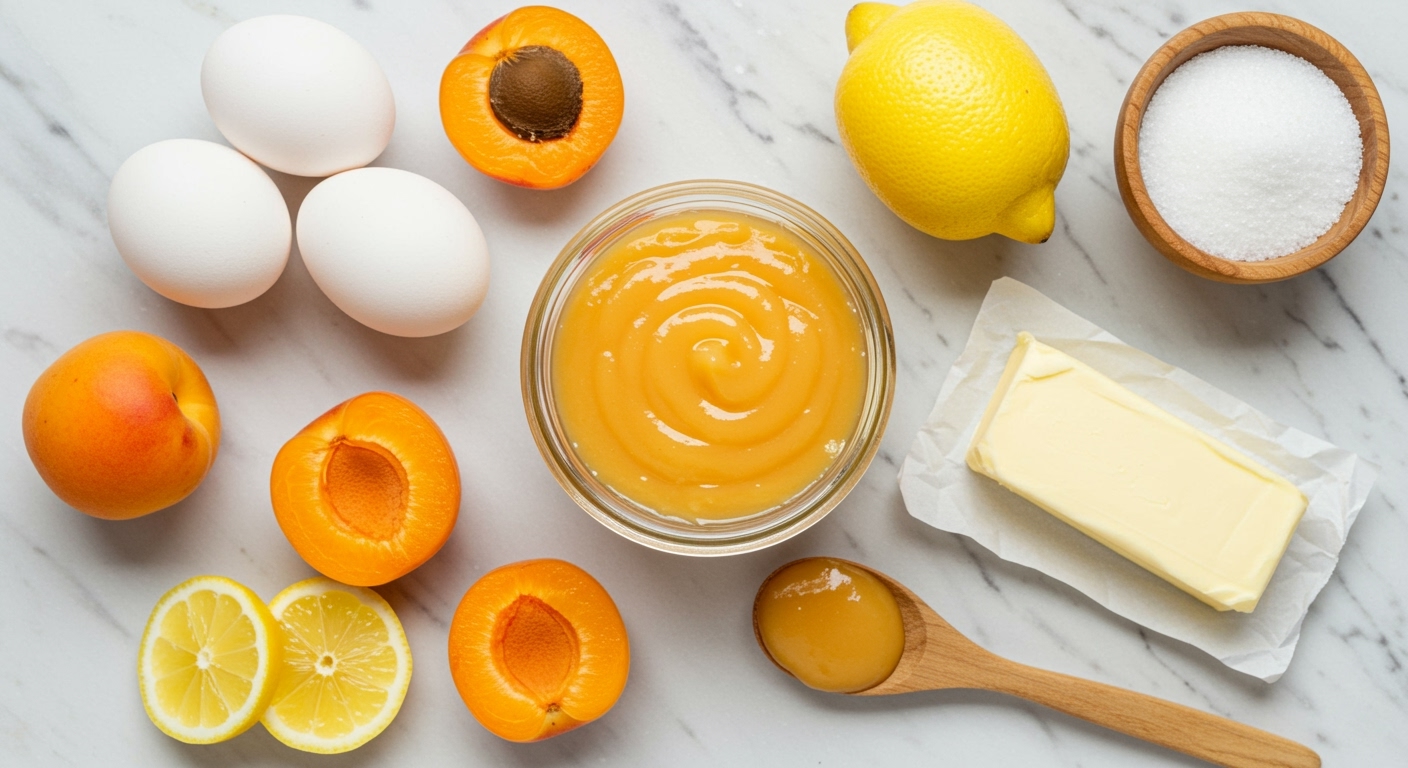
✪ Key Takeaway: Apricot curd is a silky, tangy-sweet spread made from fresh apricots, butter, eggs, and sugar that is perfect for toast, desserts, and gift-giving.
Introduction
Imagine spreading something silky smooth and golden orange on your morning toast that tastes like sunshine in a jar.
That is exactly what apricot curd delivers with its perfect balance of tangy fruit and buttery richness.
What makes this recipe special is that it uses fresh apricots instead of jam or preserves, giving you a brighter flavor and smoother texture than anything store-bought.
Hi, I am Abdur, your nutrition coach, and today I am showing you exactly how to make apricot curd that transforms simple ingredients into something truly extraordinary.
What’s the Origin of This Recipe?
Fruit curds have their roots in British cooking, where lemon curd became famous in the Victorian era as a way to preserve citrus flavors.
The technique spread across Europe and eventually reached places where apricots grow abundantly, like the Mediterranean and Central Asia.
Cooks discovered that the same method used for lemon curd worked beautifully with stone fruits, creating variations that highlighted regional produce.
Apricot curd became particularly popular in New Zealand and Australia, where fresh apricots are plentiful during summer and home preserving remains a cherished tradition.
Today, this recipe represents a modern twist on classic preserving, allowing anyone with ripe apricots to create something special in their own kitchen.
✪ Fact: The word curd comes from the Middle English word crud, which originally referred to any coagulated substance.
Is This Recipe Healthy?
Apricot curd contains natural fruit, which provides vitamins A and C, along with dietary fiber when you include the apricot puree.
The recipe does include butter and sugar, which means it should be enjoyed as a special treat rather than an everyday staple.
However, making it at home lets you control the sugar amount and avoid the preservatives and artificial colors found in commercial spreads.
You can reduce the sugar by up to 25 percent if your apricots are very ripe and sweet, though this will affect the shelf life slightly.
The eggs in this recipe add protein and healthy fats, while the butter provides fat-soluble vitamins that help your body absorb the vitamin A from apricots.
✪ Total Time: 25 minutes | ✪ Total servings: 16
Tools
- Medium heavy-bottomed saucepan
- Fine mesh strainer
- Blender or food processor
- Whisk
- Wooden spoon
- Glass jars with lids for storage
- Measuring cups and spoons
✪ Pro Tip: A heavy-bottomed saucepan distributes heat evenly and prevents hot spots that can scramble your eggs.
Ingredients
- 450g fresh ripe apricots (about 8-10 medium apricots), pitted and chopped
- 150g granulated sugar
- 3 large eggs
- 2 large egg yolks
- 100g unsalted butter, cut into small cubes
- 2 tablespoons fresh lemon juice
- Pinch of salt
✪ Note: Choose apricots that are ripe but still slightly firm for the best balance of sweetness and tang.
Instructions
- Place the chopped apricots in your blender or food processor and blend until you have a smooth puree with no large chunks remaining.
- Pour the apricot puree into your medium saucepan and add the sugar, stirring to combine well.
- Heat the mixture over medium heat, stirring occasionally, until the sugar dissolves completely and the mixture becomes warm but not boiling.
- While the apricot mixture warms, crack the whole eggs and egg yolks into a separate bowl and whisk them together until smooth and well combined.
- Once the apricot mixture is warm, remove it from the heat and slowly pour about one-third of it into the beaten eggs while whisking constantly to temper them.
- Pour the tempered egg mixture back into the saucepan with the remaining apricot mixture, whisking continuously to prevent any lumps from forming.
- Add the lemon juice and pinch of salt to the saucepan and stir everything together.
- Return the saucepan to medium-low heat and cook while stirring constantly with your wooden spoon or whisk.
- Continue cooking and stirring for about 8-10 minutes until the mixture thickens noticeably and coats the back of your spoon.
- When the curd reaches pudding-like consistency, remove it from the heat and add the butter cubes one at a time, stirring until each piece melts completely before adding the next.
- Pour the finished curd through your fine mesh strainer into a clean bowl to remove any cooked egg bits or apricot fibers.
- Transfer the strained curd into your clean glass jars, leaving about half an inch of space at the top.
- Press a piece of plastic wrap directly onto the surface of the curd to prevent a skin from forming as it cools.
- Let the curd cool to room temperature before sealing the jars with their lids.
- Refrigerate the apricot curd for at least 2 hours before using to allow it to set completely and develop its full flavor.
✪ Pro Tip: Never let the mixture boil or your eggs will scramble, so keep the heat gentle and stir constantly.
Nutrition Facts (approximate)
- Calories: 95 kcal
- Protein: 2g
- Carbohydrates: 12g
- Fat: 5g
✪ Note: Nutrition values are per tablespoon serving and will vary based on the exact ingredients and apricot sweetness you use.
What Are Common Mistakes to Avoid?
The biggest mistake people make is cooking the curd over too high heat, which causes the eggs to scramble instead of creating a smooth texture.
Always use medium-low heat and stir constantly to ensure the mixture thickens gradually without any lumps forming.
Another common error is skipping the tempering step when adding eggs to the hot fruit mixture, which shocks the eggs and creates scrambled bits.
Some cooks also stop cooking too early when the curd still looks too thin, but remember it will thicken considerably as it cools in the refrigerator.
You will know the curd is ready when it coats the back of your spoon and holds a clear line when you run your finger through it.
✪ Pro Tip: If you do get small lumps, simply strain the curd through a fine mesh strainer to achieve perfect smoothness.
What If You’re Missing an Ingredient?
If you do not have fresh apricots, you can use frozen apricots that have been thawed and drained, though the flavor will be slightly less vibrant.
For the butter, you can substitute with coconut oil for a dairy-free version, but this will change the flavor profile and give it a tropical note.
If you only have whole eggs and no extra yolks, you can use 4 whole eggs total, though the curd will be slightly less rich and golden.
The lemon juice is important for both flavor balance and helping the curd set properly, so if you are out, use lime juice or even orange juice in the same amount.
You can swap white sugar for coconut sugar or honey, but these will darken the color and add their own distinct flavors to the final product.
✪ Note: Avoid using margarine instead of butter as it contains water that will make your curd too thin and watery.
Can You Store Leftovers?
Apricot curd stores beautifully in the refrigerator for up to 2 weeks when kept in clean, airtight glass jars.
Always use a clean spoon each time you scoop out curd to prevent introducing bacteria that can shorten its shelf life.
The curd will thicken further in the refrigerator, so what seems slightly thin when warm will become perfectly spreadable when cold.
You can also freeze apricot curd for up to 3 months in freezer-safe containers, leaving some space at the top for expansion.
To use frozen curd, thaw it overnight in the refrigerator and give it a good stir before using, as some separation may occur during freezing.
✪ Fact: Fruit curds have been preserved in British pantries since the 1800s using similar refrigeration and sealing methods.
Can You Scale This Recipe?
This recipe scales up beautifully if you want to make larger batches for gift-giving or preserving during apricot season.
Simply double or triple all ingredients proportionally, but use a larger saucepan to prevent overflow and allow for easier stirring.
Keep in mind that larger batches will take slightly longer to thicken, so add an extra 5-10 minutes of cooking time and watch for the consistency cues.
For smaller portions, you can easily halve the recipe, which works perfectly if you just want to try it or have limited apricots available.
The technique remains exactly the same regardless of batch size, so focus on the visual cues and texture rather than strict timing.
✪ Pro Tip: Making larger batches is more efficient since the active cooking time per jar decreases significantly.
Can You Customize This Recipe?
You can add aromatic spices like cardamom, vanilla, or lavender to create unique flavor combinations that complement the apricot base.
Try stirring in a quarter teaspoon of ground cardamom or the seeds from one vanilla bean when you add the butter for an elegant twist.
For a nuttier version, fold in 2 tablespoons of almond extract or finely ground almonds at the end for an apricot-almond curd.
You can also blend in other stone fruits like peaches or nectarines with the apricots for a mixed fruit curd with complex flavors.
For a tangier version, increase the lemon juice to 3 tablespoons or add a teaspoon of lemon zest for extra citrus brightness.
✪ Note: Always add spices and extracts at the end of cooking to preserve their delicate flavors and aromas.
The Bottom Line
Making apricot curd at home transforms simple ingredients into something truly special that you will want to share with everyone you know.
The best recipes are the ones you make your own through small adjustments and personal touches that reflect your taste.
I would love to hear how your apricot curd turned out, what you spread it on, and any creative variations you tried in the comments below.
References
At NutritionCrown, we use quality and credible sources to ensure our content is accurate and trustworthy. Below are the sources referenced in writing this article:
- Bakes by Brown Sugar: Apricot Curd with Fresh Apricots
- Baking the Goods: Apricot Curd
- Ladies a Plate: Apricot Curd
- Global Kitchen Travels: Apricot Curd with Lavender
- The View from Great Island: Apricot Curd