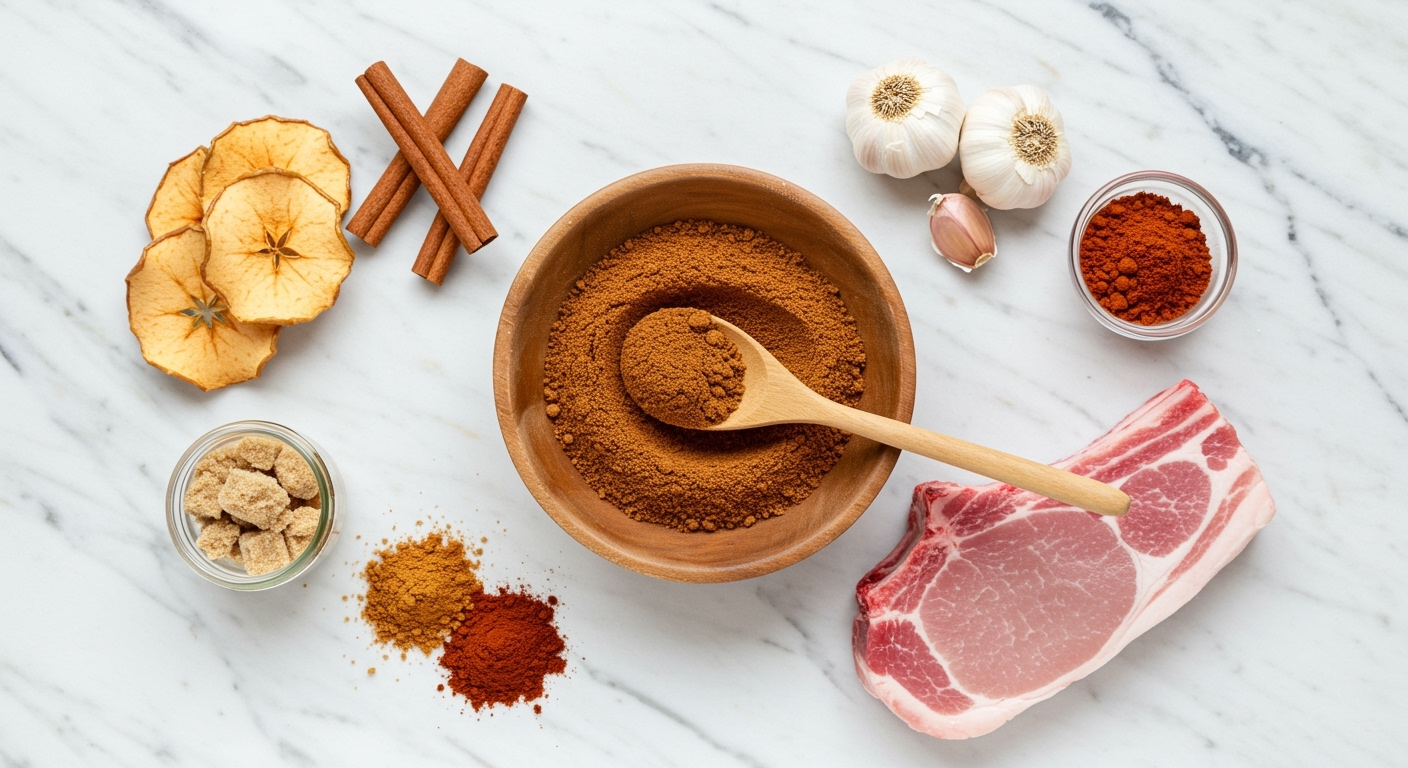
✪ Key Takeaway: This apple rub combines sweet, smoky, and savory flavors perfect for pork, chicken, and ribs in just 5 minutes.
Introduction
Imagine biting into perfectly caramelized pork with a sweet-smoky crust that makes your taste buds dance.
That is exactly what happens when you use a homemade apple rub instead of store-bought seasonings loaded with fillers and artificial flavors.
Hi, I am Abdur, your nutrition coach and today I am showing you exactly how to make an apple rub that transforms ordinary meats into restaurant-quality BBQ without any complicated techniques or expensive ingredients.
What’s the Origin of This Recipe?
Apple rubs trace their roots back to American BBQ culture, particularly in regions where apple orchards flourished alongside smoking traditions.
Pitmasters in the Midwest and Northeast discovered that dried apples added natural sweetness that complemented smoky flavors without overpowering the meat.
This combination became especially popular for pork dishes because apples and pork have been culinary partners for centuries across European and American cuisines.
Traditional recipes often included brown sugar, cinnamon, and paprika to balance the fruit’s sweetness with warmth and depth.
Today, apple rubs have evolved beyond regional BBQ competitions to become a versatile seasoning that home cooks use year-round for grilling, roasting, and even pan-searing.
✪ Fact: Dried apples contain concentrated natural sugars that caramelize beautifully under high heat, creating that signature BBQ crust.
Is This Recipe Healthy?
This apple rub is significantly healthier than most commercial BBQ seasonings because you control exactly what goes into it.
Store-bought rubs often contain excessive sodium, artificial colors, and anti-caking agents that your body does not need.
Homemade apple rub uses natural dried apples which provide fiber, antioxidants, and vitamins without any chemical additives.
The cinnamon in this recipe helps regulate blood sugar levels and provides anti-inflammatory benefits that support overall health.
You can easily adjust the salt and sugar content to fit your dietary needs, making this rub suitable for people watching their sodium intake or managing diabetes.
✪ Total Time: 5 minutes | ✪ Total servings: 16 (1 tablespoon per serving)
Tools
- Spice grinder or food processor
- Mixing bowl
- Measuring spoons
- Airtight glass jar or container
- Small whisk or spoon
✪ Pro Tip: A coffee grinder dedicated to spices works perfectly for grinding dried apples into fine powder.
Ingredients
- 3 tablespoons dried apple powder (grind dried apple slices)
- 2 tablespoons brown sugar
- 1 tablespoon smoked paprika
- 1 tablespoon ground cinnamon
- 2 teaspoons garlic powder
- 2 teaspoons onion powder
- 1 teaspoon black pepper
- 1 teaspoon sea salt
- 1/2 teaspoon cayenne pepper (optional for heat)
- 1/2 teaspoon ground ginger
✪ Note: Use unsweetened dried apples without any added sulfites or preservatives for the cleanest flavor.
Instructions
- Place dried apple slices in your spice grinder and pulse until you get a fine powder consistency.
- Transfer the apple powder to your mixing bowl.
- Add brown sugar, smoked paprika, cinnamon, garlic powder, onion powder, black pepper, salt, cayenne pepper, and ginger to the bowl.
- Whisk all ingredients together until completely combined and no clumps remain.
- Transfer the finished rub to an airtight glass jar.
- Label your jar with the date and store in a cool, dark place away from direct sunlight.
- Shake the jar before each use to redistribute the spices evenly.
✪ Pro Tip: Apply the rub at least 30 minutes before cooking to let the flavors penetrate the meat deeply.
Nutrition Facts (approximate)
- Calories: 20 kcal
- Protein: 0.3g
- Carbohydrates: 5g
- Fat: 0.1g
✪ Note: Nutrition values are per 1 tablespoon serving and do not include the meat you season with this rub.
What Are Common Mistakes to Avoid?
The biggest mistake people make is using fresh apples instead of dried ones, which adds moisture that ruins the rub’s texture and shelf life.
Another common error is not grinding the dried apples fine enough, leaving chunks that burn on the grill instead of caramelizing evenly.
Many home cooks also apply the rub too heavily, thinking more is better, but this creates a thick crust that tastes bitter and overpowering.
Storing the rub in a humid environment causes clumping and reduces its potency because moisture activates the spices prematurely.
Finally, people often skip the step of letting the seasoned meat rest before cooking, which prevents the rub from adhering properly and developing deep flavor.
✪ Pro Tip: If your rub clumps, add a few grains of uncooked rice to the jar to absorb excess moisture.
What If You’re Missing an Ingredient?
If you cannot find dried apple powder, you can substitute with apple pie spice mixed with a tiny bit of apple juice powder, though the flavor will be slightly different.
No brown sugar? Use coconut sugar or regular white sugar mixed with a pinch of molasses for similar sweetness and color.
Missing smoked paprika? Regular paprika works fine, but add a tiny pinch of liquid smoke to your meat before applying the rub to compensate for lost smokiness.
If you are out of cayenne pepper, use red pepper flakes crushed into powder or simply skip it for a milder version that kids will enjoy.
Ground ginger can be replaced with fresh grated ginger mixed into the meat directly, though this changes the rub’s dry consistency slightly.
✪ Note: The dried apple component is essential to this recipe’s identity, so avoid skipping it entirely.
Can You Store Leftovers?
This apple rub stores beautifully for up to 6 months when kept in an airtight container away from heat and light.
Glass jars work better than plastic containers because they do not absorb odors and protect the spices from degrading.
Keep your rub in a cool, dark pantry rather than near the stove where temperature fluctuations cause moisture buildup.
The rub will gradually lose potency over time, so smell it before using older batches and add a bit more if the aroma seems weak.
If you notice any color changes or off smells, discard the rub and make a fresh batch since spices can go rancid.
✪ Pro Tip: Make smaller batches every 2-3 months for maximum freshness and flavor intensity.
Can You Scale This Recipe?
This recipe scales incredibly easily in both directions without any adjustments to proportions.
Double or triple the batch if you are hosting a BBQ party or want to gift jars to friends who love cooking.
For smaller households, cut the recipe in half to make just 8 servings that you will use up quickly.
The beauty of dry rubs is that scaling never affects the final flavor profile as long as you maintain the ingredient ratios.
Just remember that larger batches require more thorough mixing to ensure even distribution of all spices throughout.
✪ Fact: Professional pitmasters often make gallon-sized batches of their signature rubs to maintain consistency across competitions.
Can You Customize This Recipe?
This apple rub is incredibly versatile and welcomes experimentation based on your personal taste preferences.
Add maple sugar instead of brown sugar for a deeper, more complex sweetness that pairs beautifully with pork.
For a spicier version, increase the cayenne pepper or add chipotle powder for smoky heat that complements the apple sweetness.
Try adding dried herbs like thyme or rosemary for an earthy dimension that works especially well with chicken and turkey.
You can also experiment with different fruit powders like pear or peach mixed with apple for unique flavor combinations that surprise your guests.
✪ Pro Tip: Keep notes on your customizations so you can recreate your favorite variations consistently.
The Bottom Line
Making your own apple rub takes just 5 minutes but elevates your cooking game for months to come.
The best BBQ starts with ingredients you can pronounce and flavors you can control.
Now I want to hear from you—what meat will you season first with this apple rub, and what customizations are you planning to try?
References
At NutritionCrown, we use quality and credible sources to ensure our content is accurate and trustworthy. Below are the sources referenced in writing this article:
- Bear Mountain BBQ: Apple Cinnamon BBQ Rub
- Pepper Palace: Zesty Apple Rub
- Kalamazoo Gourmet: Apple Cinnamon Rub
- BBQ and Baking: BBQ Apple Pie Rub