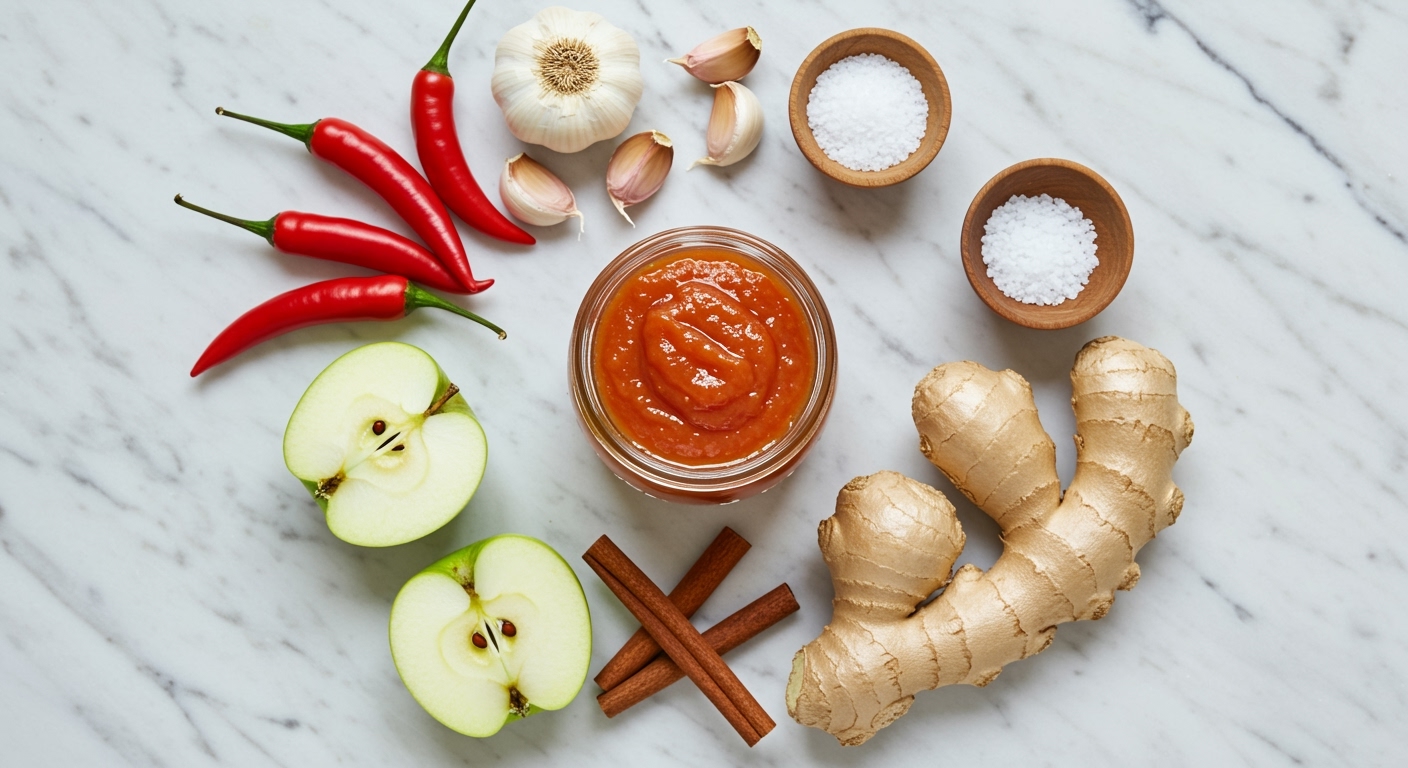
✪ Key Takeaway: Apple hot sauce combines sweet apples with fiery peppers for a balanced condiment perfect for anyone who wants heat with flavor.
Introduction
Imagine the sweet aroma of caramelized apples meeting the sharp bite of fresh peppers in one bottle.
This is not your typical one-dimensional hot sauce that just burns your mouth.
Apple hot sauce brings natural sweetness, complex flavor layers, and just the right amount of heat that makes every meal more exciting.
Hi, I am Abdur, your nutrition coach and today I am showing you exactly how to make apple hot sauce that transforms boring chicken, tacos, and even eggs into restaurant-quality dishes.
What’s the Origin of This Recipe?
Hot sauce has been around for thousands of years, but the idea of adding fruit is relatively modern.
Traditional hot sauces from Mexico and the Caribbean focused purely on pepper heat and vinegar tang.
The fruit-forward hot sauce trend started gaining popularity in North America during the craft food movement of the early 2000s.
Small-batch producers began experimenting with local ingredients, and apples became a natural choice in regions with abundant orchards.
Apple hot sauce represents a modern fusion that respects traditional fermentation techniques while embracing regional produce and creating something entirely new that appeals to people who find regular hot sauce too harsh.
✪ Fact: Apples contain natural pectin that gives hot sauce a thicker, more luxurious texture without any additives.
Is This Recipe Healthy?
Apple hot sauce offers surprising health benefits that go beyond just adding flavor to your meals.
Apples provide natural antioxidants, vitamin C, and fiber even after cooking, while peppers contain capsaicin that may boost metabolism and reduce inflammation.
Unlike store-bought hot sauces loaded with preservatives, artificial colors, and excessive sodium, homemade apple hot sauce lets you control every ingredient.
The natural sweetness from apples means you need less added sugar compared to commercial sweet chili sauces that often contain high fructose corn syrup.
This condiment fits into most dietary patterns including vegan, gluten-free, and paleo diets, making it a versatile addition to your kitchen that supports rather than sabotages your health goals.
✪ Total Time: 45 minutes | ✪ Total servings: 16
Tools
- Medium saucepan
- Blender or food processor
- Fine mesh strainer
- Glass storage bottles or jars
- Cutting board and sharp knife
- Measuring cups and spoons
✪ Pro Tip: Use glass bottles with narrow openings for better portion control and longer shelf life.
Ingredients
- 3 medium apples, cored and chopped (any variety works)
- 6-8 fresh chili peppers (jalapeno, habanero, or mix)
- 4 cloves garlic, peeled
- 1 cup apple cider vinegar
- 1/2 cup water
- 2 tablespoons honey or maple syrup
- 1 teaspoon salt
- 1/2 teaspoon ground cinnamon
- 1/4 teaspoon ground ginger
✪ Note: Choose sweeter apple varieties like Fuji or Gala for milder sauce, or tart Granny Smith for more tang.
Instructions
- Combine chopped apples, peppers, garlic, vinegar, and water in your medium saucepan.
- Bring the mixture to a boil over medium-high heat, then reduce to a simmer.
- Cook for 20-25 minutes until apples are completely soft and peppers have lost their bright color.
- Remove from heat and let cool for 10 minutes to prevent steam burns during blending.
- Transfer everything to your blender and add honey, salt, cinnamon, and ginger.
- Blend on high speed for 2-3 minutes until completely smooth with no visible chunks.
- Pour the mixture through a fine mesh strainer into a bowl, pressing with a spoon to extract all liquid.
- Taste and adjust seasoning by adding more salt, sweetener, or vinegar as needed.
- Transfer to clean glass bottles using a funnel and let cool completely before sealing.
- Store in the refrigerator where flavors will continue developing over the next few days.
✪ Pro Tip: Save the pulp from straining to mix into marinades or stir-fries for extra flavor without waste.
Nutrition Facts (approximate)
- Calories: 15 kcal
- Protein: 0g
- Carbohydrates: 4g
- Fat: 0g
✪ Note: Nutrition values are per tablespoon serving and may vary based on specific ingredients used.
What Are Common Mistakes to Avoid?
The biggest mistake people make is not cooking the ingredients long enough before blending.
Undercooked apples create a grainy texture that no amount of blending will fix, so make sure they are completely soft and falling apart.
Another common error is skipping the straining step because people think it wastes product.
Straining removes pepper skins and apple fibers that create an unpleasant mouthfeel and make the sauce separate in storage.
Many first-timers also add too much sweetener upfront, but remember that flavors concentrate as the sauce cools and sits, so start with less and adjust after tasting the cooled product.
✪ Pro Tip: Wear gloves when handling hot peppers and never touch your face during preparation.
What If You’re Missing an Ingredient?
If you do not have apple cider vinegar, white vinegar works but adds more sharpness without the subtle apple notes.
Rice vinegar creates a milder sauce that works well if you are sensitive to strong acidic flavors.
Missing fresh peppers means you can use dried chilies rehydrated in warm water for 20 minutes, though the flavor will be smokier and less bright.
No honey on hand means maple syrup, agave nectar, or even brown sugar will work, but each changes the final flavor profile slightly.
The one ingredient you cannot skip is the apples themselves because they provide the base texture and characteristic sweetness that defines this sauce.
✪ Fact: Different apple varieties create noticeably different sauce flavors, so experiment to find your favorite.
Can You Store Leftovers?
Apple hot sauce stores beautifully in the refrigerator for up to three months when kept in clean, airtight glass containers.
The high vinegar content and natural acidity from apples act as preservatives that prevent bacterial growth.
Always use a clean spoon when scooping out sauce to avoid introducing contaminants that shorten shelf life.
The sauce may darken slightly over time due to oxidation, but this does not affect safety or taste.
For longer storage, you can freeze apple hot sauce in ice cube trays, then transfer cubes to freezer bags for up to six months, though the texture may become slightly thinner after thawing.
✪ Pro Tip: Label bottles with the date and pepper type so you remember heat levels months later.
Can You Scale This Recipe?
This recipe scales beautifully in both directions without any complicated adjustments.
Doubling or tripling the batch works perfectly if you have a large enough pot and blender, though you may need to blend in batches.
Halving the recipe for a small test batch is smart if you are experimenting with new pepper varieties or heat levels.
The only consideration when scaling up is cooking time may increase by 5-10 minutes to ensure all ingredients soften properly.
Making larger batches makes sense because the effort is the same whether you make one bottle or ten, and homemade hot sauce makes excellent gifts that friends actually appreciate.
✪ Note: Larger batches require proportionally more storage containers, so plan ahead before cooking.
Can You Customize This Recipe?
The beauty of homemade hot sauce is endless customization based on your preferences and what you have available.
Try adding roasted red peppers for smokiness, fresh cilantro for herbaceous notes, or lime juice for extra brightness.
Swap cinnamon for smoked paprika to create a completely different flavor profile that works amazing with grilled meats.
For thicker sauce, reduce the water amount or add a tablespoon of tomato paste during cooking.
You can even make this fermented by skipping the cooking step, blending raw ingredients with salt, and letting it sit at room temperature for 5-7 days before adding vinegar, which creates complex tangy flavors and beneficial probiotics.
✪ Pro Tip: Keep notes on your customizations so you can recreate your favorite versions later.
The Bottom Line
Making your own apple hot sauce gives you complete control over heat levels, sweetness, and quality while costing less than premium store-bought versions.
The best hot sauce is the one you make yourself because it matches your exact taste preferences.
I would love to hear how your apple hot sauce turned out, what peppers you used, and what creative ways you found to use it in your cooking.
References
At NutritionCrown, we use quality and credible sources to ensure our content is accurate and trustworthy. Below are the sources referenced in writing this article:
- Feeding A Crowd: Jalapeno and Apple Hot Sauce
- PepperScale: Apple Habanero Hot Sauce
- Healthy Canning: Apple Hot Sauce
- Anarchy In A Jar: Apple Hot Sauce Recipe
- Hot Sauce Cookbook: Free Apple Hot Sauce Recipe