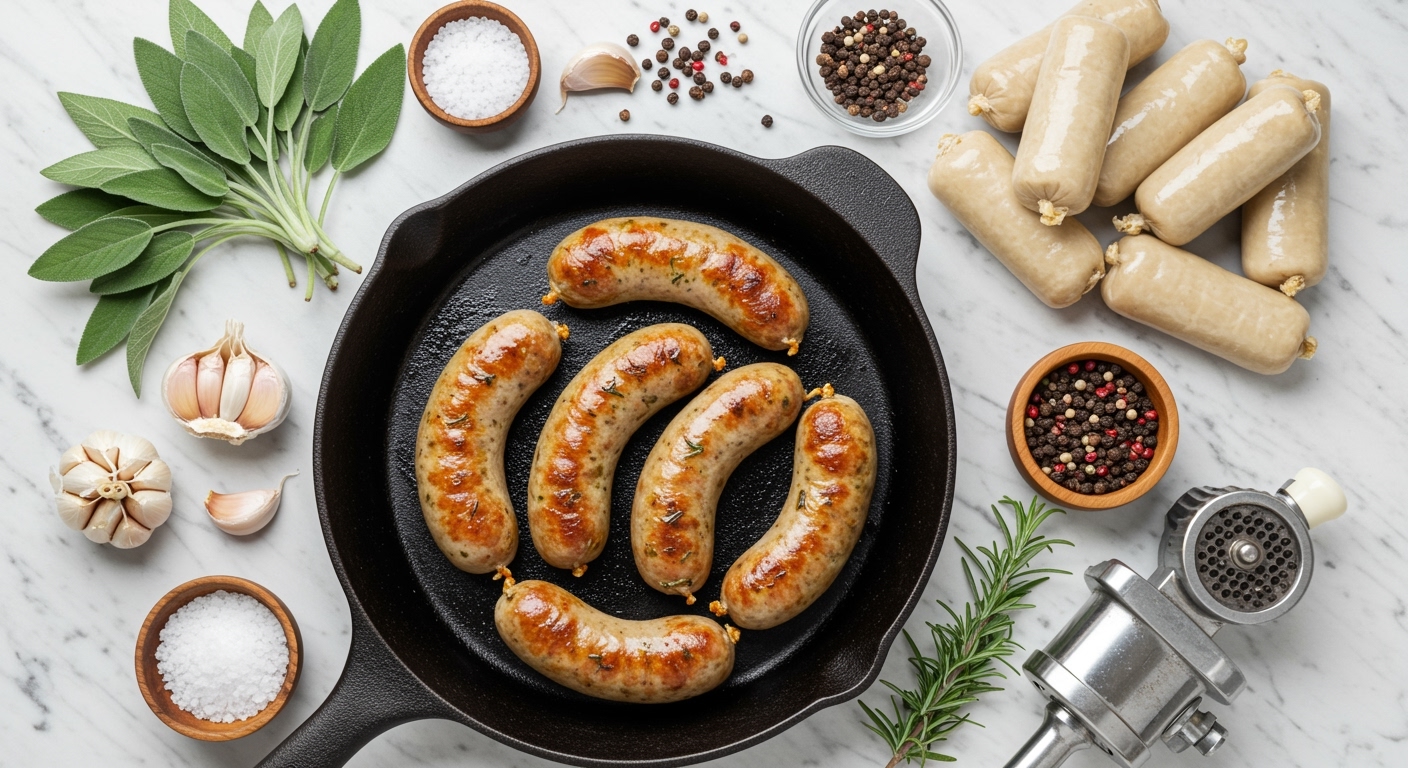
✪ Key Takeaway: Antelope sausage combines lean wild game with pork fat and aromatic herbs to create a protein-rich, flavorful alternative to traditional sausage that works perfectly for breakfast, grilling, or any meal where you want bold taste without excess calories.
Introduction
Imagine biting into a sausage that bursts with savory juices, releases the aroma of fresh sage and garlic, and delivers a rich meaty flavor without any greasy aftertaste.
That is exactly what makes antelope sausage special compared to regular pork sausage.
The lean wild game meat creates a healthier profile while the right fat ratio keeps everything juicy and delicious.
Hi, I am Abdur, your nutrition coach and today I am showing you exactly how to make antelope sausage that turns lean game meat into the most flavorful breakfast or dinner option you have ever tasted.
What’s the Origin of This Recipe?
Antelope sausage comes from the hunting traditions of the American West where pronghorn antelope roam freely across open plains.
Native American tribes and early settlers learned to preserve this lean game meat by mixing it with fat and spices, then stuffing it into casings for storage.
The practice evolved as European immigrants brought their sausage-making traditions from Germany, Italy, and Poland to the frontier.
Today, hunters across Wyoming, Montana, and Utah continue this tradition, creating regional variations that reflect local tastes.
Some prefer breakfast-style sausage with sage and maple, while others make spicy versions with cayenne and paprika, and still others create summer sausage with garlic and mustard seed for a tangy finish.
✪ Fact: Pronghorn antelope are the fastest land animals in North America, reaching speeds up to 60 miles per hour.
Is This Recipe Healthy?
Antelope meat is one of the leanest protein sources available, containing less than 3 grams of fat per 100 grams of meat.
This makes it an excellent choice for people watching their saturated fat intake or trying to build muscle without excess calories.
The meat provides high-quality protein with all essential amino acids your body needs for tissue repair and growth.
Wild game like antelope also contains higher levels of omega-3 fatty acids compared to grain-fed livestock because these animals eat natural vegetation.
However, the added pork fat in sausage recipes increases the overall calorie and fat content, so portion control matters if you are managing weight or heart health.
✪ Total Time: 90 minutes | ✪ Total servings: 8
Tools
- Meat grinder with coarse grinding plate
- Large mixing bowl
- Sausage stuffer attachment or manual stuffer
- Natural hog casings
- Kitchen scale
- Sharp knife
- Cutting board
- Large skillet or grill
✪ Note: If you do not have a meat grinder, ask your butcher to grind the meat and fat together for you.
Ingredients
- 2 pounds antelope meat, cubed and chilled
- 1 pound pork fat (back fat or pork shoulder), cubed and chilled
- 2 tablespoons fresh sage, finely chopped
- 4 cloves garlic, minced
- 2 teaspoons sea salt
- 1 teaspoon black pepper, freshly ground
- 1 teaspoon red pepper flakes (optional)
- 1 teaspoon fennel seeds (optional)
- 1/4 cup ice water
- Natural hog casings, soaked in water
✪ Pro Tip: Keep all meat and fat extremely cold throughout the grinding process to prevent the fat from smearing.
Instructions
- Cut the antelope meat and pork fat into 1-inch cubes, removing any silver skin or connective tissue from the meat.
- Place the cubed meat and fat on a tray and freeze for 30 minutes until very cold but not frozen solid.
- Set up your meat grinder with the coarse grinding plate and place a bowl underneath to catch the ground meat.
- Grind the antelope meat and pork fat together, alternating between meat and fat to ensure even distribution.
- Transfer the ground meat to a large mixing bowl and add the sage, garlic, salt, pepper, and any optional spices.
- Pour the ice water over the mixture and mix with your hands for 2-3 minutes until the seasonings are evenly distributed and the mixture becomes slightly sticky.
- Rinse the hog casings under cold water and thread one end onto your sausage stuffer nozzle.
- Fill the stuffer with the meat mixture and slowly push it into the casing, avoiding air pockets.
- Twist the filled casing every 4-5 inches to create individual links.
- Prick any visible air bubbles with a sterilized pin.
- Refrigerate the sausages uncovered for 2-4 hours to allow the casings to dry and the flavors to develop.
- Cook the sausages in a skillet over medium heat for 12-15 minutes, turning occasionally until the internal temperature reaches 160°F.
✪ Pro Tip: Do not overstuff the casings or they will burst during cooking.
Nutrition Facts (approximate)
- Calories: 285 kcal
- Protein: 24g
- Carbohydrates: 1g
- Fat: 20g
✪ Note: Nutrition values vary based on the exact fat ratio and portion size you choose.
What Are Common Mistakes to Avoid?
The biggest mistake people make is using too little fat, which results in dry, crumbly sausages that lack flavor.
You need at least 30-35% fat content for proper texture and moisture retention.
Another common error is grinding the meat when it is too warm, causing the fat to smear instead of grind cleanly.
This creates a mushy texture and poor binding.
Overmixing the seasoned meat can also make the sausage tough and dense instead of tender, so mix just until everything is evenly combined.
Finally, cooking sausages over high heat causes the casings to burst and the meat to dry out before the inside cooks through.
Always use medium heat and cook slowly for the best results.
✪ Pro Tip: Test your seasoning by cooking a small patty before stuffing all the sausages.
What If You’re Missing an Ingredient?
If you cannot find pork fat, you can substitute beef fat or even bacon ends, though this will change the flavor profile slightly.
Fresh sage can be replaced with dried sage using one-third the amount, but the flavor will be less vibrant.
When natural hog casings are unavailable, you can form the mixture into patties instead, though you will miss the traditional sausage snap.
Some people use collagen casings as an alternative, but these do not have the same texture as natural casings.
If you do not have ice water, very cold tap water works fine, but the ice helps keep the fat temperature low during mixing.
✪ Note: Do not skip the fat entirely or your sausages will be dry and unpleasant to eat.
Can You Store Leftovers?
Fresh antelope sausage keeps in the refrigerator for 2-3 days when stored in an airtight container or wrapped tightly in plastic wrap.
For longer storage, freeze the sausages by wrapping them individually in plastic wrap, then placing them in a freezer bag with all air removed.
Frozen sausages maintain quality for up to 3 months when stored at 0°F or below.
Cooked sausages can be refrigerated for up to 5 days and reheated in a skillet or microwave.
The texture holds up well, though the casings may become slightly softer after refrigeration and reheating.
✪ Pro Tip: Thaw frozen sausages in the refrigerator overnight rather than at room temperature for food safety.
Can You Scale This Recipe?
This recipe scales up beautifully if you have a large amount of antelope meat to process after a successful hunt.
Simply maintain the same ratio of 2 parts meat to 1 part fat, and increase the seasonings proportionally.
For smaller batches, you can cut the recipe in half, but grinding very small amounts of meat can be challenging with standard equipment.
The mixing and stuffing process takes the same amount of time regardless of batch size, so many people prefer to make larger quantities and freeze the extras.
Just remember that your equipment capacity may limit how much you can process at once, especially if you are using a home meat grinder.
✪ Fact: Professional butchers often process 50-100 pounds of sausage in a single session.
Can You Customize This Recipe?
The basic antelope sausage recipe serves as a blank canvas for endless flavor variations.
For breakfast sausage, add maple syrup and increase the sage for a sweet-savory profile.
Italian-style sausage works well with fennel seeds, oregano, and extra garlic.
Spicy versions benefit from cayenne pepper, paprika, and crushed red pepper flakes.
You can also create summer sausage by adding mustard seeds, coriander, and a curing salt, then smoking the links low and slow.
Some hunters mix in diced apples and onions for a sweeter, more complex flavor that pairs beautifully with the lean game meat.
The key is maintaining the proper fat ratio regardless of which seasonings you choose.
✪ Pro Tip: Write down your custom seasoning blends so you can recreate your favorite versions.
The Bottom Line
Making your own antelope sausage transforms lean wild game into something truly special that your family will request again and again.
The process takes some time and equipment, but the results are worth every minute when you taste that first juicy, flavorful bite.
The best sausage comes from respecting the meat, maintaining proper fat ratios, and never rushing the process.
Now I want to hear from you in the comments below.
What seasonings did you use in your antelope sausage?
Did you make breakfast links or try a different style?
Share your results, questions, or favorite variations so we can all learn from each other.
References
At NutritionCrown, we use quality and credible sources to ensure our content is accurate and trustworthy. Below are the sources referenced in writing this article:
- Harvesting Nature: Antelope Sage Garlic Sausage
- Utah Wildlife: Pronghorn Breakfast Sausage with Fresh Sage and Garlic
- Broken Arrow Ranch: Cooking Tips for Venison Wild Boar Sausages
- Honest Food: Antelope or Goat Longaniza Sausage
- Mule Deer Foundation: Antelope Summer Sausage