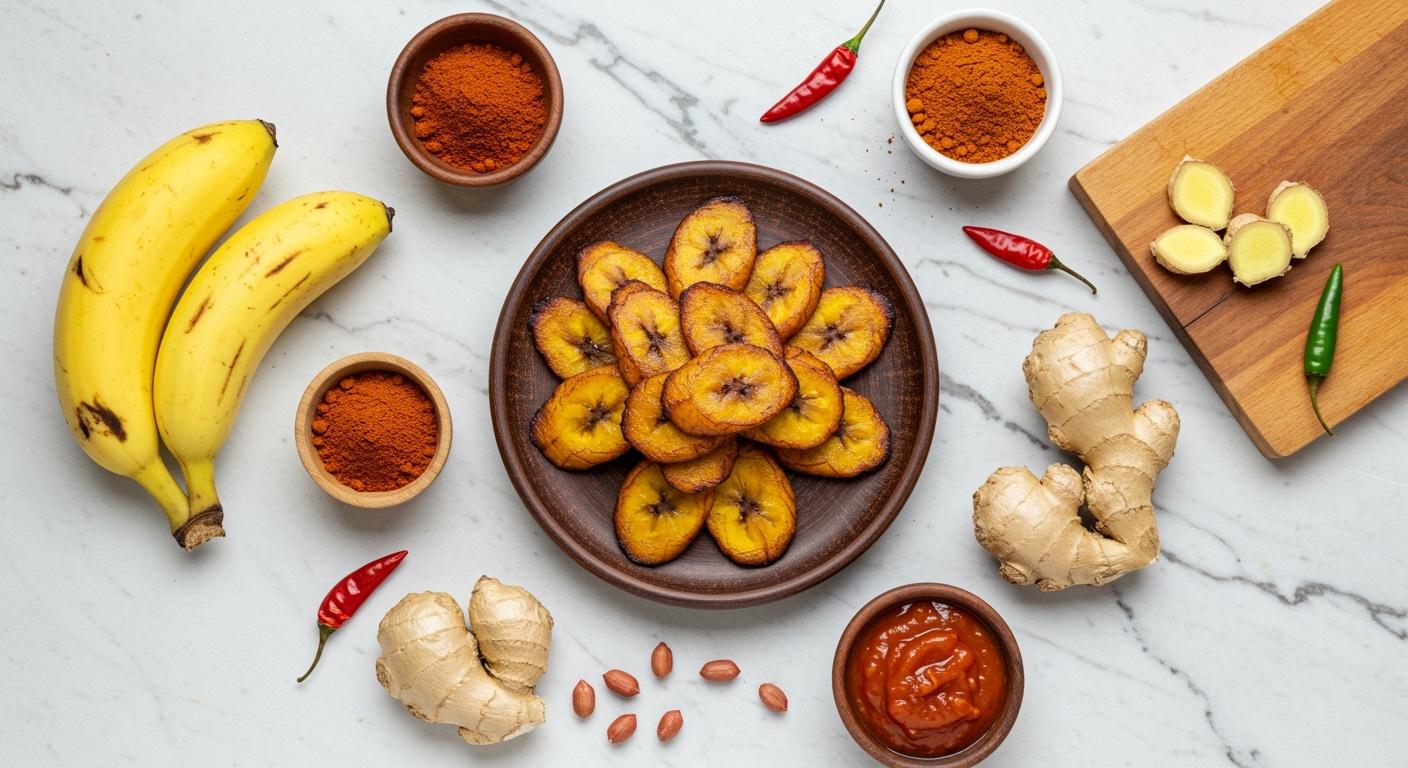
✪ Key Takeaway: Alloco is crispy fried plantain from West Africa that takes 15 minutes to make and tastes like caramelized heaven.
Introduction
Imagine biting into a piece of golden-brown plantain that crunches on the outside but melts into sweet, creamy softness inside.
That is exactly what alloco delivers every single time when you get the technique right.
This West African street food beats regular fried plantains because the spice coating creates an addictive caramelized crust that keeps you reaching for more.
Hi, I am Abdur, your nutrition coach and today I am showing you exactly how to make alloco that rivals anything you would find at the best street vendors in Abidjan or Accra.
What’s the Origin of This Recipe?
Alloco comes from Ivory Coast where it has been a beloved street food for generations.
The name itself means fried plantain in the local dialect and you will find vendors selling it on almost every street corner in major cities.
Walk through the bustling markets of Abidjan and the aroma of frying plantains mixed with ginger and chili fills the air.
Vendors typically serve alloco with a spicy tomato sauce called sauce piment and sometimes add grilled fish or hard-boiled eggs on the side.
The dish spread across West Africa with slight variations in each country.
In Ghana they call it kelewele and add more ginger and pepper to the spice mix.
Nigeria has its own version called dodo which is usually less spicy and sometimes sweetened.
What makes the Ivorian version special is the perfect balance of sweet ripe plantain against the heat from fresh ginger and cayenne pepper.
This recipe has been passed down through families and each cook adds their own twist to the spice blend.
✪ Fact: Plantains are the fourth most important staple crop in the world after rice, wheat, and maize.
Is This Recipe Healthy?
Alloco offers surprising nutritional benefits despite being a fried food.
Ripe plantains provide complex carbohydrates that give you steady energy without the crash you get from refined sugars.
They are naturally rich in potassium which supports heart health and helps regulate blood pressure.
One serving of alloco gives you about 220 calories with 3 grams of fiber that aids digestion and keeps you feeling full longer.
The ginger and cayenne pepper add more than just flavor.
Ginger contains anti-inflammatory compounds that can help reduce muscle soreness and joint pain.
Cayenne pepper boosts your metabolism and may help your body burn more calories after eating.
The main concern with alloco is the frying oil which adds saturated fat to your meal.
You can make this healthier by using avocado oil or refined coconut oil instead of palm oil.
Another option is baking the plantains at 425 degrees Fahrenheit for 20 minutes after coating them with the spice mixture.
This method cuts the fat content by more than half while still giving you that caramelized exterior.
For people managing blood sugar, alloco fits better into your meal plan when you pair it with protein like grilled fish or chicken.
The protein slows down how quickly your body absorbs the natural sugars from the ripe plantains.
✪ Total Time: 15 minutes | ✪ Total servings: 4
Tools
- Sharp knife for cutting plantains
- Large mixing bowl
- Deep frying pan or skillet
- Paper towels for draining
- Slotted spoon or spider strainer
- Small grater for fresh ginger
✪ Pro Tip: A cast iron skillet maintains steady heat better than regular pans for perfectly crispy alloco every time.
Ingredients
- 4 ripe plantains with yellow skin and black spots
- 2 tablespoons fresh ginger, finely grated
- 1 teaspoon cayenne pepper
- 1 teaspoon salt
- Half teaspoon black pepper
- 2 cups vegetable oil for frying
- 1 small onion, finely chopped (optional)
✪ Note: The plantains must have black spots on the skin to ensure they are sweet enough for authentic alloco flavor.
Instructions
- Peel the ripe plantains and cut them diagonally into half-inch thick slices.
- Place the plantain slices in a large mixing bowl.
- Add the grated ginger, cayenne pepper, salt, and black pepper to the bowl.
- Toss everything together gently until each plantain slice is coated with the spice mixture.
- Let the plantains sit for 5 minutes to absorb the flavors.
- Heat the vegetable oil in a deep frying pan over medium-high heat until it reaches 350 degrees Fahrenheit.
- Test the oil by dropping in a small piece of plantain and it should sizzle immediately.
- Carefully add the plantain slices to the hot oil in a single layer without overcrowding the pan.
- Fry for 2 to 3 minutes on each side until they turn golden brown and develop crispy edges.
- Remove the fried plantains with a slotted spoon and place them on paper towels to drain excess oil.
- If using onions, quickly fry the chopped onion in the same oil for 30 seconds until fragrant.
- Sprinkle the fried onions over the alloco and serve immediately while still hot and crispy.
✪ Pro Tip: Fry in small batches to maintain oil temperature and prevent the plantains from steaming instead of crisping.
Nutrition Facts (approximate)
- Calories: 220 kcal
- Protein: 2g
- Carbohydrates: 38g
- Fat: 8g
✪ Note: Nutrition values vary based on plantain size and amount of oil absorbed during frying.
What Are Common Mistakes to Avoid?
The biggest mistake people make is using unripe plantains that are still mostly green.
Unripe plantains stay starchy and never develop that sweet caramelized flavor that makes alloco special.
You need plantains with yellow skin covered in black spots which shows they have converted enough starch to sugar.
Another common error is cutting the plantains too thick.
Thick slices take longer to cook through and often end up with a burnt exterior and raw center.
Keep your slices at half-inch thickness for the perfect balance of crispy outside and creamy inside.
Many home cooks also fry at the wrong temperature.
Oil that is too cool makes the plantains absorb excess oil and turn greasy and soggy.
Oil that is too hot burns the outside before the inside cooks properly.
You want to see steady bubbling around the plantains without violent splattering.
Overcrowding the pan is another mistake that ruins your alloco.
When you add too many pieces at once, the oil temperature drops dramatically.
This causes the plantains to steam instead of fry and you end up with limp, pale pieces instead of golden crispy ones.
Finally, people often skip the marinating step and just throw raw plantains into hot oil.
Those 5 minutes of sitting with the spices make a huge difference in flavor penetration.
Without it, you get bland plantains with spices that just sit on the surface.
✪ Pro Tip: If your alloco turns out pale instead of golden, your oil temperature was too low during frying.
What If You’re Missing an Ingredient?
Fresh ginger is the most important ingredient for authentic alloco flavor.
If you do not have fresh ginger, you can use ground ginger powder but reduce the amount to 1 teaspoon since dried spices are more concentrated.
The flavor will not be quite as bright and zingy but it still works in a pinch.
For cayenne pepper, you have several good substitutes.
Regular chili powder works well though it adds a slightly different flavor profile.
Paprika gives you color without much heat if you want a milder version.
Fresh scotch bonnet or habanero peppers make it more authentically West African but use just a tiny amount because they are extremely spicy.
If you run out of vegetable oil, several alternatives work for frying.
Peanut oil is actually traditional in many West African kitchens and has a high smoke point perfect for frying.
Canola oil or sunflower oil also work fine and give you neutral flavor.
Avoid olive oil because it smokes at lower temperatures and adds a strong flavor that clashes with the spices.
The onion is completely optional in alloco.
Many traditional recipes skip it entirely while others consider it essential for the final garnish.
If you leave it out, your alloco will still taste authentic and delicious.
The one ingredient you absolutely cannot substitute is the ripe plantains themselves.
Regular bananas turn to mush when fried and lack the starchy structure that plantains have.
✪ Fact: Plantains and bananas are genetically similar but plantains contain more starch and less sugar than regular bananas.
Can You Store Leftovers?
Alloco tastes best when eaten fresh and hot right after frying.
The crispy texture that makes it so addictive starts to soften within 30 minutes as the plantains cool down.
That said, you can store leftovers in an airtight container in the refrigerator for up to 3 days.
The texture will change and become softer but the flavor remains good.
To reheat leftover alloco and restore some crispiness, use your oven or air fryer.
Spread the pieces in a single layer on a baking sheet and heat at 375 degrees Fahrenheit for 5 to 7 minutes.
An air fryer works even better and takes just 3 to 4 minutes at 350 degrees.
Avoid microwaving leftover alloco because it makes them soggy and rubbery.
The microwave steams the plantains instead of crisping them up.
If you know you will have leftovers, slightly undercook the plantains during the initial frying.
Take them out when they are light golden instead of deep brown.
This gives you room to finish cooking them during reheating without burning them.
You can also freeze alloco for up to 2 months.
Let the fried pieces cool completely, then arrange them in a single layer on a baking sheet and freeze until solid.
Transfer the frozen pieces to a freezer bag and they will not stick together.
Reheat frozen alloco directly in the oven at 400 degrees for 10 to 12 minutes without thawing first.
✪ Note: Store leftover alloco separately from any sauce to prevent the plantains from getting soggy in the refrigerator.
Can You Scale This Recipe?
This alloco recipe scales up beautifully for large gatherings or parties.
You can easily double or triple the ingredients to feed a bigger crowd.
The key is maintaining proper frying technique regardless of batch size.
When making alloco for 10 or more people, work in multiple batches instead of trying to fry everything at once.
Keep the finished batches warm in a 200-degree oven while you fry the remaining plantains.
This prevents the first batches from getting cold while ensuring each piece gets proper frying time.
For very large quantities, consider using a deep fryer instead of a skillet.
A deep fryer maintains consistent temperature better and lets you cook larger batches more efficiently.
Scaling down works just as well if you are cooking for one or two people.
Use just 1 or 2 plantains and reduce the spice amounts proportionally.
You can even use a small saucepan with just 1 cup of oil for frying smaller quantities.
One thing that does not scale well is the marinating time.
Whether you make 1 plantain or 20, you still need those 5 minutes for the spices to penetrate the flesh.
The frying time per batch also stays the same at 2 to 3 minutes per side.
If you regularly cook for large groups, prep the spice mixture in advance.
Mix together grated ginger, cayenne, salt, and pepper in a jar and store it in the refrigerator for up to 1 week.
This saves time when you need to make multiple batches quickly.
✪ Pro Tip: Calculate one large plantain per person as a side dish or two plantains per person if serving alloco as the main course.
Can You Customize This Recipe?
Alloco welcomes countless creative variations while staying true to its West African roots.
For a sweeter version, drizzle honey or maple syrup over the hot plantains right after frying.
This creates a sweet-spicy combination that kids especially love.
You can adjust the heat level easily to match your preference.
Cut the cayenne in half for mild alloco or double it for extra spicy versions.
Add a pinch of smoked paprika for depth without extra heat.
Some cooks add ground cinnamon or nutmeg to the spice mix for a warmer, more aromatic profile.
Just use a light hand with these spices because they can overpower the plantain flavor.
For protein additions, top your alloco with grilled shrimp or chunks of fried fish.
Hard-boiled eggs sliced in half make a traditional vegetarian protein option.
Crumbled feta cheese or goat cheese adds a tangy contrast to the sweet plantains.
The sauce you serve alongside makes a big difference in the final flavor.
Traditional pili pili sauce brings fiery heat and acidity.
A simple tomato-onion sauce offers milder flavor.
Peanut sauce creates a rich, creamy dip that complements the crispy texture.
For garnishes beyond onions, try toasted peanuts or cashews sprinkled on top.
Fresh cilantro or parsley adds a bright herbal note.
A squeeze of fresh lime juice right before serving brightens all the flavors.
You can even turn alloco into a complete meal by serving it over rice with black beans and avocado slices.
This creates a satisfying plant-based dinner with complementary proteins from the beans.
✪ Fact: In Ivory Coast, street vendors often serve alloco with spicy grilled fish called poisson braise as a complete meal.
The Bottom Line
Making authentic alloco at home takes just 15 minutes and requires only basic ingredients you can find at any grocery store.
The secret lies in choosing properly ripe plantains and maintaining the right oil temperature throughout frying.
Once you master this technique, you will have a versatile dish that works as a snack, side dish, or even a main course.
The best recipes are the ones you actually make, not the ones you bookmark and forget.
Start with this basic alloco recipe and then experiment with different spice levels and toppings until you find your perfect version.
I want to hear how your alloco turned out.
Drop a comment below sharing your results, any creative variations you tried, or questions about technique.
Did you serve it with a special sauce or add any unique toppings?
Your experience helps other readers learn and might inspire someone to try making alloco for the first time.
References
At NutritionCrown, we use quality and credible sources to ensure our content is accurate and trustworthy. Below are the sources referenced in writing this article:
- African Food and Spice Festival: Recipe Alloco
- African Bites: Kelewele or Alloco Spicy Fried Plantains
- National Dish: Cote d’Ivoire Fried Plantain with Roasted Nuts
- Nkechiajaeroh: Ghanaian Spicy Fried Plantains Kelewele Aloco
- Savourous: Plantain Recipe View