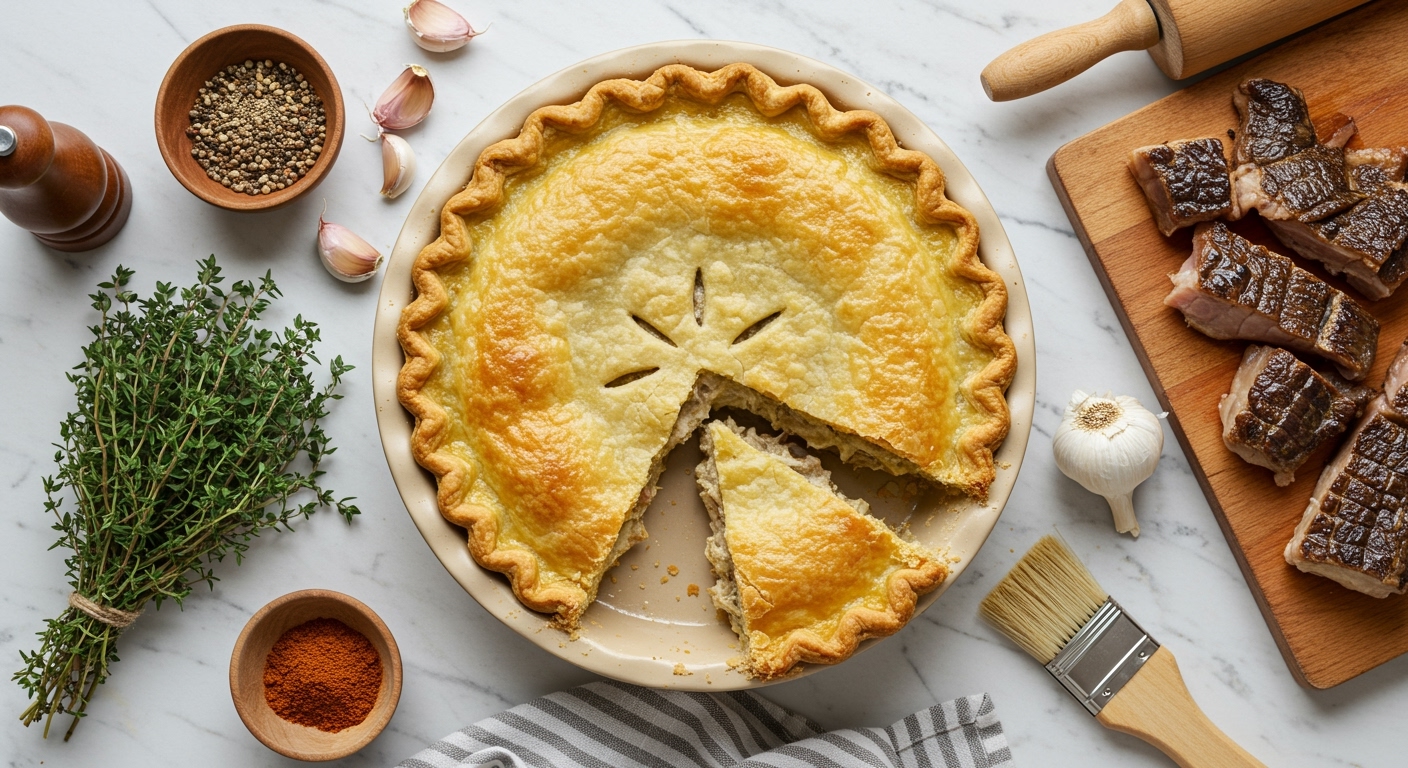
✪ Key Takeaway: Alligator pie transforms exotic meat into creamy comfort food with tender chunks in savory gravy wrapped in flaky crust—perfect for adventurous eaters.
Introduction
Imagine biting into a flaky golden crust that shatters under your fork, revealing tender chunks of mild white meat swimming in rich creamy gravy seasoned with just the right amount of Cajun spices.
What makes this alligator pie special is how it takes an unfamiliar protein and transforms it into something as comforting as chicken pot pie, but with a unique story to tell at your dinner table.
Hi, I am Abdur, your nutrition coach and today I am showing you exactly how to make alligator pie that turns skeptical guests into enthusiastic fans who ask for seconds.
What’s the Origin of This Recipe?
Alligator pie comes from the Southern United States, particularly Louisiana and Florida, where alligator hunting has been part of the cultural heritage for generations.
Native American tribes were the first to harvest alligators for food, using every part of the animal and developing cooking methods that made the tough meat tender.
When European settlers arrived, they brought their tradition of meat pies and combined it with local ingredients, creating this unique fusion dish.
In Louisiana, Cajun cooks added their signature spice blends and created versions with roux-based gravies, while Florida cooks kept it simpler with lighter seasonings.
Today, alligator pie represents sustainable eating since alligator populations are well-managed, and the meat comes from farms that follow strict environmental guidelines.
✪ Fact: Alligator farming became legal in Louisiana in 1986, turning a threatened species into a thriving conservation success story.
Is This Recipe Healthy?
Alligator meat is surprisingly lean and nutritious, containing more protein per serving than chicken breast with significantly less fat.
A 3-ounce serving of alligator provides about 46 grams of protein with only 2 grams of fat, making it excellent for muscle building and weight management.
The meat contains important minerals like phosphorus for bone health, potassium for heart function, and vitamin B12 for energy production.
The pie crust adds calories and fat, but you can make it healthier by using whole wheat flour, reducing butter, or even trying a phyllo dough topping instead.
This dish fits well into low-carb diets when you skip the bottom crust and use only a top crust, and it works for gluten-free eaters with appropriate flour substitutions.
✪ Pro Tip: Use Greek yogurt instead of heavy cream in the filling to cut calories while maintaining creamy texture and adding extra protein.
✪ Total Time: 90 minutes | ✪ Total servings: 6
Tools
- Large skillet or sauté pan
- 9-inch pie dish
- Rolling pin
- Mixing bowls (2)
- Sharp knife and cutting board
- Measuring cups and spoons
- Pastry brush
- Wooden spoon or spatula
✪ Note: A food processor makes pie crust preparation faster, but you can easily mix it by hand with a fork or pastry cutter.
Ingredients
For the filling:
- 1 pound alligator tail meat, cut into 1-inch cubes
- 2 tablespoons olive oil or butter
- 1 medium onion, diced
- 2 celery stalks, diced
- 1 bell pepper, diced
- 3 garlic cloves, minced
- 3 tablespoons all-purpose flour
- 1.5 cups chicken or vegetable broth
- 0.5 cup heavy cream or milk
- 1 cup frozen mixed vegetables (peas, carrots, corn)
- 2 teaspoons Cajun seasoning
- 1 teaspoon dried thyme
- Salt and black pepper to taste
- 2 tablespoons fresh parsley, chopped
For the crust:
- 2.5 cups all-purpose flour
- 1 teaspoon salt
- 1 cup cold butter, cubed
- 6-8 tablespoons ice water
- 1 egg, beaten (for egg wash)
✪ Pro Tip: Buy alligator meat from specialty butchers, online suppliers, or Louisiana seafood markets where it comes fresh or frozen in vacuum-sealed packages.
Instructions
Make the crust:
- Mix flour and salt in a large bowl, then add cold butter cubes.
- Use your fingers or a pastry cutter to work the butter into the flour until it resembles coarse crumbs.
- Add ice water one tablespoon at a time, mixing gently until dough just comes together.
- Divide dough in half, shape into disks, wrap in plastic, and refrigerate for 30 minutes.
Prepare the filling:
- Heat oil in a large skillet over medium-high heat.
- Season alligator cubes with salt, pepper, and 1 teaspoon Cajun seasoning, then sear for 3-4 minutes until lightly browned.
- Remove meat and set aside, then add onion, celery, and bell pepper to the same pan.
- Cook vegetables for 5 minutes until softened, then add garlic and cook for 1 more minute.
- Sprinkle flour over vegetables and stir constantly for 2 minutes to create a light roux.
- Slowly pour in broth while stirring to prevent lumps, then add cream and remaining seasonings.
- Return alligator to the pan, add frozen vegetables, and simmer for 10 minutes until sauce thickens.
- Stir in fresh parsley, taste and adjust seasoning, then remove from heat to cool slightly.
Assemble and bake:
- Preheat your oven to 375°F (190°C).
- Roll out one dough disk on a floured surface to fit your pie dish with 1-inch overhang.
- Transfer dough to pie dish, pressing gently into corners without stretching.
- Pour cooled filling into the crust, spreading it evenly.
- Roll out second dough disk for the top crust, then place it over the filling.
- Trim excess dough, leaving 0.5-inch overhang, then fold edges under and crimp with a fork or your fingers.
- Cut 4-5 small slits in the top crust to release steam.
- Brush the entire top with beaten egg for a golden finish.
- Place pie on a baking sheet to catch drips, then bake for 45-50 minutes until crust is deep golden brown.
- Let the pie rest for 15 minutes before slicing to allow filling to set properly.
✪ Pro Tip: Cover the pie edges with foil strips halfway through baking if they brown too quickly before the center finishes cooking.
Nutrition Facts (approximate)
Per serving (1 slice):
- Calories: 520 kcal
- Protein: 28g
- Carbohydrates: 42g
- Fat: 26g
- Fiber: 3g
- Sodium: 680mg
✪ Note: Nutrition values vary based on crust thickness, cream amount, and specific ingredients used in your version of this recipe.
What Are Common Mistakes to Avoid?
The biggest mistake people make is overcooking alligator meat, which turns it tough and rubbery instead of tender.
Alligator cooks quickly like chicken breast, so searing it for just 3-4 minutes before adding it to the filling prevents that chewy texture.
Another common error is making the filling too watery, which happens when you skip the flour roux step or add too much liquid.
Your filling should be thick enough to coat the back of a spoon before going into the crust, or it will make the bottom soggy.
Many home cooks also forget to let the pie rest after baking, cutting into it immediately and watching all the hot filling run out onto the plate.
If your crust shrinks during baking, you probably stretched the dough too much when placing it in the pan instead of gently pressing it into position.
Watch for a golden-brown color on top and bubbling filling visible through the steam vents as signs your pie is perfectly done.
✪ Pro Tip: Blind bake your bottom crust for 10 minutes before adding filling if you want extra insurance against sogginess.
What If You’re Missing an Ingredient?
If you cannot find alligator meat, substitute with chicken thighs or firm white fish like grouper, though you lose the unique story.
Chicken works best as a replacement because it has similar texture and mild flavor that takes on seasonings well.
Missing Cajun seasoning is easy to fix by mixing paprika, garlic powder, onion powder, cayenne, oregano, and thyme in equal parts.
You can swap heavy cream with half-and-half, whole milk, or even coconut milk for dairy-free versions, though the sauce will be slightly thinner.
Store-bought pie crust saves time and works perfectly fine, though homemade crust tastes better and gives you control over ingredients.
If you do not have fresh vegetables, use a frozen mirepoix mix or whatever vegetables you have on hand like potatoes, green beans, or mushrooms.
The key is maintaining the ratio of meat to vegetables to sauce so the filling has the right consistency and balance.
✪ Note: Butter in the crust can be replaced with shortening or lard for a different texture, but avoid oil which makes crust tough.
Can You Store Leftovers?
Alligator pie stores beautifully in the refrigerator for 3-4 days when kept in an airtight container or covered tightly with foil.
Let the pie cool completely to room temperature before refrigerating to prevent condensation that makes the crust soggy.
Reheat individual slices in a 350°F oven for 15-20 minutes to restore the crust’s crispness, or use a microwave for quick heating.
The microwave makes the crust soft, but you can crisp it up by finishing the slice in a toaster oven for 5 minutes.
For longer storage, wrap the whole pie or individual slices tightly in plastic wrap and foil, then freeze for up to 3 months.
Thaw frozen pie overnight in the refrigerator, then reheat in the oven until the center reaches 165°F for food safety.
The texture holds up remarkably well after freezing because the thick gravy protects the meat from drying out.
✪ Pro Tip: Freeze unbaked pie for up to 2 months and bake directly from frozen, adding 15-20 extra minutes to cooking time.
Can You Scale This Recipe?
This recipe scales up easily for large gatherings by doubling or tripling all ingredients and using multiple pie dishes.
You can also make one large sheet pan version in a 9×13 inch baking dish that serves 10-12 people with less fussy crust work.
For the sheet pan method, use only a top crust or create a lattice pattern that looks impressive but uses less dough.
Scaling down works perfectly for 2-3 servings by halving the recipe and using a 6-inch pie dish or small cast iron skillet.
Individual hand pies or turnovers make great portion-controlled servings that freeze individually and reheat quickly for single meals.
When making multiple pies, prepare all the filling at once but roll and assemble crusts separately to maintain the right dough temperature.
The baking time stays the same regardless of how many pies you make, as long as each pie is the standard size.
✪ Fact: Hand pies became popular in medieval times as portable meals for workers, making them the original grab-and-go food.
Can You Customize This Recipe?
You can easily make this vegetarian by replacing alligator with hearty mushrooms, jackfruit, or extra-firm tofu that mimics the meaty texture.
For a seafood version, use shrimp, crab, or a mix of firm white fish that holds up during baking without falling apart.
Adjust the spice level by increasing cayenne pepper and hot sauce for heat lovers, or omit them completely for kid-friendly versions.
Add different vegetables like sweet potatoes, butternut squash, or spinach to change the flavor profile and boost nutrition.
Try a puff pastry top instead of pie crust for an elegant presentation that puffs up dramatically and adds buttery layers.
Make it Mexican-inspired by adding black beans, corn, jalapeños, and topping with cheese and cilantro before baking.
The beauty of this recipe is its flexibility as a template that welcomes your creativity while maintaining the comforting pie structure.
✪ Pro Tip: Mix different proteins like alligator and shrimp together for a Louisiana-style surf and swamp combination that impresses dinner guests.
The Bottom Line
Alligator pie proves that adventurous eating does not mean sacrificing comfort or familiar flavors.
The best recipes tell stories while filling bellies, and this pie does both with every flaky, savory bite.
Try this recipe and share your experience in the comments below, especially if you convinced a skeptical family member to try alligator for the first time.
References
At NutritionCrown, we use quality and credible sources to ensure our content is accurate and trustworthy. Below are the sources referenced in writing this article:
- Girls Can Grill: Grilled Cajun Alligator with Comeback Sauce
- Louisiana Department of Wildlife and Fisheries: Louisiana Alligator Cookbook
- Big Cove Foods: Alligator Hand Pie Recipe
- Wild Florida Airboats: 7 Ways to Cook with Gator
- Celebration Generation: Savoury Alligator Pie Recipe