Chocolate: Is It Really Good For Low Blood Pressure? (Expert Answer)
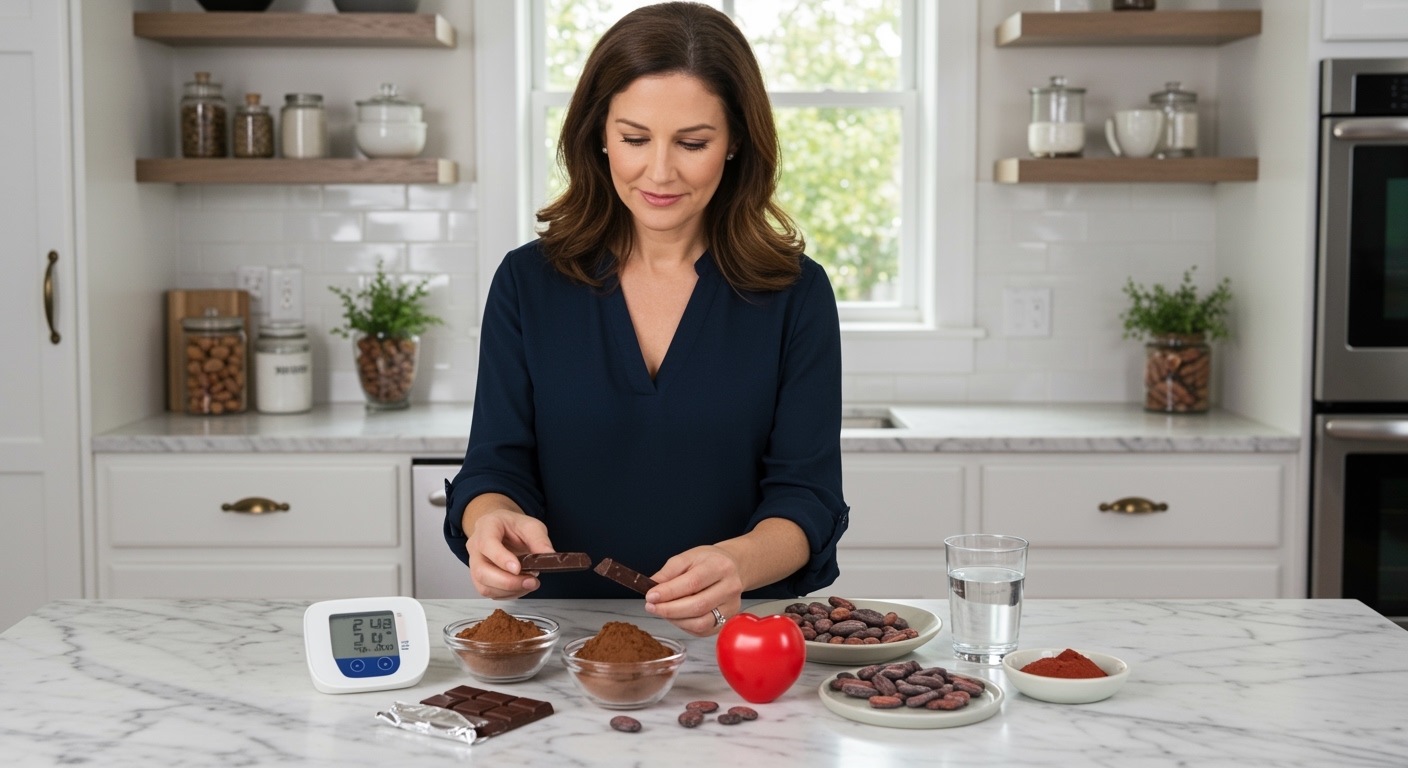
Woman standing behind marble countertop examining dark chocolate with blood pressure monitor, cocoa powder, and heart symbol visible

✪ Key Takeaway: Chocolate may slightly raise blood pressure in people with hypotension due to caffeine and sugar content. Introduction You have heard people say that dark chocolate is good for your heart. But when you have low blood pressure, you wonder if chocolate will help raise those numbers or make things worse. Hi, I am Abdur, your nutrition coach and today I am going to explain how chocolate affects your blood pressure, what compounds are at play, and whether it truly helps people with hypotension. What Happens Inside Your Body When You Eat Chocolate? When you eat chocolate, several compounds enter your bloodstream almost immediately. The most talked-about compounds are flavonoids, which are plant chemicals that can affect your blood vessels. These flavonoids help your body produce nitric oxide, a molecule that relaxes the inner lining of your blood vessels. When blood vessels relax, they widen, which typically lowers blood pressure rather than raises it. But chocolate also contains caffeine and theobromine, two stimulants that can temporarily increase heart rate and blood pressure. The sugar content in most commercial chocolate triggers an insulin response that can cause a quick energy spike followed by a drop. So your body experiences competing effects that push blood pressure in opposite directions at the same time. ✪ Fact: Dark chocolate contains about 12 milligrams of caffeine per ounce, which is roughly one-tenth the amount in a cup of coffee. Does Research Support Chocolate For Low Blood Pressure? Most scientific studies focus on how


Bitter Kola: Can It Help With High Blood Pressure? (Expert Answer)

Middle-aged woman standing behind marble counter with bitter kola seeds, heart model, and blood pressure monitor in bright kitchen

✪ Key Takeaway: Bitter kola may reduce blood pressure in some people, but the evidence is limited and effects vary widely based on dosage and individual response. Introduction Your uncle swears bitter kola cured his high blood pressure, but your doctor never mentioned it. You might be asking this question because traditional remedies often promise quick fixes, and bitter kola has been used in African medicine for generations to treat various conditions including cardiovascular problems. Hi, I am Abdur, your nutrition coach, and today I am going to explain what science actually says about bitter kola and blood pressure, including the surprising mechanisms, the real risks, and whether this seed deserves a place in your health routine. What Exactly Is Bitter Kola and Why Do People Use It? Bitter kola comes from the seeds of Garcinia kola, a tree native to West and Central Africa. The seed tastes extremely bitter, which is why it earned its name, and people traditionally chew it raw or consume it in powdered form. For centuries, African communities have used bitter kola to treat coughs, infections, and digestive problems. The seed contains several bioactive compounds including flavonoids, tannins, and saponins that give it medicinal properties. These compounds act as antioxidants, meaning they fight harmful molecules called free radicals that damage your cells. People also use bitter kola as a social custom in many African cultures, offering it to guests as a sign of hospitality and respect. The growing interest in natural remedies has pushed bitter

Palo Azul: Is It Really Good For Diabetes? (Expert Answer)

Woman holding blue herbal tea cup while looking at blood glucose meter on marble counter with palo azul wood chips and pancreas model

✪ Key Takeaway: Palo azul shows promising antioxidant properties but lacks strong human evidence for diabetes management. Introduction You have probably heard about palo azul tea from someone claiming it cured their diabetes. People search for this information because they want natural alternatives to medications or hope to find something that works better than their current treatment plan. Hi, I am Abdur, your nutrition coach and today I am going to explain what science actually says about palo azul for diabetes and whether you should consider adding it to your routine. What Exactly Is Palo Azul? Palo azul is a woody plant native to Mexico and parts of Central America. The name translates to blue stick because the wood produces a distinctive blue color when steeped in water. Traditional medicine practitioners have used this plant for centuries to treat various conditions including kidney problems and urinary tract issues. The tea contains compounds called flavonoids which act as antioxidants in your body. People typically prepare it by boiling the wood chips in water for 30 to 60 minutes until the liquid turns blue or amber. The resulting beverage has a mild, slightly sweet taste that most people find pleasant. Understanding what palo azul actually is helps you evaluate whether the traditional uses translate to real benefits for diabetes. ✪ Fact: The blue color comes from fluorescent compounds that appear under certain light conditions, not from artificial dyes. Does Research Support Palo Azul For Blood Sugar Control? The honest answer is that

Peanut Butter: Is It Even Safe For Low Blood Pressure? (Expert Answer)

Woman spreading peanut butter on bread at marble countertop with blood pressure monitor, peanuts, and healthy foods visible

✪ Key Takeaway: Peanut butter is safe for low blood pressure and may help stabilize it through healthy fats, protein, and minerals. Introduction You spread peanut butter on your morning toast and suddenly wonder if this creamy delight is making your low blood pressure worse. The confusion comes from hearing that peanut butter affects blood pressure, but nobody tells you whether it raises or lowers it, leaving you stuck between enjoying your favorite spread and worrying about your health. Hi, I am Abdur, your nutrition coach, and today I am going to explain exactly how peanut butter affects low blood pressure, what the science says, and whether you should keep it in your diet. Does Peanut Butter Lower Blood Pressure Even More? The short answer is no, peanut butter does not dangerously lower your blood pressure when you already have hypotension. Research shows that peanut butter can help reduce high blood pressure, but this effect is mild and works over time through improved vascular function. When you have low blood pressure, eating peanut butter will not cause a sudden drop that makes you dizzy or faint. The magnesium and potassium in peanut butter help regulate blood pressure by supporting healthy blood vessel function, not by forcing it down. Your body maintains blood pressure through complex mechanisms involving your heart, blood vessels, kidneys, and nervous system working together. A single food like peanut butter cannot override these sophisticated control systems unless you consume extreme amounts, which nobody does in one sitting.

Melatonin: Can It Help With Hypothyroidism? (Expert Answer)

Woman standing behind marble countertop examining supplement bottle with thyroid model, sleep mask, clock, and health items visible

✪ Key Takeaway: Melatonin can interfere with thyroid hormone production and may worsen hypothyroidism symptoms when used without proper guidance. Introduction You take your thyroid medication every morning, yet you still struggle to fall asleep at night. Someone suggests trying melatonin supplements because they worked wonders for their sleep problems, and you wonder if this natural hormone could finally give you the rest you desperately need without interfering with your hypothyroidism treatment. Hi, I am Abdur, your nutrition coach, and today I am going to explain how melatonin affects thyroid function, whether it helps or harms hypothyroidism, and what you need to know before taking this popular sleep supplement. What Does Melatonin Actually Do In Your Body? Melatonin is a hormone your pineal gland produces naturally when darkness falls. This hormone tells your body it is time to sleep by lowering your core temperature and making you feel drowsy. Your melatonin levels rise about two hours before your usual bedtime and stay elevated throughout the night. When morning light hits your eyes, melatonin production stops and cortisol levels rise to wake you up. This natural rhythm controls your circadian cycle, which affects nearly every system in your body including your thyroid gland. Many people take melatonin supplements ranging from 1 to 10 milligrams to help them fall asleep faster or adjust to new time zones. However, these supplemental doses often exceed what your body produces naturally by 10 to 100 times, which creates effects beyond simple sleep regulation. ✪ Fact:

Safi: Is It Even Important For High Blood Pressure? (Expert Answer)

Middle-aged woman standing behind marble counter with blood pressure monitor, herbal supplement, vegetables, and heart model in bright kitchen

✪ Key Takeaway: Safi is not scientifically proven to lower high blood pressure, and relying on it instead of evidence-based treatments can be dangerous. Introduction You walk into a pharmacy and see bottles of Safi lining the shelves with promises of blood purification. Your uncle swears by it, your neighbor recommends it, and now you are wondering if this herbal syrup could help manage your high blood pressure. Hi, I am Abdur, your nutrition coach, and today I am going to explain what Safi actually does, whether it has any real impact on blood pressure, and what you should focus on instead for genuine cardiovascular health. What Exactly Is Safi And What Does It Claim To Do? Safi is an herbal liquid supplement marketed primarily in South Asian countries as a blood purifier. The product contains various herbs like senna, sanay, neem, tulsi, and other botanical ingredients that supposedly cleanse your blood of toxins. The concept of blood purification itself is not recognized in modern medical science because your liver and kidneys already perform this function naturally. Safi is primarily marketed for skin conditions like acne, pimples, and blemishes rather than cardiovascular health. The manufacturers claim it works by removing impurities from your blood, which supposedly leads to clearer skin and better overall health. However, there is no scientific evidence linking Safi consumption to blood pressure reduction or cardiovascular benefits. The product is essentially a laxative due to its senna content, which means it primarily affects your digestive system rather

Protein Supplement: Is It Even Safe For Diabetes? (Expert Answer)

Middle-aged man in dark blue shirt examining protein powder container with glucose meter, chicken breast, and almonds on marble counter

✪ Key Takeaway: Protein supplements are generally safe for diabetes when you choose options without added sugars and monitor your portions carefully. Introduction You walk into a store and see rows of colorful protein powder containers promising muscle growth and better health. But when you have diabetes, every food decision feels like walking through a minefield where one wrong choice could send your blood sugar soaring. Hi, I am Abdur, your nutrition coach and today I am going to explain whether protein supplements are actually safe for people with diabetes and how to choose the right ones without risking your health. How Does Protein Actually Affect Blood Sugar Levels? Protein has a minimal direct impact on your blood glucose compared to carbohydrates. When you eat protein, your body breaks it down into amino acids that get absorbed into your bloodstream. These amino acids trigger a small insulin response, but nothing like what happens when you eat bread or rice. Research shows that protein can actually help stabilize blood sugar by slowing down the absorption of carbohydrates when eaten together. This is why adding protein to your meals prevents those sharp spikes and crashes that make diabetes management so frustrating. However, your body can convert excess protein into glucose through a process called gluconeogenesis, which happens in your liver. This conversion is slow and steady, not the rapid spike you get from eating sugar or refined carbs. ✪ Fact: Studies show that consuming 25-30 grams of protein per meal helps improve

Corn: Is It Really Good For Hypothyroidism? (Expert Answer)

Woman holding thyroid model while standing behind marble counter with corn products including fresh corn, cornmeal, and tortillas

✪ Key Takeaway: Corn is generally safe for hypothyroidism in moderate amounts, but processed corn products and overconsumption may worsen inflammation and blood sugar issues. Introduction You grab a bag of tortilla chips or pour yourself a bowl of cornflakes without thinking twice. Then someone mentions that corn might affect your thyroid, and suddenly you are questioning everything you eat. Hi, I am Abdur, your nutrition coach, and today I am going to explain exactly how corn impacts your thyroid function, what forms are safe, and when you should limit this common grain. Does Corn Contain Goitrogens That Harm Your Thyroid? The biggest concern people have about corn and hypothyroidism centers around goitrogens. Goitrogens are compounds that can interfere with thyroid hormone production by blocking iodine uptake in the thyroid gland. The good news is that corn contains minimal goitrogenic activity compared to foods like soy, cruciferous vegetables, or millet. Research shows that corn does not significantly suppress thyroid function in people with adequate iodine intake. However, if you already have iodine deficiency, eating large amounts of any grain including corn might add stress to an already struggling thyroid. The real problem with corn is not the goitrogen content but rather what happens when you eat it in processed forms or excessive quantities. ✪ Fact: Cooking corn reduces any minimal goitrogenic compounds even further, making it safer for thyroid patients. How Does Corn Affect Blood Sugar and Inflammation? Corn is a high-glycemic grain that breaks down quickly into sugar in

Sugar: Is It Really Good For Low Blood Pressure? (Expert Answer)

Woman standing behind marble counter with blood pressure monitor, juice, sugar bowl, banana, almonds, water bottle, and heart model

✪ Key Takeaway: Sugar temporarily raises blood pressure but creates dangerous blood sugar swings that worsen hypotension long-term. Introduction You feel dizzy, your vision blurs, and someone hands you a sugary drink saying it will fix your low blood pressure instantly. You might be wondering if this common advice actually works or if it creates more problems than it solves for your cardiovascular health. Hi, I’m Abdur, your nutrition coach and today I’m going to explain the real relationship between sugar consumption and low blood pressure, plus what actually works better. What Actually Happens When You Eat Sugar With Low Blood Pressure? When you consume sugar, your body experiences a rapid spike in blood glucose levels within minutes. This sudden increase triggers your pancreas to release insulin, a hormone that helps cells absorb glucose from your bloodstream. The insulin response can cause your blood vessels to dilate slightly, which might actually lower blood pressure further instead of raising it. Your body then experiences what we call reactive hypoglycemia, where blood sugar drops below normal levels after the initial spike. This creates a vicious cycle where you feel even more dizzy and weak than before, making your hypotension symptoms worse. The temporary energy boost you feel from sugar is not from improved blood pressure but from the glucose reaching your brain cells. ✪ Fact: Research shows that high sugar intake can actually impair blood pressure regulation mechanisms over time. Why Do People Think Sugar Helps Low Blood Pressure? The confusion comes

Papaya: Can It Help With High Blood Pressure? (Expert Answer)

Woman standing behind marble counter examining whole and halved papaya with blood pressure monitor, heart model, and smoothie visible

✪ Key Takeaway: Papaya may help lower blood pressure through potassium, fiber, and antioxidants, but it works best as part of an overall healthy diet. Introduction You walk past the produce section and spot those bright orange papayas sitting there looking tropical and inviting. Maybe you have heard somewhere that papaya can help with high blood pressure, and now you wonder if adding this fruit to your shopping cart could actually make a difference in your health. Hi, I am Abdur, your nutrition coach, and today I am going to explain exactly how papaya affects blood pressure and whether this tropical fruit deserves a regular spot in your diet. What Makes Papaya Special for Blood Pressure? Papaya contains several nutrients that directly influence how your blood vessels function. The most important one is potassium, which helps your body balance sodium levels and relax blood vessel walls. One medium papaya provides about 781 milligrams of potassium, which is roughly 17 percent of what most adults need daily. When you consume enough potassium, your kidneys can flush out excess sodium through urine more effectively. This process matters because high sodium intake causes your body to retain water, which increases blood volume and puts extra pressure on your artery walls. Papaya also contains fiber, which helps reduce cholesterol levels that can contribute to narrowed arteries and elevated blood pressure over time. ✪ Fact: Research shows that increasing potassium intake can lower systolic blood pressure by approximately 3 to 6 mmHg in people with