Mustard: Is It Really Good For High Blood Pressure? (Expert Answer)

Middle-aged woman standing behind marble counter with mustard products, heart model, and blood pressure monitor in bright kitchen

✪ Key Takeaway: Mustard seeds and greens may help lower blood pressure, but commercial mustard products often contain high sodium that can raise it. Introduction You reach for that yellow bottle at every barbecue without thinking twice about what it does to your blood pressure. Maybe your doctor told you to watch your sodium intake, or perhaps you heard someone mention that mustard seeds have health benefits, and now you are confused about whether this popular condiment helps or hurts your cardiovascular health. Hi, I am Abdur, your nutrition coach, and today I am going to explain exactly how mustard affects your blood pressure and what you need to know before adding it to your meals. What Type of Mustard Are We Actually Talking About? The word mustard refers to three completely different things that affect your blood pressure in very different ways. First, you have mustard seeds, which are tiny round seeds from the mustard plant that contain beneficial compounds called glucosinolates. Second, you have mustard greens, which are the leafy vegetables from the same plant family that provide vitamins, minerals, and fiber. Third, you have commercial mustard condiments like the yellow squeeze bottle in your refrigerator that contains mustard seeds mixed with vinegar, salt, and other ingredients. Most research about mustard and blood pressure focuses on the seeds and greens, not the processed condiment you buy at the store. This distinction matters because what works in a laboratory study using pure mustard seed extract does not always translate

Pumpkin: Is It Really Good for Diabetes? (Expert Answer)

Woman standing behind marble counter with whole pumpkin, cut pumpkin, glucose meter, and pumpkin preparations in bright kitchen

✪ Key Takeaway: Pumpkin can be good for diabetes when eaten in controlled portions because it has moderate glycemic impact and beneficial nutrients. Introduction You walk through the grocery store in autumn and see pumpkins everywhere. You might be asking this question because someone told you pumpkin is healthy, but you worry about your blood sugar levels and want to know if this orange vegetable will spike your glucose or help control it. Hi, I am Abdur, your nutrition coach and today I am going to explain exactly how pumpkin affects diabetes, what the science says, and how you can include it safely in your meal plan. What Makes Pumpkin Different From Other Vegetables? Pumpkin belongs to the winter squash family and contains more carbohydrates than most non-starchy vegetables. A 100-gram serving of cooked pumpkin provides about 6 grams of carbohydrates, which is higher than leafy greens but lower than potatoes. The glycemic index of pumpkin ranges from 51 to 75 depending on the variety and cooking method. This means pumpkin falls into the medium to high glycemic category, which sounds concerning at first. However, the glycemic load tells a different story because it considers the actual amount of carbohydrates in a typical serving. The glycemic load of a 100-gram serving is only about 3, which is considered low and means it will not cause dramatic blood sugar spikes when eaten in reasonable amounts. Pumpkin also contains fiber, antioxidants, and beneficial plant compounds that can support overall health and potentially

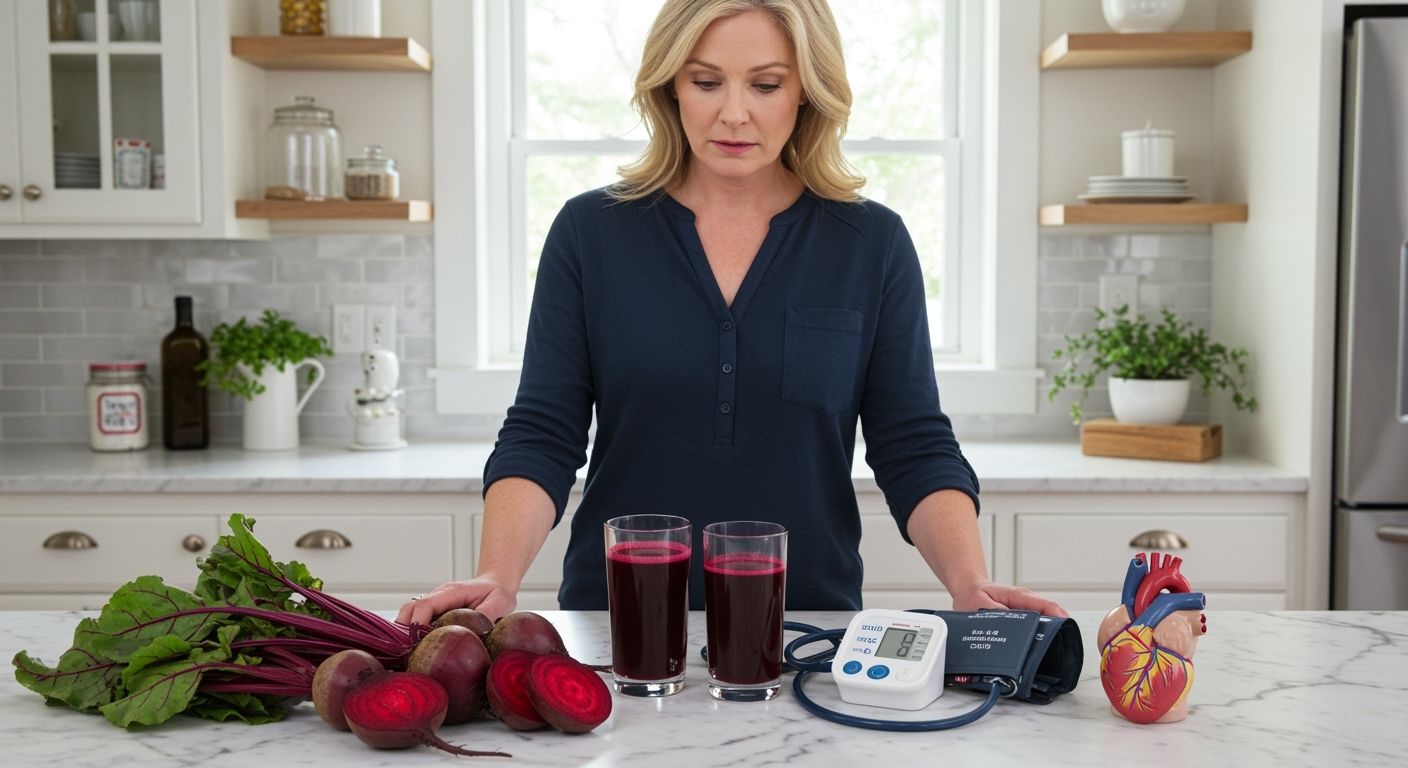
Beets: Can They Help With Low Blood Pressure? (Expert Answer)

Woman holding fresh beet while standing behind marble counter with sliced beets, juice, and blood pressure equipment in bright kitchen

✪ Key Takeaway: Beets lower blood pressure and may worsen hypotension, so avoid them if your readings are already low. Introduction You have heard that beets are heart-healthy and can manage blood pressure naturally. But what happens when your blood pressure is already too low and you start eating beets regularly? Hi, I am Abdur, your nutrition coach and today I am going to explain whether beets help or harm people with low blood pressure and what the science actually says about this popular root vegetable. What Do Beets Actually Do to Your Blood Pressure? Beets contain high amounts of dietary nitrates that your body converts into nitric oxide. Nitric oxide is a molecule that relaxes and widens your blood vessels, a process called vasodilation. When your blood vessels widen, blood flows more easily and the pressure against vessel walls decreases. This mechanism works perfectly for people with high blood pressure because it brings their readings down to healthier levels. Research shows that drinking beet juice can lower systolic blood pressure by 4-10 mmHg within just a few hours. But this same effect becomes problematic for people whose blood pressure is already low. ✪ Fact: One cup of beet juice contains approximately 250-300 mg of nitrates, enough to significantly affect blood pressure within 2-3 hours. Can Beets Make Low Blood Pressure Worse? Yes, beets can make low blood pressure worse because they do not discriminate between high and low readings. The nitrates in beets will lower your blood pressure regardless

Salted Peanuts: Are They Always Bad For High Blood Pressure? (Expert Answer)

Woman holding glass bowl of salted peanuts while standing behind marble countertop with heart model and blood pressure monitor visible

✪ Key Takeaway: Salted peanuts contain surprisingly low sodium and may actually help lower blood pressure when eaten in moderation. Introduction You grab a handful of salted peanuts and suddenly feel guilty about your blood pressure numbers. You might be asking this question because your doctor warned you about sodium, yet you love peanuts and wonder if the salt makes them completely off-limits for your heart health. Hi, I am Abdur, your nutrition coach and today I am going to explain why salted peanuts are not the blood pressure villain you think they are and how you can enjoy them without guilt. How Much Sodium Do Salted Peanuts Actually Contain? Most people believe salted peanuts are loaded with sodium that will instantly spike their blood pressure. The truth is that a one-ounce serving of oil-roasted salted peanuts contains only about 90 to 140 milligrams of sodium. This amount is surprisingly low compared to other salty snacks like potato chips, which can contain 150 to 200 milligrams per ounce. The American Heart Association has even certified certain brands of oil-roasted salted peanuts as heart-healthy because they meet the low-sodium criteria. To put this in perspective, the recommended daily limit for sodium is 2,300 milligrams for most adults, and ideally 1,500 milligrams for those with high blood pressure. A single serving of salted peanuts represents only about 6 percent of your daily sodium allowance. The real sodium culprits in your diet are processed foods, restaurant meals, canned soups, and frozen dinners that

Pumpkin: Can It Help With Diabetes? (Expert Answer)

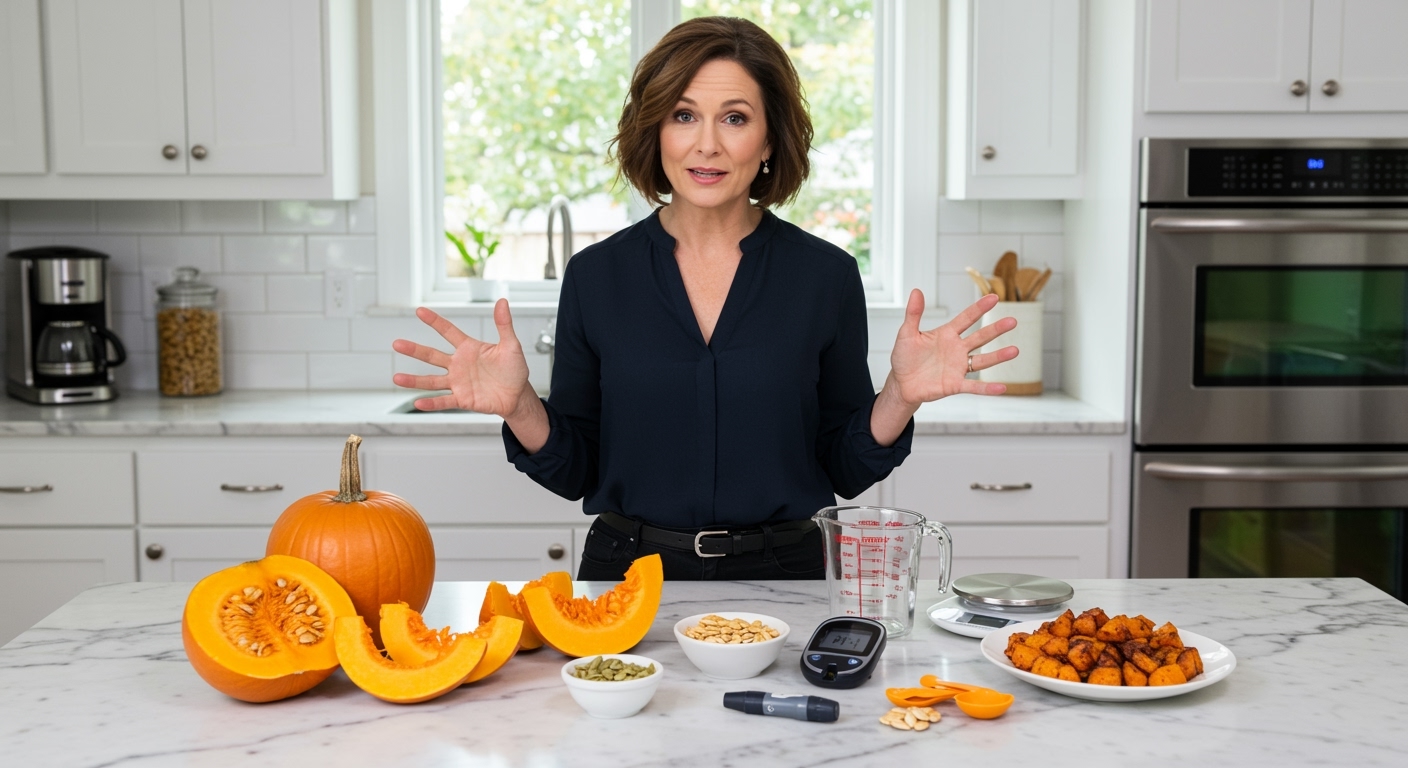
Woman standing behind marble counter gesturing toward whole pumpkin, pumpkin slices, glucose meter, and measuring tools in bright kitchen

✪ Key Takeaway: Pumpkin can help with diabetes when consumed in controlled portions due to its fiber content and low glycemic load. Introduction Every fall, pumpkin appears everywhere from coffee shops to dinner tables, but if you have diabetes, you probably wonder whether this orange vegetable will spike your blood sugar. You might be asking this question because you have heard conflicting information about pumpkin and blood sugar control, leaving you confused about whether to include it in your meal plan. Hi, I am Abdur, your nutrition coach, and today I am going to explain exactly how pumpkin affects your blood sugar and whether it deserves a place in your diabetes-friendly diet. Does Pumpkin Have a High Glycemic Index? The glycemic index of pumpkin sits around 75, which technically places it in the high category. This number makes many people with diabetes immediately cross pumpkin off their grocery list. However, the glycemic index only tells half the story because it does not account for portion size. The glycemic load provides a more accurate picture by considering how much carbohydrate you actually consume in a typical serving. A 100-gram serving of pumpkin contains only about 6 grams of carbohydrate, giving it a glycemic load of just 3, which is considered very low. This means that despite its high glycemic index, pumpkin will not cause a significant blood sugar spike when you eat reasonable portions. ✪ Fact: Watermelon has a similar high glycemic index but low glycemic load pattern, making portion control

Bananas: Can They Help With Low Blood Pressure? (Expert Answer)

Woman holding banana while standing near blood pressure monitor on marble counter in bright modern kitchen with natural lighting

✪ Key Takeaway: Bananas may not help low blood pressure and could potentially worsen it due to their high potassium content. Introduction You have probably heard countless times that bananas are great for your blood pressure. But here is the problem: most of that advice targets people with high blood pressure, not low. If you are dealing with hypotension or low blood pressure, you might be wondering whether this popular fruit can actually help raise your numbers or if it might make things worse. Hi, I am Abdur, your nutrition coach, and today I am going to explain exactly how bananas affect low blood pressure and what you should really be eating instead. What Makes Bananas So Popular For Blood Pressure? Bananas have earned their reputation as a blood pressure friendly food primarily because of one nutrient: potassium. A medium banana contains about 422 milligrams of potassium, which is roughly 9 percent of your daily needs. Potassium works in your body by helping your kidneys remove excess sodium through urine. This process helps relax blood vessel walls, which reduces the pressure inside your arteries. Research published by the American Heart Association shows that increased potassium intake can significantly lower blood pressure in people with hypertension. But notice the key word there: hypertension, which means high blood pressure, not low. The mechanism that makes bananas helpful for high blood pressure is exactly what makes them potentially problematic for low blood pressure. ✪ Fact: Most blood pressure advice online targets hypertension, leaving

Onion: Is It Even Important For High Blood Pressure? (Expert Answer)

Middle-aged woman holding red onion behind marble counter with sliced onions, heart model, and blood pressure monitor visible

✪ Key Takeaway: Onions contain quercetin and sulfur compounds that relax blood vessels and reduce blood pressure by 3-8 mmHg naturally. Introduction You probably walked past onions in the grocery store yesterday without giving them a second thought. Most people wonder if simple kitchen vegetables can actually make a difference when dealing with something as serious as high blood pressure, especially when doctors keep prescribing expensive medications. Hi, I am Abdur, your nutrition coach and today I am going to explain exactly how onions affect your blood pressure and whether they deserve a permanent spot on your plate. What Makes Onions Special For Blood Pressure? Onions contain a powerful flavonoid called quercetin that acts like a natural blood vessel relaxer. This compound works by increasing nitric oxide production in your blood vessel walls. Nitric oxide signals your blood vessels to widen, which immediately reduces pressure against artery walls. Research shows that consuming quercetin-rich foods can lower systolic blood pressure by 3-5 mmHg and diastolic pressure by 2-3 mmHg. Red and yellow onions contain the highest concentrations of quercetin, especially in their outer layers. The sulfur compounds in onions also prevent platelet clumping, which improves blood flow throughout your body. Most people throw away the papery outer layers and the first thick ring, but these parts contain up to 20 times more quercetin than the inner flesh. ✪ Fact: One medium red onion contains about 32 mg of quercetin, while white onions contain only 10 mg. How Much Onion Do You

Shilajit: Is It Even Important For Diabetes? (Expert Answer)

Middle-aged woman standing behind marble counter with shilajit resin, glucose meter, supplements, and diabetes management tools

✪ Key Takeaway: Shilajit shows modest blood sugar benefits in limited studies, but it cannot replace proven diabetes treatments or lifestyle changes. Introduction You scroll through social media and see another post claiming shilajit is the ancient secret to reversing diabetes. You might be asking this question because you are tired of medications, frustrated with blood sugar swings, or simply curious whether this black tar-like substance from the mountains can actually help your condition. Hi, I am Abdur, your nutrition coach, and today I am going to explain what shilajit actually does for diabetes, what the research really shows, and whether you should spend your money on it. What Exactly Is Shilajit And Why Do People Think It Helps Diabetes? Shilajit is a sticky resin that oozes from rocks in high mountain ranges, primarily the Himalayas. It forms over centuries from the slow decomposition of plants and contains fulvic acid, minerals, and various organic compounds. Traditional Ayurvedic medicine has used shilajit for thousands of years to treat various conditions, including what we now recognize as diabetes symptoms. The theory behind its use for diabetes centers on its supposed ability to improve cellular energy production and reduce oxidative stress. People believe that because diabetes involves mitochondrial dysfunction and inflammation, shilajit might address these root problems. However, traditional use does not automatically mean modern scientific validation, which is why we need to look at actual research data. ✪ Fact: Shilajit contains over 85 minerals in ionic form, but mineral content varies dramatically

Apples: Can They Help With Low Blood Pressure? (Expert Answer)

Woman holding red apple while standing behind marble counter with blood pressure monitor, glass of water, salt bowl, and celery

✪ Key Takeaway: Apples lower blood pressure rather than raise it, making them unsuitable for managing hypotension or low blood pressure conditions. Introduction You feel dizzy when you stand up too quickly. Someone told you that eating apples might help with your low blood pressure, and now you are wondering if this popular fruit could be your solution. Hi, I am Abdur, your nutrition coach and today I am going to explain the real relationship between apples and blood pressure, what science actually says, and what you should eat instead if you are dealing with hypotension. Do Apples Raise or Lower Blood Pressure? Apples actually lower blood pressure instead of raising it. Research published in the American Heart Association journal shows that flavonoid-rich foods like apples reduce blood pressure by improving blood vessel function. Apples contain high amounts of potassium, a mineral that helps your body eliminate excess sodium through urine. When sodium levels drop, your blood vessels relax and blood pressure decreases. One medium apple provides about 195 milligrams of potassium, which contributes to this blood pressure-lowering effect. The fiber in apples also plays a role in reducing blood pressure by improving cholesterol levels and supporting healthy blood vessel walls. So if you have low blood pressure, eating apples will not help your condition and might even make you feel worse. ✪ Fact: Studies show that people who eat apples regularly have lower systolic blood pressure compared to those who do not consume this fruit. Why Do People Think

Hot Water: Can It Help With High Blood Pressure? (Expert Answer)

Woman holding glass of hot water behind marble counter with blood pressure monitor, heart model, and other health items visible

✪ Key Takeaway: Hot water can temporarily lower blood pressure through vasodilation, but it is not a standalone treatment for hypertension. Introduction You wake up every morning and reach for that glass of water on your nightstand. But have you ever wondered if the temperature of that water could actually affect your blood pressure readings throughout the day? Hi, I am Abdur, your nutrition coach, and today I am going to explain exactly how hot water interacts with your cardiovascular system and whether this simple habit deserves a place in your blood pressure management routine. What Happens to Your Blood Vessels When You Drink Hot Water? When you drink hot water, your body temperature rises slightly. This temperature increase triggers a process called vasodilation, where your blood vessels expand and widen. Think of your blood vessels like garden hoses that can change their diameter. When these vessels widen, blood flows more easily through them with less resistance. This reduced resistance means your heart does not have to work as hard to pump blood throughout your body. The result is a temporary drop in blood pressure that can last anywhere from 30 minutes to a few hours. Research published in the journal Hypertension Research found that hot water bathing led to measurable improvements in vascular function among participants. ✪ Fact: Your blood vessels contain smooth muscle that responds to temperature changes within minutes of exposure to hot water. Does Hot Water Work Better Than Cold Water for Blood Pressure? Cold water