Salmon Fish: Can It Help With High Blood Pressure? (Expert Answer)

Middle-aged woman in navy sweater touching fresh salmon fillet on marble counter with heart model and blood pressure monitor nearby

✪ Key Takeaway: Salmon helps lower high blood pressure through omega-3 fatty acids that relax blood vessels and reduce inflammation. Introduction Your doctor just told you that your blood pressure numbers are too high and you need to make changes fast. You probably heard that eating fish might help, but you wonder if salmon really works or if it is just another health trend that sounds good but delivers nothing. Hi, I am Abdur, your nutrition coach and today I am going to explain exactly how salmon affects your blood pressure, what the science says, and how to use it properly for real results. What Makes Salmon Different From Other Fish? Salmon stands out because it contains high amounts of omega-3 fatty acids called EPA and DHA. These are not the same omega-3s you find in flaxseeds or walnuts. EPA and DHA are long-chain fatty acids that your body can use immediately without conversion. A 100-gram serving of salmon provides around 2 to 2.5 grams of these powerful omega-3s. Most other fish contain far less, which means you would need to eat much more to get the same benefit. The fat content in salmon also helps your body absorb fat-soluble vitamins like vitamin D, which plays a role in blood pressure regulation. ✪ Fact: Wild-caught salmon typically contains more omega-3s than farm-raised varieties due to their natural diet. How Does Salmon Lower Blood Pressure? The omega-3 fatty acids in salmon work through multiple mechanisms to reduce blood pressure. First, they

Grits: Is It That Bad For Diabetes? (Expert Answer)

Woman holding bowl of grits while examining blood glucose meter and healthy food alternatives on white marble countertop in bright kitchen

✪ Key Takeaway: Grits can spike blood sugar quickly, but portion control and smart preparation make them manageable for diabetes. Introduction You wake up craving a warm bowl of creamy grits, but then you remember your diabetes diagnosis. You might be asking this question because someone told you grits are off-limits, or maybe your blood sugar spiked after eating them and now you are confused about whether you can ever enjoy this comfort food again. Hi, I am Abdur, your nutrition coach, and today I am going to explain exactly how grits affect your blood sugar, when they become problematic, and what you can do to enjoy them without compromising your diabetes management. What Makes Grits a Concern For Diabetes? Grits are made from ground corn, which is a starchy grain that breaks down into glucose in your body. When you eat grits, your digestive system quickly converts those starches into simple sugars that enter your bloodstream. The glycemic index of regular grits ranges from 65 to 69, which falls into the medium to high category. This means grits can cause a rapid rise in blood glucose levels, especially when eaten in large portions or without other foods. The processing method matters too because instant grits have been ground more finely than stone-ground varieties. Finer grinding means faster digestion and quicker blood sugar spikes. One cup of cooked grits contains about 38 grams of carbohydrates with minimal fiber, which does not help slow down glucose absorption. ✪ Fact: Stone-ground grits

Dates: Are They Really Good For Low Blood Pressure? (Expert Answer)

Woman gesturing toward dates and blood pressure monitor on white marble counter in bright modern kitchen with natural lighting

✪ Key Takeaway: Dates can help raise low blood pressure through potassium, natural sugars, and minerals that support cardiovascular function. Introduction You grab a handful of dates thinking they might help your dizzy spells and constant fatigue. You are asking this question because low blood pressure makes you feel weak, and you have heard that certain foods can help, but you are not sure if dates actually work or if it is just another health myth floating around the internet. Hi, I am Abdur, your nutrition coach, and today I am going to explain exactly how dates affect your blood pressure, what mechanisms are involved, and whether they truly deserve a spot in your daily routine for managing hypotension. What Exactly Happens Inside Your Body When You Eat Dates? When you eat dates, your body immediately starts breaking down their natural sugars into glucose. This glucose enters your bloodstream quickly, causing a rapid increase in blood sugar levels. Your pancreas responds by releasing insulin, which helps cells absorb this glucose for energy. At the same time, dates deliver a significant amount of potassium into your system. Potassium works by helping your blood vessels relax and maintain proper fluid balance throughout your body. This mineral also counteracts sodium effects, which is important because sodium-potassium balance directly influences blood pressure regulation. The combination of quick energy from sugars and cardiovascular support from minerals creates a dual effect that can influence your blood pressure readings within minutes to hours after consumption. ✪ Fact:

Carrots: Can They Help With High Blood Pressure? (Expert Answer)

Woman holding carrot while gesturing toward anatomical heart model with fresh carrots, carrot juice, and blood pressure cuff on marble counter.

✪ Key Takeaway: Carrots can help lower blood pressure through potassium, fiber, and antioxidants that support healthy blood vessel function naturally. Introduction You walk through the produce section and see those bright orange carrots stacked neatly in bins. You might be asking this question because your doctor told you to watch your blood pressure or because you want to prevent problems before they start. Hi, I am Abdur, your nutrition coach and today I am going to explain exactly how carrots affect your blood pressure and whether they deserve a place in your daily diet. What Makes Carrots Good for Blood Pressure? Carrots contain potassium, which is one of the most important minerals for managing blood pressure. One medium carrot provides about 230 milligrams of potassium, which helps your body balance out the negative effects of sodium. When you eat enough potassium, your kidneys flush out more sodium through urine. This process reduces the amount of fluid your body holds, which directly lowers the pressure inside your blood vessels. Carrots also contain fiber, with about 2 grams per medium carrot, which helps reduce cholesterol levels that can damage your arteries over time. Research published in the journal Hypertension shows that people who eat more potassium-rich vegetables have significantly lower blood pressure readings compared to those who eat less. ✪ Fact: Your body needs about 3,500 to 4,700 milligrams of potassium daily to maintain healthy blood pressure levels naturally. How Do Antioxidants in Carrots Affect Your Heart? Carrots are loaded with

Beet Juice: Can It Help With Diabetes? (Expert Answer)

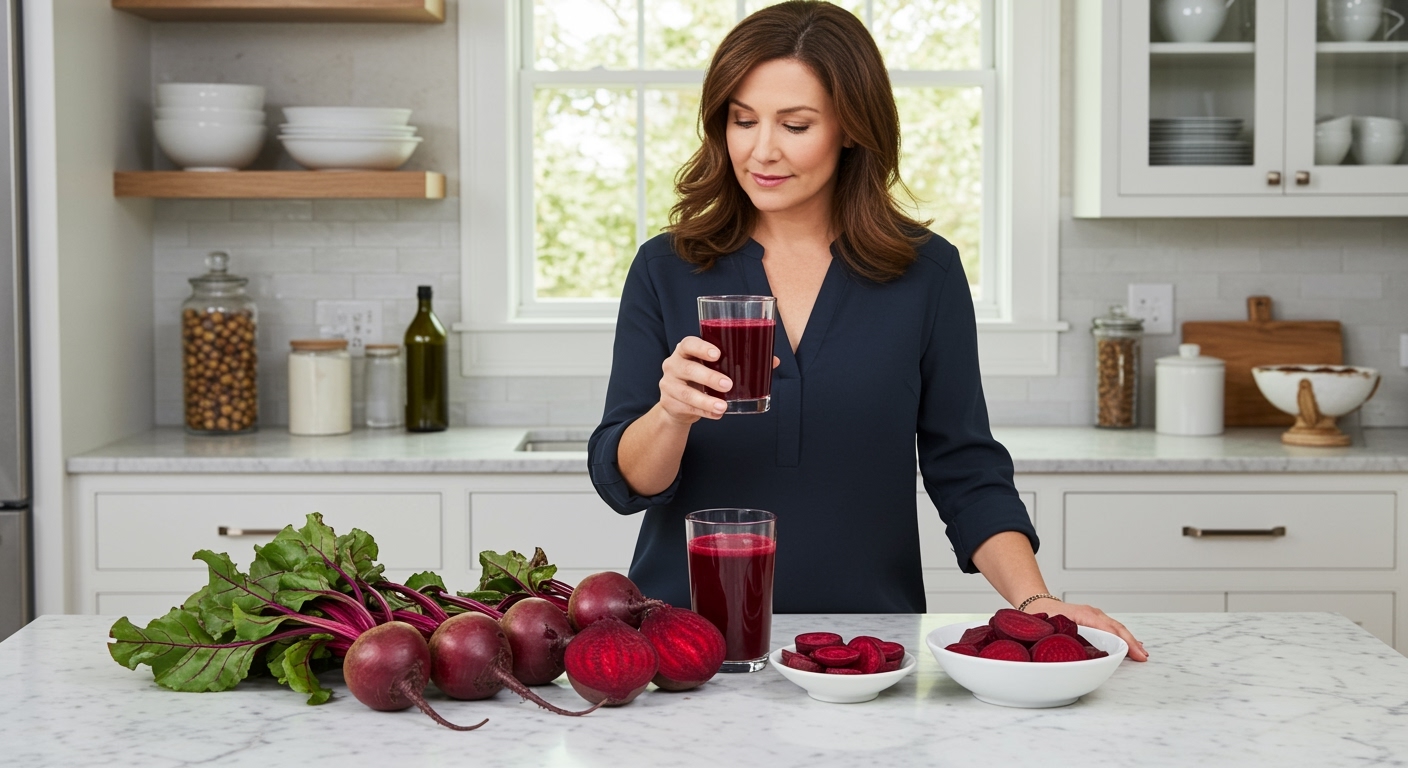
Middle-aged woman holding glass of red beet juice while standing behind marble countertop with fresh whole and sliced beets

✪ Key Takeaway: Beet juice can help with diabetes when consumed in small amounts due to its nitrates, but its natural sugar content requires careful portion control. Introduction You walk into a health food store and see bottles of bright red beet juice with labels promising better blood sugar control. You might be asking this question because you have diabetes or prediabetes and you want natural ways to manage your blood sugar without relying only on medication. Hi, I am Abdur, your nutrition coach and today I am going to explain whether beet juice actually helps with diabetes or if it creates more problems than solutions. What Makes Beet Juice Different From Other Vegetable Juices? Beet juice stands out because it contains high levels of dietary nitrates that your body converts into nitric oxide. Nitric oxide helps relax and widen your blood vessels, which improves blood flow throughout your body. This process matters for people with diabetes because poor blood circulation is a common complication of the condition. Research shows that improved blood flow can help reduce blood pressure, which often runs high in people with diabetes. Beet juice also contains betalains, which are powerful antioxidant compounds that give beets their deep red color. These antioxidants help fight inflammation and oxidative stress, two factors that worsen insulin resistance over time. The combination of nitrates and antioxidants makes beet juice unique compared to other vegetable juices that lack these specific compounds in such concentrated amounts. ✪ Fact: One cup of beet

Beet Juice: Is It Really Good For Low Blood Pressure? (Expert Answer)

Woman standing behind marble counter looking at glass of beet juice, fresh beets, and blood pressure monitor in bright modern kitchen

✪ Key Takeaway: Beet juice lowers blood pressure, so it can worsen hypotension and cause dizziness, fatigue, and fainting. Introduction You have probably heard that beet juice is a miracle drink for blood pressure problems. But here is the catch: most people do not realize that beet juice lowers blood pressure, which means it can make low blood pressure even worse instead of fixing it. Hi, I am Abdur, your nutrition coach and today I am going to explain exactly why beet juice might be dangerous for you if you already struggle with hypotension and what happens inside your body when you drink it. How Does Beet Juice Actually Affect Your Blood Pressure? Beet juice contains high amounts of dietary nitrates, which are natural compounds found in many vegetables. When you drink beet juice, your body converts these nitrates into nitric oxide through a series of chemical reactions. Nitric oxide is a powerful molecule that signals your blood vessels to relax and widen. This process is called vasodilation, and it directly reduces the pressure inside your arteries. For people with high blood pressure, this effect is beneficial because it helps bring their readings down to healthier levels. But for someone with already low blood pressure, this same mechanism can push your readings even lower into dangerous territory. Research shows that beet juice can lower systolic blood pressure by 4 to 10 mmHg within just a few hours of consumption. ✪ Fact: A single glass of beet juice contains about 250

Tuna: Is It Really Good For High Blood Pressure? (Expert Answer)

Woman standing behind marble countertop looking at fresh tuna steak and blood pressure monitor with omega-3 capsules and vegetables

✪ Key Takeaway: Tuna can lower blood pressure through omega-3s and potassium, but mercury and sodium content make choosing the right type critical. Introduction You open a can of tuna for lunch and wonder if this simple choice is helping or hurting your blood pressure. You are asking this question because conflicting information floods the internet about tuna, mercury, sodium, and heart health, leaving you confused about whether this convenient protein source belongs in your high blood pressure management plan. Hi, I am Abdur, your nutrition coach and today I am going to explain exactly how tuna affects your blood pressure, which types you should choose, and the hidden dangers you must avoid to protect your cardiovascular health. How Does Tuna Actually Lower Blood Pressure? Tuna contains omega-3 fatty acids called EPA and DHA that directly reduce inflammation in your blood vessels. These healthy fats help your blood vessels relax and expand, which naturally lowers the pressure inside them. Research shows that people who eat fish rich in omega-3s regularly have lower systolic and diastolic readings compared to those who avoid fish. Tuna also provides potassium, a mineral that counteracts sodium and helps your kidneys flush out excess fluid. When your body maintains proper potassium levels, your blood vessels stay more relaxed and your heart does not have to work as hard to pump blood. The protein in tuna supports healthy blood vessel function by providing amino acids your body needs to repair and maintain arterial walls. This combination of

Jaggery: Is It Always Bad For Diabetes? (Expert Answer)

Middle-aged woman standing behind marble countertop with jaggery bowl, glucose meter, and comparison items in bright kitchen

✪ Key Takeaway: Jaggery is not always bad for diabetes, but it raises blood sugar almost as much as white sugar and should be used sparingly. Introduction Your grandmother swears by jaggery as the healthy alternative to sugar. You might be asking this question because someone told you jaggery is safe for diabetes, or perhaps your doctor warned you against all sweeteners and you wonder if jaggery is really just as bad. Hi, I’m Abdur, your nutrition coach, and today I’m going to explain the complete truth about jaggery and diabetes so you can make informed decisions about this traditional sweetener. What Makes Jaggery Different From White Sugar? Jaggery is unrefined sugar made from sugarcane juice or palm sap that gets boiled until it solidifies. The main difference between jaggery and white sugar lies in the processing method. White sugar goes through multiple refining steps that remove all minerals and leave only pure sucrose. Jaggery keeps some minerals like iron, magnesium, and potassium because it skips the refining process. However, both jaggery and white sugar contain about 97-99% simple carbohydrates that your body breaks down into glucose. The small amount of minerals in jaggery does not change how your body processes the sugar content. This is why jaggery still raises blood sugar levels significantly despite being less processed than white sugar. ✪ Fact: Jaggery contains about 65-85 grams of sucrose per 100 grams, which is nearly identical to white sugar’s sucrose content. How Does Jaggery Affect Blood Sugar Levels? Jaggery

Cucumber: Are They Really Good For Low Blood Pressure? (Expert Answer)

Woman standing behind marble counter with cucumbers, cucumber water, heart model, and blood pressure monitor in bright kitchen

✪ Key Takeaway: Cucumbers provide hydration but lack sufficient sodium and minerals to effectively raise low blood pressure on their own. Introduction You feel dizzy when you stand up too quickly and someone tells you to eat more cucumbers for your low blood pressure. This advice sounds healthy because cucumbers are natural, refreshing, and everyone seems to praise them for hydration and health benefits. Hi, I am Abdur, your nutrition coach and today I am going to explain whether cucumbers actually help raise low blood pressure or if this popular belief misses the complete picture. What Nutrients Do Cucumbers Actually Contain? Cucumbers are made up of about 95 percent water, which makes them incredibly hydrating but very low in calories. One medium cucumber contains approximately 45 calories, 11 grams of carbohydrates, 2 grams of fiber, and minimal amounts of protein and fat. The mineral content includes small amounts of potassium (around 440 milligrams), magnesium (39 milligrams), and very little sodium (just 6 milligrams). Cucumbers also provide vitamin K, vitamin C, and several antioxidant compounds like flavonoids and tannins. However, when you compare these numbers to what your body needs daily, cucumbers provide only a small fraction of essential minerals. The low sodium content is particularly important because sodium plays a critical role in maintaining blood pressure levels. ✪ Fact: A single medium cucumber provides less than one percent of your daily sodium needs, which is crucial for blood pressure regulation. How Does Low Blood Pressure Actually Work? Low blood pressure,

Pecans: Are They Really Good For High Blood Pressure? (Expert Answer)

Woman holding pecans on marble counter with heart model, blood pressure monitor, and pecan products in bright kitchen setting.

✪ Key Takeaway: Pecans lower blood pressure through magnesium, healthy fats, and antioxidants that improve blood vessel function and reduce inflammation. Introduction You grab a handful of pecans and wonder if these buttery nuts will help your blood pressure numbers drop. Maybe your doctor mentioned changing your diet, or perhaps you heard someone say nuts are good for heart health, and now you want to know if pecans specifically can make a real difference in managing your blood pressure. Hi, I am Abdur, your nutrition coach, and today I am going to explain exactly how pecans affect your blood pressure, what the science says, and how to use them properly for maximum benefit. What Makes Pecans Different From Other Nuts? Pecans contain a unique combination of nutrients that specifically target cardiovascular health. They pack more flavonoids than most other tree nuts, which are plant compounds that protect your blood vessels from damage. One ounce of pecans provides about 34 milligrams of magnesium, a mineral that relaxes blood vessel walls and helps regulate blood pressure. The fat profile in pecans is predominantly monounsaturated and polyunsaturated fats, which reduce inflammation in your arteries. Research published in the Journal of Nutrition shows that pecans contain more than 19 vitamins and minerals that work together to support heart function. Unlike processed snacks that spike your blood sugar and stress your cardiovascular system, pecans provide steady energy without causing blood pressure fluctuations. ✪ Fact: Pecans contain the highest amount of antioxidants among all tree nuts,