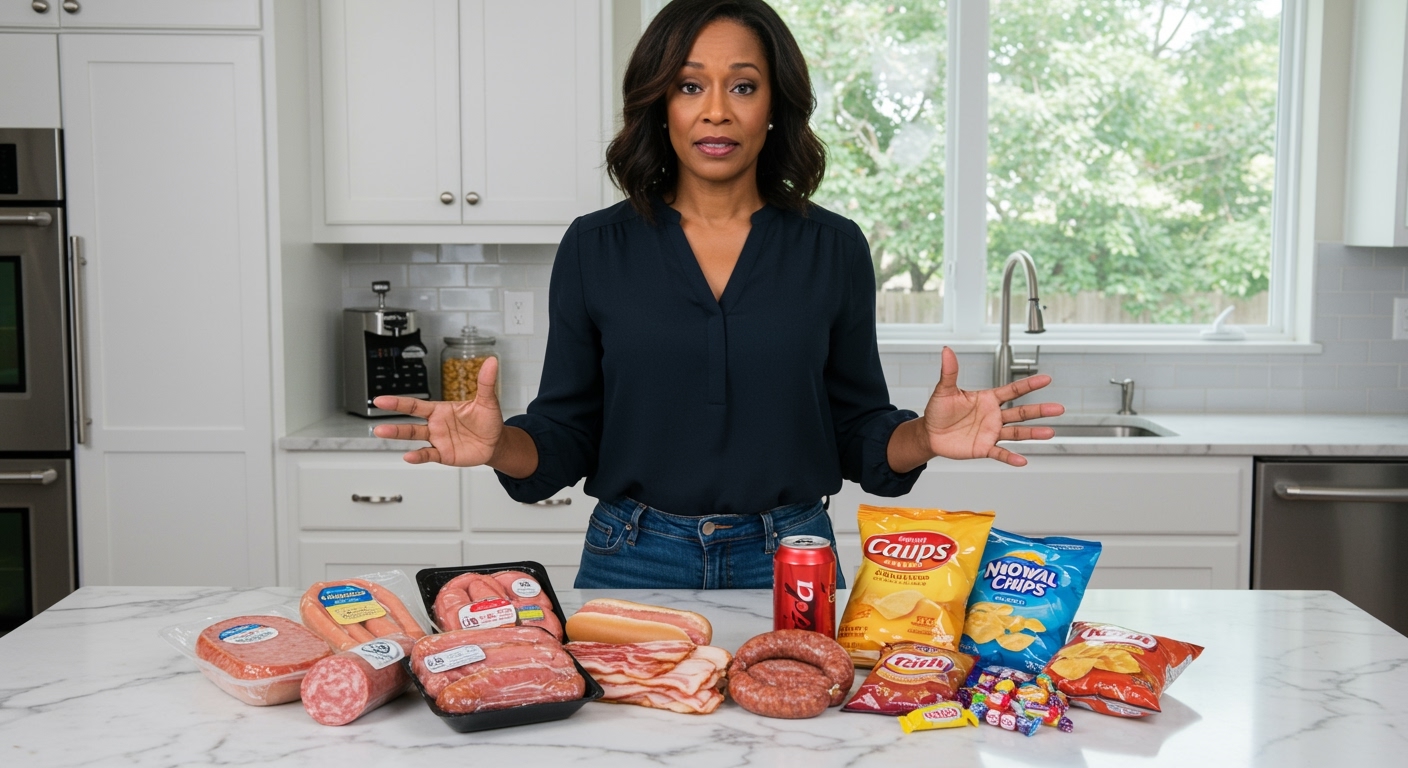
✪ Key Highlight: Black women with breast cancer who consumed the most ultra-processed foods faced 40% higher cancer death risk than low consumers.
Introduction
Black women face the highest breast cancer death rate in America compared to all other racial groups.
A groundbreaking study from Rutgers Cancer Institute followed 1,733 Black women with breast cancer for nearly a decade and discovered something alarming about their eating habits.
Hi, I am Abdur, your nutrition coach and today I am going to analyze how ultra-processed foods dramatically increase death risk among Black women diagnosed with breast cancer and what specific foods pose the greatest danger.
What Did This Groundbreaking Study Discover?
Researchers tracked Black women diagnosed with breast cancer in New Jersey from 2005 to 2019.
About 10 months after diagnosis, these women completed detailed food questionnaires during home interviews covering their eating habits in the year before cancer detection.
The research team then followed them for a median of 9.3 years to track health outcomes.
Women who ate the most ultra-processed foods before diagnosis averaged over eight servings daily.
Those who ate the least averaged fewer than three servings per day.
The results shocked researchers when they found that higher intake linked to 40% increased breast cancer-specific mortality and 36% higher all-cause mortality compared to low consumers.
This study was published in eClinicalMedicine, part of The Lancet Regional Health—Americas, giving it significant scientific credibility.
✪ Fact: Ultra-processed foods now make up 40-60% of calories in the American diet, making this research critically important for public health.
Which Ultra-Processed Foods Pose The Greatest Risk?
Processed meats stood out as the biggest culprit among all ultra-processed foods.
Items like bacon, sausage, hot dogs, and deli meats drove much of the increased death risk.
This aligns with past research tying processed meats to cancer risk and worse prognosis across multiple cancer types.
Lead author Tengteng Wang explained that maybe it is too complicated for breast cancer patients to think about how to reduce consumption of ultra-processed foods in general, but they found processed meat is the top worst contributor among all subgroups.
She added that if you cannot do everything, at least limit consumption of processed meat.
Other ultra-processed foods included sodas, sweets, salty snacks, and pre-prepared fast foods—basically items from the center aisles of supermarkets.
These foods pack high sodium, saturated fat, preservatives, emulsifiers, and additives but lack fiber and micronutrients.
✪ Pro Tip: Check ingredient lists on all packaged foods and avoid products with more than five ingredients or names you cannot pronounce.
Why Do Ultra-Processed Foods Increase Cancer Death Risk?
Total calorie intake partly explained the link because ultra-processed foods often lead to overeating, weight gain, and metabolic issues.
Yet, even after adjusting for calories, a positive association remained.
Wang noted that the total energy intake may be one of the mechanisms, but it is not the only one because a positive association existed even after adjusting for caloric intake.
These foods spark chronic inflammation, which creates an environment where cancer cells can thrive and spread more easily.
They also trigger insulin resistance, a condition where your body cannot properly use insulin to control blood sugar, leading to higher insulin levels that fuel cancer growth.
Ultra-processed foods damage your gut microbiome, the community of beneficial bacteria in your digestive system that helps regulate immunity and inflammation.
Processed meats add nitrates and nitrites that form carcinogens (cancer-causing substances) and advanced glycation end products that boost oxidative stress, damaging cells throughout your body.
✪ Note: Wang’s team is now exploring inflammation and insulin resistance markers in blood samples to confirm these biological mechanisms.
Does This Finding Apply Only To Black Women?
Wang noted the consumption levels were very similar to the UK population and also other US-based studies like the Nurses’ Health Study.
Findings matched a UK Biobank study of mostly white cancer survivors, which showed 22% higher cancer death risk with high ultra-processed food intake.
This suggests biology, not race, drives the effect.
However, Black women often face aggressive subtypes like triple-negative breast cancer plus higher metabolic and inflammatory burdens.
Triple-negative breast cancer lacks three common receptors that other breast cancers have, making it harder to treat and more likely to spread quickly.
Black women also experience greater health disparities from inequities, tumor biology, care access, and social factors.
Wang said she would like to see more studies conducted among cancer survivors to confirm this, but the current evidence looks biologically reasonable now, particularly considering they have some ideas about the underlying biological mechanisms.
✪ Fact: A major umbrella review in The BMJ last year linked high ultra-processed food intake to heart disease, diabetes, depression, and early death.
What Practical Steps Can Breast Cancer Survivors Take?
Study leader Elisa Bandera stresses that going back to cooking traditional meals can potentially save money and is generally better for your health.
Start by eliminating processed meats completely from your diet since they pose the greatest risk.
Replace deli meats with freshly cooked chicken, turkey, or fish that you prepare at home.
Swap sodas and sweetened drinks for water, unsweetened tea, or homemade smoothies.
Choose whole fruits instead of packaged snacks and candy.
Plan your meals ahead on weekends so you have healthy options ready during busy weekdays.
Diet changes alone will not erase disparities from inequities, tumor biology, care access, and social factors, but cutting processed meats gives a clear, doable step.
✪ Pro Tip: Batch cook proteins and vegetables on Sunday to create quick, healthy meals throughout the week without relying on processed convenience foods.
The Bottom Line
This research provides clear evidence that ultra-processed foods, especially processed meats, significantly increase death risk among Black women with breast cancer.
Your fork is more powerful than any pill when it comes to supporting cancer survival and long-term health outcomes.
What are your thoughts on this research, and do you have questions about making healthier food choices during cancer survivorship? Share your experiences or concerns in the comment section below.
References
At NutritionCrown, we use quality and credible sources to ensure our content is accurate and trustworthy. Below are the sources referenced in writing this article:
- Contemporary OB/GYN: Ultra-Processed Food Intake Linked to Higher Mortality Among Black Women With Breast Cancer
- Pharmacy Times: Ultra-Processed Food Consumption May Worsen Breast Cancer Outcomes Among Black Women
- Rutgers University: For Black Women With Breast Cancer, Ultra-Processed Foods May Worsen Health Outcomes
- eCancer: For Black Women With Breast Cancer, Ultra-Processed Foods May Worsen Health Outcomes
- SSRN: Ultra-Processed Food Intake and Mortality Among Black Women With Breast Cancer