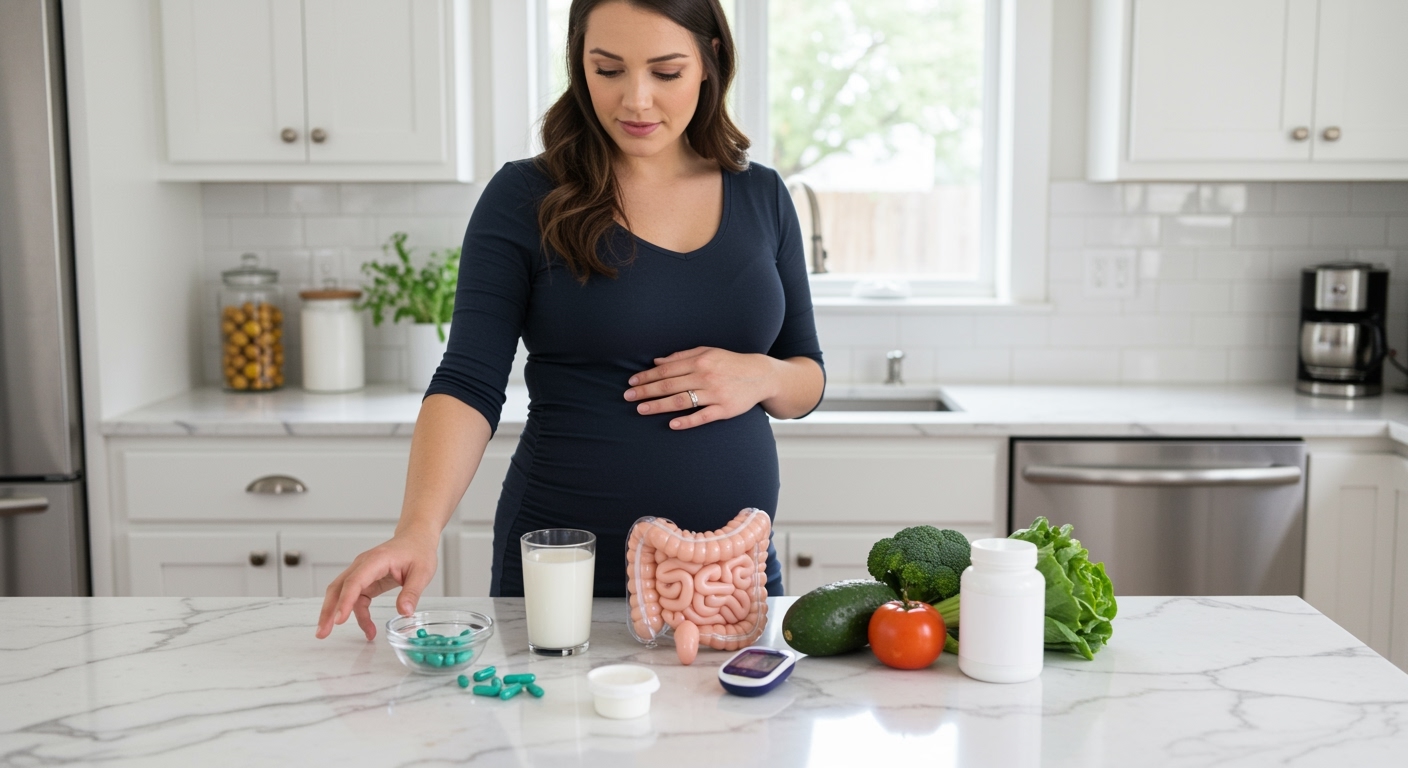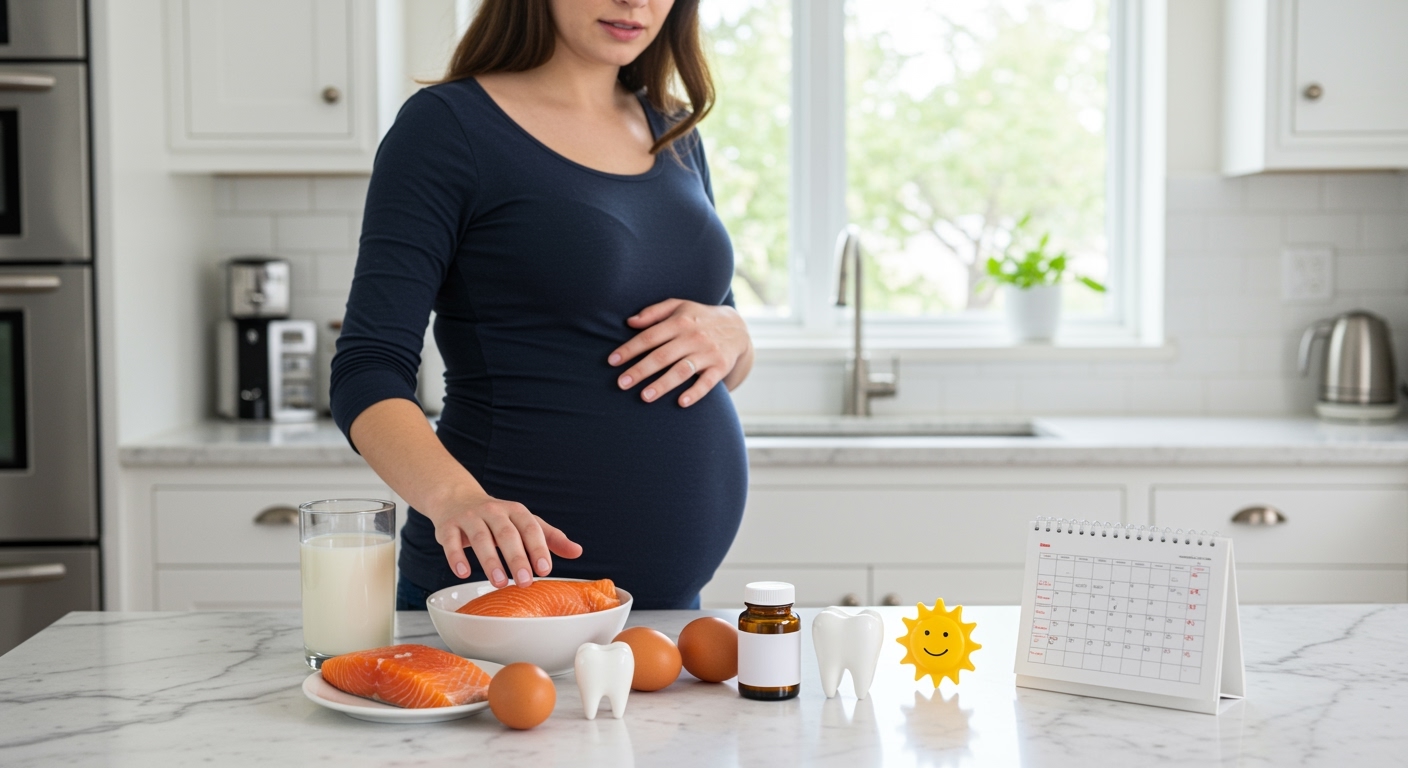
✪ Key Highlight: Low vitamin D during pregnancy triples cavity risk in children, with the third trimester being the most critical period.
Introduction
Your vitamin D levels during pregnancy could determine whether your child spends their childhood smiling confidently or sitting in a dentist’s chair.
New research reveals that mothers with low vitamin D during pregnancy dramatically increase their children’s risk of severe tooth decay, especially when deficiency strikes during the later months.
Hi, I’m Abdur, your nutrition coach, and today I’m going to analyze how maternal vitamin D status during pregnancy directly impacts children’s dental health and what you can do to protect your child’s teeth before they’re even born.
What Does the Research Actually Show About Pregnancy Vitamin D and Tooth Decay?
Scientists measured 25-hydroxyvitamin D, the form your body uses, in pregnant women throughout their pregnancy.
They tracked 81 children from birth until age six to see how many developed early childhood caries, which are cavities in baby teeth.
Mothers with vitamin D levels below 50 nmol/L during the third trimester had children with more than three times higher cavity risk.
The exact statistical measure showed an incidence rate ratio of 3.55, meaning these kids developed cavities at 3.55 times the rate of children whose mothers had adequate vitamin D.
Researchers used the dmft score system, which counts decayed, missing, or filled teeth, to measure the damage.
Interestingly, vitamin D levels measured in cord blood at birth or in babies at five months old did not predict cavity risk the same way maternal levels did during pregnancy.
This tells us that the critical window happens while teeth are forming inside the womb, not after birth.
✪ Fact: Baby teeth start forming as early as the fourth month of pregnancy, making maternal nutrition during this time absolutely critical.
Which Trimester Matters Most for Your Baby’s Teeth?
The second and third trimesters emerged as the most critical periods for dental development.
Vitamin D deficiency during these later months showed the strongest connection to higher dmft scores in children.
A large study published in JAMA Network Open used advanced testing called liquid chromatography-tandem mass spectrometry to measure vitamin D with extreme precision.
They defined deficiency as total 25(OH)D below 20 ng/mL, which is dangerously low.
Mothers with insufficiency, deficiency, or severe deficiency all faced higher odds of their children developing early childhood caries.
Even after researchers applied statistical corrections for multiple comparisons, the inverse relationship held strong.
This means the lower your vitamin D during pregnancy, the higher your child’s cavity risk, and this pattern remained consistent across different study populations.
✪ Pro Tip: Get your vitamin D levels tested during your second trimester and aim for at least 30 ng/mL to protect your baby’s developing teeth.
Does Low Vitamin D Cause Enamel Defects Too?
Researchers looked for connections between low vitamin D and enamel defects, which are visible spots or pits on teeth from poor formation.
One study tracking 81 kids found no link between maternal vitamin D at any stage and enamel defects in those specific children.
However, a broader review in Healthcare journal found that low prenatal vitamin D raised enamel hypoplasia odds by 1.29 times.
Enamel hypoplasia means the hard outer layer of teeth forms thinner or weaker than normal.
The review also confirmed that low vitamin D boosted overall dental decay risk beyond just enamel problems.
Studies varied significantly in how they measured vitamin D shortages and which populations they studied, making direct comparisons challenging.
Researchers called for more rigorous studies to determine the optimal intake for healthy baby teeth development.
✪ Note: Enamel defects create rough surfaces where bacteria thrive, making cavities more likely even with good brushing habits.
How Does Vitamin D Deficiency Speed Up Tooth Development?
Dutch researchers studied mothers at high risk from low sun exposure and made a surprising discovery.
Children of mothers with severe mid-pregnancy deficiency, under 25 nmol/L, showed advanced dental age.
Their mandibular first premolar, a permanent tooth, developed faster than normal with a beta coefficient of 0.32.
Higher maternal and newborn 25(OH)D levels actually slowed down dental growth overall.
Low vitamin D sped up tooth maturation, which hints at rushed and potentially weaker tooth formation.
Think of it like forcing a plant to grow too quickly without proper nutrients, it shoots up fast but remains weak and vulnerable.
This accelerated development combined with poor mineralization creates the perfect storm for future dental problems.
✪ Fact: Permanent teeth start forming at birth, so vitamin D status during late pregnancy affects both baby teeth and adult teeth development.
Why Does Vitamin D Matter So Much for Tooth Formation?
Vitamin D plays a crucial role in enamel and dentin mineralization, the same way it helps build strong bones.
Laboratory experiments prove that vitamin D shortage weakens these protective layers of teeth.
Interestingly, too much vitamin D also harms calcification, showing that balance matters more than simply taking massive doses.
Primary teeth start forming by the fourth month in the womb, and permanent teeth begin at birth.
This means early vitamin D status matters tremendously for giving teeth a strong start that lasts a lifetime.
Maintaining good levels throughout pregnancy supports better enamel quality and cuts caries risk significantly.
Experts now push for routine screening and smart supplementation as standard prenatal care.
✪ Pro Tip: Combine vitamin D-rich foods like fatty fish and fortified dairy with 15 minutes of safe sun exposure three times weekly for optimal levels.
The Bottom Line
The evidence clearly shows that maintaining adequate vitamin D levels during pregnancy, especially in the second and third trimesters, dramatically reduces your child’s risk of severe tooth decay.
Your nutrition choices during pregnancy write the first chapter of your child’s health story, and their smile depends on the decisions you make today.
I would love to hear your thoughts on this research or answer any questions you might have about pregnancy nutrition and dental health, so please share your experiences in the comments below.
References
At NutritionCrown, we use quality and credible sources to ensure our content is accurate and trustworthy. Below are the sources referenced in writing this article:
- Contemporary OB/GYN: Maternal Vitamin D Levels During Pregnancy Linked to Dental Caries Risk in Offspring
- PubMed Central (Nutrients): Maternal Vitamin D Status and Offspring Dental Caries
- JAMA Network Open: Vitamin D Levels During Pregnancy and Dental Caries in Offspring
- PubMed Central (Healthcare): Prenatal Vitamin D and Enamel Defects
- PubMed Central (Journal of Nutrition): Maternal Vitamin D and Dental Development