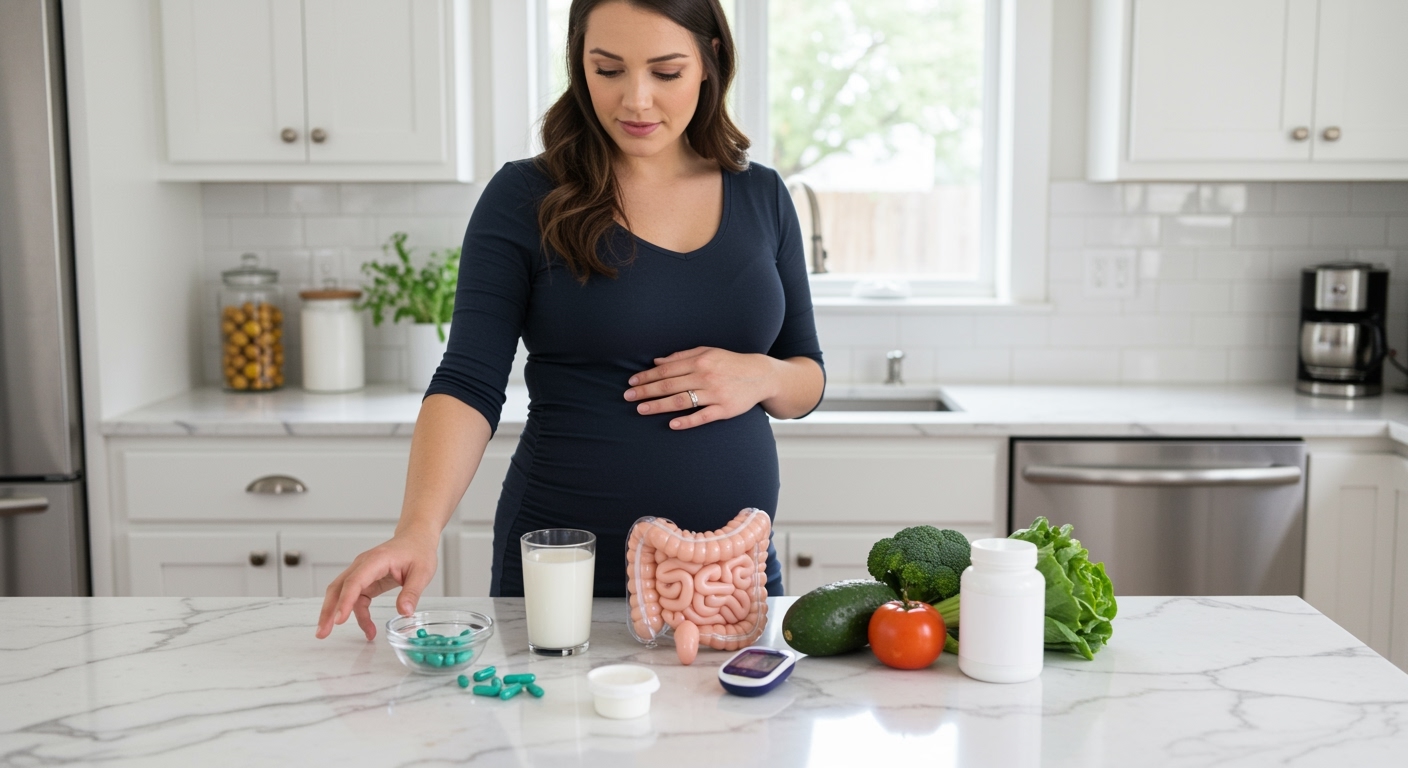
✪ Key Highlight: Giving breastfed babies a specific probiotic in their first month creates gut bacteria changes that last up to one year after birth.
Introduction
Your baby’s gut health in the first year of life shapes their immune system for decades to come.
New research reveals that a specific probiotic given to week-old breastfed infants creates lasting gut bacteria changes that persist for at least 12 months.
Hi, I’m Abdur, your nutrition coach and today I’m going to analyze this groundbreaking study showing how early probiotic supplementation with Bifidobacterium longum subsp. infantis combined with breast milk creates persistent beneficial gut changes in babies.
What Probiotic Did Researchers Give These Babies?
Scientists used a specific strain called Bifidobacterium longum subspecies infantis, shortened to B. infantis.
This is not just any random probiotic you find on store shelves.
The researchers gave babies the EVC001 strain of B. infantis starting when they were just seven days old.
Each daily dose contained 1.8 × 10^10 colony-forming units, which means 18 billion live bacteria cells.
Parents gave this probiotic to their breastfed infants every day for 21 days straight.
The control group received only breast milk without any probiotic supplementation.
This specific strain matters because B. infantis has a unique ability to feed on human milk oligosaccharides, special sugars found only in breast milk that human babies cannot digest themselves.
✪ Fact: Human milk oligosaccharides are the third most abundant component in breast milk after lactose and fats, yet babies cannot digest them directly.
How Long Did The Gut Changes Last?
The probiotic effects persisted far longer than anyone expected.
Mothers collected stool samples from their babies at 4, 6, 8, 10, and 12 months of age.
Babies who received the probiotic showed B. infantis levels that stayed 2.5 to 3.5 log units higher from 6 to 12 months compared to babies who never got the supplement.
To put this in perspective, a 2.5 log unit difference means roughly 300 times more B. infantis bacteria in their guts.
The effects were even stronger when researchers excluded infants who received formula or antibiotics during the study period.
This means the probiotic created a stable colonization that lasted at least until the baby’s first birthday.
Most probiotics disappear from the gut within days or weeks after you stop taking them, making this persistent colonization remarkable.
✪ Pro Tip: Exclusive breastfeeding without any formula creates the best environment for beneficial probiotic bacteria to thrive in your baby’s gut.
What Other Gut Bacteria Changes Happened?
The probiotic did not just increase B. infantis alone.
Babies in the supplemented group showed higher levels of the entire Bifidobacteriaceae family of bacteria.
At the same time, they had lower levels of Bacteroidaceae and Lachnospiraceae bacterial families.
This shift matters because different bacterial families produce different substances in the gut.
Bifidobacteria produce beneficial compounds like short-chain fatty acids that support gut barrier function and reduce inflammation.
Some members of Bacteroidaceae and Lachnospiraceae can produce compounds that trigger inflammatory responses when they dominate too early in life.
The probiotic essentially helped create a gut environment dominated by protective bacteria rather than potentially problematic ones during this critical developmental window.
✪ Note: The bacterial composition of an infant’s gut in the first year influences immune system development and disease risk throughout their entire life.
Why Does This Matter For Baby Health?
Modern babies in wealthy countries often have dysfunctional gut microbiomes compared to babies in traditional societies.
This dysfunction links directly to rising rates of immune diseases like allergies, asthma, and autoimmune conditions.
The problem starts because most probiotics on the market fade quickly without the right food source to sustain them.
B. infantis works differently because it perfectly matches with human milk oligosaccharides found naturally in breast milk.
These special sugars act like prebiotics that specifically feed B. infantis, allowing it to thrive and multiply in the infant gut.
Even brief formula use in breastfed babies shifts their gut bacteria toward proinflammatory types like γ-Proteobacteria while lowering beneficial Bifidobacterium.
This research shows that targeted probiotic supplementation during the first month can establish protective gut bacteria that persist even as babies start eating solid foods later in their first year.
✪ Fact: Babies born via cesarean section or given antibiotics early in life especially benefit from probiotic supplementation to restore beneficial gut bacteria.
Did The Babies Show Any Health Differences?
Researchers tracked health conditions in both groups over two full years.
Mothers filled out detailed health and diet questionnaires throughout this period.
Surprisingly, no significant differences appeared in health conditions between the probiotic group and the control group during this timeframe.
This does not mean the probiotic failed.
Many immune-related diseases linked to gut dysbiosis do not appear until later childhood or even adulthood.
The key victory here was proving that lasting colonization happens when you pair the right probiotic with breast milk during the first month of life.
Future research will need to follow these children for many more years to see if this early gut bacteria advantage translates into lower disease rates as they grow older.
✪ Pro Tip: Always consult your pediatrician before giving any supplements to your infant, even probiotics that appear safe in research studies.
The Bottom Line
This research proves that giving breastfed babies B. infantis probiotic during their first month creates gut bacteria changes that last at least one full year.
The right probiotic at the right time with the right food source creates lasting benefits that random supplementation never achieves.
What are your thoughts on giving probiotics to newborn babies? Share your questions or experiences in the comments below.
References
At NutritionCrown, we use quality and credible sources to ensure our content is accurate and trustworthy. Below are the sources referenced in writing this article:
- PubMed: Bifidobacterium longum subsp. infantis EVC001 administration is associated with a significant reduction in the incidence of antibiotic use in infants
- Frontiers in Nutrition: Probiotic supplementation restores beneficial gut bacteria in breastfed infants
- PMC: Human milk oligosaccharides and infant gut bifidobacteria
- News Medical: Probiotic supplementation restores beneficial gut bacteria in breastfed infants
- mSphere Journal: Sustained Colonization of Bifidobacterium longum subsp. infantis EVC001 in Breastfed Infants