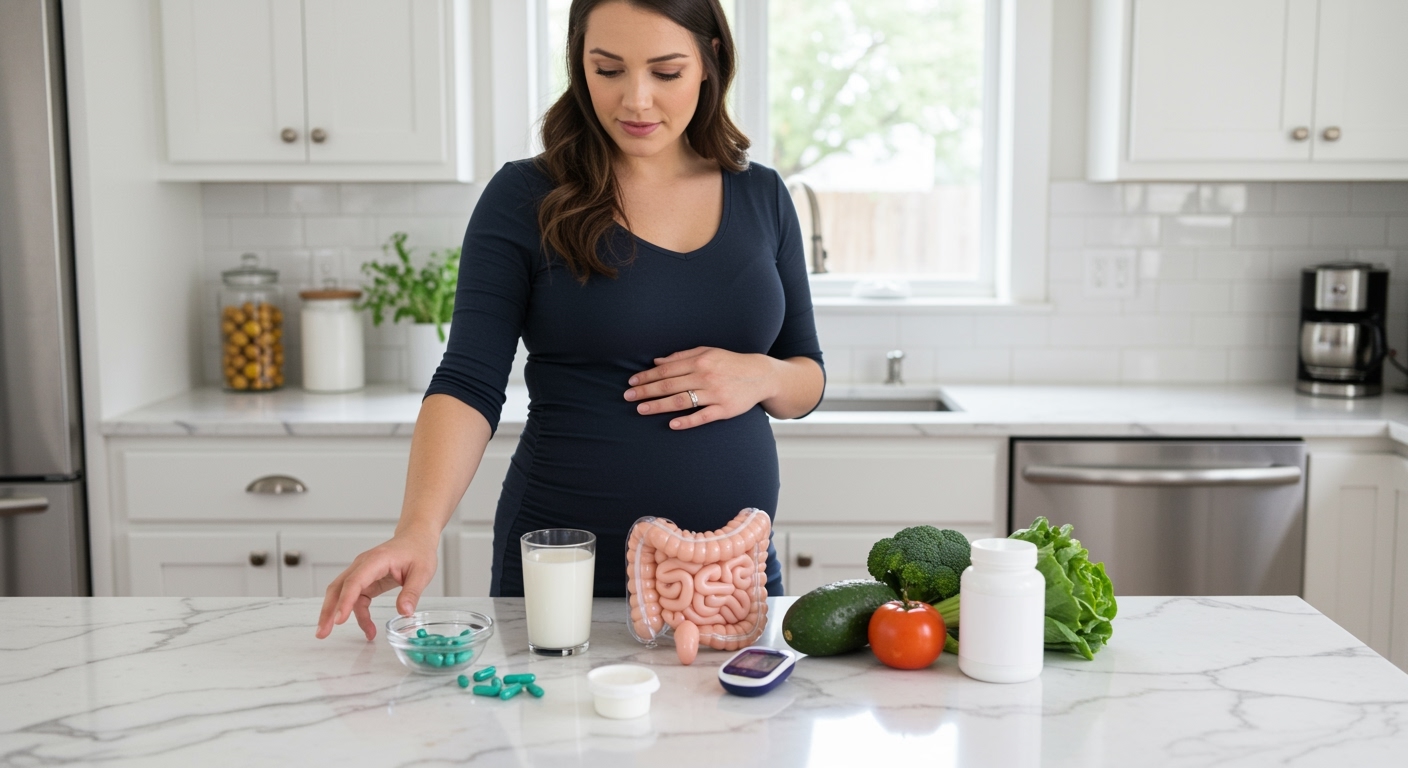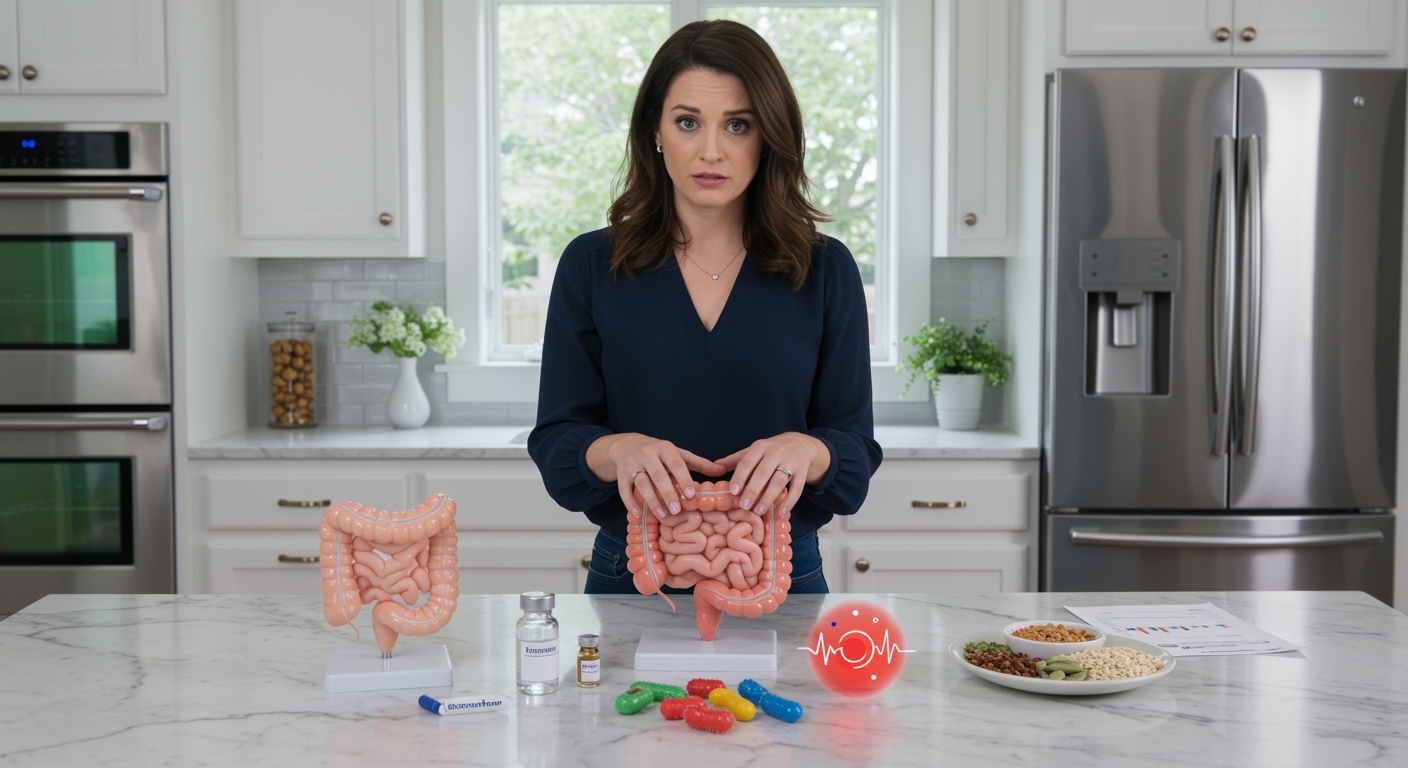
✪ Key Highlight: Estrogen activates rare gut cells that trigger a pain-amplifying hormone cascade, explaining why women suffer twice as much IBS.
Introduction
Women have been telling doctors about their gut pain for decades, only to be dismissed or ignored.
Now scientists at the University of California, San Francisco have uncovered the exact biological reason why women experience significantly more irritable bowel syndrome pain than men—and it all starts with estrogen.
Hi, I’m Abdur, your nutrition coach, and today I’m going to analyze this groundbreaking research published in Science that reveals how estrogen creates a cellular chain reaction in the gut that dramatically amplifies pain signals in women.
What Did Scientists Discover About Estrogen and Gut Pain?
Researchers found that estrogen acts directly on rare cells called L cells located in the distal colon, which is the area where gut pain typically hits hardest.
These L cells respond to estrogen by releasing a hormone called peptide YY, or PYY for short.
The PYY then travels to nearby enterochromaffin cells, also known as EC cells, which are specialized cells that produce serotonin.
When PYY binds to these EC cells, they pump out massive amounts of serotonin and fire intense pain signals directly to the brain.
This entire pathway explains why women experience gut pain that feels so much more intense than what men typically report.
The study used mouse experiments that clearly showed female mice had significantly stronger gut nerve responses compared to male mice.
When researchers removed the ovaries from female mice to eliminate estrogen production, their pain sensitivity immediately dropped to match male levels, proving the hormone’s direct role.
✪ Fact: About 10 percent of people worldwide suffer from IBS symptoms, and women are affected twice as often as men.
How Does Estrogen Create This Double Hit Effect?
Estrogen doesn’t just trigger one simple reaction—it creates what researchers call a double hit that makes women’s guts hypersensitive.
First, estrogen binds to specific receptors called ER alpha that sit mostly on L cells in the distal colon.
This binding causes L cells to ramp up production of another receptor called Olfr78, which is designed to sense short-chain fatty acids.
These fatty acids are natural byproducts created when gut bacteria break down certain fibers and sugars from the foods you eat every day.
So estrogen first increases baseline gut sensitivity by boosting PYY levels, and then it makes L cells even more reactive to normal digestive metabolites floating around in your colon.
Sanjay Venkataraman, one of the study researchers, explained that this means even everyday meals can trigger excessive pain responses in women with high estrogen levels.
This double mechanism explains why IBS symptoms often flare during menstrual cycles, pregnancy, or any time when hormone levels shift dramatically.
✪ Note: This pathway becomes most active in the distal colon, which is why pain typically concentrates in the lower abdomen.
Why Were Women Ignored When They Reported This Pain?
Holly Ingraham, a physiologist at UCSF, expressed the deep frustration that countless women have faced for years.
Women would go to their doctors complaining of severe gut pain, bloating, cramps, and irregular bowel movements, only to be dismissed or told it was all in their heads.
Without clear biological evidence, many physicians simply didn’t take these complaints seriously, leaving women suffering without proper treatment or validation.
This new research finally provides concrete scientific proof that women’s gut pain is real, measurable, and driven by specific hormonal pathways.
The study used rigorous methods including live animals, isolated gut tissues, organoids, and detailed gene profiling to build an airtight case.
David Bulmer, a pharmacologist at the University of Cambridge, praised the work as technically excellent and highly convincing.
Now doctors have no excuse to ignore women’s complaints about IBS symptoms, because the biological mechanism is clearly documented and understood.
✪ Pro Tip: Keep a detailed symptom diary tracking pain intensity, menstrual cycle, and foods eaten to identify your personal triggers.
What Treatment Options Does This Discovery Open Up?
This breakthrough research opens doors to much smarter and more targeted treatment strategies beyond the limited options currently available.
Scientists can now develop drugs that specifically block PYY receptors or the Olfr78 receptor, preventing the pain cascade before it even starts.
These targeted approaches would be far more effective than current treatments that only block serotonin after the damage is already done.
One existing drug called alosetron works better in women because it blocks gut serotonin, but it carries serious risks and is only approved for severe cases.
The research also suggests that low FODMAP diets, which reduce fibers that feed gut bacteria and produce those triggering fatty acids, might help ease symptoms.
Marie-Isabelle Garcia, a molecular biologist in Belgium, sees tremendous hope in this complex interplay offering multiple new intervention points.
You can take charge right now by tracking your hormone cycles, experimenting with fiber intake, and having informed conversations with your doctor about these newly discovered targeted options.
✪ Note: Always consult your healthcare provider before making significant dietary changes or starting new treatments for IBS.
Could This Sensitivity Have an Evolutionary Purpose?
Holly Ingraham speculates that this heightened gut sensitivity might have evolved to serve an important protective function during pregnancy.
When estrogen levels skyrocket during pregnancy, this enhanced sensitivity could help mothers instinctively avoid potentially toxic foods that might harm the developing baby.
This evolutionary advantage would have been crucial for survival when humans had no scientific way to test food safety.
However, Ingraham also points out that not every woman of reproductive age develops IBS, suggesting there must be additional factors at play.
These factors might include genetic variations, specific gut bacteria compositions, stress levels, or previous gut infections that prime the system for overreaction.
David Julius, a neurophysiologist at UCSF and 2021 Nobel laureate, emphasized that while we knew the gut had a sophisticated pain-sensing system, this study reveals exactly how hormones can dial that sensitivity up through a potent cellular connection.
Understanding this evolutionary context helps us appreciate why women’s bodies respond this way, even when it causes significant daily discomfort in modern life.
✪ Fact: Estrogen levels can increase up to 100-fold during pregnancy, potentially explaining why some women develop temporary IBS symptoms.
The Bottom Line
This groundbreaking research finally validates what women have been saying for decades—their gut pain is real, measurable, and driven by specific biological mechanisms involving estrogen, rare gut cells, and pain-amplifying hormones.
Your body’s pain signals deserve respect and proper investigation, not dismissal or doubt.
I’d love to hear about your experiences with gut pain and hormone cycles—please share your questions, thoughts, or personal stories in the comment section below so we can learn from each other and build a supportive community.
References
At NutritionCrown, we use quality and credible sources to ensure our content is accurate and trustworthy. Below are the sources referenced in writing this article:
- News Medical: Estrogen-responsive cells found to heighten gut pain in females
- Science News: Why do females experience more gut pain? Estrogen and bacteria may be to blame
- UCSF: Do hormones explain why women experience more gut pain?
- Science Magazine: Why are women more likely to get irritable bowel syndrome? New study provides clues
- Smithsonian Magazine: Women Are More Likely to Have Irritable Bowel Syndrome. This Newfound Gut Pain Pathway Might Explain Why