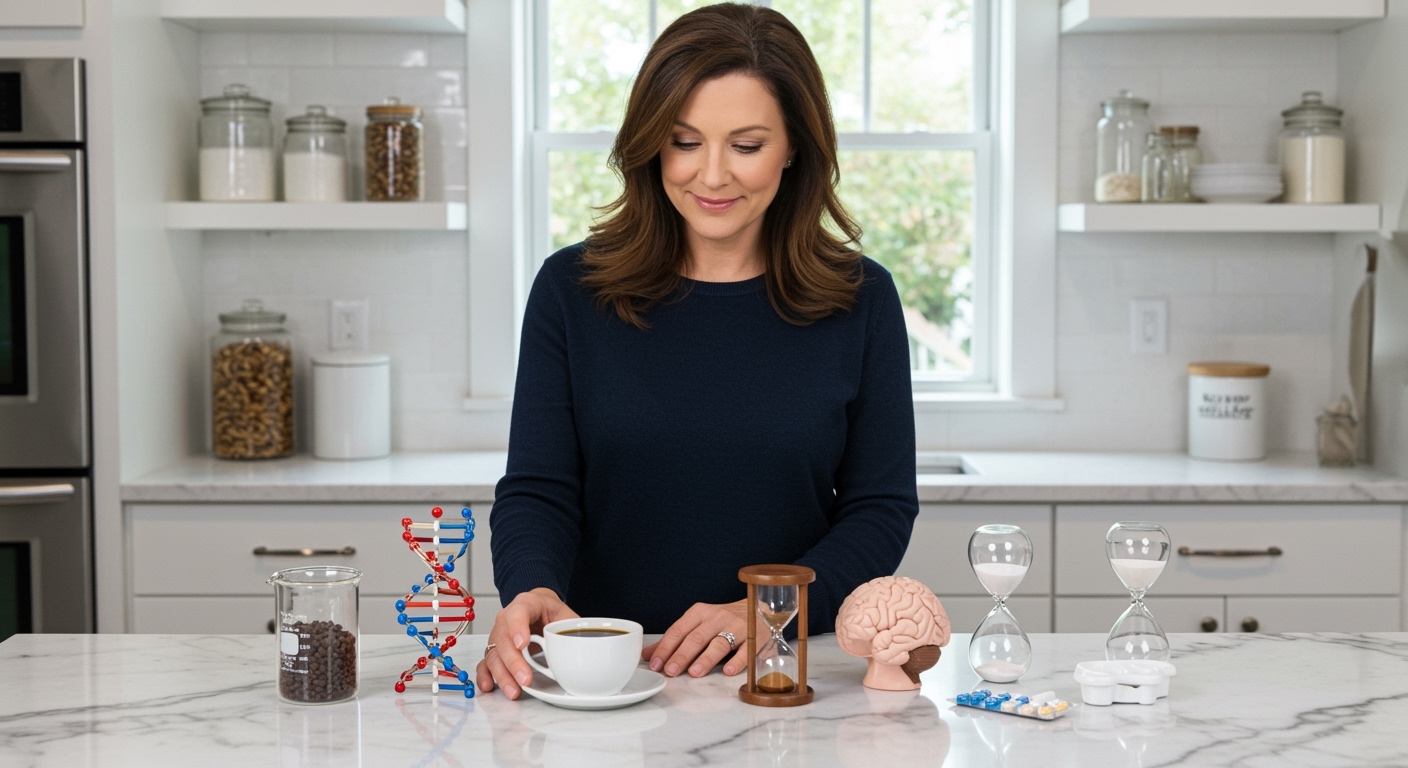
✪ Key Highlight: Drinking three to four cups of coffee daily may slow biological aging by five years in people with severe mental illness.
Introduction
Your morning coffee might be doing more than just waking you up.
A groundbreaking study published in BMJ Mental Health reveals that moderate coffee consumption could actually slow down biological aging in people living with severe mental illness by protecting cellular structures called telomeres.
Hi, I’m Abdur, your nutrition coach and today I’m going to analyze this fascinating research that shows how three to four cups of coffee daily may help people with conditions like schizophrenia and bipolar disorder maintain younger biological age.
What Are Telomeres and Why Do They Matter?
Telomeres are protective caps at the ends of your chromosomes.
Think of them like the plastic tips on shoelaces that prevent the laces from fraying.
Every time your cells divide, these telomeres get a little shorter.
When telomeres become too short, cells can no longer divide properly and eventually die.
This process is a fundamental part of biological aging.
People with major psychiatric disorders like psychosis, schizophrenia, and bipolar disorder experience accelerated telomere shortening compared to the general population.
This means their cells age faster, which may explain why these individuals often face higher risks of age-related diseases at younger ages.
✪ Fact: Telomere length serves as a biological clock that reflects your cellular age rather than your chronological age.
How Did Researchers Study Coffee and Aging?
The research team analyzed data from 436 adult participants in the Norwegian Thematically Organised Psychosis study.
Most participants had been diagnosed with schizophrenia or affective disorders like bipolar disorder and major depressive disorder with psychosis.
Researchers asked each person about their daily coffee consumption habits.
They divided participants into four groups: those who drank no coffee, one to two cups, three to four cups, and five or more cups per day.
The team also collected information about smoking habits because tobacco use affects how the body processes caffeine.
Scientists measured telomere length from white blood cells extracted from blood samples.
They then compared telomere lengths across different coffee consumption groups while accounting for factors like age, sex, ethnicity, tobacco use, type of mental illness, and medications.
✪ Note: This was an observational study, which means it shows association but cannot prove direct causation between coffee and slower aging.
What Did the Study Discover About Coffee Consumption?
The results revealed a clear pattern that surprised even the researchers.
People who drank three to four cups of coffee daily had significantly longer telomeres compared to those who avoided coffee entirely.
The most striking finding was that individuals consuming four cups daily had telomere lengths matching a biological age about five years younger than non-coffee drinkers.
However, this benefit disappeared when people drank five or more cups per day.
Those who consumed the highest amounts of coffee were significantly older and had longer smoking histories than other participants.
The sweet spot appears to be moderate consumption, not excessive intake.
This finding aligns with what international health authorities like the NHS and US Food and Drug Administration recommend: limiting caffeine intake to about 400 milligrams daily, which equals roughly four cups of coffee.
✪ Pro Tip: Track your coffee intake throughout the day to ensure you stay within the beneficial three to four cup range.
Why Might Coffee Protect Against Cellular Aging?
Coffee contains powerful compounds that may explain its protective effects.
The beverage is rich in antioxidants that fight oxidative stress in your body.
Oxidative stress occurs when harmful molecules called free radicals damage your cells, including the DNA within telomeres.
Coffee also contains anti-inflammatory compounds that reduce chronic inflammation throughout the body.
Chronic inflammation is particularly problematic for people with severe mental illness because their conditions often involve inflammatory processes.
The researchers explained that telomeres are highly sensitive to both oxidative stress and inflammation.
By reducing these two damaging processes, coffee may help preserve telomere length and slow the rate of cellular aging in a population already predisposed to accelerated aging.
✪ Fact: Coffee ranks among the highest dietary sources of antioxidants in Western diets, often surpassing fruits and vegetables in total antioxidant contribution.
What Are the Limitations and Future Directions?
The researchers acknowledge several important limitations in their study.
They did not have information about the type of coffee consumed, whether it was regular or decaffeinated, or how it was prepared.
The timing of coffee consumption throughout the day was also unknown.
Researchers could not measure actual caffeine levels in participants or account for other sources of caffeine like tea, energy drinks, or chocolate.
These gaps mean we cannot definitively say that coffee directly causes slower aging.
Future research needs to examine these relationships through controlled clinical trials rather than observational studies.
Scientists should also investigate whether the benefits extend to people without mental illness and explore the specific compounds in coffee responsible for telomere protection.
✪ Note: More research is needed before doctors can officially recommend coffee as a therapeutic intervention for slowing biological aging.
The Bottom Line
This research adds compelling evidence that moderate coffee consumption may support healthy aging, especially for people with severe mental illness.
The key to health benefits lies in moderation, not excess, because more is not always better when it comes to nutrition.
What are your thoughts on this research, and do you drink coffee regularly? Share your experiences and questions in the comments below.
References
At NutritionCrown, we use quality and credible sources to ensure our content is accurate and trustworthy. Below are the sources referenced in writing this article:
- News Medical: Moderate coffee intake linked to slower biological aging in people with severe mental illness
- PubMed Central: Coffee consumption and biological ageing in individuals with severe mental disorders
- Science Media Centre: Expert reaction to observational study looking at coffee consumption and biological ageing
- PubMed: Coffee consumption and telomere length in severe mental illness
- Healthspan Action: Scientists just figured out how coffee may slow aging