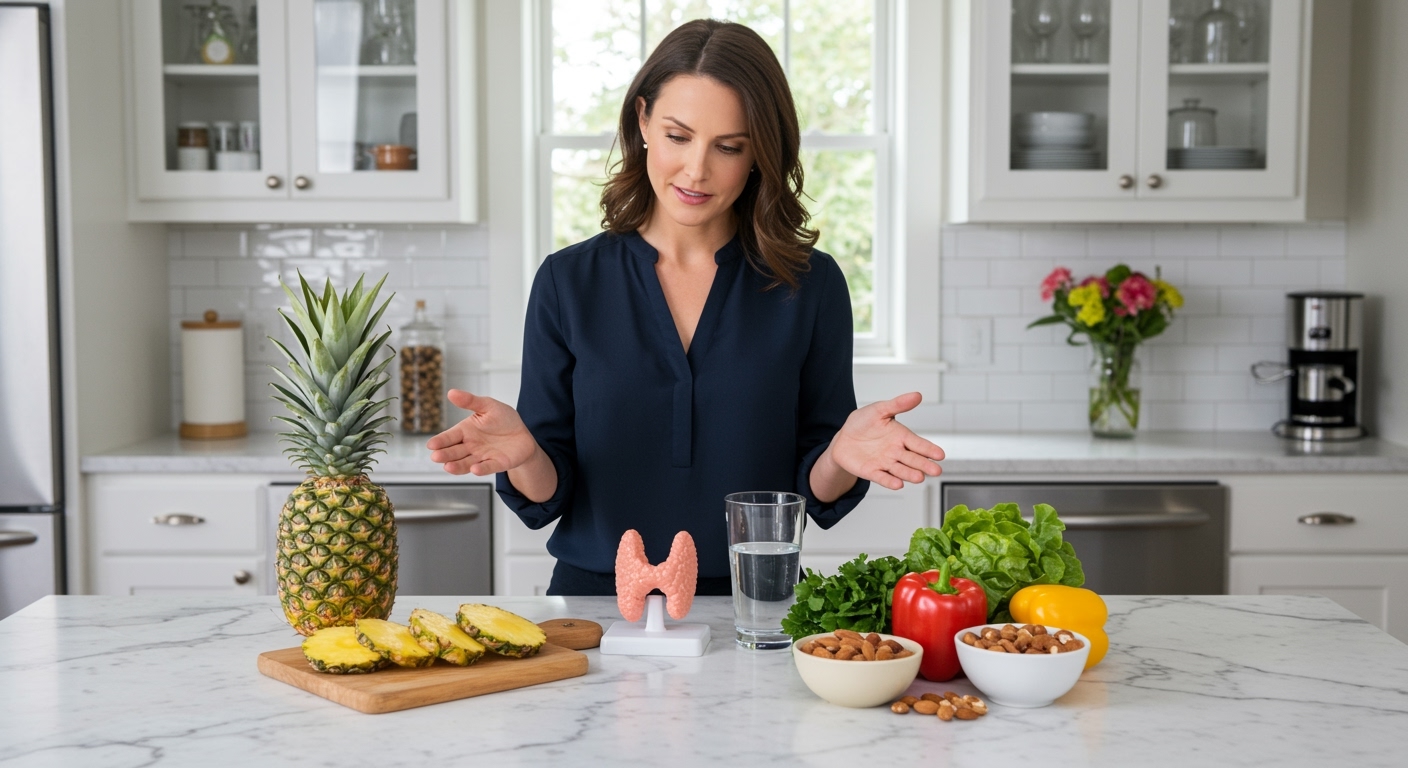
✪ Key Takeaway: Pineapple is safe and beneficial for hypothyroidism when eaten in moderation as part of a balanced diet.
Introduction
You probably heard someone say that pineapple can fix your thyroid problems overnight.
You might be asking this question because conflicting information online leaves you confused about whether this tropical fruit helps or harms your hypothyroidism management.
Hi, I am Abdur, your nutrition coach and today I am going to explain exactly how pineapple affects your thyroid function and whether you should include it in your diet.
What Nutrients Does Pineapple Provide For Thyroid Health?
Pineapple contains vitamin C, which your body needs to produce thyroid hormones properly.
One cup of fresh pineapple gives you about 79 milligrams of vitamin C, which is roughly 88 percent of your daily requirement.
This fruit also provides manganese, a mineral that supports your metabolism and helps protect your thyroid gland from oxidative stress.
The bromelain enzyme in pineapple reduces inflammation throughout your body, including your thyroid gland.
Chronic inflammation often worsens hypothyroidism symptoms, so eating anti-inflammatory foods like pineapple makes sense.
Pineapple contains small amounts of B vitamins that help convert the inactive thyroid hormone T4 into the active form T3.
These nutrients work together to support your overall thyroid function, though no single food can cure hypothyroidism on its own.
✪ Fact: Fresh pineapple contains significantly more bromelain than canned versions because heat processing destroys this beneficial enzyme.
Does Pineapple Interfere With Thyroid Medication?
Pineapple does not directly interfere with levothyroxine or other thyroid medications.
However, you should eat pineapple at least four hours after taking your thyroid medication to ensure proper absorption.
The fiber content in pineapple can slow down how quickly your body absorbs medication when consumed too close together.
This timing rule applies to all foods, not just pineapple, because thyroid medication works best on an empty stomach.
Some people worry about the natural sugars in pineapple affecting their thyroid function, but this concern lacks scientific support.
Your thyroid gland needs glucose for energy, and the natural sugars in fruit provide a healthy source when eaten in reasonable amounts.
The key is maintaining consistent timing between your medication and meals, which helps your body maintain stable thyroid hormone levels throughout the day.
✪ Pro Tip: Take your thyroid medication first thing in the morning with water only, then wait at least 30 minutes before eating breakfast that includes pineapple.
Can Pineapple Worsen Hypothyroidism Symptoms?
Pineapple does not contain goitrogens, the compounds found in some foods that can interfere with thyroid hormone production.
This means pineapple will not suppress your thyroid function or make your hypothyroidism worse.
The natural sugars in pineapple might cause blood sugar spikes if you eat large amounts at once, which can indirectly affect your energy levels.
People with hypothyroidism often struggle with weight management, and eating too much of any fruit can add unnecessary calories.
One serving of pineapple equals about one cup of fresh chunks, which contains roughly 82 calories and 22 grams of carbohydrates.
Eating pineapple as part of a balanced meal with protein and healthy fats helps prevent rapid blood sugar changes.
The anti-inflammatory properties of pineapple may actually help reduce some hypothyroidism symptoms like joint pain and fatigue when consumed regularly in appropriate portions.
✪ Note: If you notice digestive discomfort after eating pineapple, start with smaller portions and gradually increase as your body adjusts to the bromelain enzyme.
How Much Pineapple Should You Eat With Hypothyroidism?
One cup of fresh pineapple chunks three to four times per week provides health benefits without overdoing the natural sugars.
This amount gives you enough vitamin C and bromelain to support your immune system and reduce inflammation.
Eating pineapple every single day is not necessary and might contribute to excessive sugar intake if you are watching your weight.
Fresh pineapple is always better than canned versions because canned fruit often contains added sugars and loses some nutritional value during processing.
You can add pineapple to your breakfast smoothie with spinach and protein powder, or eat it as a snack with a handful of nuts.
Combining pineapple with protein or fat slows down sugar absorption and keeps your blood sugar more stable.
Listen to your body and adjust portions based on how you feel, your blood sugar response, and your overall health goals.
✪ Pro Tip: Freeze pineapple chunks and blend them into smoothies for a refreshing treat that provides the same nutritional benefits as fresh fruit.
What Other Fruits Support Thyroid Health Better?
Berries like blueberries and strawberries contain powerful antioxidants that protect your thyroid gland from damage.
These fruits have lower sugar content than pineapple, making them better choices if you struggle with weight management.
Apples provide pectin fiber that helps remove toxins from your body, which can indirectly support better thyroid function.
Oranges and other citrus fruits deliver high amounts of vitamin C without the bromelain enzyme that some people find irritating to their digestive system.
Bananas offer potassium and B vitamins that support your metabolism and energy production.
The best approach is eating a variety of fruits throughout the week rather than focusing on just one type.
No single fruit will cure hypothyroidism, but including different fruits in your diet provides the range of nutrients your thyroid needs to function optimally.
✪ Fact: People with hypothyroidism need more antioxidants than healthy individuals because their condition creates higher levels of oxidative stress in the body.
The Bottom Line
Pineapple is a safe and nutritious fruit that you can enjoy as part of your hypothyroidism management plan.
The best diet for hypothyroidism is not about avoiding specific foods but rather building a balanced plate that supports your overall health and medication effectiveness.
I would love to hear your experience with pineapple or any questions you have about managing hypothyroidism through nutrition in the comments below.
References
At NutritionCrown, we use quality and credible sources to ensure our content is accurate and trustworthy. Below are the sources referenced in writing this article:
- Healthline: Hypothyroidism Diet: Can Certain Foods Increase Thyroid Function?
- Paloma Health: Best Fruits to Eat for Hypothyroidism
- Liv Health: Fruits for Hypothyroidism
- Feel: Best Food for Thyroid Function