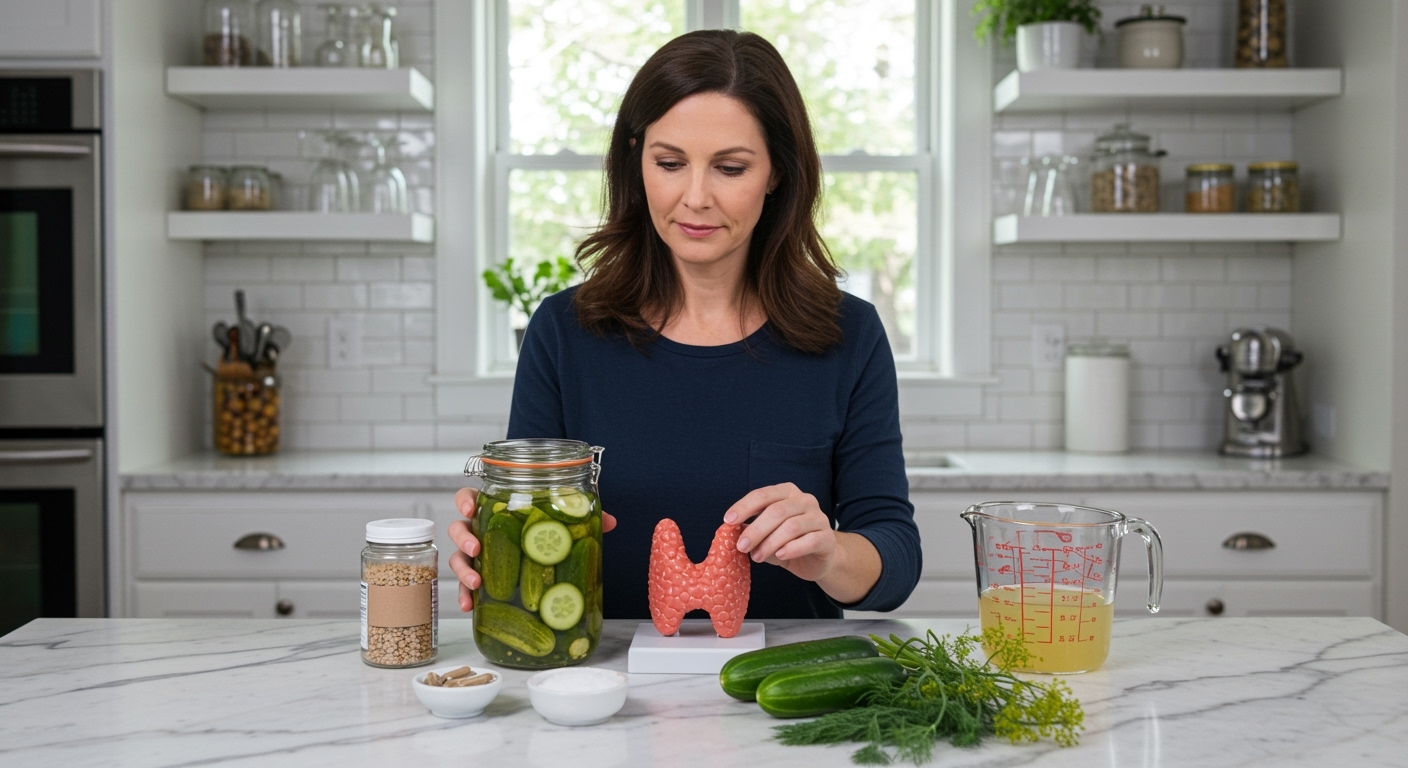
✪ Key Takeaway: Pickles can support hypothyroidism through gut health benefits, but only if they are naturally fermented and consumed in moderation.
Introduction
You have probably heard that fermented foods are good for your gut health.
But when you are dealing with hypothyroidism, every food choice suddenly feels like walking through a minefield.
You might be wondering if pickles help your thyroid function or if the salt and fermentation process could make things worse.
Hi, I am Abdur, your nutrition coach, and today I am going to explain the real connection between pickles and hypothyroidism so you can make informed decisions about your diet.
What Makes Pickles Different From Other Fermented Foods?
Not all pickles are created equal, and this matters more than you think.
Naturally fermented pickles are made through a process called lacto-fermentation where beneficial bacteria convert sugars into lactic acid.
This process creates probiotics that support your gut microbiome, which plays a crucial role in thyroid hormone conversion.
However, most store-bought pickles are simply cucumbers soaked in vinegar with preservatives, which means they contain zero live probiotics.
These vinegar-based pickles might taste good, but they will not give you the gut health benefits that naturally fermented versions provide.
Your thyroid health depends heavily on a healthy gut because about 20 percent of thyroid hormone conversion from T4 to active T3 happens in your gastrointestinal tract.
When your gut bacteria are balanced, this conversion process works more efficiently, which directly impacts how you feel every single day.
✪ Pro Tip: Always check the ingredient list and look for pickles that say naturally fermented or contain live cultures for maximum thyroid support benefits.
How Does The Gut-Thyroid Connection Actually Work?
Your gut and thyroid communicate through multiple pathways that most people never learn about.
The gut microbiome influences thyroid function through immune system regulation, nutrient absorption, and hormone metabolism.
When your gut bacteria are imbalanced, a condition called dysbiosis, it can trigger inflammation that interferes with thyroid hormone production and conversion.
Research shows that people with hypothyroidism often have altered gut bacteria composition compared to those with healthy thyroid function.
Fermented foods like naturally made pickles introduce beneficial bacteria that help restore this balance and reduce gut inflammation.
These probiotic bacteria also help your body absorb essential nutrients like selenium, zinc, and B vitamins that your thyroid desperately needs to function properly.
Without adequate nutrient absorption, your thyroid medication might not work as effectively as it should, leaving you feeling tired and frustrated.
✪ Fact: Studies indicate that gut dysbiosis can increase thyroid antibodies in people with autoimmune thyroid conditions like Hashimoto’s disease.
What About The Sodium Content In Pickles?
The high sodium content in pickles raises legitimate concerns for people managing hypothyroidism.
One medium pickle can contain anywhere from 300 to 800 milligrams of sodium, which is a significant portion of the recommended daily limit.
However, sodium itself does not directly harm your thyroid gland or interfere with thyroid hormone production.
The real concern is that hypothyroidism often comes with other health issues like high blood pressure or fluid retention where excess sodium becomes problematic.
Interestingly, some people with hypothyroidism actually need adequate sodium because the condition can cause electrolyte imbalances and low blood pressure.
The key is understanding your individual situation rather than following blanket rules that might not apply to your specific health needs.
If you have normal blood pressure and no kidney issues, enjoying pickles in moderate amounts will likely cause no problems at all.
✪ Note: Always consult your healthcare provider about sodium intake if you have coexisting conditions like hypertension or heart disease alongside hypothyroidism.
Do Pickles Contain Goitrogens That Harm Thyroid Function?
Cucumbers belong to the gourd family, and some people worry about goitrogenic compounds that can interfere with thyroid function.
Goitrogens are substances that can block iodine uptake by the thyroid gland, potentially worsening hypothyroidism symptoms.
However, cucumbers contain very minimal amounts of goitrogens compared to foods like raw cruciferous vegetables or soy products.
The fermentation process actually reduces whatever small amounts of goitrogens might be present in the original cucumber.
This means naturally fermented pickles are even safer for your thyroid health than eating raw cucumbers would be.
Unless you are eating pickles by the jar every single day, the goitrogen content is too insignificant to cause any measurable impact on your thyroid function.
The benefits you get from the probiotics and improved gut health far outweigh any theoretical concerns about minimal goitrogen exposure.
✪ Pro Tip: Focus on eating a varied diet rather than eliminating foods with trace goitrogens, as variety ensures you get all necessary nutrients for optimal thyroid function.
How Should You Include Pickles In Your Hypothyroidism Diet?
The way you incorporate pickles into your diet matters just as much as whether you eat them at all.
Start by choosing naturally fermented pickles from the refrigerated section of your grocery store or make them at home for maximum probiotic benefits.
Limit your intake to one or two pickle spears per day to keep sodium levels reasonable while still getting the gut health advantages.
Eat pickles as part of a balanced meal rather than as a standalone snack to help moderate the sodium impact on your body.
Pair them with foods rich in selenium and zinc like Brazil nuts or pumpkin seeds to support comprehensive thyroid nutrition.
Avoid eating pickles within four hours of taking your thyroid medication because the sodium and other minerals might interfere with medication absorption.
Pay attention to how your body responds, as individual tolerance to fermented foods varies based on your unique gut microbiome composition and overall health status.
✪ Fact: Homemade fermented pickles allow you to control salt content while maximizing probiotic benefits, making them the healthiest option for thyroid support.
The Bottom Line
Naturally fermented pickles can absolutely support your hypothyroidism management through improved gut health and better nutrient absorption.
Your thyroid health depends on your gut health more than most people realize, and fermented foods build the bridge between them.
I would love to hear about your experience with fermented foods and hypothyroidism, so please share your thoughts, questions, or personal stories in the comments below.
References
At NutritionCrown, we use quality and credible sources to ensure our content is accurate and trustworthy. Below are the sources referenced in writing this article:
- Paloma Health: Fermented Food and Hypothyroidism
- PubMed Central: Gut Microbiota and Thyroid Function
- Dr. Brighten: The Thyroid Gut Connection
- Cleveland Clinic: Thyroid Issues: What You Need to Know About Diet and Supplements