Are Cherries Bad for CKD? (Expert Answer)

Short Answer: Cherries are good for CKD. Because they have antioxidants and anti-inflammatory compounds that can protect your kidneys from damage, and they are low in phosphorus, which can harm your bones and blood vessels. Chronic kidney disease (CKD) is a condition that affects your kidneys, which are organs that filter wastes and excess fluids from your blood. In CKD, your kidneys gradually lose their function over time. This can lead to various health problems, such as high blood pressure, anemia, weak bones, poor nutrition, nerve damage, and heart disease. One of the key factors in managing CKD is diet. What you consume can affect your blood sugar, blood pressure, electrolytes, and fluid balance, which can impact your CKD symptoms and overall health. To effectively manage CKD, you should consume fiber-rich foods like fruits, vegetables, and whole grains, and avoid sodium-rich foods like processed meats, canned soups, and fast foods. Now, cherries are a type of fruit that have a sweet or sour taste. People usually eat them fresh, dried, frozen, or as juice. Cherries are good for CKD because they contain antioxidants and anti-inflammatory compounds, such as anthocyanins, vitamin C, and carotenoids. These compounds can help protect your kidneys from oxidative stress and inflammation, which are common causes of kidney damage. One cup (154 grams) of sweet, raw, pitted cherries can give you 18% of your daily vitamin C needs, 10% of your potassium needs, and 3 grams of fiber. Vitamin C can help boost your immune system and
Is Beets Good for Anemia? (Expert Answer)

Short Answer: Beets are good for anemia. Because they have iron, folate, vitamin B12, and betalains, and they can increase your red blood cell production, prevent vitamin deficiency anemia, reduce inflammation and oxidative stress, and support your overall health. Anemia is a condition that affects your blood. In anemia, your body does not have enough healthy red blood cells to carry oxygen to your tissues. This can lead to various health problems, such as fatigue, weakness, shortness of breath, and increased risk of infections. One of the key factors in managing anemia is diet. What you consume can affect your iron levels, which can impact your anemia symptoms and overall health. Iron is an essential nutrient that helps to produce red blood cells, and without it, your body cannot make enough. To effectively manage anemia, you should consume iron-rich foods like meat, poultry, fish, and eggs, and avoid calcium-rich foods like dairy products, spinach, and rhubarb. Calcium can interfere with iron absorption and worsen anemia. Now, beets are a root vegetable that have a deep red or purple color. People usually eat them cooked, raw, pickled, or juiced. Beets are a good source of iron, folate, vitamin B12, and antioxidants, which are all beneficial for people with anemia. Beets are good for anemia because they contain iron, folate, vitamin B12, and betalains. Iron helps to produce red blood cells, folate and vitamin B12 help to prevent anemia caused by vitamin deficiency, and betalains are natural plant pigments that have anti-inflammatory

Are Avocados Good for Muscle Building? (Expert Answer)

Short Answer: Avocado is good for muscle building. Because it has healthy fats, fiber, and antioxidants and they can support your energy balance, protein synthesis, hormone production, and muscle recovery. Muscle building is a condition that affects your skeletal muscles. In muscle building, your body breaks down and rebuilds muscle fibers in response to resistance training. This can lead to various health benefits, such as increased strength, endurance, metabolism, and bone density. One of the key factors in muscle building is diet. What you consume can affect your protein synthesis, energy balance, and hormone production, which can impact your muscle building results and overall health. To effectively build muscle, you should consume protein-rich foods like eggs, chicken, and whey, and avoid processed foods like chips, cookies, and soda. Now, avocado is a fruit that has a creamy, buttery texture and a mild flavor. People usually eat it raw, sliced, mashed, or blended. Avocado is good for muscle building because it contains healthy fats, fiber, and antioxidants. Half an avocado can give you 9 grams of fat, 7 grams of fiber, and 10% of your daily vitamin C needs. Fat can help you maintain a positive energy balance, which is essential for muscle growth. It can also support your hormone production, especially testosterone, which is a key hormone for muscle building. Fiber can help you feel full longer, which can prevent overeating and aid weight management. It can also improve your digestion, which is important for nutrient absorption and waste elimination.

Is Bread Good for Weight Gain? (Expert Answer)

Short Answer: Bread is bad for obesity. Because it has refined carbohydrates and gluten, and they can increase your blood sugar, insulin, and fat storage. Obesity is a condition that affects your body weight and health. In obesity, your body stores excess fat, especially around your waist. This can lead to various health problems, such as diabetes, heart disease, high blood pressure, and some cancers. One of the key factors in managing obesity is diet. What you consume can affect your calorie intake, which can impact your weight and health. To effectively manage obesity, you should consume protein-rich foods like eggs, chicken, fish, and beans, and avoid sugar-rich foods like candy, soda, pastries, and ice cream. Now, bread is a staple food made from flour, water, yeast, and salt. People usually eat bread as a part of their breakfast, lunch, or dinner, or as a snack. Bread is not good for obesity because it contains refined carbohydrates and gluten. Refined carbohydrates are quickly digested and absorbed, causing spikes in blood sugar and insulin levels. This can promote fat storage and hunger. Gluten is a protein found in wheat and other grains that can cause inflammation and digestive issues in some people. One slice of white bread can give you 66 calories, 13 g of carbs (4% of your daily needs), 2 g of protein (4% of your daily needs), and 1 g of fat (1% of your daily needs). Carbohydrates can negatively affect obesity by increasing your appetite and cravings,

Are Peanut Butter Pretzels Good for Weight Loss? (Expert Answer)

Short Answer: Peanut butter pretzels are bad for obesity. Because they have high amounts of fat, calories, and sodium and they can increase your weight gain, blood sugar, and blood pressure. Obesity is a condition that affects your body weight and fat distribution. In obesity, your body stores excess fat, especially around your waist and organs. This can lead to various health problems, such as diabetes, heart disease, stroke, and some cancers. One of the key factors in managing obesity is diet. What you consume can affect your calorie intake and expenditure, which can impact your obesity symptoms and overall health. To effectively manage obesity, you should consume fiber-rich foods like fruits, vegetables, and whole grains and avoid sugar-rich foods like candies, sodas, and pastries. Now, peanut butter pretzels are a snack food that consists of hard pretzels filled with peanut butter. People usually eat them as a snack between meals or as a treat. Peanut butter pretzels are bad for obesity because they contain high amounts of fat, calories, and sodium. According to the nutrition facts12, 10 peanut butter filled pretzels (28 g) have 140 calories, 7 g of fat, and 360 mg of sodium. This is about 7% of your daily calorie needs, 11% of your daily fat needs, and 16% of your daily sodium needs. Fat can increase your calorie intake and contribute to weight gain. Calories are the units of energy that your body uses to function. If you consume more calories than you burn, you

Pickles: Are They Really Good For Hypothyroidism? (Expert Answer)

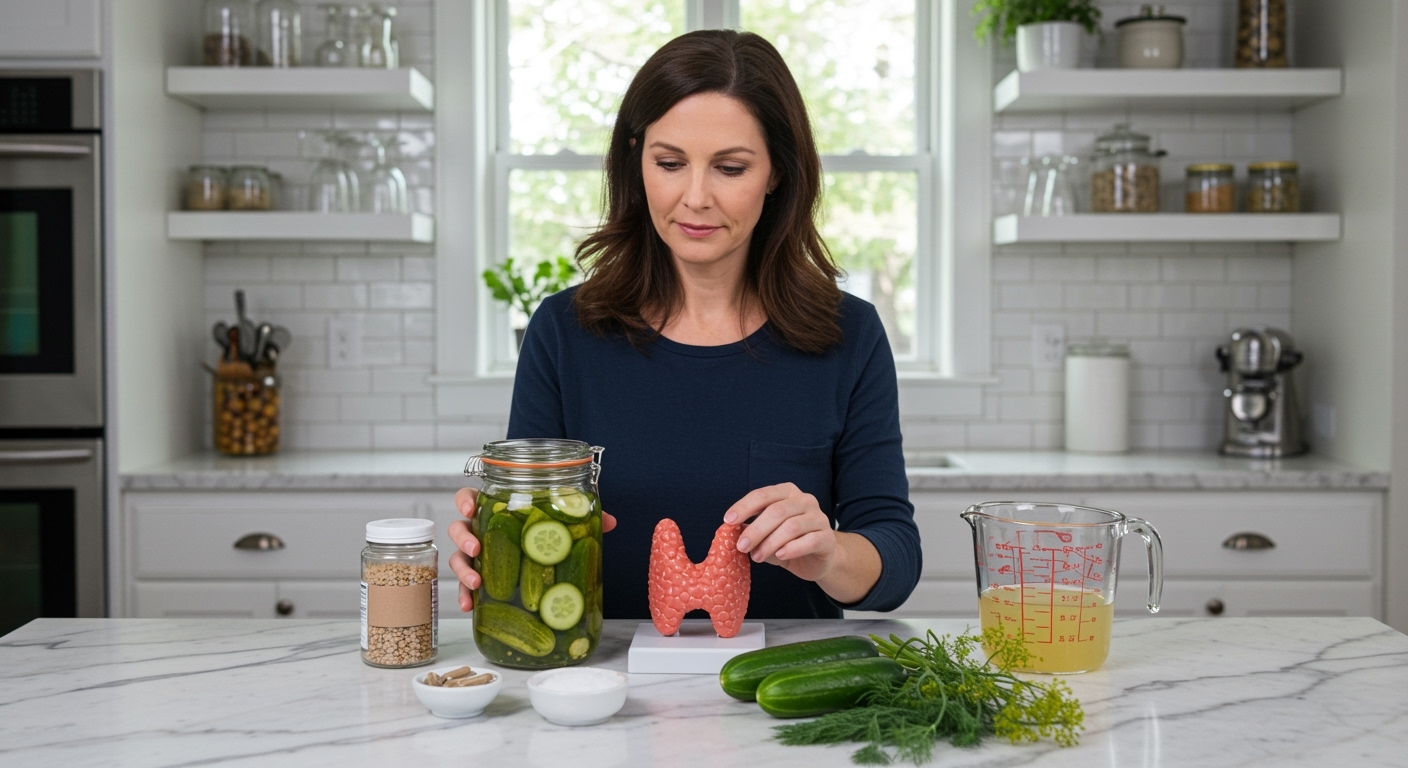
Woman standing behind marble counter examining pickle jar with thyroid model, cucumbers, salt, and supplements arranged on surface

✪ Key Takeaway: Pickles can support hypothyroidism through gut health benefits, but only if they are naturally fermented and consumed in moderation. Introduction You have probably heard that fermented foods are good for your gut health. But when you are dealing with hypothyroidism, every food choice suddenly feels like walking through a minefield. You might be wondering if pickles help your thyroid function or if the salt and fermentation process could make things worse. Hi, I am Abdur, your nutrition coach, and today I am going to explain the real connection between pickles and hypothyroidism so you can make informed decisions about your diet. What Makes Pickles Different From Other Fermented Foods? Not all pickles are created equal, and this matters more than you think. Naturally fermented pickles are made through a process called lacto-fermentation where beneficial bacteria convert sugars into lactic acid. This process creates probiotics that support your gut microbiome, which plays a crucial role in thyroid hormone conversion. However, most store-bought pickles are simply cucumbers soaked in vinegar with preservatives, which means they contain zero live probiotics. These vinegar-based pickles might taste good, but they will not give you the gut health benefits that naturally fermented versions provide. Your thyroid health depends heavily on a healthy gut because about 20 percent of thyroid hormone conversion from T4 to active T3 happens in your gastrointestinal tract. When your gut bacteria are balanced, this conversion process works more efficiently, which directly impacts how you feel every single day. ✪

Are Brussel Sprouts Good for Gout? (Expert Answer)

Short Answer: Brussels sprouts are good for gout. Because they have vitamin C, folate, and fiber, and they can lower uric acid levels, prevent gout attacks, and reduce inflammation. Gout is a condition that affects your joints, especially the big toe. In gout, your body produces too much uric acid, a waste product that forms sharp crystals in your joints. This can lead to various health problems, such as inflammation, pain, swelling, and joint damage. One of the key factors in managing gout is diet. What you consume can affect your uric acid levels, which can impact your gout symptoms and overall health. To effectively manage gout, you should consume foods rich in vitamin C, such as citrus fruits, strawberries, and bell peppers, and foods low in purines, such as eggs, nuts, and low-fat dairy products. You should avoid foods high in purines, such as red meat, organ meats, seafood, and beer. Now, Brussels sprouts are a type of cruciferous vegetable that look like mini cabbages. People usually roast, sauté, or boil them and eat them as a side dish. Brussels sprouts are good for gout because they contain vitamin C, folate, and fiber. Vitamin C can help lower uric acid levels and prevent gout attacks. Folate can also help reduce uric acid levels by inhibiting an enzyme that produces it. Fiber can help flush out excess uric acid from your body and improve your kidney function. One cup of cooked Brussels sprouts can give you 124% of your daily

Are Beets Good for Hyperthyroidism? (Expert Answer)

Short Answer: Beets are good for hyperthyroidism. Because they have nitrates, betalains, and fiber, which can lower blood pressure, reduce inflammation, and improve digestion. Hyperthyroidism is a condition that affects your thyroid gland, which is located at the front of your neck. In hyperthyroidism, your body produces too much thyroid hormone, which speeds up your metabolism and affects many organs and systems. This can lead to various health problems, such as irregular heartbeat, weight loss, anxiety, tremor, and eye problems. One of the key factors in managing hyperthyroidism is diet. What you consume can affect your thyroid function, which can impact your hyperthyroidism symptoms and overall health. To effectively manage hyperthyroidism, you should consume foods rich in antioxidants, such as berries, cruciferous vegetables, and vitamin D, and avoid foods high in iodine, such as seaweed, dairy products, and iodized salt. Now, beets are a type of root vegetable that have a deep purple color and an earthy flavor. People usually eat them raw, cooked, pickled, or juiced. Beets are good for hyperthyroidism because they contain nitrates, betalains, and fiber. These ingredients can have beneficial effects on your blood pressure, inflammation, and digestion. A 3.5-ounce (100-gram) serving of boiled beets can give you 20% of your daily folate needs, 14% of your manganese needs, 8% of your copper needs, and 7% of your potassium needs. Nitrates can help lower your blood pressure, which is often elevated in hyperthyroidism. Betalains are pigments that have anti-inflammatory and antioxidant properties, which can protect your

Is Coffee Good for Arthritis? (Expert Answer)

Short Answer: Coffee is controversial for arthritis. Because it has antioxidants and polyphenols, which can reduce inflammation, and caffeine, which can increase inflammation. Arthritis is a condition that affects your joints, which are the places where your bones meet and move. In arthritis, your body’s immune system attacks your own joint tissues, causing inflammation, pain, stiffness and swelling. This can lead to various health problems, such as reduced mobility, joint damage, disability and increased risk of infections. One of the key factors in managing arthritis is diet. What you consume can affect your inflammation levels, which can impact your arthritis symptoms and overall health. To effectively manage arthritis, you should consume anti-inflammatory foods like fruits, vegetables, nuts and fish, and avoid pro-inflammatory foods like red meat, processed foods, sugar and alcohol. Now, coffee is a popular beverage that is made from roasted and ground coffee beans. People usually drink coffee to boost their energy, mood and alertness. Coffee is controversial for arthritis because it contains both good and bad ingredients. Coffee has antioxidants and polyphenols, which are compounds that can reduce inflammation and protect your cells from damage. Coffee also has caffeine, which is a stimulant that can increase your blood pressure, heart rate and stress hormones. One cup of coffee can give you about 95 mg of caffeine, which is 19% of your daily limit, and 0.6 mg of manganese, which is 26% of your daily needs. Antioxidants and polyphenols can positively affect arthritis by fighting free radicals, which

Is Metamucil Good for Hemorrhoids? (Expert Answer)

Short Answer: Metamucil is good for hemorrhoids. Because it has psyllium fiber and it can help soften stool, reduce pressure, and prevent bleeding. Hemorrhoids is a condition that affects your anus and rectum. In hemorrhoids, your body has swollen veins in the lower part of your rectum and anus. This can lead to various health problems, such as bleeding, pain, itching, and infection. One of the key factors in managing hemorrhoids is diet. What you consume can affect your stool, which can impact your hemorrhoids symptoms and overall health. To effectively manage hemorrhoids, you should consume fiber-rich foods like fruits, vegetables, and whole grains and avoid low-fiber foods like white bread, cheese, and meat. Now, Metamucil is a fiber supplement that contains natural psyllium fiber. People usually take it with water or juice to treat constipation or lower cholesterol. Metamucil is good for hemorrhoids because it contains psyllium fiber. Psyllium fiber can help soften your stool, make it easier to pass, and reduce the pressure on your veins. It can also help prevent or reduce bleeding, inflammation, and pain. One tablespoon of Metamucil can give you about 3 grams of fiber, which is 12% of your daily needs. Psyllium fiber can positively affect hemorrhoids by increasing the bulk and moisture of your stool, stimulating bowel movements, and reducing straining. Furthermore, Metamucil is a bulk-forming laxative and bulk-forming laxatives are good for hemorrhoids. Because, they can help relieve constipation, one of the main causes of hemorrhoids. You can take one to