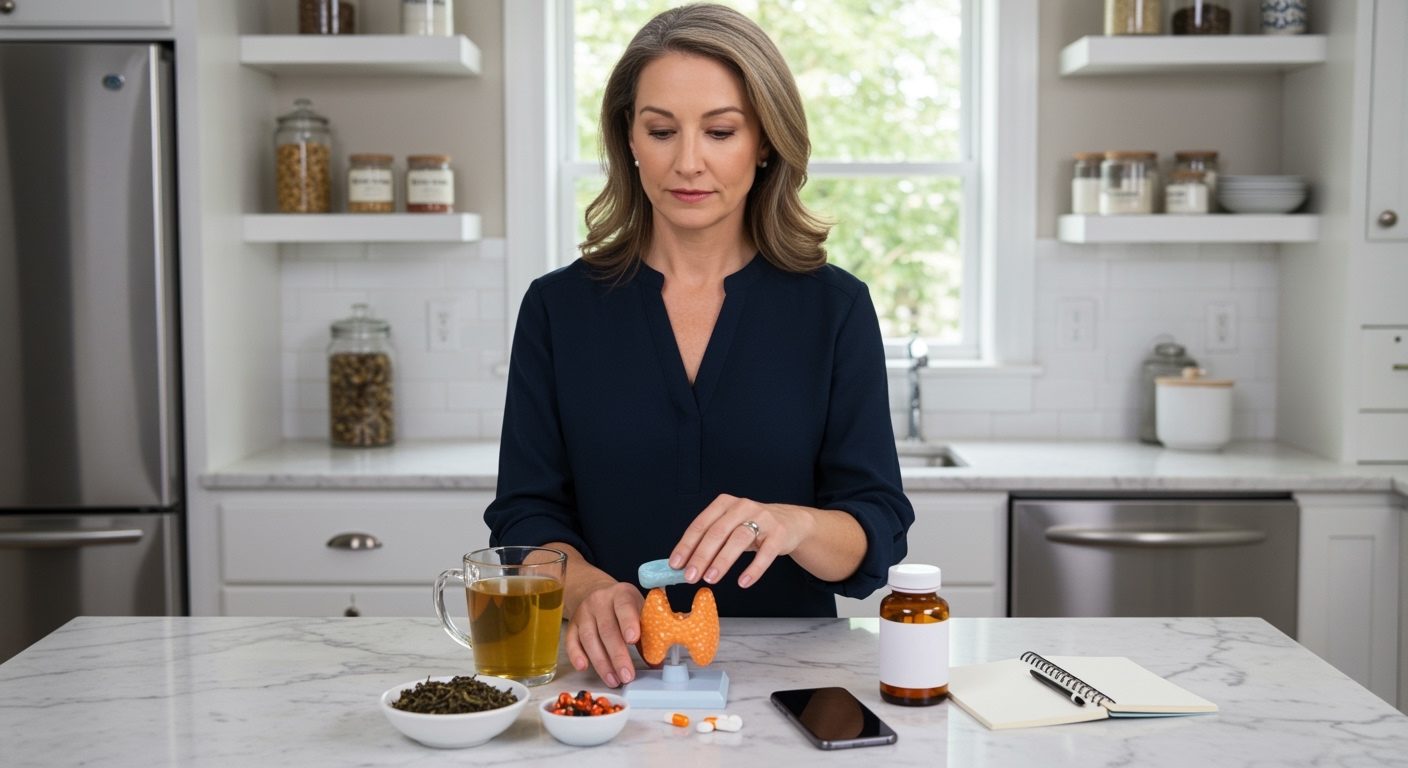
✪ Key Takeaway: Green tea is safe for hypothyroidism when consumed at least four hours away from thyroid medication.
Introduction
You probably heard that green tea might interfere with your thyroid medication and now you are confused about whether you should give it up completely.
This question comes up because many people with hypothyroidism love their morning cup of green tea but worry it might be sabotaging their treatment without them knowing it.
Hi, I am Abdur, your nutrition coach and today I am going to explain exactly how green tea affects hypothyroidism, what the research actually says, and the simple timing strategy that lets you enjoy both your tea and optimal thyroid health.
Does Green Tea Actually Interfere With Thyroid Medication?
The short answer is yes, but only when you drink it at the wrong time.
Green tea contains compounds called catechins, particularly one named epigallocatechin gallate or EGCG, which can bind to thyroid medication in your digestive system.
When this binding happens, your body cannot absorb the medication properly, which means less of it reaches your bloodstream where it needs to work.
Research shows that consuming green tea within a few hours of taking levothyroxine (the most common thyroid medication) can reduce its absorption by up to 27 percent.
This reduction happens because the catechins form complexes with the medication molecules, making them too large to pass through your intestinal walls efficiently.
The good news is this interference is completely preventable with proper timing strategies that I will explain in detail.
✪ Fact: Green tea catechins can reduce thyroid medication absorption by up to 27 percent when consumed too close together.
What Is The Safe Time Gap Between Green Tea And Thyroid Medication?
Most thyroid specialists recommend waiting at least four hours between taking your medication and drinking green tea.
This time gap ensures your body has already absorbed the thyroid medication before the catechins from green tea enter your digestive system.
Your thyroid medication gets absorbed primarily in your small intestine, and this process takes about two to three hours under normal conditions.
Adding an extra hour or two as a buffer gives you the safest approach, which is why the four-hour rule works so well in practice.
If you take your medication first thing in the morning on an empty stomach as recommended, you can safely enjoy your green tea around lunchtime or early afternoon.
Alternatively, if you prefer morning tea, you could take your medication at bedtime instead, which many people find works better for their daily routine anyway.
✪ Pro Tip: Set a daily alarm on your phone to remind you when the four-hour window has passed and green tea becomes safe.
Can Green Tea Actually Harm Your Thyroid Gland Itself?
This is where things get interesting because the answer depends on how much you drink and your current iodine status.
Some older studies suggested that extremely high amounts of green tea might interfere with thyroid hormone production in the gland itself.
However, these studies used amounts equivalent to drinking 10 to 15 cups per day, which is far beyond what most people consume in real life.
At normal consumption levels of one to three cups daily, green tea does not appear to harm thyroid function in people with adequate iodine intake.
The concern becomes more relevant if you already have iodine deficiency, which is rare in developed countries but still exists in some populations.
Your thyroid gland needs iodine to produce hormones, and some research suggests that excessive catechins might interfere with this process when iodine levels are already low.
For most people with hypothyroidism who take their medication properly and maintain adequate nutrition, moderate green tea consumption poses no direct threat to the thyroid gland itself.
✪ Note: Moderate green tea consumption of one to three cups daily does not harm thyroid function in people with adequate iodine intake.
Are There Any Benefits Of Green Tea For People With Hypothyroidism?
Yes, green tea actually offers several health benefits that can be particularly helpful for people managing hypothyroidism.
Many people with hypothyroidism struggle with weight management because their slower metabolism makes it harder to maintain a healthy weight.
Green tea has been shown to slightly boost metabolic rate and increase fat oxidation, which means your body burns stored fat more efficiently.
The catechins in green tea also provide powerful antioxidant protection that helps reduce inflammation throughout your body.
Since hypothyroidism is often caused by autoimmune conditions like Hashimoto thyroiditis, reducing systemic inflammation can support overall health and wellbeing.
Additionally, green tea contains L-theanine, an amino acid that promotes mental clarity and reduces stress without causing drowsiness.
This can be especially valuable since many people with hypothyroidism experience brain fog and cognitive difficulties as part of their condition.
✪ Fact: Green tea catechins can boost metabolic rate and increase fat burning, which helps with weight management challenges common in hypothyroidism.
What About Matcha And Other Forms Of Green Tea?
Matcha is a concentrated form of green tea where you consume the entire ground leaf rather than just an infusion, which means it contains higher levels of everything including catechins.
Because of this concentration, matcha has an even greater potential to interfere with thyroid medication absorption if consumed at the wrong time.
The same four-hour rule applies, but you might want to be even more careful with timing when drinking matcha compared to regular brewed green tea.
Green tea supplements and extracts present another concern because they often contain extremely high doses of catechins far beyond what you would get from drinking tea.
These concentrated supplements can potentially cause more significant interference with medication and might even affect thyroid function directly at very high doses.
If you have hypothyroidism, stick with regular brewed green tea or matcha in moderate amounts rather than taking concentrated supplements unless specifically recommended by your healthcare provider.
✪ Pro Tip: Avoid green tea supplements and extracts with hypothyroidism, as concentrated catechins pose greater risks than brewed tea.
The Bottom Line
Green tea is completely safe for people with hypothyroidism when you follow the simple four-hour timing rule between your medication and tea consumption.
Your health should never feel like a prison of restrictions but rather a journey of smart choices that let you enjoy life while protecting what matters most.
I would love to hear about your experience with green tea and hypothyroidism in the comments below, so please share your questions, concerns, or any tips that have worked well for you.
References
At NutritionCrown, we use quality and credible sources to ensure our content is accurate and trustworthy. Below are the sources referenced in writing this article: