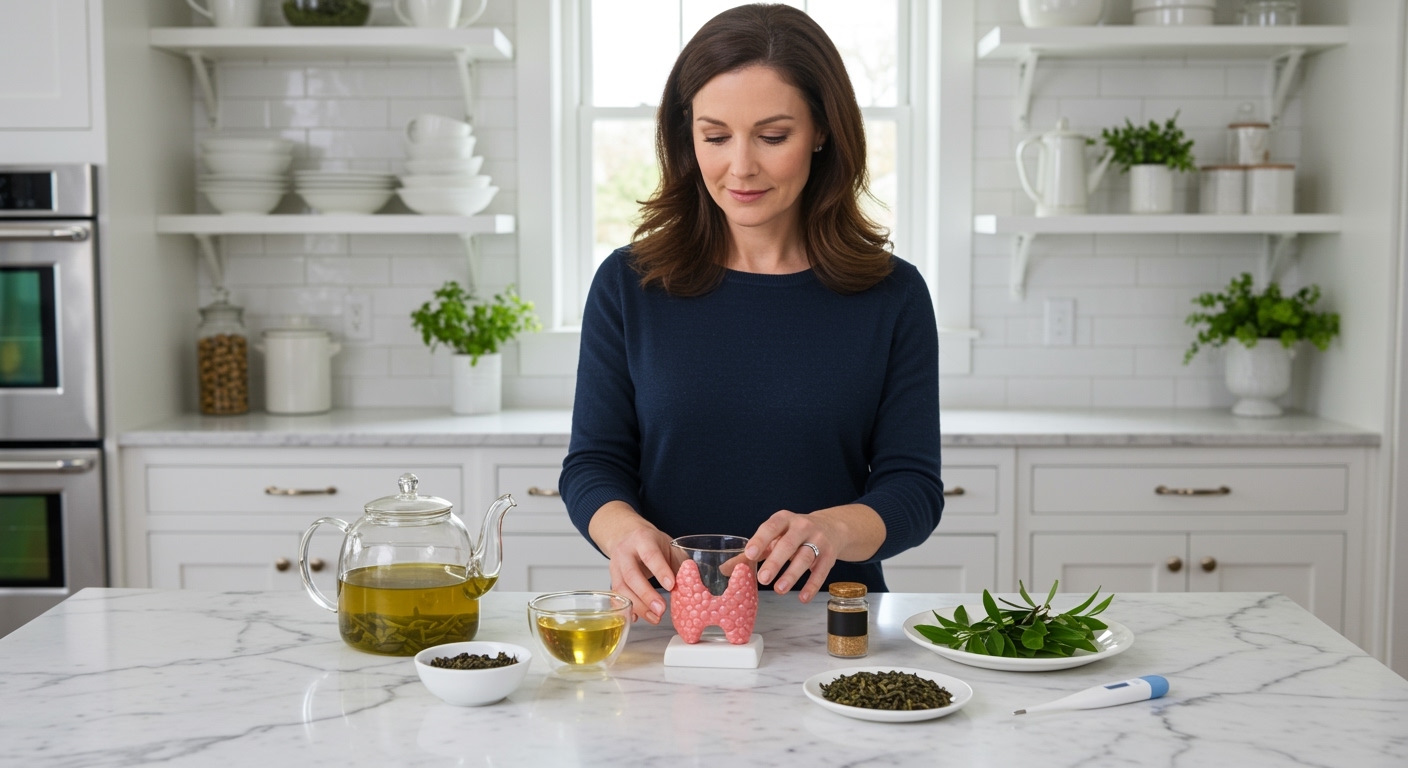
✪ Key Takeaway: Green tea can be safe for hypothyroidism when consumed in moderation and timed properly away from thyroid medication.
Introduction
You probably heard that green tea is a superfood that fixes everything from weight gain to brain fog.
But when you have hypothyroidism, you start questioning whether this popular beverage might actually work against your thyroid health instead of supporting it.
Hi, I’m Abdur, your nutrition coach, and today I’m going to explain exactly how green tea affects your thyroid function and whether you should keep it in your daily routine.
What Does Green Tea Actually Do To Your Thyroid?
Green tea contains compounds called catechins, with one specific type called epigallocatechin gallate being the most abundant.
These catechins can interfere with an enzyme called thyroid peroxidase, which your thyroid gland needs to produce thyroid hormones.
Research published in the European Journal of Public Health found that excessive green tea consumption was associated with increased risk of thyroid problems in some populations.
However, the keyword here is excessive, which typically means consuming more than 5-6 cups daily over extended periods.
Your thyroid uses iodine and the enzyme thyroid peroxidase to create thyroid hormones T3 and T4.
When catechins block this enzyme, your thyroid cannot produce hormones efficiently, potentially worsening hypothyroidism symptoms.
But this effect depends heavily on how much you drink and your overall iodine status in the body.
✪ Fact: One cup of green tea contains approximately 50-100 mg of catechins, far below the levels shown to significantly impact thyroid function in most studies.
Can Green Tea Interfere With Your Thyroid Medication?
This question matters more than the direct effect on your thyroid gland itself.
If you take levothyroxine or any thyroid hormone replacement medication, timing your green tea consumption becomes critical.
Studies show that certain compounds in green tea can bind to thyroid medication in your digestive system, reducing how much your body actually absorbs.
This means you might be taking your full dose but only getting a fraction of the medication benefit you need.
The solution is simple but requires discipline in your daily routine.
You should wait at least 3-4 hours after taking your thyroid medication before drinking green tea.
This timing window allows your medication to be fully absorbed before the tea compounds enter your digestive system.
✪ Pro Tip: Take your thyroid medication first thing in the morning on an empty stomach, then enjoy your green tea mid-morning or afternoon for optimal results.
Does The Amount You Drink Really Matter?
Absolutely, and this is where most people make their biggest mistake.
Drinking 1-2 cups of green tea daily poses minimal risk for most people with hypothyroidism.
The problems start when people consume 5-6 cups or more, especially concentrated forms like matcha powder or green tea extracts.
Research from Folia Morphologica journal indicates that moderate consumption does not significantly impact thyroid function in healthy individuals.
But when you already have compromised thyroid function, even moderate amounts might create issues if your iodine intake is low.
Your body needs adequate iodine to counteract any potential interference from green tea catechins.
If you eat iodized salt, seafood, dairy products, or eggs regularly, you likely have sufficient iodine stores to handle moderate green tea consumption safely.
✪ Note: Matcha contains approximately 3 times more catechins than regular brewed green tea, so adjust your portions accordingly if you prefer this concentrated form.
Are There Any Benefits Of Green Tea For Hypothyroidism?
Despite the concerns, green tea offers several benefits that might actually help manage hypothyroidism symptoms indirectly.
Many people with hypothyroidism struggle with weight management due to slower metabolism.
Green tea contains compounds that can slightly boost metabolic rate and support fat oxidation, according to research published in various nutrition journals.
The antioxidants in green tea also help reduce inflammation throughout your body.
Since many thyroid conditions involve autoimmune inflammation, reducing overall inflammatory burden might provide some protective benefits.
Green tea also supports cardiovascular health, which matters because hypothyroidism increases risk for heart disease and high cholesterol.
The key is finding the right balance where you get these benefits without interfering with your thyroid function or medication absorption.
✪ Fact: Green tea contains L-theanine, an amino acid that promotes calm focus without the jittery effects of coffee, making it a gentler caffeine option for people with thyroid issues.
Should You Choose Green Tea Over Other Teas?
This depends on your individual situation and how well your hypothyroidism is currently managed.
If your thyroid levels are unstable or you recently started medication, you might want to choose herbal teas that do not contain catechins.
Options like chamomile, peppermint, or rooibos provide antioxidants without the thyroid-interfering compounds found in true tea leaves.
However, if your thyroid function is well-controlled with medication and your levels are stable, moderate green tea consumption is generally safe.
Black tea and oolong tea contain catechins too, though typically in lower amounts than green tea.
White tea has the least processing and contains fewer catechins, making it potentially the safest true tea option for people with thyroid concerns.
The most important factor is not which tea you choose, but rather maintaining consistent timing away from your medication and monitoring how you feel.
✪ Pro Tip: Keep a simple journal tracking your tea consumption and energy levels for two weeks to identify any patterns that might indicate your thyroid is being affected.
The Bottom Line
Green tea can be part of your diet when you have hypothyroidism, but moderation and timing are absolutely essential.
Your health deserves more than convenience, it requires intentional choices that support your body rather than work against it.
I would love to hear about your experience with green tea and hypothyroidism in the comments below, so share your thoughts, questions, or any concerns you might have about managing your thyroid health through nutrition.
References
At NutritionCrown, we use quality and credible sources to ensure our content is accurate and trustworthy. Below are the sources referenced in writing this article: