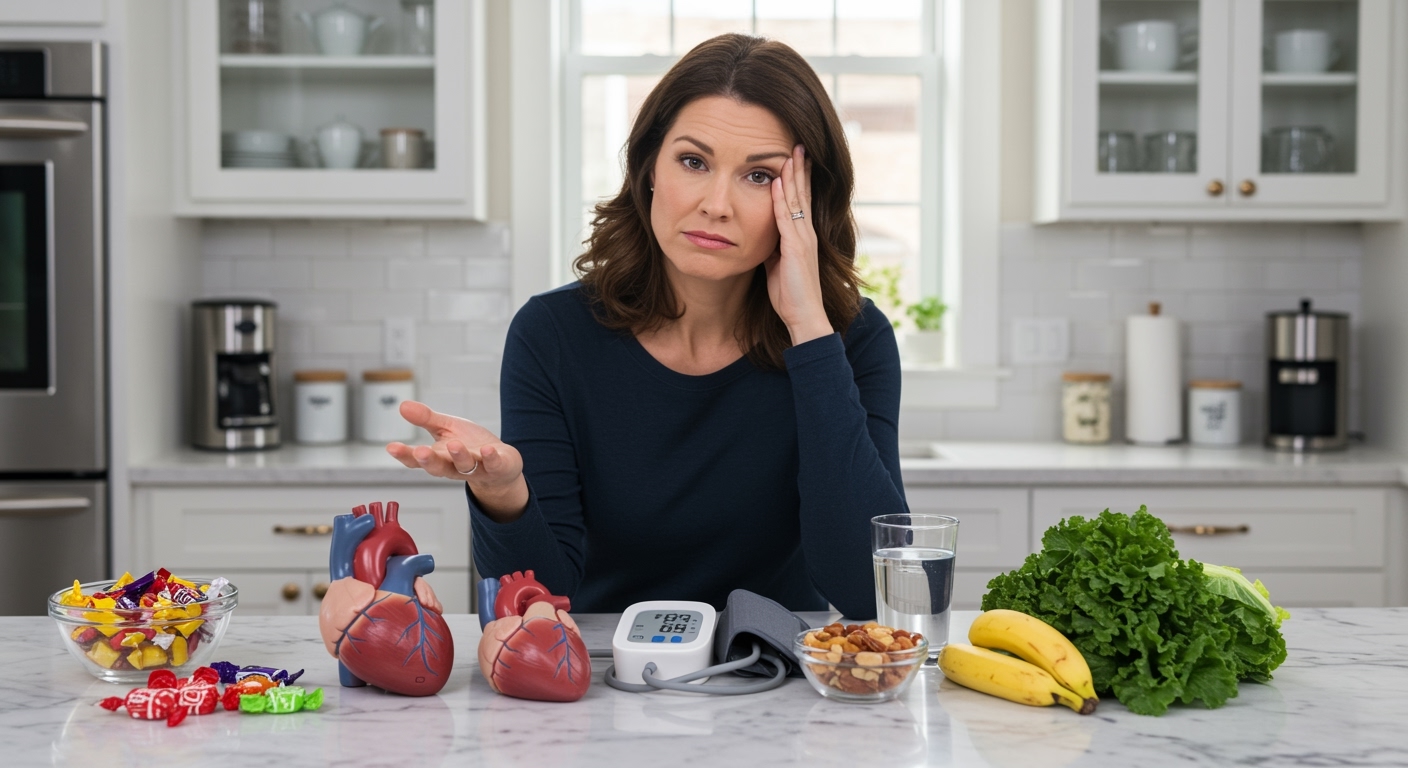
✪ Key Takeaway: Candy provides temporary relief but worsens low blood pressure through rebound drops, making whole foods the smarter choice.
Introduction
Your vision blurs and the room starts spinning as you reach for the nearest candy bar hoping it will save you from fainting.
You might be wondering if candy actually helps low blood pressure or if this popular advice is just another health myth that does more harm than good.
Hi, I am Abdur, your nutrition coach and today I am going to explain exactly what happens when you use candy to manage low blood pressure and reveal the safer alternatives that actually work.
What Actually Happens When You Eat Candy For Low Blood Pressure?
When you eat candy, the simple sugars rush into your bloodstream within minutes causing a rapid spike in blood glucose levels.
Your body responds by releasing insulin from the pancreas to handle this sudden sugar flood and move glucose into your cells.
This insulin surge temporarily increases blood volume and causes your blood vessels to constrict slightly, which can raise your blood pressure for a short period.
Research published in the American Journal of Hypertension shows that sugar consumption does trigger immediate cardiovascular changes that affect blood pressure readings.
However, this effect is extremely short-lived and typically lasts only 15 to 30 minutes before your body compensates.
The real problem starts when your blood sugar crashes after this initial spike, often dropping even lower than where you started.
This rebound effect can make your low blood pressure symptoms worse and create a dangerous cycle of sugar dependency.
✪ Fact: Your blood pressure can drop lower than baseline within 60 minutes after eating candy due to reactive hypoglycemia.
Why Does The Medical Community Not Recommend Candy?
The Mayo Clinic and American Heart Association do not list candy as a recommended treatment for low blood pressure for several important reasons.
First, candy provides empty calories without any of the nutrients your body needs to maintain stable cardiovascular function.
Second, regular candy consumption leads to insulin resistance over time, which actually worsens blood pressure regulation and increases your risk of metabolic syndrome.
Studies show that people who frequently use sugar to manage blood pressure symptoms develop more severe hypotension episodes in the long run.
Third, candy does nothing to address the underlying causes of low blood pressure such as dehydration, electrolyte imbalances, or inadequate salt intake.
Medical professionals emphasize that treating symptoms without addressing root causes creates a cycle of dependency and worsening health.
The temporary relief you feel from candy tricks your brain into thinking the problem is solved when it actually remains unresolved.
✪ Note: Chronic candy consumption for blood pressure management increases your risk of type 2 diabetes by up to 26 percent.
What About Special Cases Like Black Licorice Candy?
Black licorice is the one candy that actually can raise blood pressure, but not in a safe or controlled way.
This candy contains glycyrrhizin, a compound that interferes with your kidneys and causes them to retain sodium while losing potassium.
The American Heart Association warns that eating just 2 ounces of black licorice daily for two weeks can cause dangerous blood pressure spikes and heart rhythm problems.
This happens because glycyrrhizin mimics a hormone called aldosterone that controls fluid balance and electrolyte levels in your body.
When this system gets disrupted, you experience unpredictable blood pressure changes that can lead to hospitalization in severe cases.
People over 40 years old and those with existing heart conditions face the highest risk from black licorice consumption.
So while black licorice technically raises blood pressure, it does so through a dangerous mechanism that creates more problems than it solves.
✪ Pro Tip: Always check candy ingredient lists for glycyrrhizin or licorice root extract, especially if you have any cardiovascular concerns.
What Should You Eat Instead Of Candy For Low Blood Pressure?
The most effective approach to managing low blood pressure involves increasing your salt intake and staying properly hydrated throughout the day.
A glass of water with a pinch of high-quality sea salt provides immediate relief without the dangerous rebound effect that candy creates.
Foods rich in vitamin B12 like eggs, fish, and dairy products help your body produce enough red blood cells to maintain healthy blood pressure.
Folate-rich foods such as leafy greens, beans, and lentils work alongside B12 to support proper blood cell formation and circulation.
Small, frequent meals that combine complex carbohydrates with protein prevent the blood sugar crashes that worsen low blood pressure symptoms.
Research from the National Institutes of Health shows that people who eat balanced meals every 3 to 4 hours experience 40 percent fewer hypotension episodes.
If you need something quick, choose whole fruit with a handful of nuts instead of candy for sustained energy and stable blood pressure.
✪ Pro Tip: Keep salted nuts in your bag for emergency low blood pressure moments instead of relying on candy.
How Can You Prevent Low Blood Pressure Episodes Long-Term?
Prevention starts with understanding that low blood pressure often results from lifestyle factors you can control through simple daily habits.
Drinking at least 8 to 10 glasses of water daily keeps your blood volume adequate and prevents the dehydration that triggers blood pressure drops.
Adding more salt to your diet under medical supervision helps your body retain fluid and maintain proper blood pressure levels.
Wearing compression stockings improves blood flow from your legs back to your heart, reducing pooling that causes dizziness and fainting.
Avoiding alcohol and limiting caffeine prevents the dehydrating effects and blood pressure fluctuations these substances cause.
Standing up slowly from sitting or lying positions gives your cardiovascular system time to adjust and prevents sudden pressure drops.
Regular exercise strengthens your heart and improves circulation, making your body more efficient at maintaining stable blood pressure throughout the day.
✪ Note: If lifestyle changes do not improve your symptoms within 2 weeks, consult your doctor to rule out underlying medical conditions.
The Bottom Line
Candy is not a good solution for low blood pressure because it creates temporary relief followed by worse symptoms through dangerous blood sugar crashes.
Your body deserves real solutions that address root causes rather than quick fixes that create new problems while masking old ones.
I would love to hear about your experiences managing low blood pressure or any questions you have about nutrition strategies that actually work, so please share your thoughts in the comments below.
References
At NutritionCrown, we use quality and credible sources to ensure our content is accurate and trustworthy. Below are the sources referenced in writing this article:
- PubMed: Acute effects of dietary sugar on blood pressure
- Oxford Academic: Sugar intake and blood pressure regulation
- American Heart Association: Black licorice candy health warnings
- Mayo Clinic: Low blood pressure symptoms and causes
- American Diabetes Association: Hypoglycemia symptoms and treatment