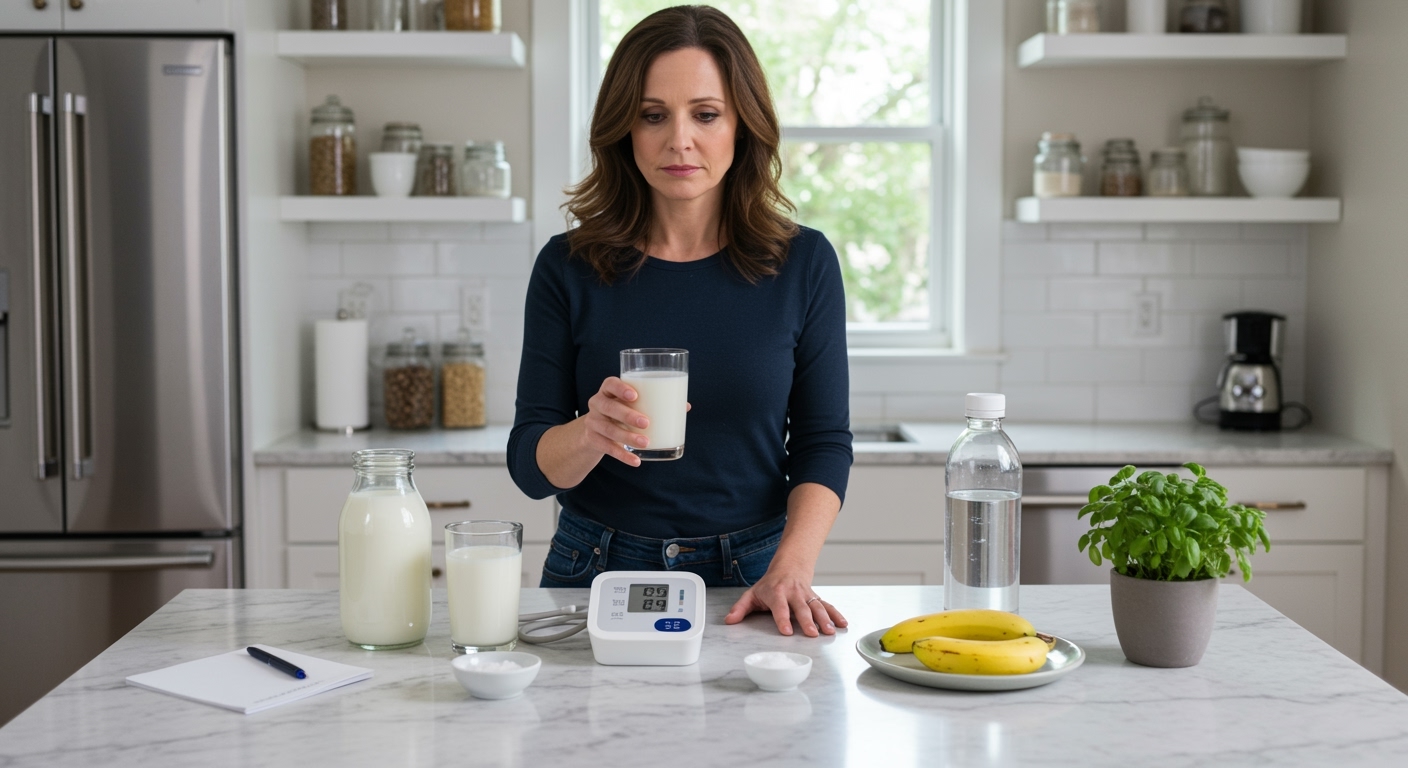
✪ Key Takeaway: Buttermilk can help low blood pressure temporarily through hydration and sodium, but it is not a reliable long-term solution.
Introduction
You feel dizzy when you stand up too quickly and someone tells you to drink buttermilk.
You might be asking this question because you have heard that buttermilk raises blood pressure naturally, or perhaps a family member suggested it as a traditional remedy for your lightheadedness and fatigue.
Hi, I am Abdur, your nutrition coach and today I am going to explain whether buttermilk truly helps with low blood pressure and what you need to know before making it part of your daily routine.
What Does Buttermilk Actually Contain That Affects Blood Pressure?
Buttermilk contains sodium, which is the primary mineral that influences blood pressure levels in your body.
One cup of cultured buttermilk typically provides around 250 to 350 milligrams of sodium, depending on the brand and preparation method.
Sodium helps your body retain water, which increases the blood volume circulating through your vessels.
When blood volume increases, your blood pressure naturally rises because more fluid is pushing against the walls of your arteries.
Buttermilk also contains potassium, calcium, magnesium, and probiotics, but these nutrients do not directly raise blood pressure the way sodium does.
The hydration you get from drinking buttermilk also plays a role because dehydration is a common cause of low blood pressure.
✪ Fact: Traditional buttermilk from churning butter contains far less sodium than the cultured buttermilk you buy in stores today.
How Does Buttermilk Temporarily Raise Low Blood Pressure?
When you drink buttermilk, the sodium it contains gets absorbed into your bloodstream within minutes.
Your kidneys respond by holding onto more water to balance the sodium concentration in your blood.
This water retention increases your blood volume, which pushes your blood pressure upward temporarily.
The effect is similar to what happens when you eat salty foods or drink sports drinks with added electrolytes.
However, this rise in blood pressure is short-lived because your body constantly works to maintain balance through a process called homeostasis.
Your kidneys will eventually flush out the excess sodium and water through urine, bringing your blood pressure back down to its baseline level.
This means buttermilk might help you feel better for a few hours, but it does not fix the underlying cause of your low blood pressure.
✪ Pro Tip: If you feel dizzy from low blood pressure, drink buttermilk with a pinch of salt for a faster temporary boost.
Can Buttermilk Be Part of a Long-Term Solution for Low Blood Pressure?
Buttermilk alone cannot serve as a long-term solution for managing low blood pressure effectively.
Low blood pressure, also called hypotension, has many possible causes including dehydration, nutritional deficiencies, heart problems, endocrine disorders, or medication side effects.
Drinking buttermilk daily might provide temporary relief, but it does not address the root cause of why your blood pressure stays low.
If you rely only on buttermilk, you might miss important underlying health issues that need proper medical attention.
A better approach combines adequate hydration, balanced meals with enough sodium, regular physical activity, and sometimes medical treatment depending on your specific condition.
Buttermilk can be one part of this approach, especially if you enjoy the taste and it helps you stay hydrated throughout the day.
✪ Note: Always consult your doctor before using buttermilk or any food as a remedy for persistent low blood pressure symptoms.
What Are the Potential Downsides of Using Buttermilk for Low Blood Pressure?
Drinking too much buttermilk can lead to excessive sodium intake, which creates its own set of health problems.
High sodium consumption over time can damage your kidneys, increase your risk of heart disease, and cause bloating or water retention.
Store-bought buttermilk often contains added salt beyond what naturally occurs during fermentation, making the sodium content even higher.
If you are lactose intolerant, buttermilk might cause digestive discomfort including gas, bloating, or diarrhea despite containing less lactose than regular milk.
Some people also experience allergic reactions to milk proteins found in buttermilk, which can cause skin rashes, breathing difficulties, or stomach pain.
Additionally, buttermilk contains calories and drinking multiple glasses daily without adjusting your overall diet can lead to unwanted weight gain over time.
✪ Pro Tip: Check the nutrition label on your buttermilk container to know exactly how much sodium you are consuming per serving.
What Should You Do Instead to Manage Low Blood Pressure Properly?
Start by drinking enough water throughout the day because dehydration is one of the most common and easily fixable causes of low blood pressure.
Aim for at least eight glasses of water daily, and increase this amount if you exercise heavily or live in a hot climate.
Include adequate sodium in your diet through natural sources like sea salt, pickles, olives, or salted nuts rather than relying solely on buttermilk.
Eat smaller, more frequent meals to prevent the blood pressure drop that often happens after large meals when blood rushes to your digestive system.
Avoid standing up too quickly from sitting or lying positions, and take a moment to let your body adjust before moving.
Wear compression stockings if your doctor recommends them, as they help prevent blood from pooling in your legs and improve circulation.
Most importantly, work with your healthcare provider to identify and treat any underlying medical conditions causing your low blood pressure symptoms.
✪ Fact: Crossing your legs while sitting can temporarily raise blood pressure by improving blood return from your lower body to your heart.
The Bottom Line
Buttermilk can provide temporary relief from low blood pressure symptoms through its sodium content and hydration benefits, but it is not a complete solution for managing this condition long-term.
Quick fixes feel good in the moment but lasting health comes from understanding and addressing the real problem beneath the surface.
I would love to hear your thoughts on this topic, so please share your experiences with buttermilk and low blood pressure in the comments below, and let me know if you have any questions about managing your blood pressure naturally.
References
At NutritionCrown, we use quality and credible sources to ensure our content is accurate and trustworthy. Below are the sources referenced in writing this article:
- PubMed: Probiotics and blood pressure: current insights
- Go Digit: Benefits of Buttermilk
- Ganesh Diagnostic: Benefits of Buttermilk: Advantages and FAQs
- PharmEasy: Health Benefits of Buttermilk