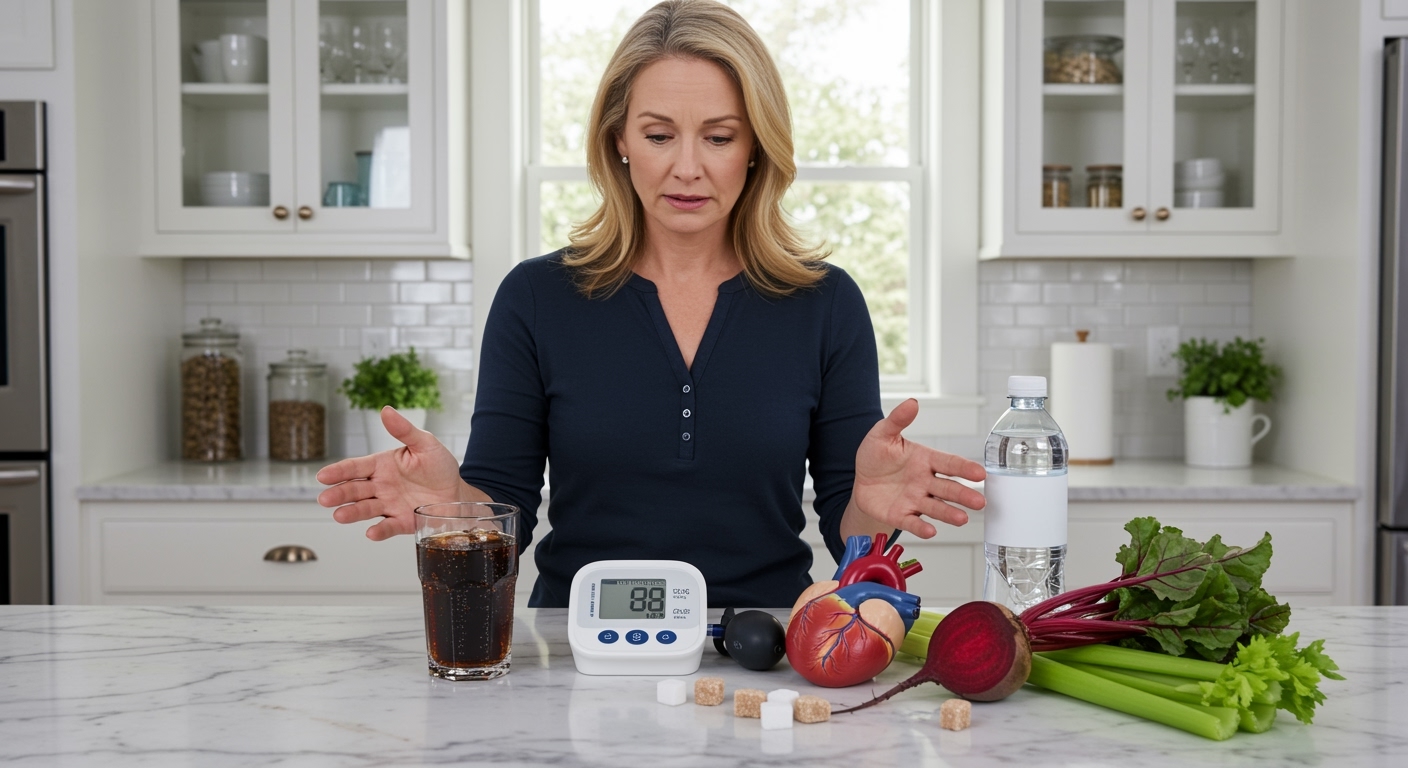
✪ Key Takeaway: Soft drinks are unsafe for low blood pressure because they cause rapid blood sugar spikes followed by crashes that worsen hypotension.
Introduction
You feel dizzy, your vision blurs, and someone hands you a cold soft drink saying it will help your low blood pressure.
This happens because people believe the sugar and caffeine in soft drinks can quickly raise blood pressure and make you feel better instantly.
Hi, I am Abdur, your nutrition coach, and today I am going to explain why soft drinks create more problems than solutions for people with low blood pressure and what actually happens inside your body when you drink them.
What Happens to Your Blood Pressure When You Drink Soft Drinks?
When you drink a soft drink, the high sugar content enters your bloodstream within minutes.
Your pancreas responds by releasing insulin to handle this sudden glucose surge.
This insulin spike can actually cause your blood vessels to dilate, which may temporarily lower your blood pressure even further.
The caffeine in many soft drinks does cause a short-term increase in blood pressure by stimulating your adrenal glands to release stress hormones.
However, this effect lasts only 30 to 60 minutes before your blood pressure drops again, often lower than before you drank it.
Research published in the American Journal of Physiology shows that sugar-sweetened beverages can disrupt normal blood pressure regulation mechanisms over time.
The real danger comes from this rollercoaster effect that leaves you feeling worse than when you started.
✪ Fact: A single can of cola contains about 39 grams of sugar, which equals nearly 10 teaspoons dumped into your bloodstream at once.
Why Does the Sugar Crash Make Low Blood Pressure Worse?
The initial sugar rush from soft drinks triggers your body to produce excessive insulin to bring glucose levels back down.
This overcompensation often causes your blood sugar to drop below normal levels, a condition called reactive hypoglycemia.
When your blood sugar crashes, your body struggles to maintain adequate blood pressure because glucose is essential for energy production in your cells.
Your heart needs steady glucose to pump effectively, and your blood vessels need it to maintain proper vascular tone.
This crash can make you feel dizzy, weak, shaky, and even more lightheaded than before drinking the soft drink.
The Mayo Clinic identifies this pattern as particularly dangerous for people with chronic low blood pressure conditions.
You end up needing another sugary drink to feel normal again, creating a destructive cycle that damages your cardiovascular system.
✪ Pro Tip: If you experience dizziness from low blood pressure, drink water with a pinch of salt instead of reaching for soft drinks.
Can Caffeine in Soft Drinks Actually Help Low Blood Pressure?
Caffeine does provide a temporary boost to blood pressure by blocking adenosine receptors in your brain.
Adenosine normally promotes relaxation and blood vessel dilation, so blocking it causes your vessels to constrict slightly.
This constriction can raise your blood pressure by 5 to 10 points for a short period.
However, the amount of caffeine in most soft drinks is relatively low compared to coffee, usually around 30 to 50 milligrams per can.
The problem is that this small caffeine boost comes packaged with massive amounts of sugar that counteract any potential benefits.
Regular caffeine consumption also leads to tolerance, meaning your body adapts and the blood pressure effect diminishes over time.
Banner Health research indicates that relying on caffeinated soft drinks for blood pressure management creates more cardiovascular instability than it solves.
✪ Note: If you need caffeine for low blood pressure, black coffee or green tea provides better results without the harmful sugar load.
What Are the Long-Term Dangers of Using Soft Drinks for Low Blood Pressure?
Regular soft drink consumption damages your cardiovascular system in ways that make low blood pressure management even harder.
The constant sugar spikes and crashes train your body to become insulin resistant over time.
Insulin resistance affects how your blood vessels respond to signals that regulate blood pressure.
Your body also becomes dependent on external sugar sources for energy instead of efficiently using stored glycogen and fat.
This dependency makes your blood pressure more unstable and harder to control through natural means.
Medical News Today reports that people who regularly consume soft drinks experience more frequent episodes of dizziness and fatigue related to blood pressure fluctuations.
The artificial ingredients and preservatives in soft drinks also contribute to chronic inflammation that damages blood vessel walls and impairs their ability to regulate pressure effectively.
✪ Fact: Studies show that people who drink one or more soft drinks daily have a 20 percent higher risk of developing cardiovascular problems.
What Should You Drink Instead When Your Blood Pressure Drops?
Water with a small amount of natural salt is the most effective immediate solution for low blood pressure episodes.
Salt increases blood volume by helping your body retain water, which directly raises blood pressure in a stable way.
Coconut water provides natural electrolytes including sodium and potassium that support healthy blood pressure regulation.
Beetroot juice has been shown to improve blood flow and help maintain stable blood pressure throughout the day.
Green tea offers gentle caffeine along with compounds that support cardiovascular health without the sugar crash.
Eating small, frequent meals with balanced protein, healthy fats, and complex carbohydrates prevents the blood sugar swings that trigger blood pressure drops.
Century Medical and Dental recommends focusing on whole food sources rather than processed beverages for long-term blood pressure stability.
✪ Pro Tip: Keep a small container of sea salt with you to add to water when you feel your blood pressure dropping suddenly.
The Bottom Line
Soft drinks are not safe for managing low blood pressure because they create unstable blood sugar levels that worsen your condition.
Your body deserves stable fuel not a sugar rollercoaster that leaves your cardiovascular system struggling to keep up.
I would love to hear your experiences with managing low blood pressure and what strategies work best for you, so please share your thoughts in the comments below.
References
At NutritionCrown, we use quality and credible sources to ensure our content is accurate and trustworthy. Below are the sources referenced in writing this article:
- American Journal of Physiology: Cardiovascular and metabolic effects of sugar-sweetened beverages
- Mayo Clinic: Low blood pressure symptoms and causes
- Banner Health: What you drink can raise or lower your blood pressure
- Medical News Today: Low blood pressure diet recommendations