Ginger: Are They Really Good For Low Blood Pressure? (Expert Answer)

Middle-aged woman holding fresh ginger root while standing behind marble countertop with blood pressure monitor and ginger products

✪ Key Takeaway: Ginger may lower blood pressure further, making it potentially risky for people with hypotension. Introduction You add ginger to your tea thinking it will boost your health. But what if that same spice is making your low blood pressure worse instead of better? Hi, I am Abdur, your nutrition coach and today I am going to explain how ginger affects your blood pressure and whether you should avoid it if you have hypotension. Does Ginger Lower Blood Pressure Even More? Yes, ginger can lower your blood pressure even further. This happens because ginger contains compounds called gingerols and shogaols that act as natural calcium channel blockers. These compounds prevent calcium from entering the cells of your heart and blood vessel walls. When calcium cannot enter these cells, your blood vessels relax and widen. This widening of blood vessels is called vasodilation, and it reduces the pressure inside your arteries. For someone with normal or high blood pressure, this effect might be beneficial. But if you already have low blood pressure, ginger can push your numbers down to dangerous levels. ✪ Fact: Studies show ginger can reduce systolic blood pressure by 6 mmHg and diastolic by 2 mmHg in some people. What Happens When You Consume Ginger With Hypotension? When you have hypotension and consume ginger, you risk making your symptoms worse. Your blood pressure might drop so low that your brain and organs do not get enough oxygen-rich blood. This can lead to dizziness, lightheadedness, and even

Ghee: Is It Always Bad For Low Blood Pressure? (Expert Answer)

Middle-aged woman stirring ghee in glass bowl on marble counter with blood pressure monitor and healthy foods nearby in bright kitchen

✪ Key Takeaway: Ghee is not inherently bad for low blood pressure and may actually help when combined with adequate sodium and balanced meals. Introduction You have been told to avoid ghee because it might worsen your blood pressure problems. You might be asking this question because someone warned you that fatty foods are dangerous for anyone with blood pressure issues, or perhaps you experienced dizziness after eating ghee and wondered if there was a connection. Hi, I am Abdur, your nutrition coach, and today I am going to explain how ghee actually affects low blood pressure and whether you should really avoid it. What Actually Happens When You Eat Ghee With Low Blood Pressure? When you consume ghee, your body breaks it down into fatty acids that get absorbed through your intestinal walls. These fatty acids enter your bloodstream and provide concentrated energy that your cells can use immediately. Ghee contains mostly saturated fats, which are stable molecules that do not directly lower or raise blood pressure on their own. The confusion comes from mixing up high blood pressure advice with low blood pressure needs. People with hypotension need adequate calories and often benefit from energy-dense foods like ghee to maintain stable blood sugar and prevent sudden drops in blood pressure. Research published in the British Journal of Nutrition showed that ghee consumption did not negatively affect cardiovascular markers in healthy adults. ✪ Fact: Ghee contains butyric acid, a short-chain fatty acid that supports gut health and may help

Garlic: Is It Really Good For Low Blood Pressure? (Expert Answer)

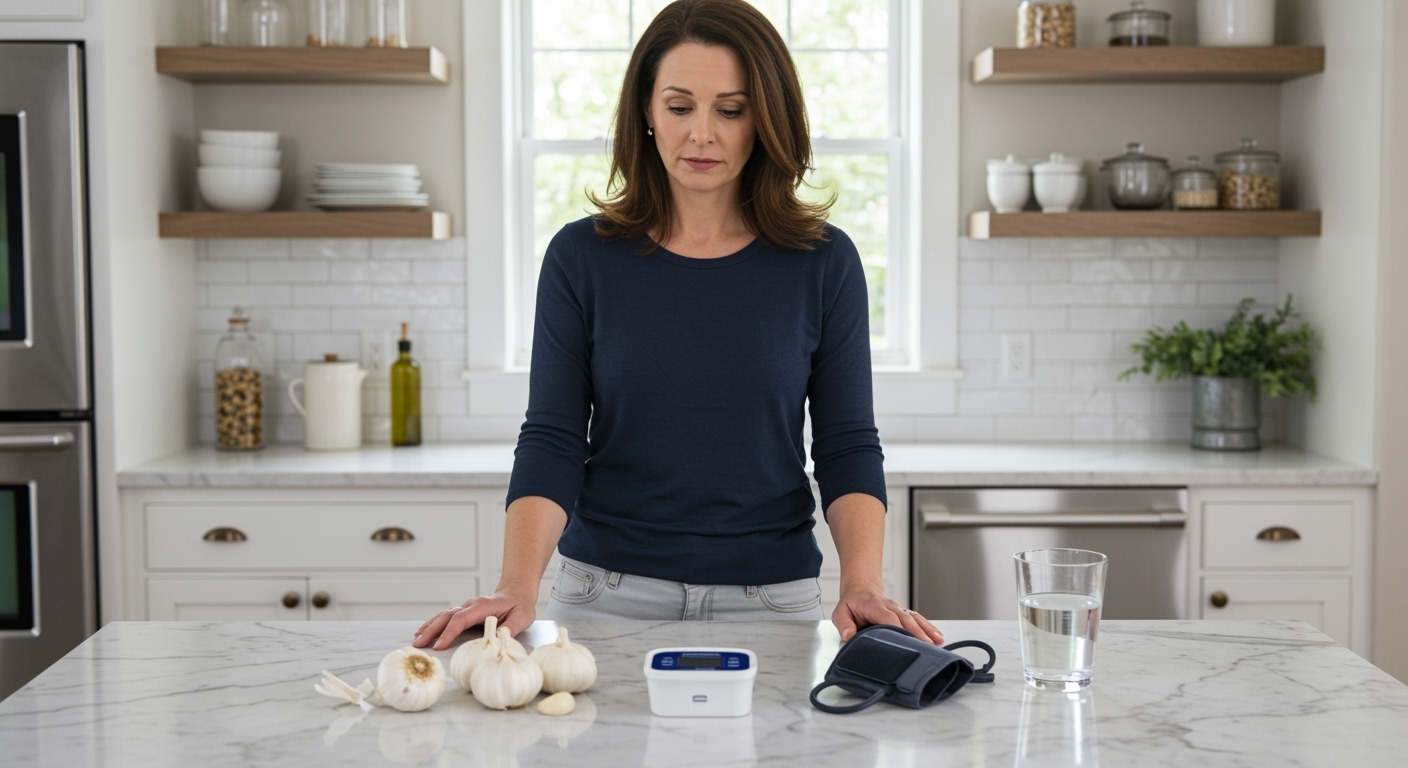
Middle-aged woman holding garlic bulb while standing behind marble counter with garlic cloves, blood pressure monitor, and water glass

✪ Key Takeaway: Garlic lowers blood pressure, so if yours is already low, consuming garlic regularly can make your condition worse. Introduction You have heard that garlic is a miracle food for heart health. Your grandmother swears by it, your neighbor takes garlic supplements daily, and every health blog seems to praise its cardiovascular benefits. But if you struggle with low blood pressure, you might be wondering whether this popular remedy will help you or actually make your symptoms worse. You are asking this question because you want to know if garlic is safe for your specific condition. You need clear answers about whether garlic will give you more energy or leave you feeling dizzy and fatigued. Hi, I am Abdur, your nutrition coach, and today I am going to explain exactly how garlic affects blood pressure, why it might not be your best choice if yours runs low, and what you should do instead. What Does Garlic Actually Do to Your Blood Pressure? Garlic contains a compound called allicin, which forms when you crush or chop fresh garlic cloves. This compound relaxes your blood vessels by increasing the production of nitric oxide in your body. Nitric oxide is a molecule that signals your blood vessel walls to relax and widen. When your blood vessels widen, the pressure inside them naturally decreases. This effect is exactly why doctors and researchers recommend garlic for people with high blood pressure. Multiple studies show that garlic can reduce systolic blood pressure by an

Fish Oil: Is It Even Important For Low Blood Pressure? (Expert Answer)

Woman standing behind marble counter examining fish oil supplement bottles with salmon, walnuts, and blood pressure monitor visible

✪ Key Takeaway: Fish oil lowers blood pressure, making it potentially dangerous for people with hypotension who need higher readings. Introduction You walk into a health store and see bottles of fish oil supplements everywhere with promises of heart health benefits. But when you already struggle with low blood pressure that makes you dizzy and tired, you wonder if these popular supplements will help or harm your condition. Hi, I’m Abdur, your nutrition coach, and today I’m going to explain exactly how fish oil affects blood pressure and whether people with hypotension should avoid it completely. What Does Fish Oil Actually Do To Your Blood Pressure? Fish oil contains omega-3 fatty acids called EPA and DHA that directly affect your cardiovascular system. These fatty acids make your blood vessels more flexible and relaxed, which reduces the resistance blood faces when flowing through your arteries. When resistance drops, your blood pressure naturally decreases because your heart does not need to pump as hard to move blood throughout your body. Research shows that consuming about 3 grams of omega-3 fatty acids daily can lower both systolic and diastolic blood pressure readings by several points. This effect becomes more pronounced in people who already have elevated blood pressure, but it still occurs in those with normal or low readings. The problem emerges when someone with hypotension takes fish oil expecting health benefits without understanding this blood pressure-lowering mechanism. ✪ Fact: Studies show omega-3s can reduce blood pressure by 2-8 mmHg depending on dosage

Dates: Are They Really Good For Low Blood Pressure? (Expert Answer)

Woman gesturing toward dates and blood pressure monitor on white marble counter in bright modern kitchen with natural lighting

✪ Key Takeaway: Dates can help raise low blood pressure through potassium, natural sugars, and minerals that support cardiovascular function. Introduction You grab a handful of dates thinking they might help your dizzy spells and constant fatigue. You are asking this question because low blood pressure makes you feel weak, and you have heard that certain foods can help, but you are not sure if dates actually work or if it is just another health myth floating around the internet. Hi, I am Abdur, your nutrition coach, and today I am going to explain exactly how dates affect your blood pressure, what mechanisms are involved, and whether they truly deserve a spot in your daily routine for managing hypotension. What Exactly Happens Inside Your Body When You Eat Dates? When you eat dates, your body immediately starts breaking down their natural sugars into glucose. This glucose enters your bloodstream quickly, causing a rapid increase in blood sugar levels. Your pancreas responds by releasing insulin, which helps cells absorb this glucose for energy. At the same time, dates deliver a significant amount of potassium into your system. Potassium works by helping your blood vessels relax and maintain proper fluid balance throughout your body. This mineral also counteracts sodium effects, which is important because sodium-potassium balance directly influences blood pressure regulation. The combination of quick energy from sugars and cardiovascular support from minerals creates a dual effect that can influence your blood pressure readings within minutes to hours after consumption. ✪ Fact:

Beet Juice: Is It Really Good For Low Blood Pressure? (Expert Answer)

Woman standing behind marble counter looking at glass of beet juice, fresh beets, and blood pressure monitor in bright modern kitchen

✪ Key Takeaway: Beet juice lowers blood pressure, so it can worsen hypotension and cause dizziness, fatigue, and fainting. Introduction You have probably heard that beet juice is a miracle drink for blood pressure problems. But here is the catch: most people do not realize that beet juice lowers blood pressure, which means it can make low blood pressure even worse instead of fixing it. Hi, I am Abdur, your nutrition coach and today I am going to explain exactly why beet juice might be dangerous for you if you already struggle with hypotension and what happens inside your body when you drink it. How Does Beet Juice Actually Affect Your Blood Pressure? Beet juice contains high amounts of dietary nitrates, which are natural compounds found in many vegetables. When you drink beet juice, your body converts these nitrates into nitric oxide through a series of chemical reactions. Nitric oxide is a powerful molecule that signals your blood vessels to relax and widen. This process is called vasodilation, and it directly reduces the pressure inside your arteries. For people with high blood pressure, this effect is beneficial because it helps bring their readings down to healthier levels. But for someone with already low blood pressure, this same mechanism can push your readings even lower into dangerous territory. Research shows that beet juice can lower systolic blood pressure by 4 to 10 mmHg within just a few hours of consumption. ✪ Fact: A single glass of beet juice contains about 250

Cucumber: Are They Really Good For Low Blood Pressure? (Expert Answer)

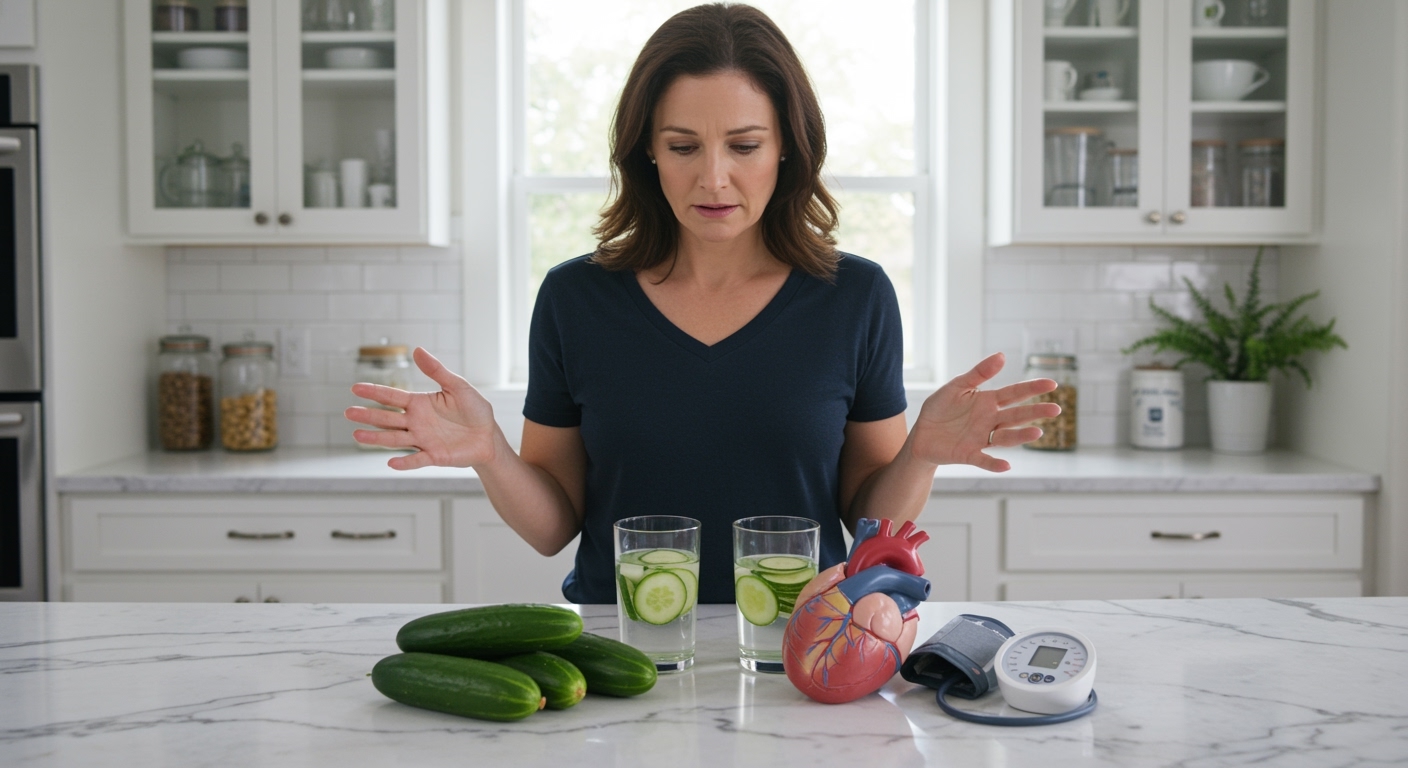
Woman standing behind marble counter with cucumbers, cucumber water, heart model, and blood pressure monitor in bright kitchen

✪ Key Takeaway: Cucumbers provide hydration but lack sufficient sodium and minerals to effectively raise low blood pressure on their own. Introduction You feel dizzy when you stand up too quickly and someone tells you to eat more cucumbers for your low blood pressure. This advice sounds healthy because cucumbers are natural, refreshing, and everyone seems to praise them for hydration and health benefits. Hi, I am Abdur, your nutrition coach and today I am going to explain whether cucumbers actually help raise low blood pressure or if this popular belief misses the complete picture. What Nutrients Do Cucumbers Actually Contain? Cucumbers are made up of about 95 percent water, which makes them incredibly hydrating but very low in calories. One medium cucumber contains approximately 45 calories, 11 grams of carbohydrates, 2 grams of fiber, and minimal amounts of protein and fat. The mineral content includes small amounts of potassium (around 440 milligrams), magnesium (39 milligrams), and very little sodium (just 6 milligrams). Cucumbers also provide vitamin K, vitamin C, and several antioxidant compounds like flavonoids and tannins. However, when you compare these numbers to what your body needs daily, cucumbers provide only a small fraction of essential minerals. The low sodium content is particularly important because sodium plays a critical role in maintaining blood pressure levels. ✪ Fact: A single medium cucumber provides less than one percent of your daily sodium needs, which is crucial for blood pressure regulation. How Does Low Blood Pressure Actually Work? Low blood pressure,

Dark Chocolate: Is It Really Good For Low Blood Pressure? (Expert Answer)

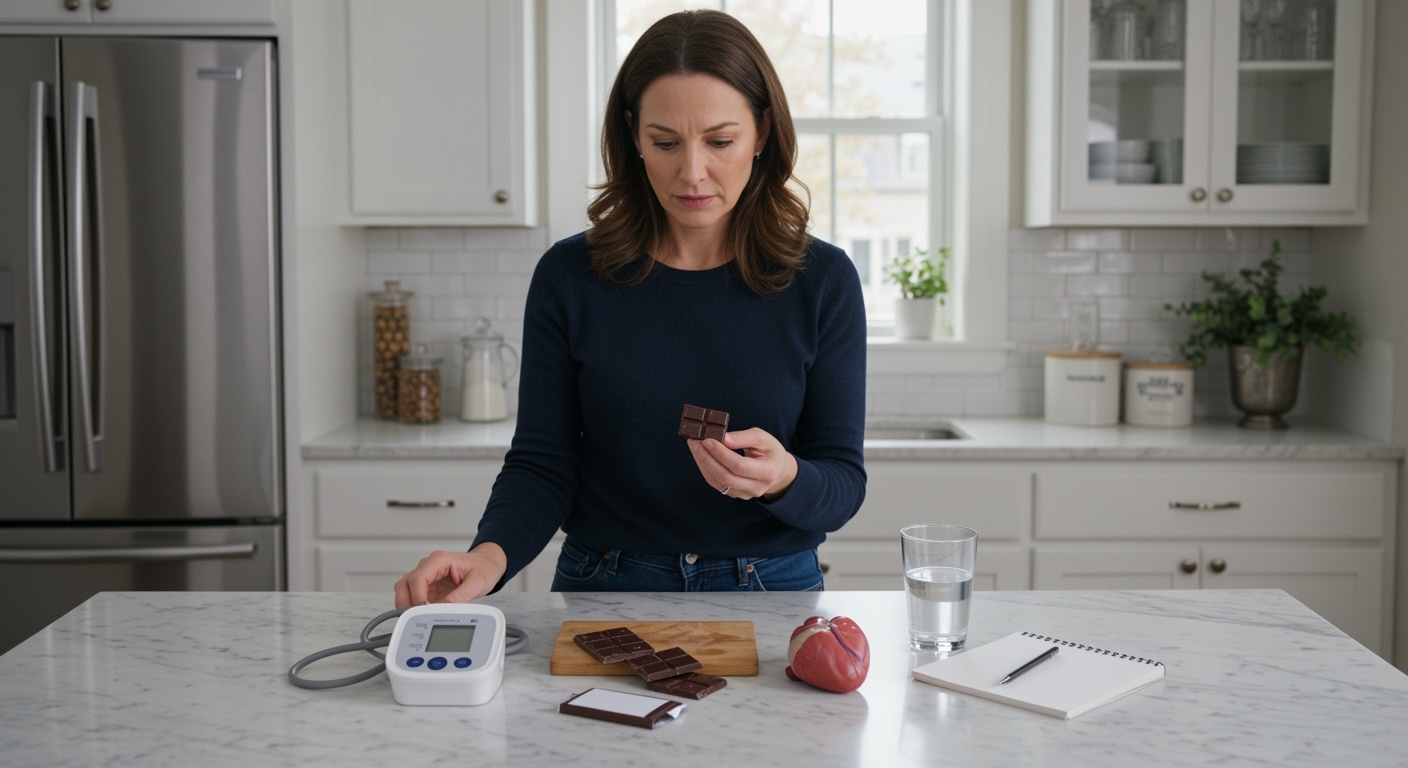
Woman holding dark chocolate piece while standing behind marble counter with blood pressure monitor and heart model in bright kitchen

✪ Key Takeaway: Dark chocolate can worsen low blood pressure by further reducing it, potentially causing dizziness, fatigue, and fainting. Introduction You have probably heard that dark chocolate is good for your heart and blood pressure. But what if your blood pressure is already too low and you are wondering whether that daily piece of dark chocolate is helping or hurting you. Hi, I am Abdur, your nutrition coach and today I am going to explain whether dark chocolate is really good for low blood pressure and what you need to know before making it part of your daily routine. What Does Dark Chocolate Actually Do To Blood Pressure? Dark chocolate contains compounds called flavonoids that have been studied extensively for their effects on cardiovascular health. These flavonoids, particularly a type called epicatechin, help your blood vessels relax and widen through a process called vasodilation. When your blood vessels widen, the resistance to blood flow decreases, which naturally lowers blood pressure. Multiple research studies have confirmed that consuming dark chocolate can reduce both systolic and diastolic blood pressure by approximately 2 to 3 mmHg. This effect happens because flavonoids stimulate the production of nitric oxide in the inner lining of your blood vessels. Nitric oxide acts as a signaling molecule that tells your blood vessel walls to relax and expand. For people with high blood pressure, this mechanism can be beneficial and even protective against heart disease and stroke. ✪ Fact: Dark chocolate with at least 70 percent cocoa content

Cucumber: Can It Help With Low Blood Pressure? (Expert Answer)

Woman slicing fresh cucumbers on marble countertop with whole cucumbers, cucumber water, heart model, and blood pressure cuff visible

✪ Key Takeaway: Cucumbers may lower blood pressure further, which can worsen hypotension symptoms in people already struggling with low BP. Introduction You wake up feeling dizzy, your vision blurs when you stand, and you wonder if that cucumber salad you ate last night made things worse. You might be asking this question because you have low blood pressure and you have heard that cucumbers are good for blood pressure, but you are not sure if they help or harm your specific condition. Hi, I am Abdur, your nutrition coach, and today I am going to explain exactly how cucumbers affect low blood pressure, what happens in your body when you eat them, and whether you should include them in your diet or avoid them completely. What Does Cucumber Do to Your Blood Pressure? Cucumbers contain potassium, a mineral that helps your body balance sodium levels and relax blood vessel walls. When you eat cucumbers regularly, the potassium works to reduce tension in your arteries, which typically lowers blood pressure in people with hypertension. One medium cucumber provides about 442 milligrams of potassium, which is roughly 10 percent of your daily requirement. This blood pressure lowering effect happens because potassium signals your kidneys to excrete more sodium through urine, and less sodium means less fluid retention and lower pressure in your blood vessels. Cucumbers also contain about 95 percent water, which helps maintain proper hydration and blood volume in your body. The problem is that if your blood pressure is

Fish: Is It Really Good For Low Blood Pressure? (Expert Answer)

Woman standing behind marble counter looking at salmon fillet and blood pressure monitor with fish oil capsules and vegetables

✪ Key Takeaway: Fish can lower blood pressure further, making it risky for hypotension unless consumed strategically. Introduction You have heard everywhere that fish is heart-healthy and good for blood pressure. But what if your blood pressure is already low, and you are wondering whether fish will make it worse or actually help stabilize it? Hi, I am Abdur, your nutrition coach, and today I am going to explain exactly how fish affects low blood pressure, when it helps, when it harms, and how to eat it safely without causing dizziness or fatigue. Does Fish Lower Blood Pressure Even More? Yes, fish can lower blood pressure even further if you already have hypotension. Fish contains omega-3 fatty acids, specifically EPA and DHA, which relax blood vessel walls and improve blood flow. When blood vessels relax, the resistance against blood flow decreases, which naturally reduces blood pressure. Research shows that consuming about 3 grams of omega-3 daily can reduce systolic blood pressure by approximately 5 mmHg and diastolic by 3 mmHg. For someone with normal or high blood pressure, this drop is beneficial and protective. But for someone with low blood pressure, this same effect can push readings dangerously lower, causing symptoms like dizziness, fainting, blurred vision, and extreme fatigue. So yes, fish does have a blood pressure-lowering effect, and this matters significantly if your baseline pressure is already below normal. ✪ Fact: Omega-3 fatty acids reduce blood pressure by improving endothelial function and decreasing vascular resistance. What Happens Inside Your