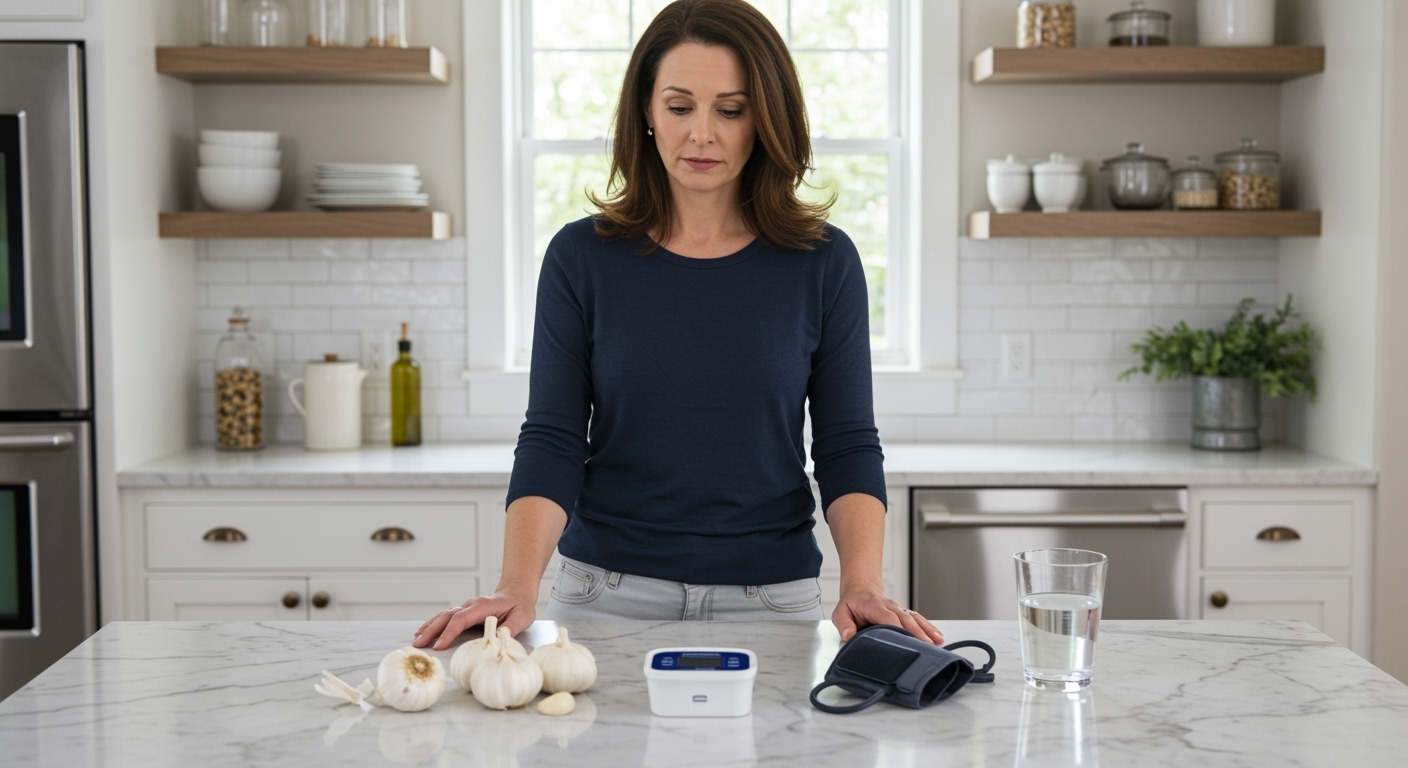
✪ Key Takeaway: Garlic lowers blood pressure, so if yours is already low, consuming garlic regularly can make your condition worse.
Introduction
You have heard that garlic is a miracle food for heart health.
Your grandmother swears by it, your neighbor takes garlic supplements daily, and every health blog seems to praise its cardiovascular benefits.
But if you struggle with low blood pressure, you might be wondering whether this popular remedy will help you or actually make your symptoms worse.
You are asking this question because you want to know if garlic is safe for your specific condition.
You need clear answers about whether garlic will give you more energy or leave you feeling dizzy and fatigued.
Hi, I am Abdur, your nutrition coach, and today I am going to explain exactly how garlic affects blood pressure, why it might not be your best choice if yours runs low, and what you should do instead.
What Does Garlic Actually Do to Your Blood Pressure?
Garlic contains a compound called allicin, which forms when you crush or chop fresh garlic cloves.
This compound relaxes your blood vessels by increasing the production of nitric oxide in your body.
Nitric oxide is a molecule that signals your blood vessel walls to relax and widen.
When your blood vessels widen, the pressure inside them naturally decreases.
This effect is exactly why doctors and researchers recommend garlic for people with high blood pressure.
Multiple studies show that garlic can reduce systolic blood pressure by an average of 8 to 10 points in people with hypertension.
But here is the problem: if your blood pressure is already low, making it drop further will not help you feel better.
✪ Fact: Research shows garlic can lower systolic blood pressure by up to 10 mmHg in people with elevated levels.
Why Would Garlic Make Low Blood Pressure Worse?
Your body needs a certain level of blood pressure to push blood through your arteries and deliver oxygen to your organs.
When your blood pressure drops too low, your brain and other vital organs do not get enough oxygen and nutrients.
This is why people with low blood pressure often experience dizziness, fatigue, blurred vision, and even fainting spells.
Garlic works by lowering blood pressure, which means it pushes your already low numbers even lower.
If you consume garlic regularly or take concentrated garlic supplements, you might notice your symptoms getting worse instead of better.
You might feel more lightheaded when you stand up quickly, experience more frequent headaches, or struggle with persistent tiredness throughout the day.
This is not because garlic is bad for everyone, but because it is working exactly as intended in a body that does not need that particular effect.
✪ Note: Low blood pressure is medically defined as readings below 90/60 mmHg, though symptoms vary between individuals.
Should You Avoid Garlic Completely If You Have Low Blood Pressure?
You do not need to eliminate garlic from your diet completely unless your doctor specifically tells you to do so.
Using small amounts of garlic in your cooking is generally safe for most people with low blood pressure.
The key difference lies between eating a clove or two in your meals versus taking concentrated garlic supplements or consuming large amounts daily.
When you cook with garlic, you typically use one or two cloves, which provides flavor and some health benefits without dramatically affecting your blood pressure.
But garlic supplements contain concentrated doses that equal eating multiple cloves at once, which creates a much stronger effect on your cardiovascular system.
If you enjoy garlic in your food, pay attention to how you feel after eating it.
If you notice increased dizziness, fatigue, or other symptoms of low blood pressure, reduce the amount you use or avoid it on days when you already feel unwell.
✪ Pro Tip: Track your symptoms in a simple journal to identify if garlic consumption correlates with feeling worse on certain days.
What Should You Focus On Instead to Raise Your Blood Pressure?
If you have low blood pressure, your focus should be on strategies that help raise it to healthy levels rather than lowering it further.
Increasing your salt intake is one of the most effective ways to raise blood pressure because sodium helps your body retain water, which increases blood volume.
Drinking more water throughout the day also helps because dehydration is a common cause of low blood pressure.
Eating smaller, more frequent meals prevents blood from pooling in your digestive system after large meals, which can cause blood pressure to drop.
Including more protein and healthy fats in your diet helps stabilize blood sugar levels, which indirectly supports better blood pressure control.
Wearing compression stockings can help prevent blood from pooling in your legs, which keeps more blood circulating to your upper body and brain.
These practical strategies address the root cause of your low blood pressure instead of adding foods like garlic that work against your goals.
✪ Pro Tip: Start your morning with a glass of water and a pinch of salt to help raise your blood pressure naturally before breakfast.
When Should You Talk to Your Doctor About Garlic and Blood Pressure?
You should always discuss dietary changes with your doctor if you have any diagnosed medical condition, including low blood pressure.
This becomes especially important if you take medications for any health condition because garlic can interact with certain drugs.
Garlic can increase the effects of blood thinners like warfarin, which raises your risk of bleeding.
It can also interact with medications for diabetes, HIV, and other conditions by affecting how your body processes these drugs.
If you experience severe symptoms like frequent fainting, chest pain, or extreme fatigue, you need medical attention regardless of your garlic consumption.
Your doctor can run tests to determine the underlying cause of your low blood pressure and recommend appropriate treatments.
Never start taking garlic supplements without medical supervision, especially if you have any existing health conditions or take prescription medications.
✪ Note: Always inform your doctor about all supplements and herbs you take, as they can affect your treatment plan significantly.
The Bottom Line
Garlic is a powerful food that lowers blood pressure, which makes it excellent for people with hypertension but potentially problematic for those with low blood pressure.
Your health depends on choosing foods that support your specific needs, not following generic advice that works for everyone else.
I would love to hear your thoughts and experiences in the comments below, so please share any questions or feedback you have about managing your blood pressure naturally.
References
At NutritionCrown, we use quality and credible sources to ensure our content is accurate and trustworthy. Below are the sources referenced in writing this article:
- PMC: Garlic and cardiovascular disease
- American Heart Association: Sorting folklore from fact on the health benefits of garlic
- Cleveland Clinic: Garlic for blood pressure
- PMC: Effects of garlic on blood pressure