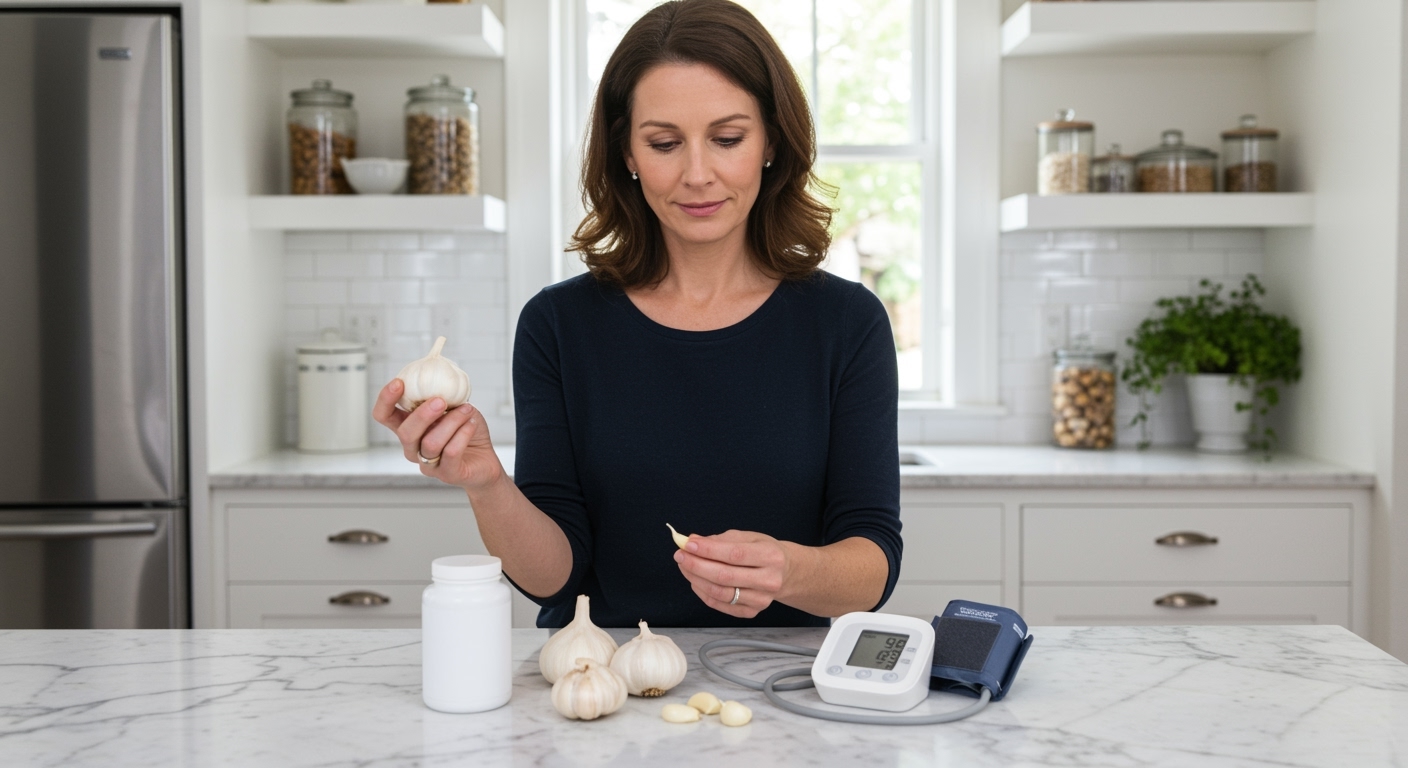
✪ Key Takeaway: Garlic can lower blood pressure further, making it risky for people with hypotension who should use it cautiously.
Introduction
You have heard that garlic is good for your heart, but what if your blood pressure is already too low?
You might be asking this question because you love cooking with garlic, or someone told you about its health benefits, but you worry it could make your hypotension worse.
Hi, I am Abdur, your nutrition coach and today I am going to explain how garlic affects low blood pressure and whether you should avoid it or use it carefully.
What Does Garlic Actually Do to Your Blood Pressure?
Garlic contains a compound called allicin that forms when you crush or chop fresh cloves.
This allicin helps your blood vessels relax and widen, which is called vasodilation.
When your blood vessels widen, the pressure inside them naturally decreases.
Research shows that garlic can lower systolic blood pressure by about 8-10 mmHg in people with high blood pressure.
But here is the problem: if your blood pressure is already low, this relaxing effect could push it even lower.
Your body needs a certain level of pressure to push blood to your brain, heart, and other vital organs.
When pressure drops too much, you might feel dizzy, weak, or even faint.
✪ Fact: Allicin breaks down quickly after cutting garlic, so letting it sit for 10 minutes before cooking preserves more of its active compounds.
Is Cooked Garlic Safer Than Raw Garlic for Hypotension?
Raw garlic contains the highest concentration of allicin and other active compounds.
When you cook garlic, heat destroys some of these compounds, making it less potent.
This means cooked garlic will have a milder effect on your blood pressure compared to raw garlic.
If you have low blood pressure, using small amounts of cooked garlic in your meals is generally safer.
You still get the flavor and some health benefits without the strong blood pressure-lowering effect.
However, eating large amounts of even cooked garlic could still affect your pressure levels.
The key is moderation and paying attention to how your body responds after eating garlic-rich meals.
✪ Pro Tip: Start with one small cooked clove per day and monitor your symptoms before increasing your garlic intake.
Should You Avoid Garlic Supplements With Low Blood Pressure?
Garlic supplements contain concentrated amounts of active compounds, much more than you would get from food.
These supplements are specifically designed to deliver therapeutic doses for conditions like high blood pressure.
If you already have hypotension, taking garlic supplements could be risky.
The concentrated dose might lower your blood pressure too much, causing dizziness, fatigue, or fainting.
Some people take garlic supplements for immune support or cholesterol management, not realizing the blood pressure effect.
If you have low blood pressure and want to take garlic supplements for other reasons, talk to your doctor first.
Your doctor can help you decide if the benefits outweigh the potential risks for your specific situation.
✪ Note: Garlic supplements can interact with blood thinners and other medications, so always check with your healthcare provider before starting them.
What Amount of Garlic Is Safe for People With Hypotension?
There is no official guideline for safe garlic intake specifically for people with low blood pressure.
However, using garlic as a cooking ingredient in normal amounts is usually fine for most people.
One or two cloves of cooked garlic in your daily meals typically will not cause significant problems.
The issue arises when you consume large amounts of raw garlic or take concentrated supplements.
Pay attention to your body’s signals after eating garlic-rich foods.
If you notice increased dizziness, weakness, or lightheadedness, reduce your garlic intake.
Everyone responds differently, so what works for someone else might not work for you.
✪ Pro Tip: Keep a food diary to track your garlic intake and any symptoms you experience to identify your personal tolerance level.
Can Garlic Ever Be Beneficial for Low Blood Pressure?
This might sound contradictory, but garlic could potentially help in specific situations.
Some people have low blood pressure because their blood vessels are too stiff or their circulation is poor.
Garlic improves blood vessel flexibility and circulation, which could help your cardiovascular system work more efficiently.
Better circulation means your heart does not have to work as hard to pump blood throughout your body.
However, this potential benefit only applies to certain types of hypotension and should be explored with medical guidance.
Never use garlic as a treatment for low blood pressure without consulting your doctor first.
Your doctor needs to identify the underlying cause of your hypotension before recommending any dietary changes.
✪ Fact: Low blood pressure is not always a problem and many healthy people naturally have readings below 120/80 mmHg without any symptoms.
The Bottom Line
Garlic can lower blood pressure, which makes it potentially risky for people with hypotension, especially in supplement form or large amounts.
Your health is not about avoiding foods but understanding how they affect your unique body.
If you have low blood pressure and love garlic, share your experience in the comments below and let me know how you manage your garlic intake safely.
References
At NutritionCrown, we use quality and credible sources to ensure our content is accurate and trustworthy. Below are the sources referenced in writing this article:
- PMC: Garlic: A Review of Potential Therapeutic Effects
- American Academy of Family Physicians: Evaluation and Management of Orthostatic Hypotension
- PubMed: Aged Garlic Extract Lowers Blood Pressure in Patients with Treated but Uncontrolled Hypertension
- American Heart Association: Sorting Folklore From Fact on the Health Benefits of Garlic