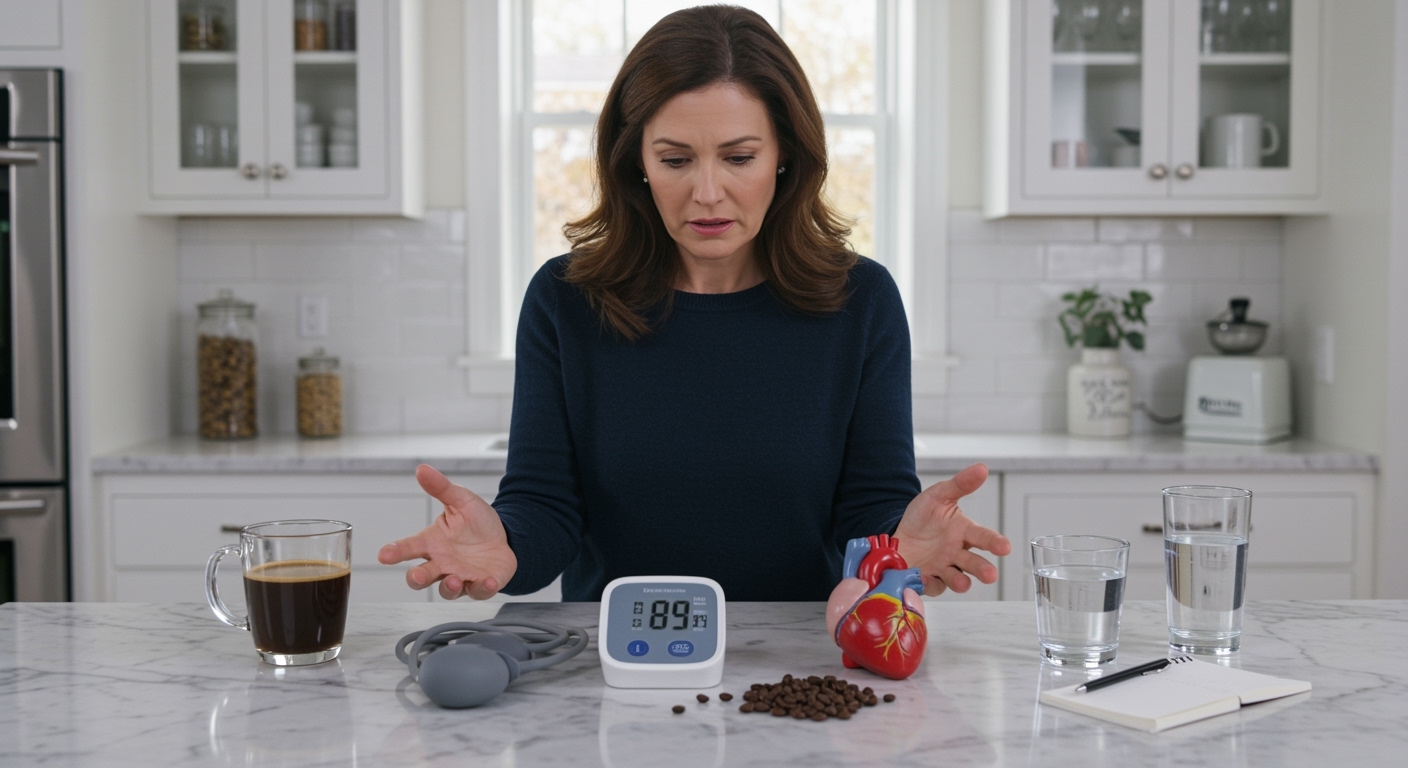
✪ Key Takeaway: Black coffee can temporarily raise blood pressure by 3-15 mmHg, making it potentially helpful for low blood pressure when used strategically.
Introduction
You feel dizzy when you stand up too quickly, and someone tells you to drink black coffee.
You might be asking this question because you have low blood pressure and wonder if that morning cup could help you feel better or make things worse.
Hi, I am Abdur, your nutrition coach, and today I am going to explain exactly how black coffee affects your blood pressure, when it helps, when it does not, and what you need to know before making it part of your daily routine.
How Does Black Coffee Actually Affect Your Blood Pressure?
Black coffee contains caffeine, a natural stimulant that directly affects your cardiovascular system.
When you drink coffee, caffeine blocks adenosine receptors in your body.
Adenosine is a chemical that normally relaxes your blood vessels and makes you feel calm.
When caffeine blocks these receptors, your blood vessels constrict or narrow, which increases resistance to blood flow.
This constriction causes your heart to pump harder, and your blood pressure rises temporarily.
Research shows that caffeine can raise systolic blood pressure by 3-15 mmHg and diastolic pressure by 4-13 mmHg within 30 minutes of consumption.
For someone with low blood pressure, this temporary increase might actually bring readings closer to normal range and reduce symptoms like dizziness or fatigue.
✪ Fact: The blood pressure raising effect of caffeine typically peaks at 30-60 minutes and can last up to 4 hours in your system.
Does Your Body Build Tolerance To Coffee Over Time?
This is where things get interesting and often confusing.
If you drink coffee regularly, your body starts to adapt to caffeine within just one to two weeks.
Your adenosine receptors increase in number to compensate for the constant blocking by caffeine.
This means the same amount of coffee that once raised your blood pressure significantly will have a much smaller effect after regular consumption.
Studies show that habitual coffee drinkers experience minimal blood pressure changes from their daily cups.
For someone with low blood pressure hoping coffee will help long-term, this tolerance becomes a major problem.
The initial benefit you feel from that first cup gradually disappears as your body adjusts to regular caffeine intake.
✪ Pro Tip: If you use coffee strategically only when symptoms appear rather than daily, you maintain its effectiveness for raising blood pressure.
When Should You Drink Black Coffee For Low Blood Pressure?
Timing matters more than most people realize.
Many people with low blood pressure experience their lowest readings in the morning after waking up or after meals.
This happens because blood pools in your legs when you lie down all night, or it rushes to your digestive system after eating.
Drinking black coffee 15-30 minutes before you expect symptoms can help prevent that dizzy, lightheaded feeling.
For morning hypotension, having coffee right after you wake up gives caffeine time to work before you start moving around.
For postprandial hypotension (low blood pressure after eating), drinking coffee with or right after your meal can counteract the blood pressure drop.
However, avoid drinking coffee late in the day because it can disrupt your sleep, and poor sleep actually worsens blood pressure regulation.
✪ Note: Never drink coffee on an empty stomach if you have low blood pressure, as it can cause jitteriness and worsen dehydration.
What Are The Hidden Risks Of Using Coffee This Way?
Black coffee is not a magic solution, and it comes with real downsides you need to understand.
First, caffeine is a diuretic, meaning it makes you urinate more frequently.
This can lead to dehydration, and dehydration is one of the most common causes of low blood pressure.
So while coffee temporarily raises your pressure, it might actually make your underlying problem worse if you do not drink enough water.
Second, relying on coffee can mask symptoms of a more serious underlying condition that needs medical attention.
Low blood pressure can signal heart problems, endocrine disorders, nutritional deficiencies, or medication side effects that require proper diagnosis.
Third, excessive caffeine intake can cause anxiety, heart palpitations, and sleep disturbances, all of which negatively impact your overall health and can paradoxically worsen blood pressure control.
✪ Pro Tip: Always drink at least one glass of water for every cup of coffee to prevent dehydration from worsening your low blood pressure.
What Else Should You Do Besides Drinking Coffee?
Coffee should never be your only strategy for managing low blood pressure.
The most effective approach combines multiple lifestyle changes that address the root causes.
First, increase your salt intake moderately unless your doctor advises otherwise, because sodium helps your body retain water and increases blood volume.
Second, drink at least 8-10 glasses of water daily to maintain proper hydration and blood volume.
Third, eat smaller, more frequent meals to prevent postprandial hypotension instead of three large meals.
Fourth, wear compression stockings if you experience symptoms when standing, as they help prevent blood from pooling in your legs.
Fifth, stand up slowly from sitting or lying positions to give your body time to adjust and prevent sudden drops in blood pressure.
✪ Fact: Regular physical activity improves blood pressure regulation by strengthening your cardiovascular system and improving circulation throughout your body.
The Bottom Line
Black coffee can temporarily raise blood pressure and help manage symptoms of low blood pressure when used strategically and in moderation.
Coffee is a tool, not a treatment, and your body deserves a comprehensive approach that addresses the real causes behind your low blood pressure.
I would love to hear about your experience with coffee and low blood pressure, so please share your thoughts, questions, or feedback in the comment section below.
References
At NutritionCrown, we use quality and credible sources to ensure our content is accurate and trustworthy. Below are the sources referenced in writing this article:
- Mayo Clinic: Blood pressure: Does it have a daily pattern?
- American Heart Association: Acute Effects of Coffee Consumption on Self-Reported Gastrointestinal Symptoms, Blood Pressure and Stress Indices in Healthy Individuals
- PubMed: Cardiovascular and metabolic responses to tap water ingestion in young humans: does the water temperature matter?
- eMedicineHealth: Is Coffee Good for Low Blood Pressure?