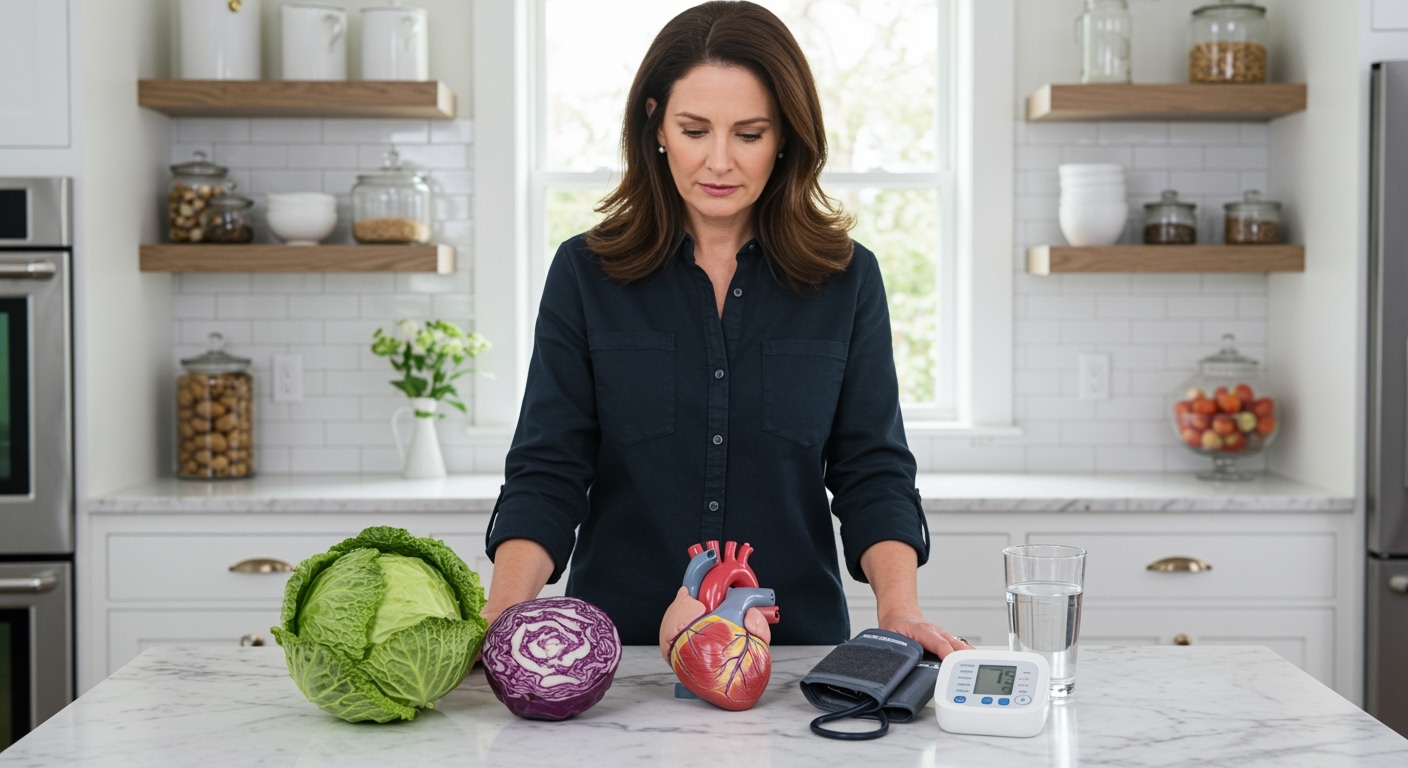
✪ Key Takeaway: Cabbage cannot help with low blood pressure because it actually lowers blood pressure further through its potassium and antioxidant content.
Introduction
You feel dizzy when you stand up too quickly and wonder if eating more vegetables might fix this problem.
You might be asking this question because someone told you that cabbage is good for blood pressure, but they did not specify whether it helps with high or low blood pressure, and now you are confused about whether it will help or harm your condition.
Hi, I am Abdur, your nutrition coach, and today I am going to explain exactly how cabbage affects your blood pressure, why it actually works against low blood pressure, and what you should eat instead if you struggle with hypotension.
What Does Cabbage Actually Do to Your Blood Pressure?
Cabbage contains high amounts of potassium, with about 170 milligrams per 100 grams of raw cabbage.
Potassium works by helping your kidneys remove excess sodium from your body through urine.
When sodium levels drop, your blood vessels relax and widen, which reduces the pressure inside them.
This mechanism is exactly why doctors recommend potassium-rich foods to people with high blood pressure.
A 2024 study published in BMC Medicine found that cruciferous vegetables like cabbage significantly lowered blood pressure more than root vegetables.
The research showed that people who ate more cruciferous vegetables had lower systolic and diastolic readings compared to those who ate fewer of these vegetables.
If your blood pressure is already low, eating large amounts of cabbage will push it even lower and make your symptoms worse.
✪ Fact: One cup of cooked cabbage provides about 11 percent of your daily potassium needs, which actively works to lower blood pressure.
Why Does Low Blood Pressure Happen in the First Place?
Low blood pressure, also called hypotension, occurs when your blood pressure reading falls below 90/60 mmHg.
Your body needs adequate pressure to push blood through your arteries and deliver oxygen to your brain, heart, and other vital organs.
Common causes include dehydration, which reduces blood volume and makes it harder for your heart to maintain pressure.
Certain medications like diuretics and beta blockers can lower blood pressure as a side effect.
Nutritional deficiencies, particularly vitamin B12 and folate, prevent your body from producing enough red blood cells, leading to anemia and low blood pressure.
Endocrine problems like underactive thyroid or low blood sugar can also cause your pressure to drop.
Understanding the root cause helps you choose the right dietary and lifestyle strategies instead of randomly eating foods that might worsen your condition.
✪ Note: If you experience frequent dizziness, fainting, or blurred vision, consult your doctor before making any dietary changes.
What Should You Eat Instead if You Have Low Blood Pressure?
Your body needs adequate sodium to maintain blood volume and pressure, so moderate salt intake becomes important when you have hypotension.
Adding a pinch of sea salt to your meals helps retain water in your bloodstream, which increases blood volume and raises pressure.
Drinking plenty of water throughout the day prevents dehydration, which is one of the most common triggers of low blood pressure episodes.
Foods rich in vitamin B12 like eggs, fish, and dairy products help your body produce healthy red blood cells that carry oxygen efficiently.
Including folate-rich foods like lentils, chickpeas, and leafy greens supports red blood cell production and prevents anemia-related hypotension.
Small, frequent meals prevent postprandial hypotension, which is when your blood pressure drops after eating large meals because blood rushes to your digestive system.
Avoiding high-potassium foods in excess, including cabbage, helps prevent further drops in your already low blood pressure.
✪ Pro Tip: Keep a glass of water with a pinch of salt by your bedside and drink it before standing up in the morning to prevent dizziness.
Can You Still Eat Cabbage if You Have Low Blood Pressure?
You do not need to completely eliminate cabbage from your diet just because you have low blood pressure.
The key is eating it in small, controlled portions rather than making it a daily staple or consuming large amounts at once.
A small serving of cooked cabbage once or twice a week will not dramatically affect your blood pressure if you balance it with other foods.
Cooking cabbage reduces its potassium content slightly because some of it leaches into the cooking water, making it a safer option than raw cabbage.
Always pair cabbage with sodium-containing foods like a pinch of salt or naturally salty foods to counterbalance its blood pressure-lowering effect.
Monitor how your body responds after eating cabbage by checking for dizziness, fatigue, or lightheadedness within a few hours.
If you notice these symptoms consistently after eating cabbage, it makes sense to reduce or avoid it until your blood pressure stabilizes.
✪ Fact: Fermented cabbage like sauerkraut contains added salt, which may actually be better for low blood pressure than fresh cabbage.
The Bottom Line
Cabbage cannot help with low blood pressure because it contains potassium and antioxidants that actively lower blood pressure, which is the opposite of what you need when dealing with hypotension.
Health is not about following generic advice but understanding what your specific body needs at this specific time, and that means choosing foods that support your current condition rather than working against it.
I would love to hear about your experience with managing low blood pressure through diet, so please share your questions, thoughts, or personal strategies in the comment section below.
References
At NutritionCrown, we use quality and credible sources to ensure our content is accurate and trustworthy. Below are the sources referenced in writing this article: