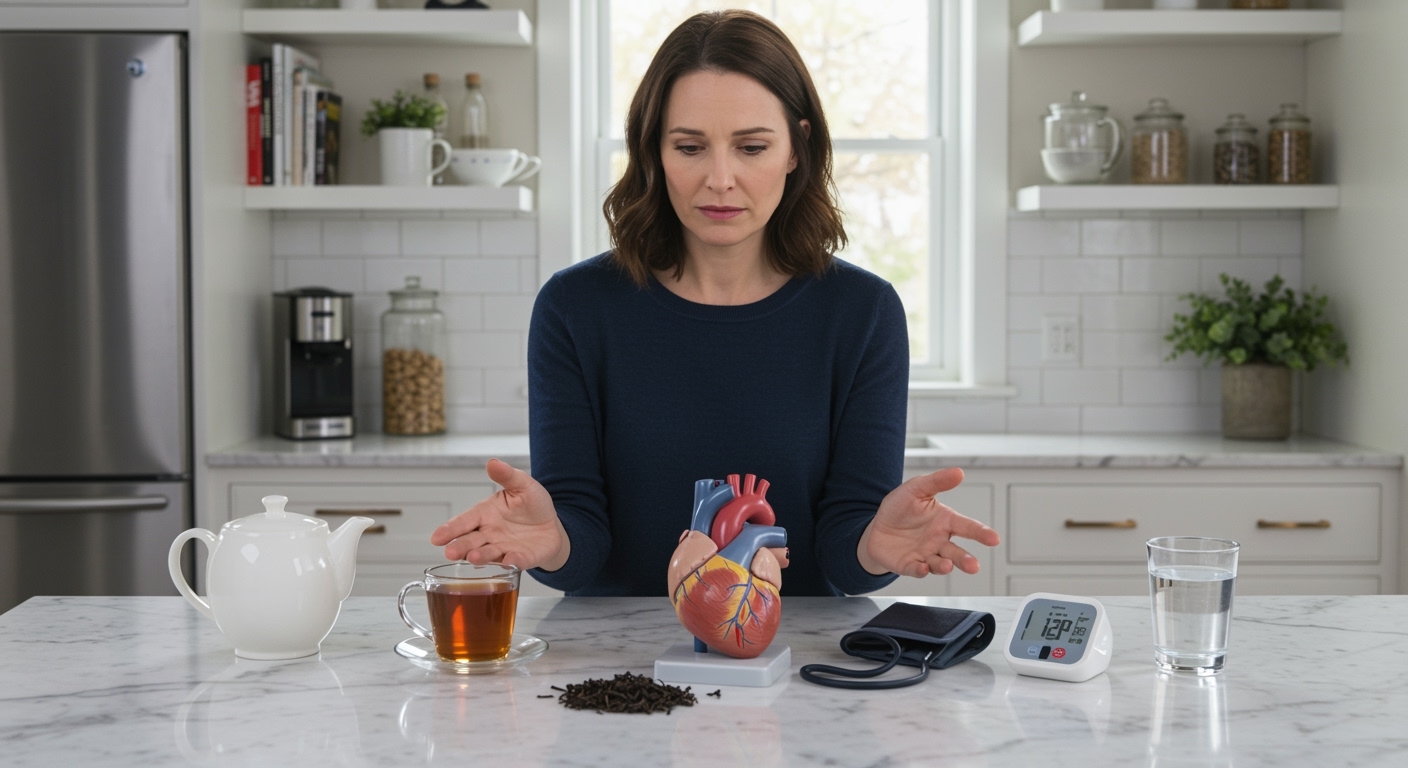
✪ Key Takeaway: Black tea is generally safe for low blood pressure when consumed in moderation, but timing and individual response matter significantly.
Introduction
You pour yourself a cup of black tea and suddenly wonder if this simple pleasure might drop your already low blood pressure even further.
This question comes up because black tea contains caffeine, and people with hypotension often hear conflicting advice about what they should or should not drink.
Hi, I am Abdur, your nutrition coach, and today I am going to explain exactly how black tea affects your blood pressure, when it might help or harm you, and what practical steps you can take to enjoy it safely.
Does Black Tea Actually Lower Blood Pressure?
The short answer is that black tea typically does not lower blood pressure in most people.
Research published in the American Heart Association journal shows that regular black tea consumption is associated with improved cardiovascular health and better blood pressure regulation over time.
The caffeine in black tea actually causes a temporary increase in blood pressure for most individuals, not a decrease.
This happens because caffeine blocks adenosine receptors in your body, which normally help blood vessels relax and widen.
When these receptors get blocked, your blood vessels constrict slightly, and your heart rate may increase, leading to a modest rise in blood pressure that lasts about 3 to 4 hours.
However, some people with low blood pressure worry about black tea because they confuse it with herbal teas that have genuinely hypotensive effects, like hibiscus or chamomile.
Black tea comes from the Camellia sinensis plant and contains compounds that work differently than most herbal varieties.
✪ Fact: One cup of black tea contains about 40 to 70 milligrams of caffeine, roughly half the amount found in a typical cup of coffee.
Why Do Some People Feel Dizzy After Drinking Black Tea?
If you have experienced dizziness after drinking black tea, you are not imagining things, but the cause might surprise you.
The dizziness rarely comes from the tea itself lowering your blood pressure directly.
Instead, it often results from drinking black tea on an empty stomach, which can cause rapid caffeine absorption and blood sugar fluctuations.
When caffeine enters your bloodstream quickly without food to slow its absorption, it can trigger a stress response that temporarily diverts blood flow away from your digestive system.
This redistribution of blood can make you feel lightheaded, especially if you already have low blood pressure and limited circulatory reserve.
Another factor involves the tannins in black tea, which are polyphenolic compounds that can interfere with iron absorption when consumed with or near meals.
Over time, this interference might contribute to iron deficiency, which commonly causes dizziness, fatigue, and worsening of hypotension symptoms in susceptible individuals.
✪ Pro Tip: Always consume black tea with food or at least 30 minutes after eating to minimize dizziness and maximize nutrient absorption.
Can Black Tea Actually Help With Low Blood Pressure?
Here is where things get interesting and potentially beneficial for you.
The caffeine content in black tea can actually provide a helpful boost to people experiencing symptomatic hypotension.
Studies show that moderate caffeine intake temporarily raises blood pressure by 3 to 15 millimeters of mercury, which can alleviate symptoms like fatigue, brain fog, and dizziness.
This makes black tea a potentially useful tool for managing orthostatic hypotension, the type of low blood pressure that causes dizziness when you stand up quickly.
The key advantage of black tea over coffee is its more moderate and sustained caffeine release, which provides steadier cardiovascular support without the dramatic spikes and crashes.
Beyond caffeine, black tea contains flavonoids and other bioactive compounds that support endothelial function, which is the ability of your blood vessel lining to regulate blood flow properly.
Research published in medical journals demonstrates that regular black tea consumption improves vascular function and may help your body maintain more stable blood pressure throughout the day.
✪ Note: The blood pressure raising effect of caffeine diminishes with regular consumption as your body develops tolerance within one to two weeks.
What Is The Safest Way To Drink Black Tea With Hypotension?
Timing matters more than most people realize when it comes to black tea consumption with low blood pressure.
The best approach is drinking your tea in the morning or early afternoon when your blood pressure naturally tends to be higher.
Avoid consuming black tea late in the day because the caffeine can interfere with sleep, and poor sleep quality worsens blood pressure regulation the following day.
Start with one cup daily and observe how your body responds before increasing your intake.
Most people with low blood pressure tolerate two to three cups of black tea daily without problems, but individual responses vary significantly.
Always pair your tea with adequate hydration throughout the day because caffeine has mild diuretic properties that can lead to fluid loss.
Dehydration compounds hypotension symptoms, so drinking an extra glass of water for each cup of tea helps maintain proper blood volume and circulatory function.
✪ Pro Tip: Add a small pinch of salt to your black tea if you experience frequent dizziness, as sodium helps maintain blood volume and pressure.
When Should You Avoid Black Tea Completely?
Despite its general safety, certain situations call for avoiding or limiting black tea consumption.
If you take medications for any heart condition, the caffeine in black tea can interact with drugs like beta blockers or calcium channel blockers in unpredictable ways.
People with severe anemia should be particularly cautious because the tannins in black tea significantly reduce iron absorption from plant-based foods.
This becomes especially problematic if your low blood pressure stems from iron deficiency anemia rather than primary hypotension.
Pregnant women with low blood pressure need to monitor their total caffeine intake carefully, keeping it below 200 milligrams daily from all sources combined.
If you experience heart palpitations, severe anxiety, or worsening dizziness after drinking black tea, these are clear signals to stop consumption and consult your healthcare provider.
Your body is telling you something important, and pushing through these symptoms never leads to positive outcomes.
✪ Note: Always inform your doctor about your black tea consumption habits during medical consultations, as it affects medication timing and effectiveness.
The Bottom Line
Black tea is generally safe and may even be beneficial for people with low blood pressure when consumed mindfully and in moderation.
Your beverage choices should support your body, not fight against it, and black tea offers a middle ground between complete caffeine avoidance and excessive stimulation.
I would love to hear about your experiences with black tea and blood pressure in the comments below, and feel free to share any questions or concerns you might have about managing hypotension through dietary choices.
References
At NutritionCrown, we use quality and credible sources to ensure our content is accurate and trustworthy. Below are the sources referenced in writing this article:
- American Heart Association: Arterial and Cardiac Aging: Major Shareholders in Cardiovascular Disease Enterprises
- PubMed: Effects of Tea Intake on Blood Pressure
- PMC: Tea Consumption and Cardiovascular Disease
- Cleveland Clinic: Black Tea Benefits